
Building Facade Restoration Services
From assessment through completion, RSI delivers expert commercial facade repair that addresses root causes—not just symptoms. We restore safety, weather protection, and lasting beauty to your building’s exterior.

What Is Building Facade Restoration?
Building facade restoration is far more than cosmetic improvement—it’s a comprehensive approach to maintaining the structural integrity, weather resistance, and visual character of your building’s exterior envelope.
“Building facade restoration is essentially the process of repairing and maintaining the exterior facade of the building so it remains safe, weather-tight, and visually consistent with its original design. It’s not just about making a building look nice.”— Tayton Eggenberger, Branch Manager, Minnesota, RSI
Every commercial facade serves three critical functions that must work in harmony: safety (preventing falling materials that could injure pedestrians or damage property), weather protection (keeping moisture out of the building envelope to protect interior spaces and structural systems), and aesthetic preservation (maintaining the visual character that defines your property’s value and appeal).
At RSI, our commercial facade repair projects span the full spectrum—from targeted mortar joint repairs starting around $5,000 to comprehensive full-building restorations exceeding $5 million. What remains consistent across every project is our commitment to addressing root causes, not just visible symptoms.
Whether your building features historic limestone, decorative terra cotta, traditional brick, or modern panel systems, proper facade restoration services require understanding how each material behaves, how it interacts with Minnesota’s extreme climate, and what’s actually causing the deterioration you’re seeing.

Warning Signs Your Facade Needs Attention
Don’t wait for a crisis. These indicators suggest your building may require professional facade assessment and potential masonry restoration services.
Water Intrusion or Interior Moisture
Water staining on interior walls, damp spots, or recurring moisture in tenant spaces often indicates compromised facade weatherproofing. By the time you see interior damage, water has already penetrated deeply into the wall system.
Visible Cracking or Spalling
Cracks in mortar joints, spalling brick faces, or fractures in stone indicate active deterioration. These openings allow water infiltration, which accelerates damage during freeze-thaw cycles—making small problems rapidly worse.
Deteriorating Mortar Joints
Mortar is designed as a sacrificial material that protects brick and stone. When joints erode, crumble, or recede, the entire facade system becomes vulnerable. Proactive tuckpointing services prevent exponentially larger repairs later.
White Staining (Efflorescence)
Those white, chalky deposits on masonry surfaces are mineral salts left behind as water evaporates from within the wall. Efflorescence signals that water is actively moving through your facade—a problem requiring investigation.
Rust Staining or Corrosion Signs
Rust-colored staining on masonry surfaces typically indicates corroding steel components behind the facade—lintels, shelf angles, or embedded structural supports. This “rust jacking” can eventually push masonry off the building.
Loose or Falling Masonry
Any loose materials represent an immediate safety hazard and potential liability. Even small pieces falling from height can cause serious injury. This requires urgent professional assessment—do not delay.
Failed Sealants and Caulking
Cracked, separated, or missing sealants around windows, joints, and penetrations create direct water entry points. Failed sealants are often the easiest and most cost-effective items to address before they cause deeper damage.
Bulging or Bowing Walls
Visible wall movement indicates serious structural concerns—potentially corroded anchors, failed ties, or shifting foundations. This condition requires immediate professional evaluation to determine stability and safety.
The True Cost of Deferred Facade Maintenance
Waiting to address facade issues doesn’t save money—it multiplies costs. Understanding these numbers can help you make informed decisions about when to act.
“Facade work is often viewed as cosmetic until a crisis occurs, until there’s a life safety hazard on the exterior of the building, or until we start seeing widespread water infiltration issues affecting interior tenant spaces.”— Dylan Reynolds, Project Manager, RSI
Our Building Facade Restoration Process
Every RSI project follows a proven methodology that ensures we identify root causes, not just symptoms—delivering lasting results instead of temporary fixes.
Comprehensive Assessment
We conduct thorough visual inspections, often including hands-on examination from swing stage or scaffold. Our team documents all visible deficiencies and identifies potential concerns that aren’t obvious from street level.
Root Cause Analysis
We don’t stop at symptoms. Our experienced project managers investigate why deterioration is occurring—examining flashing systems, drainage patterns, corrosion sources, and wall movement to develop solutions that address underlying problems.
Expert Execution
Our skilled craftsmen perform repairs using proper techniques and materials matched to your building. For historic structures, we ensure mortar composition and aesthetic details match original specifications exactly.
Documentation & Planning
Every project includes detailed documentation of completed work and recommendations for ongoing maintenance. We help you plan future work phases so you can budget effectively and prioritize repairs strategically.
Wondering What Deferred Maintenance Is Costing You?
Get a complimentary facade assessment from our team. We’ll identify current issues, prioritize repairs by urgency, and help you understand the true cost of waiting versus acting now.
Commercial Facade Repair Services
RSI provides comprehensive facade restoration services tailored to each building’s unique needs, materials, and condition. Every service is backed by our commitment to addressing root causes.
Brick Repair & Replacement
Precision removal and replacement of damaged, spalled, or deteriorated brick units. We carefully source matching brick for color, texture, and size to maintain visual continuity across your facade. Proper preparation ensures long-lasting bonds.
Stone Restoration
Expert repair of limestone, granite, sandstone, and other natural stone facades. Our craftsmen address cracking, surface erosion, staining, and structural concerns using techniques that respect the material’s natural characteristics.
Tuckpointing Services
Complete mortar joint restoration using properly formulated mortars matched to your masonry. We remove deteriorated material to appropriate depths and apply new mortar that performs correctly—not just looks good.
Lintel & Steel Repair
Restoration of corroded steel lintels, shelf angles, and embedded supports that cause “rust jacking” and facade displacement. We address the corrosion source, repair or replace steel components, and rebuild surrounding masonry.
Historic Facade Restoration
Specialized restoration for buildings with historic significance, including work with Historic Preservation Committees. We use petrographic analysis to match original mortar composition and maintain architectural authenticity.
Sealant & Waterproofing Systems
Complete sealant replacement at joints, windows, and penetrations, plus application of appropriate water-repellent coatings. We select products based on substrate compatibility and long-term performance, not just initial appearance.
The RSI Difference: Root Cause vs. Surface Repair
Not all facade contractors approach projects the same way. Understanding what separates expert masonry restoration from surface-level repairs can save you significant money and frustration.
What Inexperienced Contractors Miss
- Skimming mortar joints instead of properly removing deteriorated material and filling to appropriate depth—repairs that look good initially but fail within a few years
- Using incorrect mortar hardness—modern Portland-heavy mortars that are too hard for historic brick, causing the masonry units themselves to crack and spall
- Ignoring the underlying cause—repairing visible damage without investigating why the deterioration is occurring, guaranteeing the same problems will return
- Missing hidden corrosion—failing to identify corroding steel components behind the facade that will continue pushing masonry off the building
- Overlooking flashing failures—water entry points that allow moisture into the wall system where it causes ongoing damage
“What often gets overlooked by inexperienced contractors are the issues causing the need for repair in the first place. An inexperienced contractor will just repair the damaged masonry without addressing the underlying root cause of the deterioration.”— Dylan Reynolds, Project Manager, RSI
What RSI’s Expert Assessment Catches
- Hidden corrosion within the facade system—identifying rust jacking and steel deterioration before it becomes a safety hazard or causes extensive masonry damage
- Subtle wall movement—detecting early signs of structural concerns that indicate failed anchors, corroded ties, or other serious conditions
- Failing flashings—locating compromised water management systems that allow moisture entry into the wall assembly
- Efflorescence patterns—reading the mineral deposits as diagnostic indicators of water movement within walls
- Chronic moisture sources—identifying water entry points and pathways that aren’t visible from street level but are causing ongoing damage
“Some of the things that are often overlooked—and that we take an in-depth review to identify—are hidden corrosion within the facade system, subtle wall movement, failing flashings, efflorescence build-up, and chronic moisture sources that aren’t visible from the sidewalk. A thorough repair plan must account for all of these.”— Dylan Reynolds, Project Manager, RSI
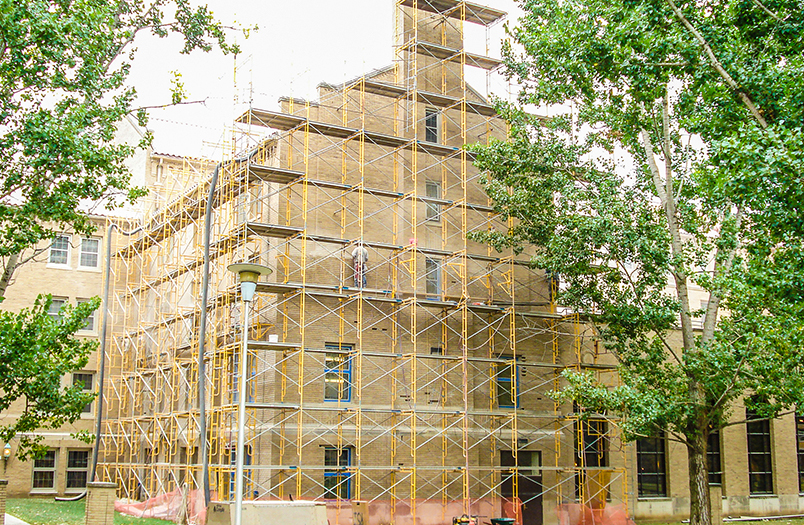
Midwest Masonry: Why Climate Expertise Matters
Minnesota’s climate is uniquely brutal on building facades. Our temperature swings—from summer heat to deep winter cold—create conditions that rapidly accelerate masonry deterioration if not properly addressed.
“The freeze-thaw cycle damages masonry by trapping water in its pores. When that water freezes, it expands by approximately 9%, exerting immense pressure that cracks and weakens brick, stone, and mortar.”— Dylan Reynolds, Project Manager, RSI
In a typical Minneapolis winter, we experience dozens of freeze-thaw cycles. Each cycle pushes moisture deeper into masonry, widens existing cracks, and creates new pathways for water infiltration. This is why facades in our region require different approaches than those in milder climates.
Chaska brick—a locally-produced material common in historic Midwest buildings—presents particular challenges. Its characteristic cream color and soft texture made it popular in the late 1800s, but it’s also more porous and freeze-sensitive than harder-fired brick. Working with Chaska brick facades requires specialized knowledge about appropriate mortar selection and repair techniques.
Key insight: The determining factor for facade longevity isn’t the building’s age—it’s how well the facade was originally constructed and how well it’s been maintained. We’ve seen 100-year-old buildings in excellent condition and 30-year-old buildings requiring major restoration.
Historic Facade Restoration Expertise
Historic buildings require a specialized approach that balances preservation requirements with practical performance. RSI has completed more than 20 projects working directly with Historic Preservation Committees, meeting strict standards for material authenticity and architectural accuracy.
One of the most critical aspects of historic facade restoration is mortar matching. Historic mortars were typically much softer than modern formulations—made with lime rather than Portland cement. Using the wrong mortar on a historic building can cause more damage than the original deterioration.
“Mortar acts as both the bonding agent and a sacrificial material—it holds the masonry units together while accommodating minor movement and moisture transfer. Ideally, the mortar should deteriorate before the brick or stone does, protecting the more permanent materials.”— Tayton Eggenberger, Branch Manager, Minnesota, RSI
For projects requiring precise mortar matching, we employ petrographic analysis—laboratory testing of original mortar samples to determine exact composition, aggregate size, and color. This scientific approach ensures replacement mortar performs correctly and looks authentic, meeting both preservation standards and building performance requirements.
Our team understands that historic facade restoration isn’t just about following rules—it’s about preserving the character and craftsmanship that make these buildings significant. We work closely with preservation committees, architects, and building owners to develop solutions that honor original design intent while addressing modern performance needs. For guidance on navigating the approval process, see our Minneapolis Historic Preservation Committee guide.
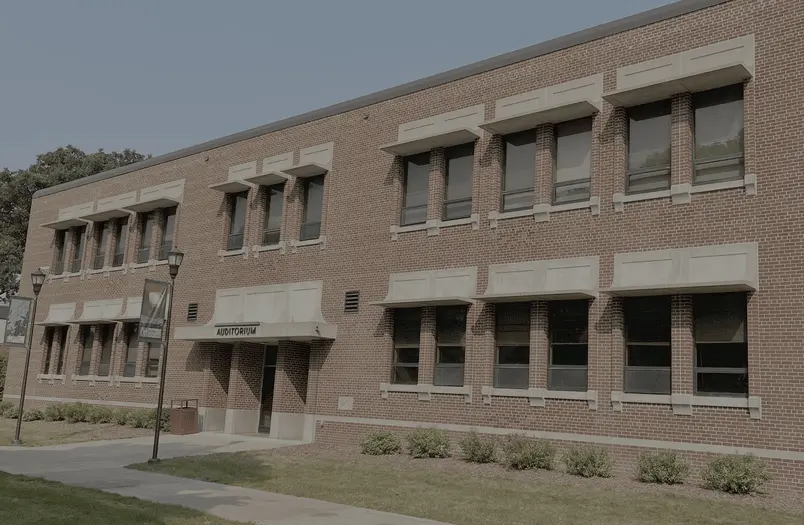
Facade Inspection Ordinances: What Property Managers Need to Know
Several Midwest cities have implemented mandatory facade inspection ordinances to protect public safety. If your building falls under these requirements, understanding the process can help you avoid costly surprises and plan proactively.
Minneapolis Ordinance
Buildings 6+ stories require periodic facade inspections by licensed engineers or architects. The city uses a tiered schedule based on building age, with older buildings inspected more frequently. Non-compliance can result in fines and mandatory immediate inspections.
Milwaukee Ordinance
Milwaukee’s facade ordinance requires periodic inspections for buildings over a certain height in the downtown area. The inspection must be performed by qualified professionals, with detailed reporting on any deficiencies discovered.
The Hidden Cost of Waiting Until Inspection Time
Many property managers first learn about facade issues during mandatory inspections—then face the reality that addressing those issues requires significant access equipment.
Important: Scaffolding, swing stages, and lifts can add 20% or more to any facade repair project. Smart planning that identifies issues before mandatory inspections allows you to combine multiple repairs during one equipment mobilization—dramatically reducing overall costs.
RSI’s Pre-Inspection Solution
We offer complimentary preliminary assessments for property managers facing upcoming mandatory inspections. Our team can identify likely deficiencies, help you understand potential scope and budget requirements, and develop a strategic plan that addresses issues efficiently.
This proactive approach transforms the inspection from an unwelcome surprise into a planned maintenance opportunity—allowing you to budget appropriately, coordinate with tenants, and potentially address multiple concerns during a single mobilization period.
Featured Building Facade Restoration Projects
Every project tells a story of diagnosis, expert execution, and lasting results. Here’s a sampling of the facade challenges our team has solved across the Midwest.
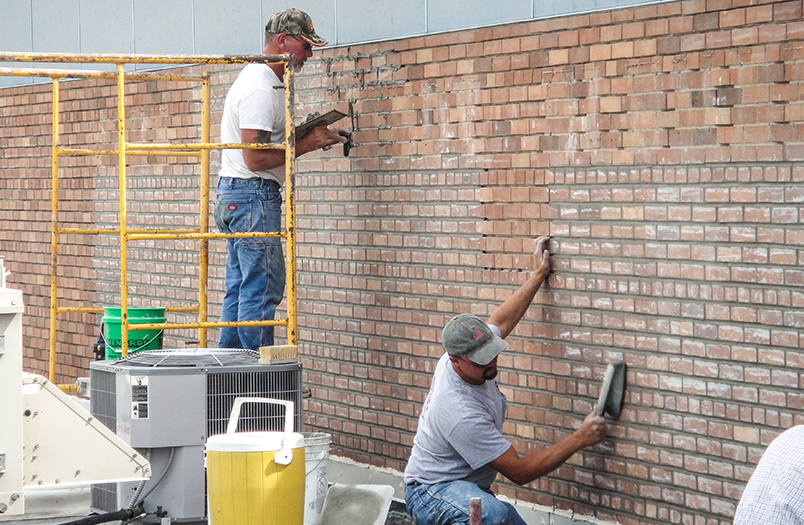
St. Cloud State University
Corroded anchors had allowed entire “wilds” (sections of masonry) to detach from the building structure. Our team carefully removed loose sections, replaced deteriorated anchors, and rebuilt masonry to match original coursing patterns.
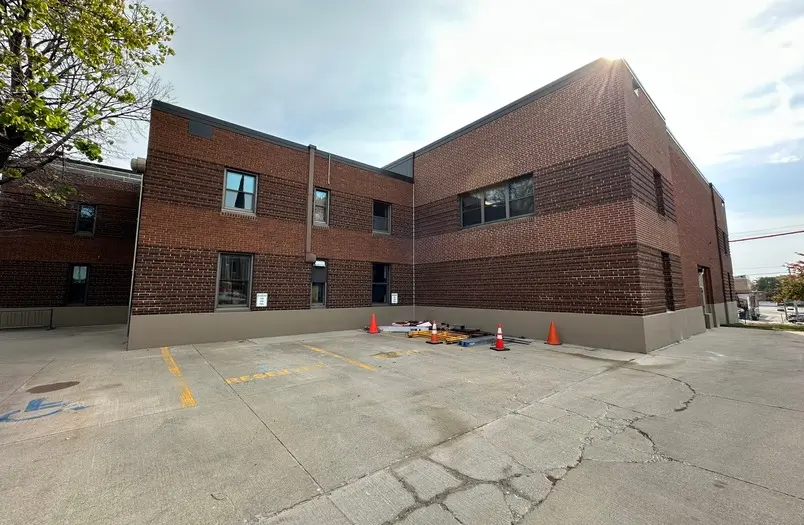
Human Services Building
Cracked and displaced limestone panels required careful assessment of the underlying anchor system. We repaired corroded connections, reset displaced panels, and filled cracks with color-matched repair materials that maintain visual continuity.
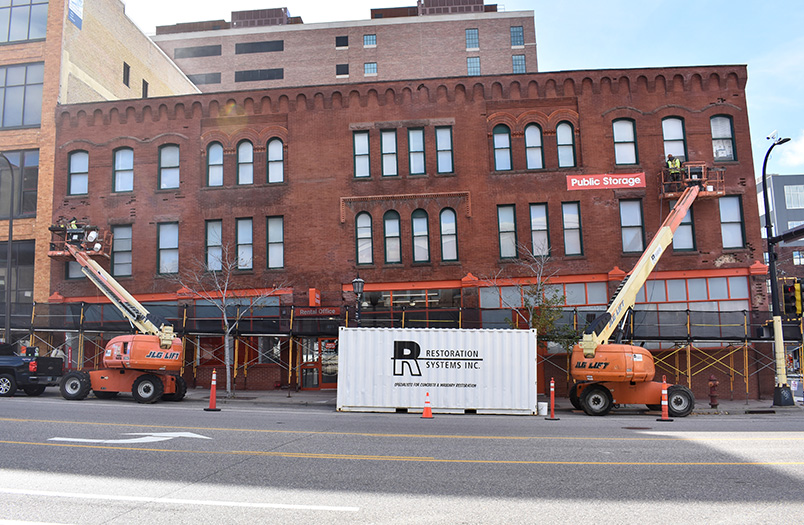
425 Washington
Decades of deferred maintenance had left mortar joints severely deteriorated across the entire facade. Our comprehensive tuckpointing services restored weather protection throughout, using properly formulated mortar matched to the historic masonry.
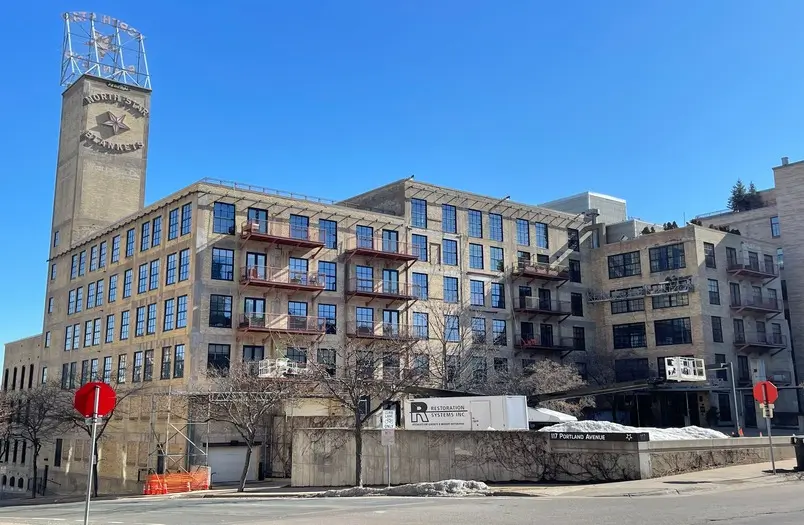
North Star Lofts
Historic decorative elements including terra cotta details and ornamental masonry required specialized restoration techniques. Our craftsmen repaired damaged features while preserving the architectural character that defines the building’s identity.
Frequently Asked Questions
Common questions about building facade restoration, answered by RSI’s expert team.
Project timelines vary significantly based on scope, building access requirements, and weather conditions. A targeted tuckpointing project on a single elevation might take 2-4 weeks, while comprehensive restoration of a large historic building could span several months. We provide detailed timelines during project planning and keep you informed of progress throughout. Our goal is completing work efficiently while maintaining quality—rushing facade work leads to premature failures.
The terms are often used interchangeably, though technically “tuckpointing” refers to a specific decorative technique using contrasting mortar colors. In modern practice, both terms describe the process of removing deteriorated mortar from joints and replacing it with new mortar. The critical factor isn’t the terminology—it’s ensuring the work is done properly: removing mortar to appropriate depth (not just surface skimming), using correctly formulated mortar for your masonry type, and applying proper tooling technique for weather resistance.
Cleaning addresses surface discoloration but doesn’t repair structural deterioration. If you’re seeing cracked or crumbling mortar, spalling brick faces, water infiltration, rust staining, or loose masonry, you need restoration—not just cleaning. A professional assessment can distinguish between cosmetic issues and genuine deterioration. Sometimes cleaning reveals underlying damage that wasn’t visible before, so we recommend assessment before committing to cleaning-only approaches.
Mortar selection depends on your building’s age, masonry type, and original construction. Historic buildings typically require softer mortars (Type O or Type K) that allow the masonry to move slightly and are sacrificial—designed to deteriorate before the brick or stone. Modern construction often uses harder mortars (Type N or Type S). Using mortar that’s too hard for historic brick causes the masonry units to crack and spall. We analyze your existing mortar and masonry to recommend the appropriate formulation.
Masonry work requires temperatures above freezing for mortar to cure properly—typically 40°F and rising. In Minnesota, this limits traditional facade restoration to roughly April through October. However, some work can continue in winter using heated enclosures and cold-weather techniques, though this adds cost. We help clients plan projects to maximize the productive season and prioritize urgent safety repairs that can’t wait for warmer weather.
Facade restoration costs vary dramatically based on project scope, building access requirements, and material specifications. Targeted repairs might start around $5,000, while comprehensive multi-story restorations can exceed $5 million. Access equipment (scaffolding, swing stages) often represents 20% or more of project cost. We provide detailed estimates after assessment, breaking down labor, materials, and access costs so you understand exactly what you’re paying for. We also help identify opportunities to phase work or combine repairs to optimize your budget.
RSI stands behind our work with meaningful warranties that reflect our confidence in our craftsmanship. Specific warranty terms vary by project type and scope. More importantly, we approach every project with the goal of solving problems permanently—not just making them look fixed temporarily. Our root-cause approach means repairs last because we address why deterioration occurred, not just its visible symptoms.
Yes. RSI has completed more than 20 projects working directly with Historic Preservation Committees. We understand the specific requirements for maintaining historic authenticity—including mortar matching through petrographic analysis, material sourcing, and documentation. Our team knows how to navigate the approval process efficiently while ensuring restoration work meets both preservation standards and practical performance requirements.
Our assessments begin with visual inspection from grade, documenting visible deficiencies and identifying areas of concern. For comprehensive evaluations, we use swing stages or scaffolding to conduct hands-on examination—probing mortar joints, sounding for hollow areas, and closely inspecting suspect conditions. We document everything photographically and provide detailed reports with prioritized recommendations. Our goal is understanding not just what’s damaged, but why—so repair plans address root causes.
RSI serves the entire Midwest region, with particular depth of experience in Minneapolis-St. Paul, Milwaukee, and surrounding areas. Our understanding of regional climate challenges—especially freeze-thaw cycles—makes us uniquely qualified for Midwest masonry restoration. We’ve also completed projects across Minnesota, Wisconsin, North Dakota, and South Dakota. Contact us to discuss your project location.
Ready to Protect Your Building’s Future?
Don’t wait for a crisis to address facade concerns. Schedule a complimentary assessment with RSI’s expert team and get a clear picture of your building’s condition, repair priorities, and options for moving forward.