

20+ HPC Projects Completed

Working With the Minneapolis Historic Preservation Committee: A Guide for Commercial Property Owners

Navigate the HPC approval process with confidence. From certificates of appropriateness to Chaska brick matching, RSI has the expertise to preserve your historic property.

Dylan Reynolds
Dylan Reynolds Project Manager, RSI Minneapolis Office | 6 Years Experience
Quick Summary

What You Need to Know

Minneapolis has 25 historic districts with over 1,300 designated properties. If your building is in one, any exterior work requires a Certificate of Appropriateness from the Heritage Preservation Commission. The process demands historically accurate materials—especially Chaska brick and compatible mortars. RSI has completed 20+ successful HPC projects, handling everything from petrographic analysis to multi-year permit extensions.

Historic Districts

Understanding Minneapolis Historic Preservation Requirements

If you own or manage a commercial property in downtown Minneapolis, there’s a good chance it falls within one of the city’s 25 historic districts. The Minneapolis Heritage Preservation Commission (HPC) oversees more than 1,300 designated properties, ensuring that restorations maintain historical integrity.

Before any exterior work begins—whether it’s tuckpointing, facade repairs, or waterproofing—you’ll need to determine if your building requires HPC approval. Properties within designated districts must obtain a Certificate of Appropriateness before exterior modifications can proceed. This isn’t optional; it’s mandated by city ordinance to protect the architectural character that defines Minneapolis.

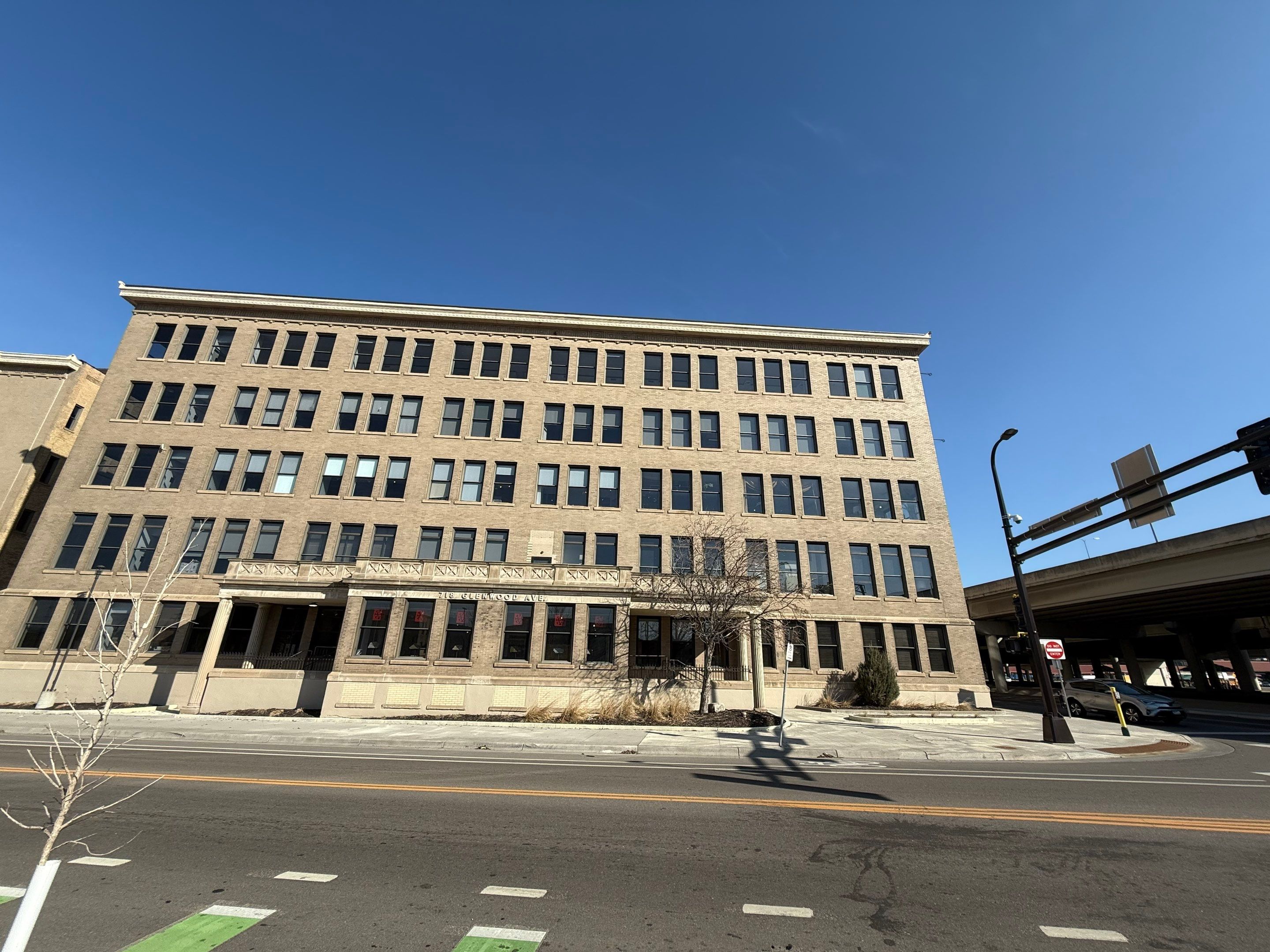
International Market Square building in Minneapolis, a historic commercial property requiring HPC-approved restoration
International Market Square—one of many Minneapolis commercial properties within designated historic districts.
Process Overview

The HPC Approval Process: 5 Key Steps

1

Determine Historic Designation Status

Check the Minneapolis Heritage Preservation Commission’s registry to confirm whether your property falls within a designated historic district or is individually landmarked. This determines which review process applies.

2

Conduct Material Analysis

Submit samples for petrographic analysis to determine original mortar composition. The HPC requires documentation proving replacement materials are historically compatible—especially for buildings with Chaska brick.

3

Prepare Your Application Package

Compile detailed scope of work, material specifications, historical photographs, and proposed restoration methods. Applications must demonstrate compliance with Secretary of the Interior Standards 9 and 10.

4

HPC Review and Approval

Present your application at an HPC meeting. Staff may request modifications or additional documentation. Complex projects often require multiple review sessions before receiving the Certificate of Appropriateness.

5

Execute with Approved Specifications

Once approved, all work must follow the exact specifications in your certificate. Deviations require resubmission. The HPC may conduct site inspections to verify compliance throughout the project.

The Challenge

Why Historic Preservation Projects Overwhelm Property Owners

The Minneapolis HPC approval process is rigorous for good reason—it protects irreplaceable historic architecture. But for property owners facing urgent repairs, the requirements can feel overwhelming. Documentation alone demands architectural surveys, material samples, historical research, and detailed restoration plans that meet federal preservation standards.

“It is a very labor intensive process, highly, highly detailed process, and it can seem very, very daunting to property managers and building owners.”

— Dylan Reynolds, Project Manager, RSI

The Secretary of the Interior’s Standards for Rehabilitation—specifically Standards 9 and 10—govern material compatibility. Standard 9 requires that new work be compatible with historic materials but also distinguishable upon close inspection. Standard 10 mandates that treatments be reversible when possible. Proving compliance requires expertise most property managers don’t have.

Add to this the technical challenge of material matching. Modern mortars and brick can actually damage historic masonry by trapping moisture or creating stress fractures. The HPC knows this, which is why they scrutinize material specifications carefully. Without proper guidance, applications get rejected—sometimes multiple times.
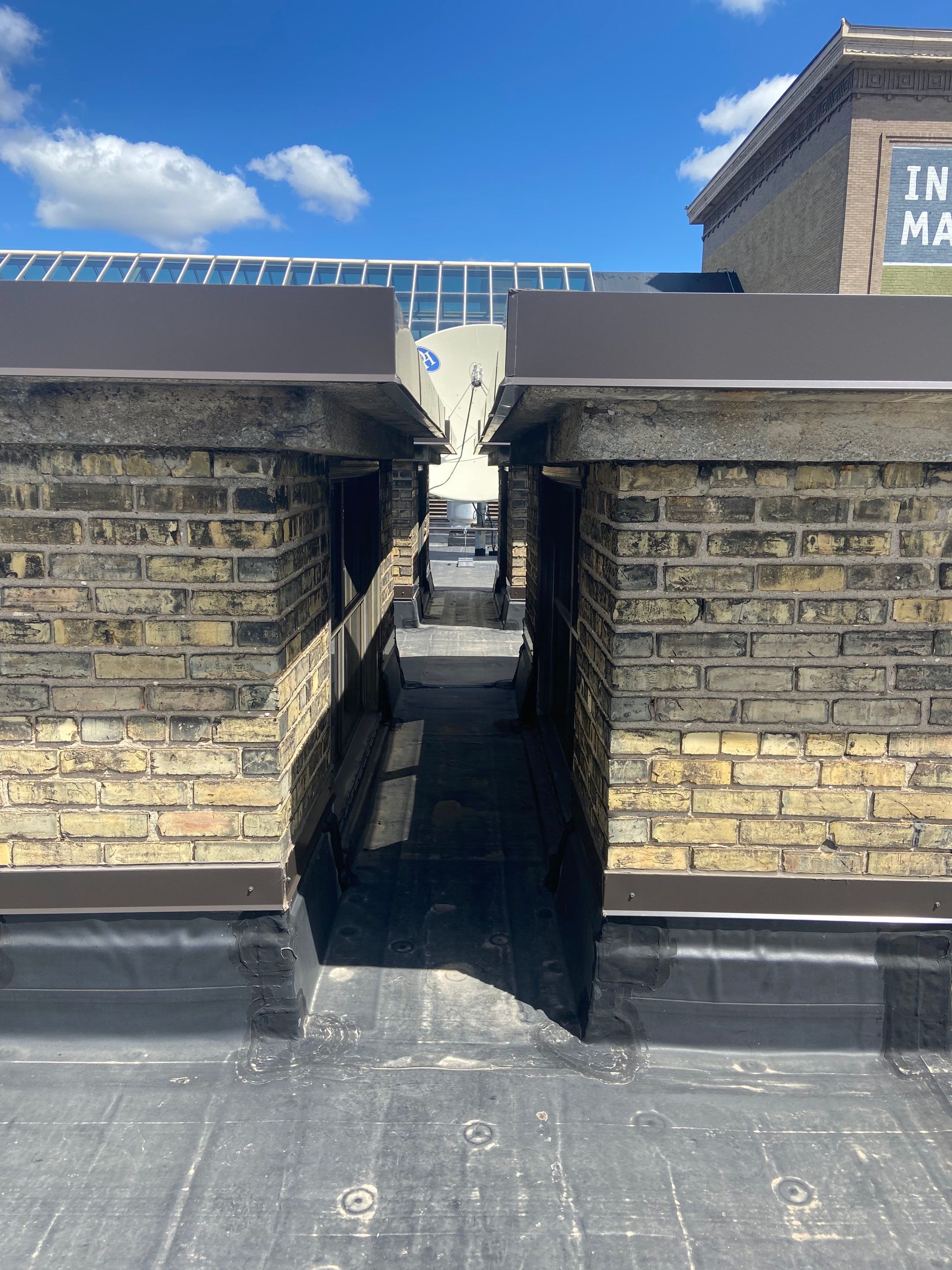
Close-up of historic brick masonry at International Market Square showing mortar joint details requiring precise material matching
Precise material matching is essential—the goal is restoration work that’s invisible to the casual observer.
Technical Expertise

The Science of Historic Material Matching

Historic masonry restoration isn’t about finding materials that look similar—it’s about finding materials that perform identically. Petrographic analysis examines mortar samples under microscope to determine exact composition: aggregate type, binder ratios, and compressive strength. This data guides the formulation of replacement mortars that won’t damage century-old brick.

The HPC requires this level of precision because mismatched materials cause accelerated deterioration. Modern Portland cement mortars, for example, are far stronger than historic lime mortars. Understanding commercial brick mortar repair is essential. When applied to soft historic brick, the harder mortar causes the brick face to spall and crack—exactly the opposite of preservation.

“That’s our goal—when we’re done, you can’t tell that we worked on that building.”

— Dylan Reynolds, Project Manager, RSI

Successful historic masonry restoration is invisible. When colors, textures, and joint profiles match the original work, the building looks as it should—maintained, not altered. That invisibility requires meticulous material science and skilled craftsmanship working together.

Minneapolis Heritage

The Chaska Brick Challenge

What is Chaska Brick?

Chaska brick is the distinctive cream-colored brick manufactured in Chaska, Minnesota from 1857 to 1915. You’ll find it throughout downtown Minneapolis—it’s the defining material of many historic commercial buildings. The brick’s soft composition and characteristic color make it both beautiful and challenging to restore.

The original kilns shut down over a century ago, which means authentic Chaska brick is no longer manufactured. For restoration projects, RSI sources matching brick from salvage operations and specialty suppliers across several different areas of the country. Finding the right match requires extensive relationships and material expertise.

Why Mortar Matters

Chaska brick is softer than modern brick, which means it requires low-compressive-strength mortar—typically Type K or Type O formulations. These mortars have lower Portland cement content and higher lime content, allowing them to flex with the softer brick rather than cracking it.

The HPC understands this technical requirement. Applications that specify inappropriate mortar types will be rejected. RSI uses petrographic analysis to determine original mortar composition and formulates custom mortars that meet both historical accuracy and structural performance requirements.

Why Minneapolis Masonry Faces Unique Challenges

80–100+

Minneapolis experiences 80–100+ freeze-thaw cycles annually, causing moisture expansion that stresses historic masonry.

25

Minneapolis has 25 designated historic districts with over 1,300 protected properties requiring HPC approval.

100+

Most Chaska brick buildings date from 1857-1915, making them over a century old and requiring specialized care.

Case Study

Navigating Multi-Year Permit Approvals

How RSI managed a complex HPC approval process that required a 4-year permit extension.

Initial Permit Duration

13 Months

Extension Granted

4 Years

Project Type

Historic Masonry Restoration

Outcome

Successfully Completed

Large-scale historic preservation projects often exceed initial timelines due to unforeseen conditions, material sourcing challenges, or phased funding. RSI has experience navigating permit extensions with the HPC, documenting ongoing compliance while adapting to project realities. In this case, thorough documentation of progress and continued adherence to approved specifications enabled a 4-year extension on what was originally a 13-month permit—allowing the property owner to complete restoration work properly rather than rush to meet an arbitrary deadline.

Recent Project

Limestone Panel Restoration: Getting the Color Match Right

A 2023 restoration project demonstrated the precision required for HPC-approved work. The building featured limestone panels that had deteriorated over decades of Minnesota weather exposure. Simply replacing damaged panels wasn’t enough—the replacements had to match the weathered appearance of the surrounding original stone.

The Solution: RSI evaluated 3 different color matches and ultimately used 2 custom blends to achieve the seamless appearance the HPC required. The variation was necessary because different areas of the facade had weathered differently—a single replacement color would have created visible patchwork.

This level of detail exemplifies what HPC approval demands. It’s not enough to use historically accurate materials—the finished appearance must honor the building’s evolved character while ensuring structural integrity for decades to come.

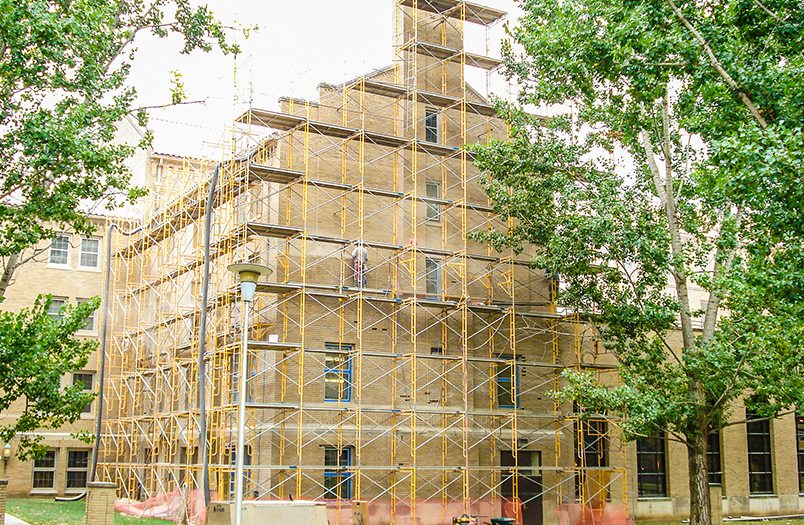
Lourdes Hall masonry repair project showing precise restoration work on historic stonework
Historic masonry restoration requires matching both material and appearance to achieve invisible repairs. This is Lourdes Hall at Winona State University, where we replaced 150 pieces of original Indiana Limestone
Why RSI

How RSI Simplifies the HPC Process

With 20+ successful HPC projects, we handle the complexity so you can focus on your building’s future.

Application Preparation

We compile complete HPC application packages including material specifications, historical documentation, and compliance narratives that meet Secretary of Interior Standards.

Material Analysis

Petrographic analysis determines original mortar composition. We formulate custom mortars and source matching Chaska brick from suppliers across the country.

Expert Execution

Our skilled craftsmen deliver restoration work that meets HPC standards while protecting your building for decades. We document compliance throughout the project.

“We’ll walk you through the entire process and save you dozens of hours of back and forth with the Preservation Society.”

— Dylan Reynolds, Project Manager, RSI

Ready to Start Your Historic Preservation Project?

Don’t navigate the HPC approval process alone. RSI has the expertise, relationships, and track record to get your project approved and completed right.

Frequently Asked Questions

How do I know if my building requires HPC approval?

Check the Minneapolis Heritage Preservation Commission’s registry to see if your property is within one of the 25 designated historic districts or is individually landmarked. Any exterior modifications to designated properties require a Certificate of Appropriateness before work can begin.

How long does the HPC approval process typically take?

The timeline varies depending on project complexity. Simple projects may receive approval in 4-6 weeks, while complex restorations requiring material analysis, multiple review sessions, or revisions can take 3-6 months or longer. RSI’s experience helps streamline this process by submitting complete, accurate applications from the start.

What is Chaska brick and why does it require special treatment?

Chaska brick is cream-colored brick manufactured in Chaska, Minnesota from 1857 to 1915. It’s softer than modern brick, requiring low-compressive-strength mortars (Type K or Type O) to prevent damage. Since the original kilns closed over a century ago, replacement brick must be sourced from salvage operations and specialty suppliers.

What happens if I do exterior work without HPC approval?

Performing exterior modifications on a designated historic property without a Certificate of Appropriateness violates city ordinance. You may be required to remove or undo the unauthorized work, face fines, and still need to obtain proper approval. It’s always more cost-effective to get approval before starting work.

Can RSI help with projects that have already started or been rejected?

Yes. RSI has experience helping property owners navigate challenging situations, including projects that received initial rejections or require permit extensions. We can assess your current situation, identify compliance gaps, and develop a path forward that satisfies HPC requirements while meeting your project goals.