01
Crash-rated protection
Used when the project calls for a tested crash-rated bollard. It gives the engineer and owner a common language for vehicle-impact protection. [ASTM F2656]

Bollards protect the places where a small vehicle mistake can become a building repair, an access problem, or a pedestrian-safety event.
RSI installs fixed steel, removable, decorative, and heavier-duty security bollards for parking structures and commercial properties across the Upper Midwest. Most projects start with one of three triggers: a prior impact, a safety upgrade, or a larger renovation/restoration scope. The field test is straightforward: the post has to protect “what the owner is trying to protect” without blocking doors, narrowing accessible routes, trapping water, or anchoring into concrete that cannot take the load.

On a commercial property or inside a parking structure, bollards are usually installed where vehicle movement and vulnerable areas overlap: loading docks, utility equipment, sidewalks, overhead door openings, storefronts, main entrances, and parking ramp access points. RSI most often sees these projects triggered by a prior vehicle impact, a pedestrian-safety upgrade, or as part of a larger renovation or parking deck restoration scope.
The post type has to match the exposure. Fixed steel bollards are the common choice for impact protection, while removable bollards can help with access control, decorative bollards may fit higher-visibility commercial entrances, and heavier-duty security systems may be needed where the impact risk is greater. Just as important, the spacing must still allow clear pedestrian movement, door operation, accessible routes, and drop-off circulation under [ADA 2010 Standards].
For existing concrete, RSI looks first at the substrate. The slab or curb has to be sound enough for the bollard system to perform. Depending on the condition and design intent, installation may involve core drilling, saw cutting, grouted embedded bollards, or engineered surface-mounted systems. If the concrete is deteriorated, too thin, or affected by cracking and delamination, concrete repair may need to happen before the bollards are installed.
That substrate review matters even more across the Upper Midwest, where deicing salts, freeze-thaw cycles, snow removal, and drainage conditions can shorten the life of base plates, anchors, coatings, and surrounding concrete. A bollard that looks substantial above grade can still underperform if the anchorage, spacing, and concrete condition were not addressed together.
A few of RSI’s Commercial Bollard Installation projects
Not every commercial bollard needs a crash rating. Some installs are mainly for traffic guidance and pedestrian separation; others need formal engineering review. These references help the project team decide what level of protection, anchorage, and clearance the site actually requires.
Used when the project calls for a tested crash-rated bollard. It gives the engineer and owner a common language for vehicle-impact protection. [ASTM F2656]
Used by the design team to evaluate the concrete and anchorage the bollard depends on, including slab thickness, reinforcement, and embedment. [ACI 318]
Keeps the layout from solving a vehicle problem while creating a pedestrian access problem. Bollard spacing should preserve the accessible route. [ADA §402]
Applies when the bollard or barrier is part of an engineered impact-protection scope and the load path needs to be checked. [IBC §1607]
Embedded bollards rely on deeper engagement in reinforced concrete and are commonly used when the site needs higher impact protection. Surface-mounted systems use a baseplate and anchors into a sound slab. The existing concrete decides which option is realistic.
In existing concrete, the biggest thing is making sure the bollard is properly anchored into sound concrete. The anchorage design is critical because the bollard is only as strong as what it’s attached to.
Tayton EggenbergerRSI Minnesota Branch Manager
Upper Midwest bollards live at the exact point where plows, tires, deicing salts, meltwater, and concrete movement concentrate. A clean-looking post can still loosen early if the layout ignores the slab, the drainage, or the corrosion detail.
Salt and water collect at grade first. If the concrete is deteriorated, thin, or unprotected, the anchor zone can fail before the visible steel looks worn out.
One common mistake is to “focus only on the bollard itself and not the substrate.” Product strength does not matter if the slab is delaminated, too thin, or breaking down around reinforcing steel.
Deicing salts hold moisture against the post base and the surrounding concrete. In parking structures, that exposure should influence anchor selection, coatings, sleeves, and maintenance expectations.
Spacing has to block the vehicle path without pinching the pedestrian path. A line that is too loose may not protect the target; a line that is too tight can compromise the accessible route. [ADA 2010 Standards]
Posts can interrupt surface water and snowmelt if the layout is not checked against drains and slopes. The result is standing moisture at the base, faster corrosion, and concrete that keeps cycling wet and frozen.
When bollards penetrate coated drive lanes, RSI coordinates the anchor work with traffic coatings so the installation does not create the next leak path through the deck.
RSI treats bollard installation as layout, concrete, anchorage, and access coordination in one scope. The sequence is built to avoid the common failure: setting a post before confirming what it is attached to.
Check whether the existing slab, curb, or apron is sound enough for the system. RSI verifies thickness and reinforcing conditions where needed and looks for deterioration before choosing embedded or surface-mounted anchorage.
Place the bollard line around traffic patterns, accessible walk paths, door clearances, drains, loading movements, and emergency or service access. A “poorly placed bollard” can create as many problems as it solves.
Core drill or saw cut as needed, then grout in embedded bollards or install engineered surface-mounted systems. When specific impact criteria are required, RSI works with the project engineer and manufacturer so the selected system matches the application.
Detail the post base for Midwest exposure: finish coatings, galvanizing when specified, sleeves or protection at grade, and patching that does not leave salt and water sitting against unprotected steel.
If the impact damage extends below the post base, RSI addresses the concrete first through concrete repair services so the new bollard has a sound load path.
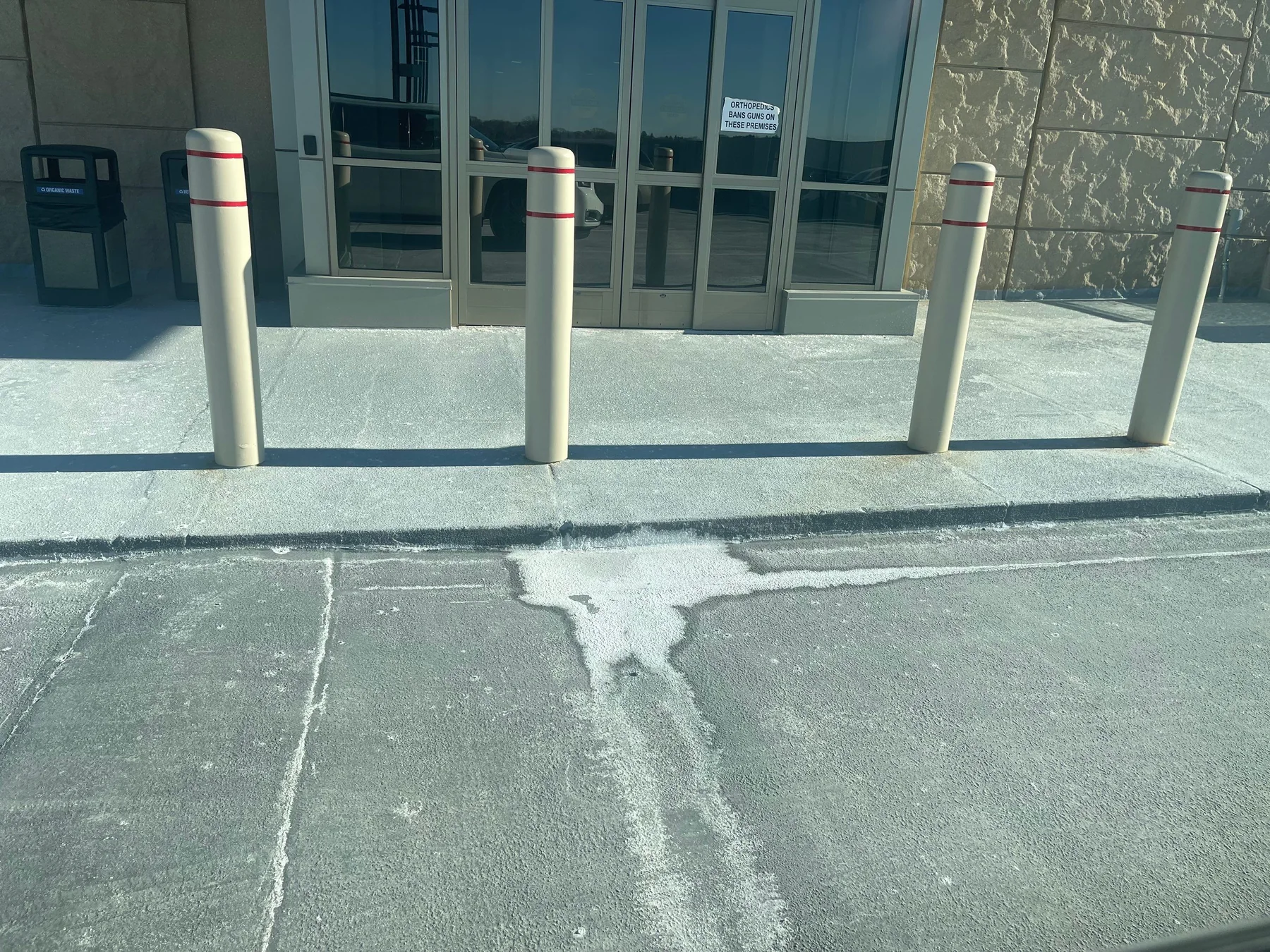
RSI commonly sees bollards at loading docks, utility equipment, sidewalks, overhead door openings, storefronts, parking-ramp entrances, and healthcare or commercial drop-off areas. The purpose is to separate vehicle movement from people, doors, equipment, and other vulnerable areas.
Fixed steel bollards are the common choice for impact protection. Removable bollards are used where access needs to be controlled. Decorative bollards are often selected for higher-visibility commercial properties. Heavier-duty security bollards are used where the owner, engineer, or risk profile calls for added protection.
No. Some bollards are intended for pedestrian separation, traffic guidance, or protection from low-speed site movement. Other projects require engineered impact criteria or tested crash-rated systems, such as systems evaluated under ASTM vehicle-impact standards. [ASTM F2656] RSI coordinates with engineers and manufacturers when specific load or impact criteria are required.
The existing concrete drives the decision. RSI may core drill or saw cut and grout in embedded bollards where the application calls for it, or install an engineered surface-mounted system where the slab can support that approach. Either way, the anchorage must tie into sound concrete.
Yes. Bollard spacing and placement have to preserve accessible routes, pedestrian flow, and door clearances. A layout that protects a wall but narrows the walking route can create a new access problem. [ADA 2010 Standards]
Common causes include deteriorated or thin concrete, poor anchorage, drainage that holds water at the post base, underestimated spacing, and long-term corrosion from deicing salts. Midwest conditions make the base detail important because salt and moisture concentrate where the bollard meets the slab.
Yes. RSI has completed bollard work at a healthcare facility where repeated vehicle traffic near a main entrance created pedestrian-safety concerns. The work required new steel bollards around a drop-off lane and entry area while maintaining access for patients and emergency traffic.
Confirm what is being protected, how vehicles move through the area, whether pedestrian access is affected, what condition the existing concrete is in, how drainage works, and what corrosion protection is expected. The bollard style matters, but the layout and substrate decide whether the installation performs.
RSI installs commercial bollards across the Upper Midwest for parking structures, entrances, loading docks, equipment areas, and pedestrian routes. We review the layout, concrete condition, embedment or surface-mount approach, and surrounding access needs before posts go in.