01
Surface profile range
Concrete Surface Profile gives the project team a shared language for how rough the concrete should be before coating or repair work begins. [ICRI 310.2R]

Dust-controlled shot blasting for parking decks, ramps, elevated slabs, and industrial concrete floors before coatings or repairs.
When a traffic coating peels, blisters, or lets water reach the deck, the next system can only perform as well as the concrete beneath it. RSI uses commercial ride-on shot blasting machines with integrated vacuum recovery to remove weak surface material, expose failed areas, and create the “consistent concrete surface profile” the coating or repair material actually requires.

Shot blasting prepares concrete by mechanically throwing small steel shot against the surface. On commercial concrete, that impact helps remove dirt, laitance, thin deteriorated coatings, and weak surface material while creating a consistent concrete surface profile for the system that follows.
RSI uses shot blasting most often on horizontal concrete surfaces: parking structures, concrete decks, ramps, elevated slabs, and industrial concrete floors. It is a common preparation step before traffic coatings, waterproofing systems, and concrete repairs because the next material needs a dependable bond line, not just a surface that looks clean.
Compared with open media blasting, shot blasting is typically more controlled for deck and floor work. RSI uses commercial ride-on shot blasting machines with integrated vacuum systems that recover the steel shot and help control dust during operation. Machine size is selected around the project size and access conditions, which matters on active Upper Midwest parking ramps and occupied commercial properties.
The profile is not selected by habit. Shot size, machine settings, and travel speed are adjusted to match what the coating manufacturer or repair material requires. Some systems need a lighter profile; others need a more aggressive surface for adhesion. Heavy membranes, thick coatings, tight corners, vertical surfaces, or heavily uneven substrates may require grinding, removal work, or another prep method before shot blasting can finish the surface correctly.
A few of RSI’s Commercial Shot Blasting projects
A good shot-blast scope is practical: identify what has to be removed, choose the profile the next material requires, set the machine accordingly, and leave the deck clean enough for the next crew to start without guessing.
Concrete Surface Profile gives the project team a shared language for how rough the concrete should be before coating or repair work begins. [ICRI 310.2R]
The coating or repair material drives the target profile. RSI adjusts shot size, machine settings, and travel speed around that requirement.
Commercial shot blasting machines recover the steel shot and pull dust and fines away from the work area as the machine moves across the slab.
Shot blasting is strongest on open horizontal concrete. Tight corners, vertical faces, thick membranes, or uneven substrates may call for grinding or another removal method.
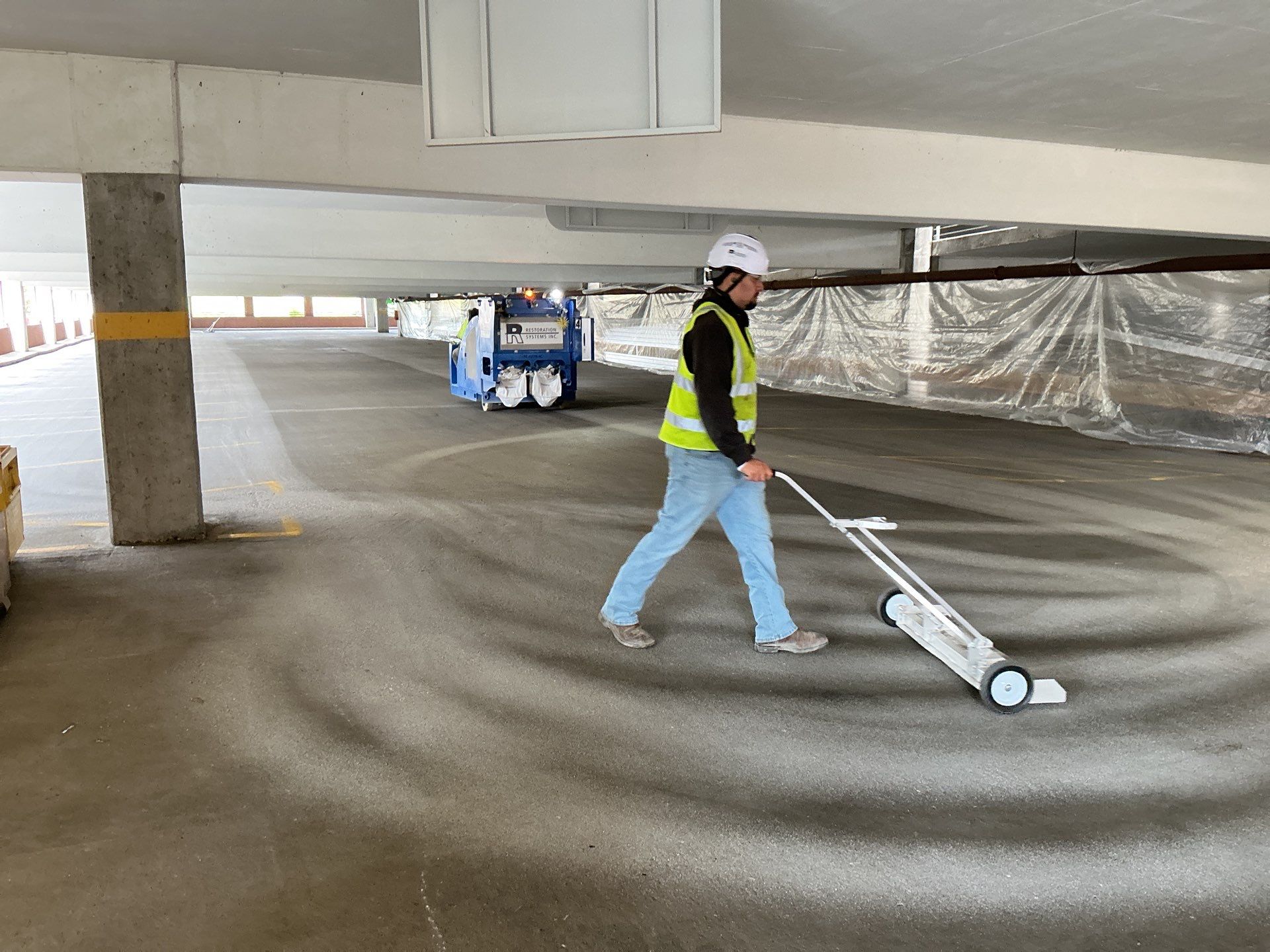
The machine throws steel shot at the slab, recovers the reusable shot, and routes dust and concrete fines into its vacuum system. That closed-loop approach is why shot blasting is a preferred method on open parking decks and industrial floors where a consistent profile and cleaner work zone matter.
Surface prep is one of the biggest factors in how long a coating system lasts. A lot of coating failures aren’t because of the coating itself – they’re because the concrete wasn’t properly prepared underneath.
Tayton EggenbergerRSI Minnesota Branch Manager
Upper Midwest parking decks see failed coatings, winter contamination, wet traffic lanes, and concrete that may already be weak below the surface. Shot blasting exposes that reality. On a parking ramp restoration where the existing traffic coating had failed in multiple areas, RSI shot blasted the deck surface to remove deteriorated coating and create the required profile before the new traffic coating system was installed.
Shot blasting performs best on relatively open horizontal surfaces. Vertical work, tight corners, and heavily uneven concrete may need a different preparation method.
A deck can be clean and still be wrong. Some systems need a lighter profile; others need a more aggressive surface for adhesion. The coating or repair material sets the target.
Shot blasting removes thin coatings and surface contamination well. Thick membranes or heavy build-ups may need additional coating removal before shot blasting can do its job.
One reason to blast is that it exposes weak concrete areas. If the deck is already delaminated or unsound, the correct next step may be repair, not immediate coating.
Ride-on shot blasting shines on open decks and slabs. Edges, tight corners, vertical surfaces, and heavily uneven substrates may require grinding or another preparation method.
When blasting uncovers unsound concrete, RSI can transition the scope into concrete repair before the traffic coating is installed. For a relevant parking-ramp example, see the Bloomington Parking Ramp project.
RSI treats shot blasting as the preparation step that controls adhesion. The crew reads the slab, chooses the right equipment size, adjusts the aggressiveness, and hands off a surface that is ready for the specified coating, waterproofing, or repair material.
Review the existing coating, traffic wear, contamination, and visible concrete distress. Shot blasting can expose weak areas, so the scope has to allow for what the slab reveals.
The target is based on what the coating manufacturer or repair material requires. RSI controls the depth through “machine settings, shot size, and travel speed.”
Open deck areas are prepared with commercial ride-on shot blasting machines. The integrated vacuum system recovers steel shot and helps control dust during operation.
The prepared deck is cleaned and reviewed before the next system goes down. This is where shortcuts show up later; coating life depends on the concrete being properly prepared underneath.
For new membranes and wearing surfaces, RSI sets the blast profile around the manufacturer requirements for traffic coatings.
Shot blasting is a mechanical surface-preparation method that uses small steel shot blasted against concrete. The impact cleans the surface, removes weak material, and creates a profile for coatings, waterproofing systems, or repair materials.
Shot blasting is usually more controlled and is primarily used on horizontal concrete surfaces. RSI uses it on parking ramps, decks, elevated slabs, and industrial floors where a consistent profile is needed before the next system is installed.
Traffic coatings need a clean, profiled concrete surface for adhesion. A failed coating system often failed at the bond line, so RSI removes deteriorated coating and surface contamination before installing the new system.
Shot blasting can create different profile depths. RSI adjusts the aggressiveness based on the material going down, because some systems need a lighter profile while others require a more aggressive surface prep for proper adhesion.
It does a very good job removing thin coatings, dirt, laitance, and surface contamination. Heavier coatings or thick membranes may need additional removal methods before shot blasting can fully prepare the concrete.
Shot blasting works best on relatively open, horizontal concrete. It is not ideal for vertical surfaces, tight corners, or heavily uneven substrates. In those areas, grinding or another preparation method may make more sense.
The preparation is not a minor line item. It is one of the biggest factors in how long the coating system lasts, because many coating failures start with concrete that was not properly prepared underneath.
RSI provides commercial shot blasting for parking structures, concrete decks, ramps, elevated slabs, and industrial concrete floors across the Upper Midwest. We match the profile to the coating or repair material, control dust with recovery equipment, and prepare the concrete for long-term bond.