01
Engineering Review
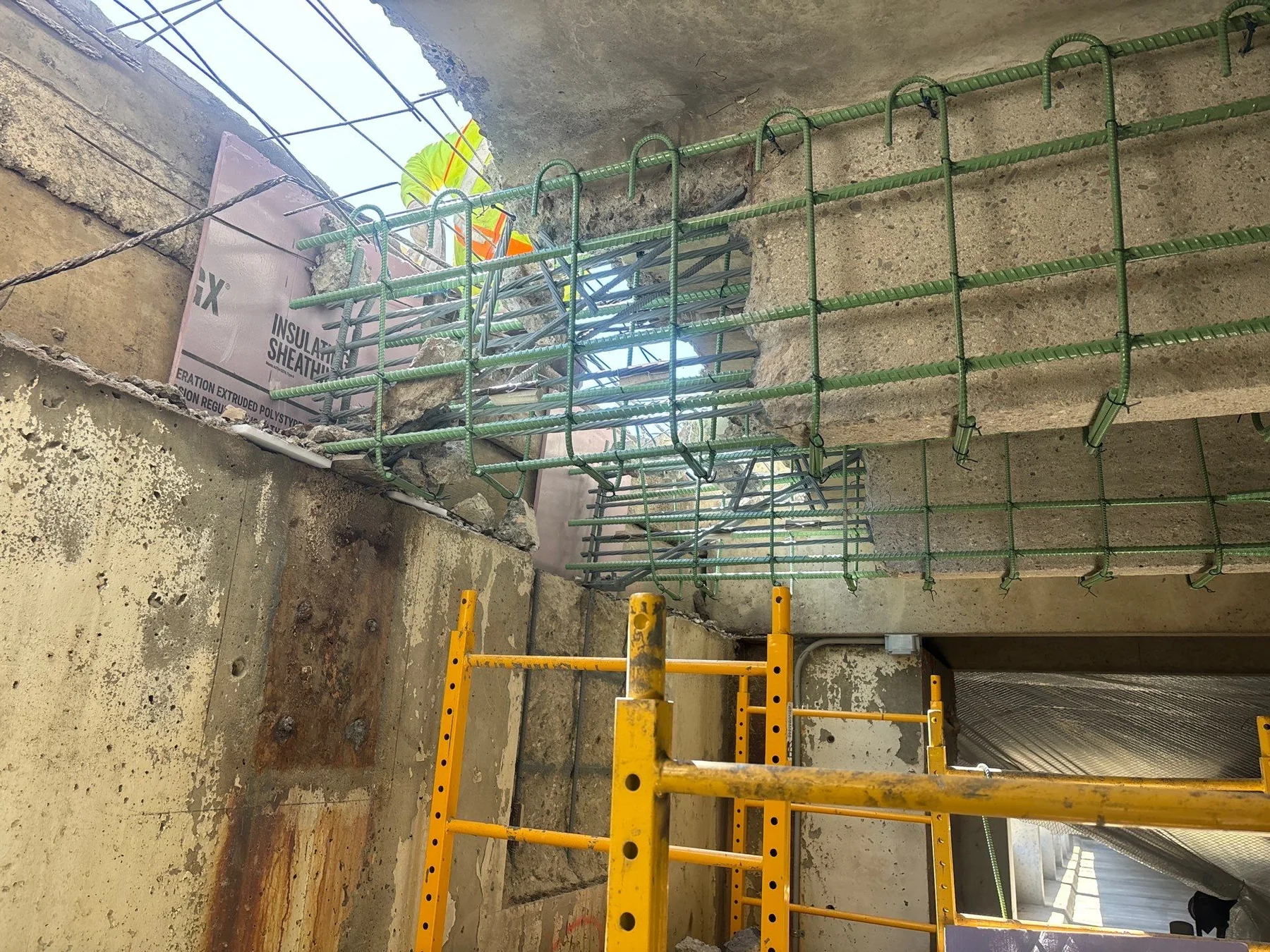
Loading and support requirements are reviewed before the layout is set. Deteriorated concrete, exposed reinforcing steel, and removed sections all change what the structure can safely carry.

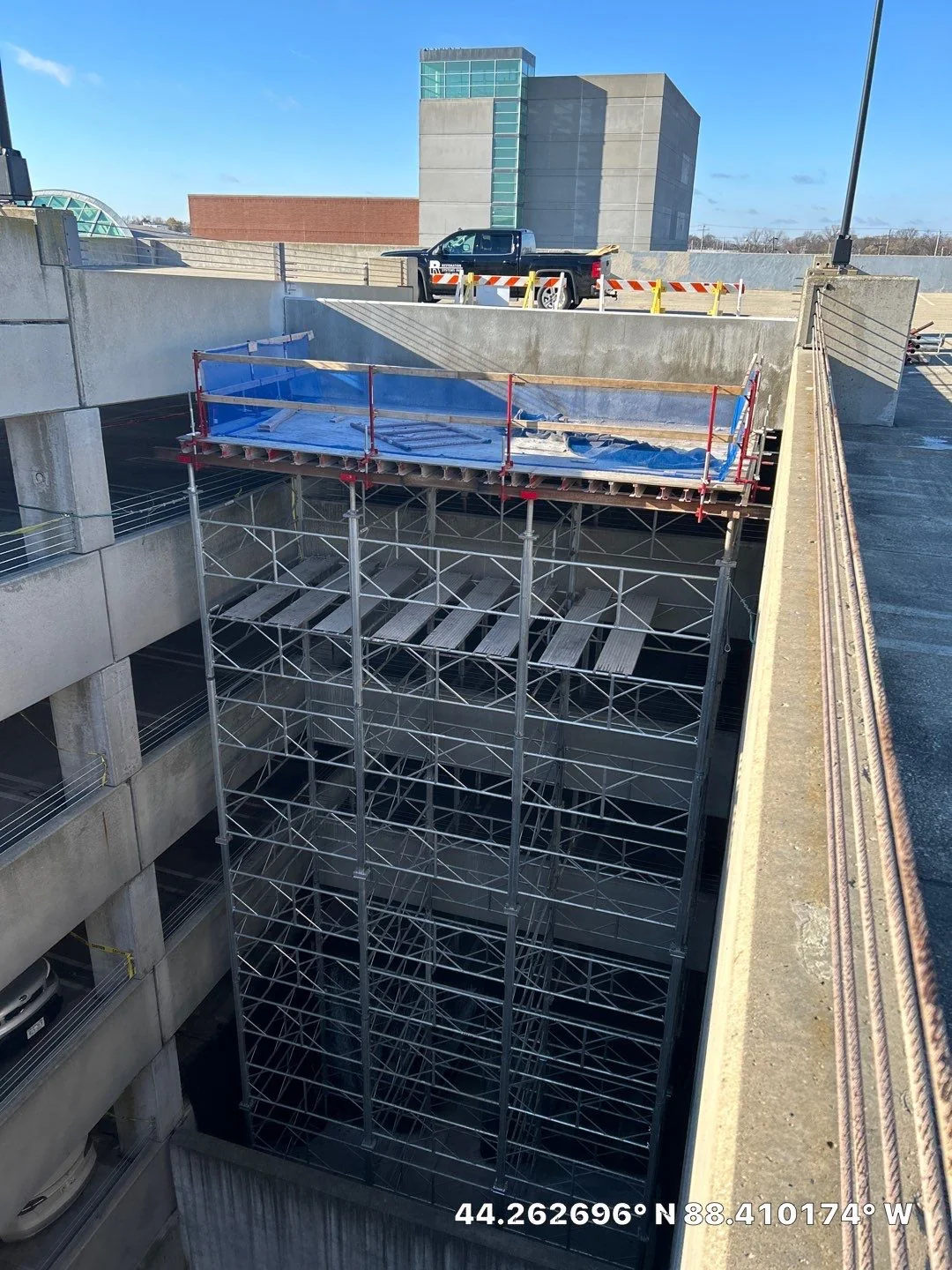
Temporary structural support for repair work that cannot wait for the permanent fix to carry itself.
A parking-deck slab opens up and the reinforcing steel is worse than expected. A facade repair exposes a section that needs to be held before removal continues. A stair tower, balcony, or elevated slab has to stay stable while concrete is cut, repaired, and returned to service. RSI treats shoring as “temporary support” tied directly to the repair sequence: engineered review first, a practical shoring plan next, then installation and monitoring until permanent repairs are complete.
Structural shoring is temporary support used to stabilize part of a structure while repairs, removals, or safety work are underway. In commercial restoration, RSI most often sees it when concrete deterioration, reinforcing steel damage, or the order of repair work creates a condition that needs added support before crews can safely open and rebuild the area.
Parking structures are the most common setting, but shoring can also apply to facades, balconies, elevated slabs, stair towers, and occupied commercial buildings across the Upper Midwest. The need may be planned into a restoration scope, or it may become urgent when deterioration is discovered and the condition cannot wait for a normal construction sequence.
The process typically starts with engineering review to determine the loading and support requirements. From there, RSI develops the shoring plan, installs the system, and monitors conditions until the permanent repairs are complete. Depending on the structure and access constraints, that may involve steel shoring towers, pipe shores, beam systems, suspended supports, or custom-engineered temporary supports.
That coordination is where RSI’s in-house shoring experience matters. Temporary support affects where crews can work, what gets removed first, how traffic moves through a ramp, when concrete repair can proceed, and when the system can be taken out. Keeping shoring integrated with parking deck restoration, concrete repair, building facade restoration, and traffic coatings helps reduce handoff delays and keeps the repair plan tied to site safety.
A few of RSI’s Commercial Structural Shoring projects
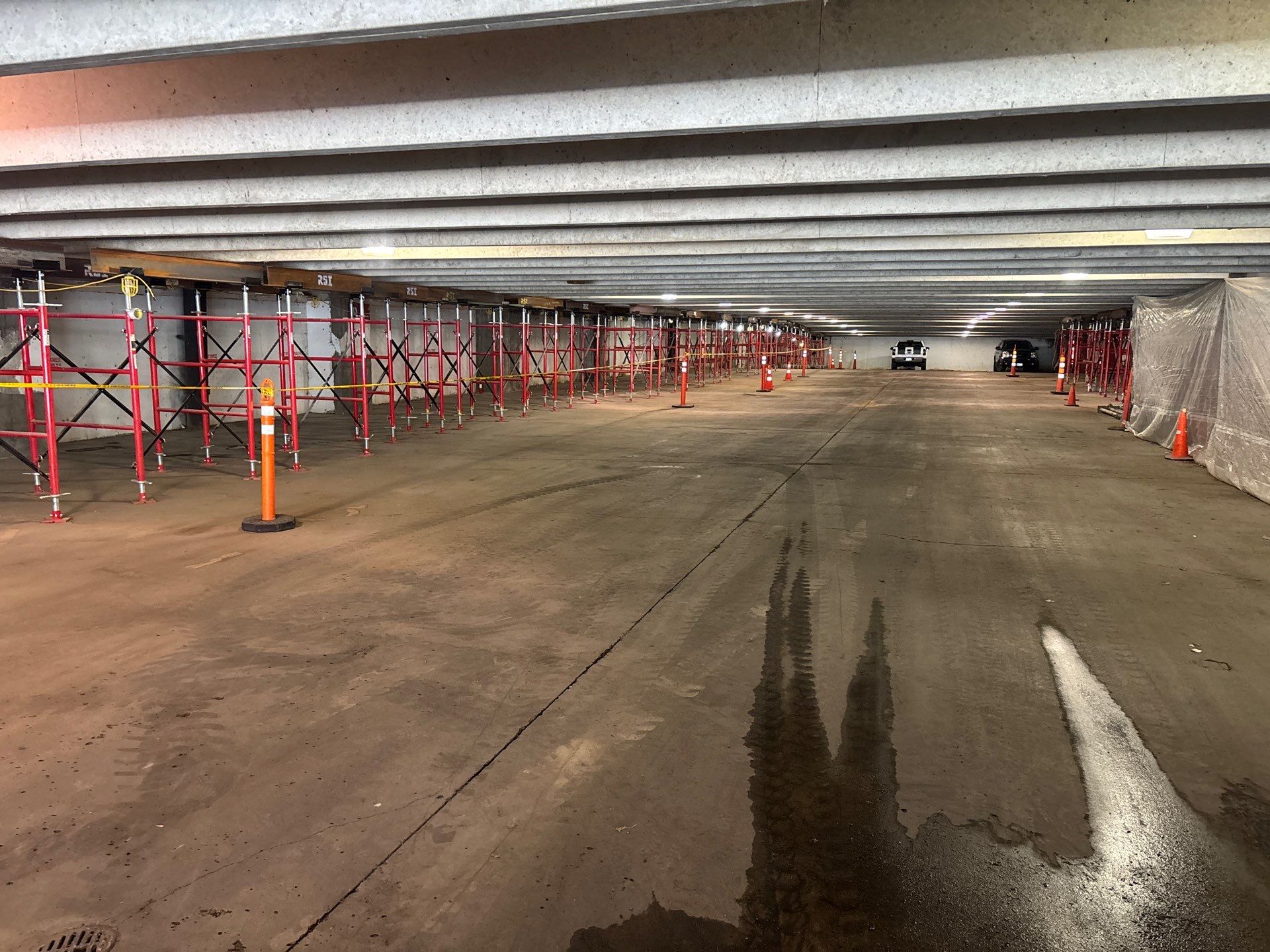
A shoring plan is only useful if it matches the actual structure, the repair sequence, and the way the building has to operate during the work. RSI coordinates the field plan from the engineering review through installation, monitoring, and removal so the temporary system supports the permanent repair instead of blocking it.
Loading and support requirements are reviewed before the layout is set. Deteriorated concrete, exposed reinforcing steel, and removed sections all change what the structure can safely carry.
Towers, pipe shores, beams, suspended supports, and custom assemblies are selected for the load, access, height, bearing surface, and repair method — not because one system is convenient.
Most commercial structures do not empty out for restoration. Access routes, parking flow, tenant safety, staging, and work sequencing have to be part of the shoring conversation.
The temporary system stays in place until permanent repairs are complete and the project team has confirmed the sequence for safely transferring load back to the repaired structure.
Planned shoring is coordinated before removals begin. Emergency shoring happens when the condition is discovered late and support has to be installed “very quickly” to stabilize an unsafe area. The field logic is the same in both cases: confirm the support requirements, build the shoring plan, protect building users, install the system, and keep monitoring until permanent repairs are complete.
A lot of people think of shoring as just temporary support, but it often impacts access, operations, schedules, and repair sequencing throughout the entire project. Early planning and communication make a huge difference.
Tayton EggenbergerMinnesota Branch Manager, RSI
Across the Upper Midwest, the hard part is often not setting the shore. It is setting the right support in a structure that is deteriorated, occupied, weather-exposed, and still expected to move people, vehicles, tenants, deliveries, and emergency access around the repair zone.
Temporary support affects access, operations, schedules, and repair sequencing. The earlier those impacts are mapped, the fewer surprises owners face once crews open the structure.
Shoring decisions fail when the plan assumes full original capacity. Deteriorated concrete and reinforcing steel change the support path, especially in older parking structures and suspended slabs.
Concrete removals, slab repairs, facade work, waterproofing, and traffic coating all depend on what is being held and when it can carry load again. Shoring has to be integrated with the restoration scope, not handed off as a side task.
Towers and posts occupy stalls, drive lanes, sidewalks, work platforms, and tenant routes. On occupied buildings, “phasing and communication” are what keep the repair zone from taking over the property.
When a suspended slab section or facade condition is flagged as unsafe, the owner may need support before the full restoration schedule is ready. In-house shoring experience helps RSI react faster and coordinate the temporary support with the permanent repair.
For deck work, shoring often protects the structure while crews complete concrete repair; final sequencing may include traffic coatings once the permanent repair is ready for service.
RSI’s process follows a disciplined sequence: review the condition, develop the shoring plan, install the system, monitor it during the work, and remove it only as the permanent repair takes over. That sequence matters most when the property must remain “partially operational” during the repair.
The project team confirms loading and support requirements based on the actual condition: deterioration, structural damage, repair openings, access limitations, and the areas that must stay in service.
RSI develops a field plan for system type, layout, installation order, protection, access routes, and the way the temporary support connects to the concrete or facade repair scope.
Crews set steel towers, pipe shores, beam systems, suspended supports, or custom temporary assemblies. Keeping this capability in-house helps RSI respond faster and reduce handoff delays between the support work and the restoration work.
Conditions are watched throughout the project. Shoring stays in place until permanent repairs are complete, then comes out in the planned order as load returns to the repaired structure.
Shoring buys time for the real fix; the permanent scope is often rooted in commercial concrete repair, facade restoration, or parking deck restoration.
Structural shoring is temporary support used to stabilize part of a structure during repairs or when there is a safety concern. On commercial restoration projects, it is commonly used when deterioration, structural damage, or repair sequencing creates a condition that cannot be left unsupported.
Parking structures are the most common, but RSI also shores facades, balconies, elevated slabs, stair towers, and occupied commercial buildings depending on the project conditions.
It can be either. Planned shoring is built into the repair sequence before work begins. Emergency shoring is needed when deterioration or a structural concern is discovered and the area must be stabilized quickly before repairs can continue.
RSI installs steel shoring towers, pipe shores, beam systems, suspended supports, and custom-engineered temporary supports. The system depends on the load, access, structure type, repair method, and occupancy requirements.
Often, yes. Many RSI shoring projects occur in occupied or partially operational buildings. The plan must account for access routes, tenant safety, traffic flow, staging, and sequencing so the temporary support does not create a new operational problem.
It stays until the permanent repair is complete and the project team is ready to transfer load back to the repaired structure. A localized repair may require a short duration; a phased parking-structure repair can require shoring to move or remain in place across multiple work zones.
When the same restoration team can coordinate the shoring plan and the repair scope, owners avoid delays between separate contractors. It also helps RSI respond faster when the condition is urgent and adjust sequencing as the repair work exposes new information.
RSI installs commercial structural shoring across the Upper Midwest for parking structures, facades, balconies, elevated slabs, stair towers, and occupied buildings. Bring us in before removals start, or when a discovered condition needs temporary support before permanent repair.