01
Code Requirements
Barrier height, loading, impact resistance, and guard conditions are reviewed against the applicable building code and local jurisdiction requirements [IBC].

When a barrier is cracked, hit, rust-stained, or moving at the slab edge, the first question is not what to bolt back on. It is whether the concrete behind it can still hold.
RSI repairs and replaces concrete barriers, guardrails, cable rail systems, steel barriers, and parking ramp perimeter protection systems on parking structures, loading areas, and elevated decks where “vehicle containment is critical.” Our scope includes the associated concrete repair at the attachment point, because impact resistance depends on the barrier, the anchorage, and the deck working together.

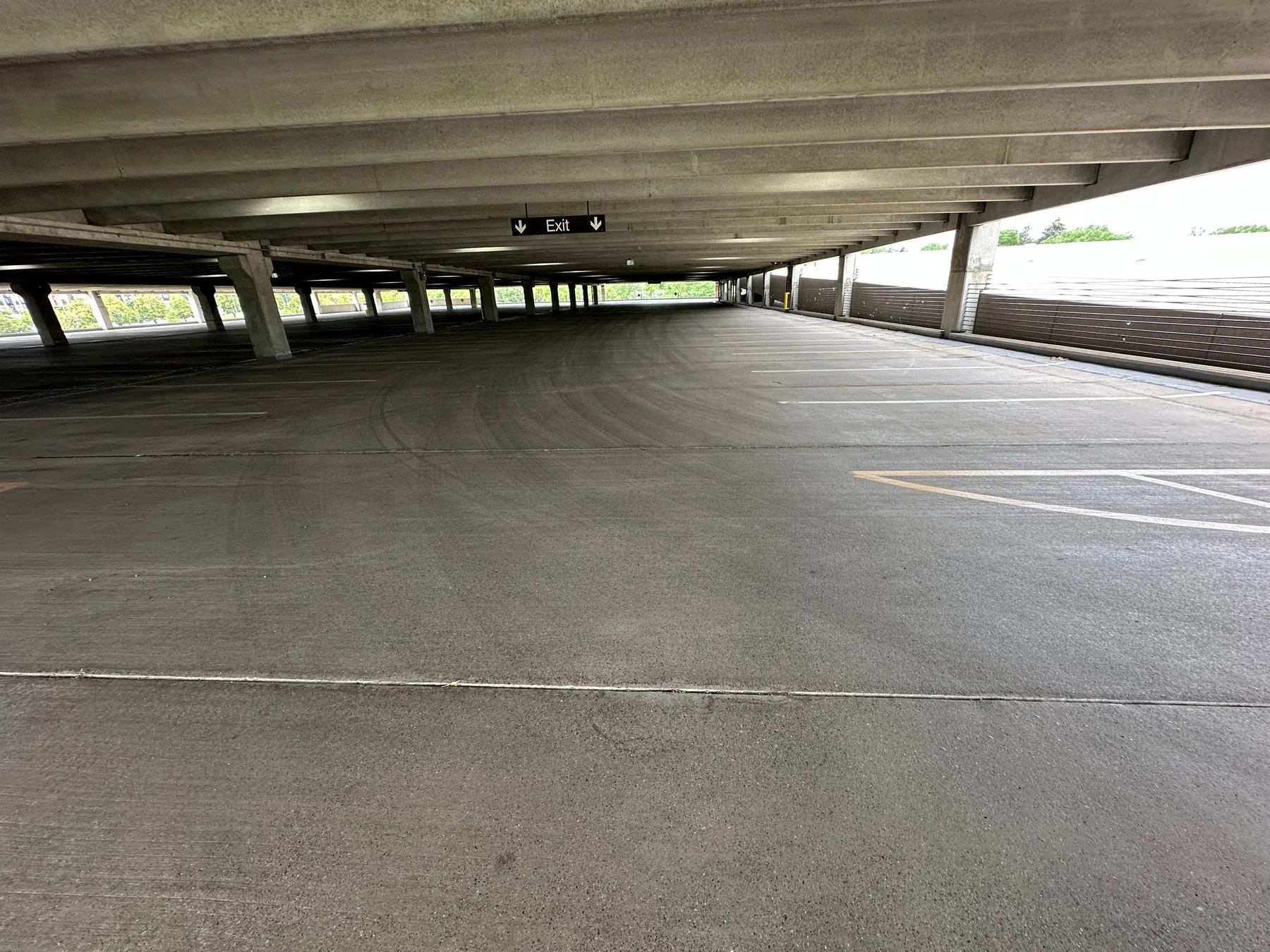
On a parking ramp or elevated deck, a vehicle barrier is a containment system. The visible damage may be a cracked concrete barrier, bent guardrail, loose cable rail, or rusted steel section, but RSI also looks at the concrete behind it: the slab edge, anchorage zone, reinforcing steel, and any deterioration where the barrier attaches to the structure.
Most barrier distress RSI sees in Upper Midwest parking structures comes from vehicle impact damage, corrosion, and water intrusion. Salt exposure accelerates reinforcing steel corrosion, freeze-thaw movement opens up concrete, and spalls around barrier connections can turn a small maintenance item into a life-safety concern.
RSI determines whether to repair or replace a barrier by reviewing the overall structural condition, the extent of cracking and corrosion, signs of movement, impact damage, and whether the existing anchorage can still perform as intended. Isolated repairs can be appropriate when the surrounding concrete and connection are sound. When the barrier or anchorage system is heavily deteriorated, replacement is usually the better long-term solution.
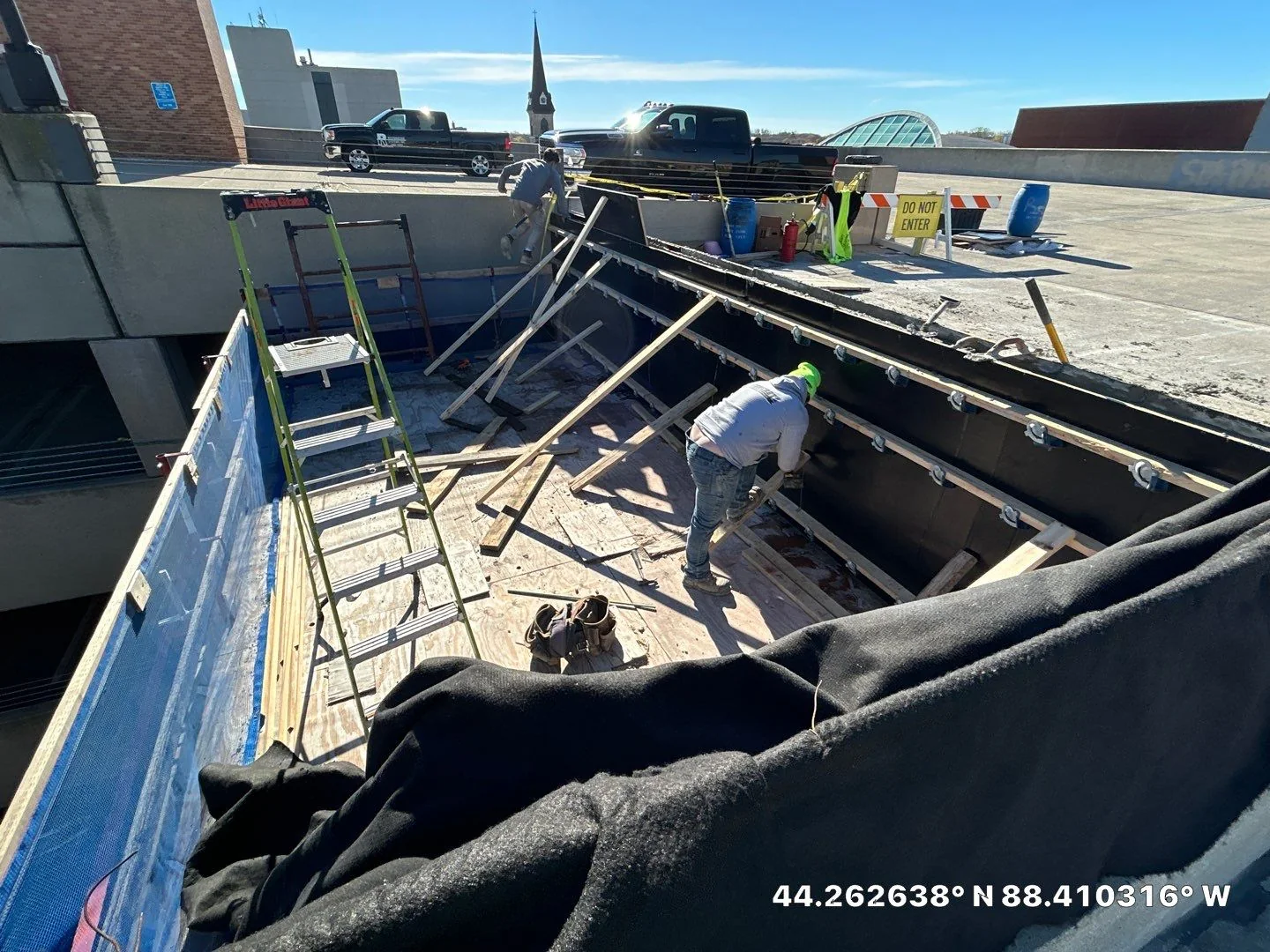
The repair process typically starts by removing deteriorated concrete and evaluating the reinforcing steel and existing anchors. From there, RSI repairs or rebuilds the concrete, installs new anchors or embeds where needed, and either reinstalls a serviceable system or replaces it with new reinforced barrier sections. Barrier height, loading, and impact resistance are typically governed by the IBC and local code requirements [IBC], so the finished repair has to restore function, not just appearance.
Vehicle barrier condition belongs in the broader safety assessment of a parking structure. Cracking, rust staining, spalling concrete, exposed reinforcing steel, movement, or prior impact damage can also point to water intrusion and structural deterioration within the deck. For that reason, barrier work often fits within a larger parking deck restoration plan and may tie directly into structural concrete repair where the containment system connects to the ramp.
A few of RSI’s Commercial Vehicle Barrier Repair & Replacement projects
Vehicle barriers in parking structures are life-safety components. The governing requirements usually come from the International Building Code and local code review for barrier height, loading, and impact resistance [IBC]. RSI’s field work is built around the practical point inside those requirements: the barrier has to be anchored into concrete capable of carrying the load.
Barrier height, loading, impact resistance, and guard conditions are reviewed against the applicable building code and local jurisdiction requirements [IBC].
The barrier face is not enough. Posts, cables, embeds, reinforcing, and slab-edge concrete all have to transfer force back into the structure.
Cracked concrete, rusted embeds, loose hardware, and exposed reinforcing steel change the repair. “Proper anchorage into sound concrete” is one of the biggest parts of the work.
Barrier repair often happens in active ramps. Phasing, temporary protection, access control, and cure times are planned so the repair does not create a new circulation hazard.
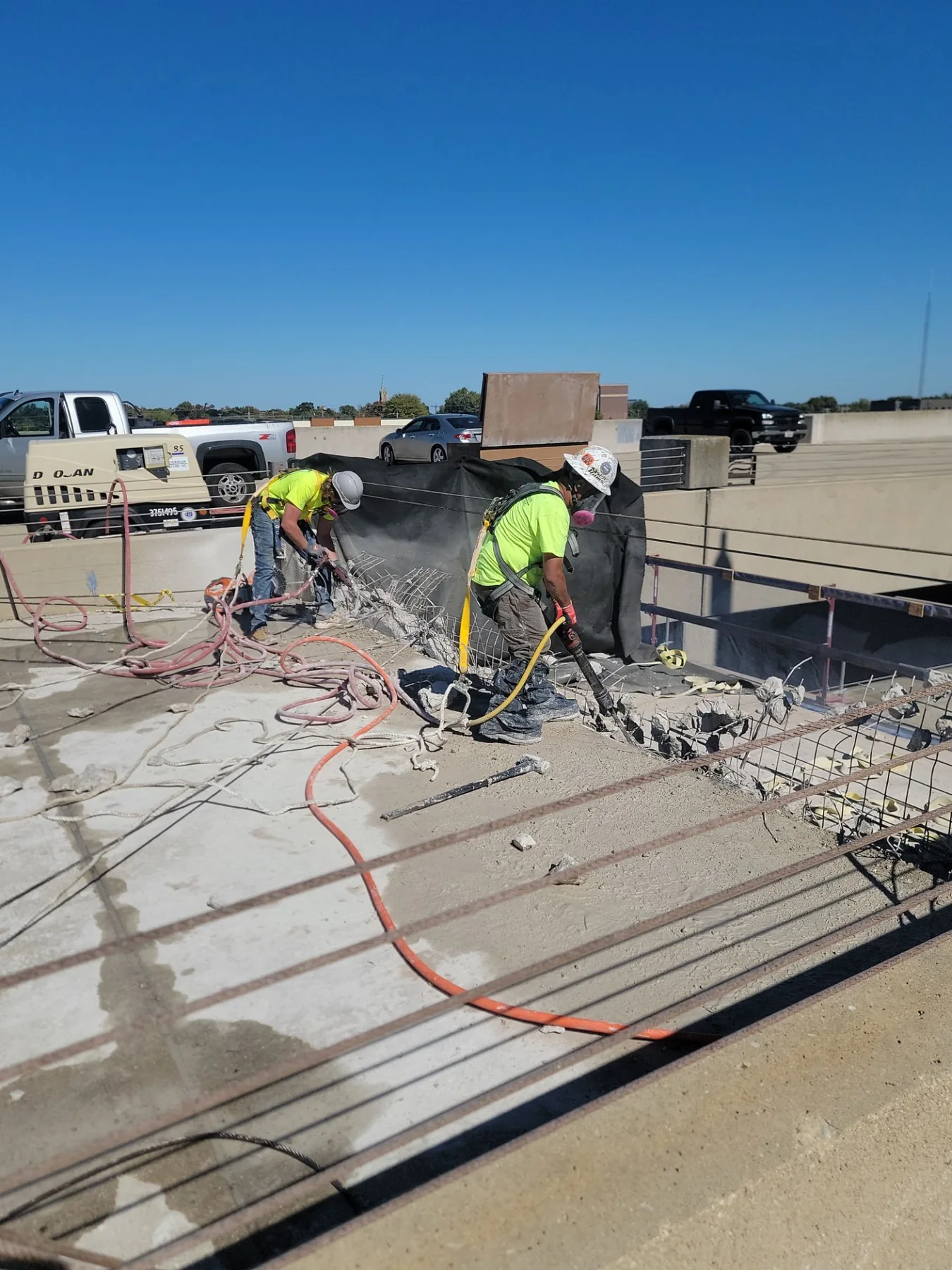
Concrete barriers, guardrails, cable rail systems, and steel barriers fail in different ways, but they share the same weak point when water gets in: the connection to the structure. RSI selects the repair approach after the concrete at the attachment line is opened, cleaned, and evaluated.
Barrier condition is a major safety item during parking structure inspections. If barriers are deteriorated or compromised, it can indicate larger water intrusion or structural deterioration issues within the deck itself. These systems are there to protect vehicles and occupants.
Dylan ReynoldsRSI Project Manager
The most common trigger is still vehicle impact. But across the Upper Midwest, the damage often accelerates because the barrier line is also a collection point for chloride-laden water, freeze-thaw movement, and corrosion at embedded steel.
A bumper strike may expose the problem, but years of winter exposure can already be working at the anchors, reinforcing steel, and concrete behind the barrier.
Vehicle strikes can crack a concrete barrier, bend a rail, loosen posts, or disturb cable hardware. Even when the face looks repairable, RSI checks whether the load path at the attachment point was damaged.
Parking ramps “exposed to salt” see chloride attack at slab edges, barrier bases, and anchor pockets. Rusting reinforcing steel expands, fractures the surrounding concrete, and weakens the anchorage zone.
Open cracks and failed joint edges let water reach the reinforcing steel. Repeated freeze-thaw movement widens the path and can turn a small crack into spalling at the barrier connection.
A surface patch at a barrier post may hide the symptom while corrosion keeps spreading behind it. If the anchorage concrete is deteriorated, the repair has to go deeper than the visible spall.
After barrier and slab-edge repairs, adjacent drive lanes often need traffic coatings and related commercial waterproofing measures to slow water and chloride intrusion into the repaired concrete.
RSI starts with the condition of the barrier, the surrounding concrete, and the anchorage. From there, the scope is phased around safety, access, demolition limits, concrete repair, and the building’s need to keep traffic moving.
Document cracking, corrosion, movement, exposed reinforcing steel, prior impact damage, and the overall condition of the barrier. The goal is to determine whether an isolated repair will hold or whether replacement is the better long-term solution.
Deteriorated concrete is removed back to sound material. Reinforcing steel, embeds, anchors, and connection hardware are exposed and evaluated before new material is placed.
RSI repairs or rebuilds the concrete at the attachment point, installs new anchors or embeds where needed, and prepares the substrate so the barrier is connected to sound structure instead of deteriorated material.
Concrete barrier sections are rebuilt, guardrails or steel barriers are reinstalled or replaced, and cable rail systems are restored as required. On occupied ramps, RSI sequences the work to “keep portions of the ramp operational” where conditions allow.
Impact-damaged barriers usually include cracked concrete, failed anchors, or exposed steel, which puts concrete repair services at the center of the scope.
Vehicle barriers include damaged or deteriorated concrete barriers, guardrails, cable rail systems, steel barriers, and perimeter protection systems on parking ramps, loading areas, and elevated decks. RSI also handles the concrete repair where the barrier attaches to the structure.
RSI looks at the structural condition of the barrier, the amount of cracking or corrosion, impact damage, movement, and whether the anchorage system can still perform safely. Isolated damage may be repairable. If the barrier or anchorage is heavily deteriorated, replacement is usually the better long-term solution.
IBC requirements and local code requirements typically govern barrier height, loading, and impact resistance [IBC]. Because barriers protect vehicles and occupants at deck edges and drive lanes, the structural capacity and anchorage condition are central to the repair plan.
Look for cracking, rust staining, spalling concrete, movement, exposed reinforcing steel, loose or damaged rail components, and signs of prior impact. Small deterioration around the connection can become a larger structural issue if “water and corrosion continue to spread.”
The biggest cause RSI sees is vehicle impact damage. Corrosion and water intrusion are also major contributors in Upper Midwest parking ramps exposed to deicing salts. Over time, deteriorated concrete, rusting reinforcing steel, and freeze-thaw movement can weaken the barrier system and its anchorage points.
Yes, when barrier work involves a post-tensioned deck, RSI coordinates the repair approach with the project requirements and protects the structural system during demolition and rebuild. Related RSI scope is described on our post-tension cable repair and replacement page.
Not always. Some barrier repairs can be phased so portions of the ramp remain operational. Closure needs depend on the location of the damaged barrier, the depth of concrete repair, temporary protection requirements, and whether shoring or full-depth work is needed.
RSI removes deteriorated concrete, evaluates reinforcing steel and existing anchorage, repairs or rebuilds the concrete, installs new anchors or embeds where needed, and then reinstalls or replaces the barrier system. The finished work depends on the barrier type and the condition of the concrete it attaches to.
RSI repairs and replaces vehicle barriers across the Upper Midwest. We review impact damage, corrosion, concrete condition, reinforcing, and anchorage before pricing the rebuild, because the barrier can only perform as well as the structure it is attached to.