
Coating Removal Methods: Hydrodemolition, Scarification, and Chemical Stripping Compared
Improper surface preparation causes the majority of coating failures in parking structures. Before a new protective system can perform, the old one must be completely removed—and the method you choose directly impacts long-term performance. Understanding the differences between hydrodemolition, scarification, and chemical stripping helps you make informed decisions that protect your investment.
What You Need to Know About Coating Removal
- Three primary methods: Hydrodemolition uses high-pressure water for selective removal, scarification employs mechanical milling (most common for parking decks), and chemical stripping dissolves coatings on delicate substrates.
- Selection depends on project specifications: Surface type, coating thickness, environmental conditions, and manufacturer requirements all influence which method is appropriate.
- 70-80% of coating failures trace back to improper surface preparation—making complete removal of existing coatings critical to new system performance.
- Removal reveals hidden conditions: The process often uncovers concrete deterioration, structural steel issues, or post-tension cables that require attention before recoating.
- RSI’s approach: Specification-driven methodology with robotic grinders and shot blasters ensures consistent results and zero warranty issues over hundreds of projects.
Coating Removal Methods Compared
Each method has distinct advantages depending on your project’s specific requirements and conditions.
| Method | How It Works | Best Applications | Key Considerations |
|---|---|---|---|
| Hydrodemolition | Uses high-pressure water (up to 40,000 PSI) to selectively remove coatings and deteriorated concrete while leaving sound substrate intact. | Bridge decks, areas requiring selective removal, situations where substrate damage must be minimized. | Requires water management and containment systems. Ideal when precision matters more than speed. |
| Scarification | Mechanical milling using rotating drums with carbide cutters to abrade and remove surface coatings and concrete layers. | Traffic coatings on parking decks (most common method), large-scale removal projects, urethane and epoxy systems. | RSI uses robotic grinders for consistent depth control. Creates significant dust—requires containment protocols. |
| Chemical Stripping | Chemical agents dissolve coating bonds, allowing removal without mechanical impact to the substrate surface. | Delicate substrates, historic structures, situations where mechanical methods could cause damage. | Least common method. Slower process requiring careful chemical handling and disposal procedures. |
Why Proper Coating Removal Matters
Industry data consistently shows that 70-80% of coating failures can be traced back to inadequate surface preparation. When existing coatings aren’t fully removed, new systems can’t achieve proper adhesion to the substrate. The result? Premature delamination, moisture infiltration, and costly re-work within years of application.
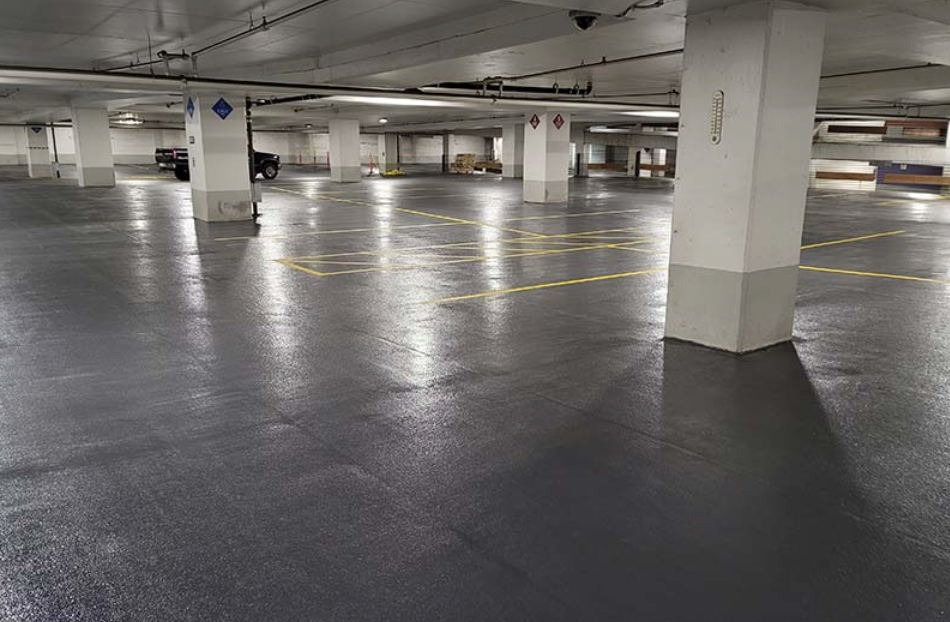
The goal of any coating removal project is straightforward: eliminate the existing failed coating system completely so the new coating can bond directly to properly prepared concrete. This requires achieving the manufacturer-specified concrete surface profile (CSP) and ensuring no contaminants remain.
“You’re eliminating the failed coating and taking it down to bare substrate. Once you get your substrate, you’re treating the concrete and exposing the pores so the new coating adheres properly. I’ve overseen over 100 traffic coating projects and have never had a warranty issue—that’s because we follow manufacturer specifications exactly.”
This specification-driven approach is the difference between coatings that perform for decades and those that fail within a few years. When manufacturers establish surface preparation requirements, they’re based on extensive testing—shortcuts during removal almost always create problems down the road.
Selecting the Right Coating Removal Method
Choosing between hydrodemolition, scarification, and chemical stripping isn’t a one-size-fits-all decision. Multiple factors influence which method delivers the best results for your specific project:
- Project specifications: Engineer and manufacturer requirements dictate minimum surface profiles and acceptable removal methods.
- Environmental conditions: Temperature, humidity, and weather exposure affect both removal processes and subsequent coating application.
- Surface type and condition: Concrete age, existing deterioration, and reinforcement placement influence method selection.
- Coating thickness and composition: Thick urethane systems require different approaches than thin epoxy sealers.
- Client operational requirements: Occupied buildings may require quieter methods or phased scheduling.
- Pedestrian and vehicle proximity: Safety considerations around active areas impact equipment choices.
- Manufacturer requirements: Coating manufacturers specify acceptable preparation methods for warranty coverage.
Equipment Matters
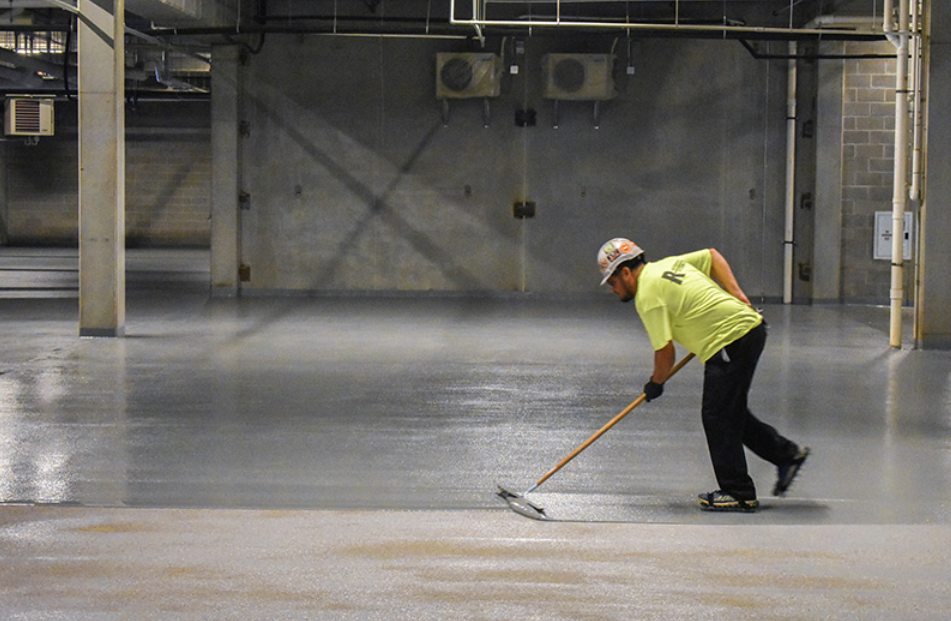
RSI employs robotic grinders and shot blasters that deliver consistent, controlled removal across large deck areas. Unlike handheld equipment, robotic systems maintain uniform depth and surface profile throughout the project—critical for coating performance. Shot blasting is particularly effective for creating the aggressive surface profiles that high-performance traffic coatings require.
The equipment selection also impacts project timeline and cost. Robotic scarification can cover significantly more square footage per day than manual methods, reducing both labor hours and building downtime. For facility managers weighing options, this efficiency often makes scarification the most practical choice for parking structure applications.
The Diagnostic Value of Coating Removal
Beyond preparing surfaces for new coatings, the removal process serves a critical diagnostic function. Stripping away decades of coating layers often reveals hidden conditions that weren’t visible during initial assessments—information that can significantly impact project scope and budgeting.
“During removal, we often find things that nobody knew were there—concrete repairs that were done incorrectly, structural steel that wasn’t supposed to be exposed, post-tension cables that need evaluation. The coating was hiding all of it. This discovery phase is incredibly valuable for building owners.”
This discovery aspect makes coating removal a strategic opportunity rather than just a necessary step. Addressing hidden deterioration during the removal phase—before new coatings are applied—prevents future failures and extends the service life of the entire restoration. Smart facility managers view this diagnostic benefit as part of the value proposition when budgeting for traffic coating projects.
Midwest Conditions: Why Regional Expertise Matters
Parking structures in Minnesota and throughout the Midwest face unique challenges that directly impact coating removal and reapplication. Freeze-thaw cycles, de-icing chemical exposure, and extreme temperature swings accelerate coating deterioration in ways that facilities in milder climates simply don’t experience.
Temperature requirements add another layer of complexity. Most traffic coatings require application temperatures above 40°F, which limits the construction window in Minnesota. This makes efficient coating removal even more critical—every day saved during preparation extends the available time for proper coating application before temperatures drop.
“There’s something full-circle about this work. We’re now removing traffic coatings that were installed 30-40 years ago—in some cases, coatings our company originally installed. Seeing that lifecycle play out reinforces why we’re so committed to doing removal right: the work we do today determines whether the next coating lasts another 30 years.”
RSI’s three decades of Midwest experience translates to practical understanding of how regional conditions affect every phase of coating work—from removal timing to material selection to application scheduling. This regional expertise is why facility managers throughout Minnesota, Wisconsin, and the Dakotas trust RSI with their parking structure restoration projects.
Frequently Asked Questions
Common questions about coating removal methods and processes.
Ready to Discuss Your Coating Removal Project?
RSI’s specification-driven approach to concrete surface preparation ensures your new traffic coating system performs as designed. Let our team assess your parking structure and recommend the right removal method for your specific conditions.
Request a Project AssessmentServing Minnesota, Wisconsin, North Dakota, South Dakota, and throughout the Midwest since 1997.