
Parking Garage Restoration: Why Repair Almost Always Beats Replacement
In 21 years and approximately 300 projects, RSI’s Mike Hintsala can count on one hand the number of parking ramps that needed a full replacement versus a repair. Here’s why, and what that means for your next capital decision.

| Repair beats replacement 99% of the time. New parking structure construction costs $28,000 to $35,000 per space. Strategic restoration typically costs a fraction of that. | The 5-year rule: If you’re doing major repairs to the same area within 5 years, it’s time for a more comprehensive solution, not another patch. |
| Deferred maintenance compounds at 7% annually. A $500,000 repair deferred can escalate to $4 million or more when structural damage spreads. | Think investment, not expense. Your parking structure is often your building’s second-largest asset. Treat maintenance like managing a $200M portfolio. |
The Replacement Assumption Is Usually Wrong
When building owners see significant concrete deterioration—spalling decks, rusted rebar, standing water—there is a temptation from owners to tear the whole thing down. It feels like the safe choice. A fresh start.
But here’s what 21 years in the field has taught us: that instinct is almost never correct. The math doesn’t support it, and neither does the engineering.
New parking structure construction runs $28,000 to $35,000 per space.1 For a 500-space garage, you’re looking at $14 to $17.5 million—before demolition costs, lost revenue during construction, and the 18-24 month timeline.
“I’ve had owners call me ready to tear down their parking ramp. After we assess it, we realize we can keep that structure performing for decades. We can keep that old car running forever if you maintain it right.”— Mike Hintsala, RSI Expert
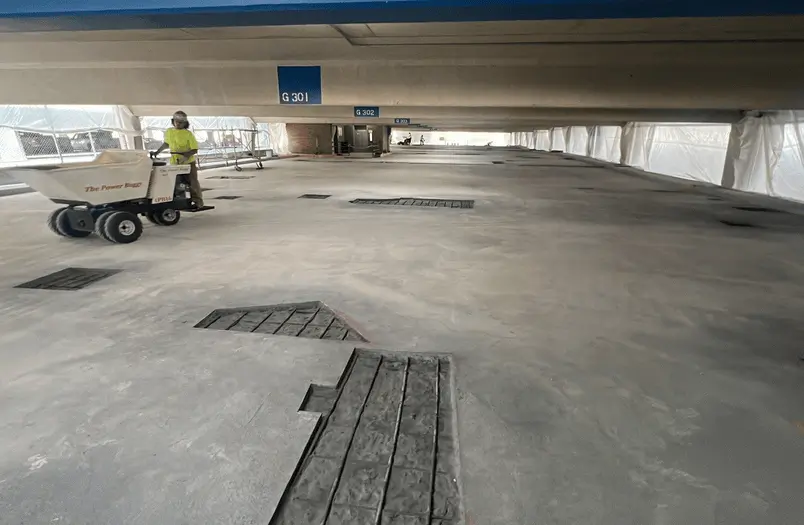
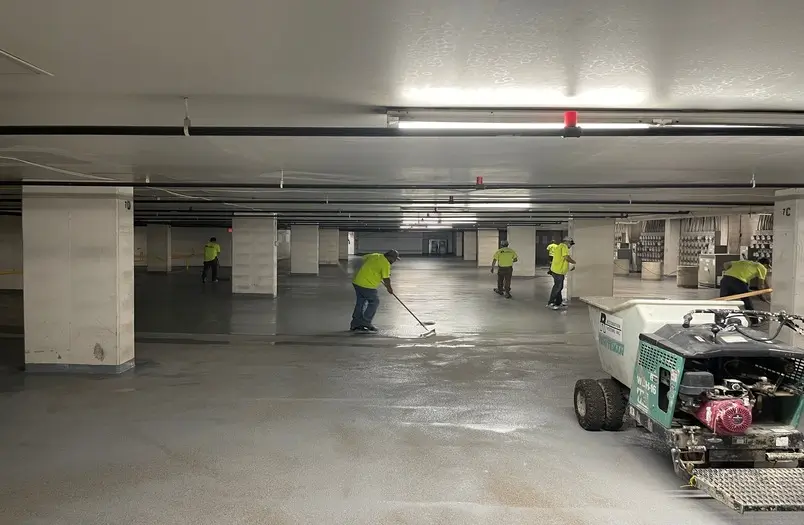
The Dual Helix Story: 30 Years of Proof
Early in Mike’s career, he worked on a parking structure where the owner needed to make a decision: how do we approach restoration on this aging concrete?
The structure had two distinct sections—essentially two separate ramps connected at the center. The owner chose to restore them using two completely different methodologies.
Section A: Strip and Replace
Full deck removal down to structural concrete, new waterproofing membrane, fresh wearing surface. The comprehensive approach.
Section B: Patch and Seal
Targeted repairs of deteriorated areas, crack injection, and a quality sealer application. The conservative approach.
The result? Both sections are still standing and performing today—30 years later. Both approaches worked. The only meaningful difference was the initial cost.
When two different repair approaches both deliver 30+ years of service life, the initial investment becomes the deciding factor. The “more expensive” solution isn’t always the better one.
How a $500,000 Repair Became a $4 Million Problem
One of the most instructive projects we’ve encountered involved a parking structure that had been neglected for years. By the time RSI was brought in, the situation had reached a critical point.
The original assessment had identified approximately $500,000 in needed repairs—significant deterioration in the deck membrane, some spalling concrete, and early-stage rebar corrosion. The owner deferred, hoping to “get another year or two” out of the structure.
When we finally got the call, the building was in receivership. Winter had come and gone—multiple times. Water infiltration had accelerated the freeze-thaw damage exponentially. What we found was far worse than anyone had imagined.
The concrete damage had spread throughout multiple levels. Structural steel required extensive repairs. The project timeline stretched from months to years. And the owner—no longer the original owner—was left holding a bill eight times larger than what prevention would have cost.
This isn’t an outlier. Industry research consistently shows that deferred maintenance compounds at approximately 7% annually. Every year you wait, the problem—and the price tag—grows.
The 7% Compounding Rule
Deferred maintenance doesn’t stay static. According to facility management research, every dollar of deferred repairs grows by approximately 7% per year. A $100,000 repair deferred for 10 years doesn’t cost $100,000—it costs closer to $200,000, plus the risk of catastrophic failure.
Repair vs. Replacement: Cost Comparison by Garage Size
Understanding the true cost difference between repair and replacement helps you make smarter capital decisions. Here’s how the numbers typically break down:
| Garage Size | New Construction Cost | Comprehensive Restoration Cost | Typical Savings |
|---|---|---|---|
| 100 Spaces | $2.8M – $3.5M | $560K – $1.4M | 60–80% |
| 250 Spaces | $7M – $8.75M | $1.4M – $3.5M | 60–80% |
| 500 Spaces | $14M – $17.5M | $2.8M – $7M | 60–80% |
Note: New construction estimated at $28,000–$35,000 per space.1 Restoration costs vary based on condition and scope of work. Does not include demolition costs, lost revenue during construction, or extended timeline factors for replacement.
1. The $28,000–$35,000 per space figure is based on WGI’s 2024 Parking Structure Cost Outlook, which reports a national median of $29,900/space—the industry-standard reference drawing from hundreds of completed projects since 2006. This range is corroborated by Kiwi Newton ($28,000–$35,000 for above-grade structures), HomeGuide ($21,000–$30,000), and Fixr ($19,000–$30,000 for multi-level). While Midwest construction costs may trend toward the lower end of this range (~$55/sf vs. $85+ on coasts), the $28K–$35K band represents a conservative estimate assuming traditional pour-in-place construction methods. ↩
Repair Type Lifespans: What to Expect
Understanding expected lifespans helps you make smarter capital decisions. Here’s what our experience shows for common parking structure repairs:
| Repair Type | Expected Lifespan | Key Considerations |
|---|---|---|
| Patch Repairs (Localized) | 5 years | Good for isolated damage; not a long-term solution for systemic issues |
| Strip and Resurface | 10 to 25 years | Removes deteriorated surface; lifespan depends on membrane quality and maintenance |
| Full Deck Replacement | 25 to 50 years | Comprehensive solution; structural concrete condition is the limiting factor |
Critical Insight: The repair itself is rarely the limiting factor. The surrounding structure dictates true lifespan. A brand-new deck membrane on a structure with compromised structural concrete won’t reach its full potential. That’s why comprehensive assessment, not just surface inspection, is essential before major restoration work.
Why Midwest Parking Structures Face Unique Challenges
Parking structures in Minnesota, Wisconsin, and throughout the Midwest don’t just age—they’re actively under assault from environmental conditions that accelerate deterioration.
-
Salt and Chloride Intrusion
Road salt tracked in by vehicles penetrates concrete and accelerates rebar corrosion. Studies show chloride-induced corrosion can reduce service life by 50 percent or more without proper protection.
-
Freeze-Thaw Cycles
Minnesota experiences 80–100+ freeze-thaw cycles annually. Water infiltration expands when frozen, cracking concrete from the inside out. Each cycle compounds the damage.
-
Municipal Inspection Requirements
Minneapolis, St. Paul, and Bloomington require regular parking structure inspections. These mandates exist because the risks are real, and they create opportunities to catch problems early.
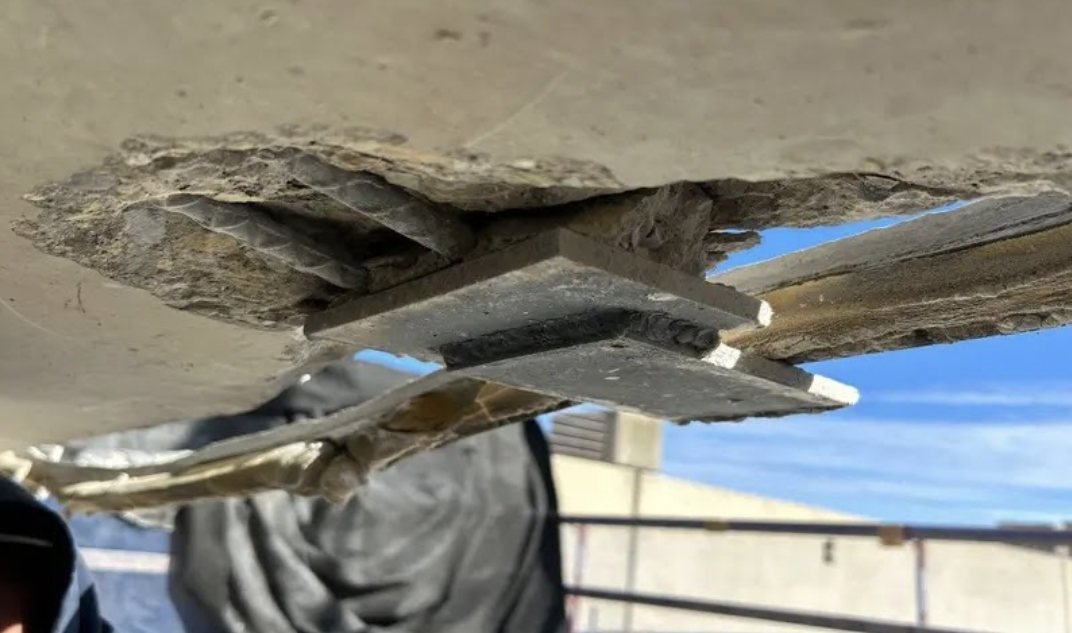
5 Warning Signs You Need More Than a Patch
Patch repairs have their place, but they’re not always the right answer. Here are the signs that indicate you need a more comprehensive solution:
Repeated Repairs in the Same Area
If you’re patching the same section within 5 years, it’s a symptom of a deeper problem. The substrate is likely compromised, and you’re treating symptoms, not causes. This is the 5-year rule in action.
Trip Hazards from Uneven Surfaces
When patched areas create height differences that pose safety risks, it’s a sign that either the repairs aren’t holding or the underlying structure is shifting. Both indicate systemic issues.
Loose or Delaminated Concrete
Concrete that sounds hollow when tapped, or that’s separating from the structure, indicates bond failure. This is often caused by water infiltration and corrosion beneath the surface.
Visible Rebar or Rust Staining
When you can see reinforcing steel or brown staining on the concrete surface, corrosion is already advanced. The rebar expands as it corrodes, creating internal pressure that accelerates spalling.
Water Infiltration to Lower Levels
Staining, mineral deposits, or active leaks on ceilings below the parking deck indicate membrane failure. Water is finding paths through the structure—and it’s carrying chlorides with it.
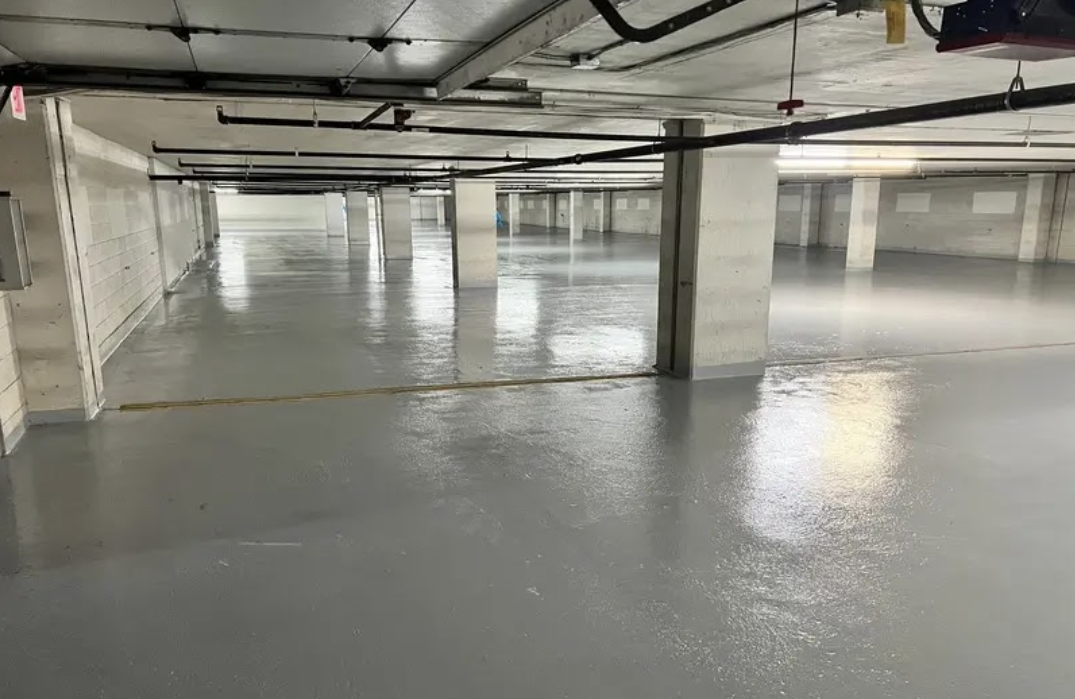
Shift Your Mindset: Your Parking Structure Is an Investment
Here’s the perspective shift that changes everything: your parking structure isn’t an expense line; it’s often the second-largest asset on your property, after the building itself.
A 500-space parking garage at current construction costs represents a $14-17 million asset. Would you ignore a $15 million investment portfolio for years at a time? Would you skip regular reviews and let small problems become catastrophic losses?
The most sophisticated building owners treat parking structure maintenance exactly like portfolio management: regular assessment, strategic allocation of capital, and a long-term view that prioritizes sustained performance over short-term savings.
This mindset shift also changes how you evaluate contractors. You’re not looking for the lowest bid on a repair; you’re looking for a partner who understands the full lifecycle of your asset and can help you make decisions that protect its value for decades.
“We can keep that old car running forever if you’re willing to maintain it properly. The structures that fail aren’t the ones that got repairs—they’re the ones where owners kept deferring, hoping to get one more year.”— Mike Hintsala, RSI Expert
Let’s Talk About Your End Goal
Every parking structure is different. Every owner has different objectives, whether that’s maximizing remaining service life, preparing for a sale, or planning a phased restoration over multiple budget cycles. Tell us where you want to be, and we’ll help you get there.
No obligation. We’ll assess your situation and provide honest recommendations, even if that means telling you to wait.
Frequently Asked Questions
How do I know if my parking structure needs repair or replacement?
In most cases, repair is the right answer. Replacement is typically only necessary when structural elements are compromised beyond repair, which is rare. A professional condition assessment will evaluate the structural concrete, rebar corrosion levels, and overall integrity to determine the most cost-effective path forward.
What is the 5-year rule for parking structure repairs?
If you’re performing major repairs to the same area within 5 years, it’s a sign that patch repairs aren’t addressing the underlying problem. At that point, you need a more comprehensive solution—whether that’s a full deck restoration, membrane replacement, or addressing systemic drainage issues.
How much does parking structure restoration cost compared to replacement?
New parking structure construction costs $28,000 to $35,000 per space. Strategic restoration typically costs 60-80% less than replacement, depending on the scope of work needed. A 500-space garage replacement could cost $14-17 million, while comprehensive restoration might range from $3-7 million.
How long do parking structure repairs last?
Repair longevity depends on the type of work performed. Localized patch repairs typically last about 5 years. Strip and resurface projects last 10-25 years. Full deck replacements can last 25-50 years. The key factor is the condition of the underlying structural concrete—repairs are only as durable as the substrate they’re applied to.
Why do Midwest parking structures deteriorate faster?
Midwest parking structures face a triple threat: road salt tracked in by vehicles accelerates rebar corrosion, 80–100+ annual freeze-thaw cycles crack concrete from the inside out, and moisture infiltration compounds both issues. Without proper maintenance and waterproofing, these factors can reduce service life by 50% or more.