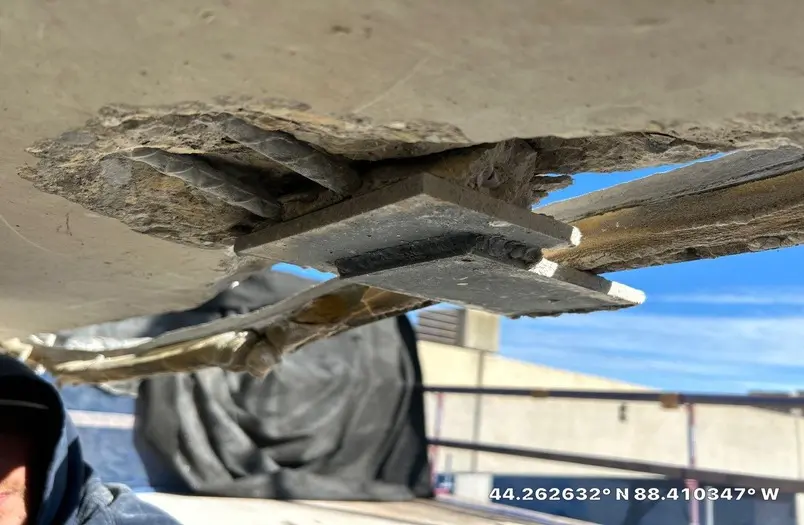
Appleton, WI Parking Ramp Restoration
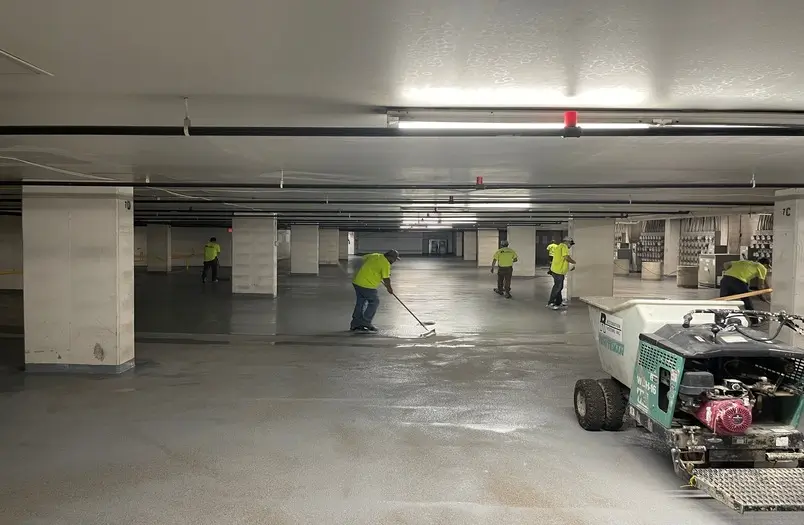
Comprehensive concrete and structural repair

When your parking structure shows signs of deterioration, you need a team that understands Midwest conditions—and helped write the industry standards. RSI has completed 300+ parking deck restoration projects across Minnesota and Wisconsin, delivering craftsmanship that protects your investment for decades.
Midwest parking structures face accelerated deterioration from freeze-thaw cycles, road salt, and moisture infiltration. Early intervention saves significant costs—waiting until visible damage appears often means the underlying problem has progressed far beyond what’s visible on the surface. RSI brings 35+ years of expertise and ICRI standards knowledge to every assessment and repair project.
Identifying deterioration early is critical to minimizing repair costs and preventing structural failures. As RSI Expert Mike Hintsala explains, recognizing these warning signs—and understanding what they mean—can save property owners significant expense and risk.
“If you’re repaired in the same area over and over again, something’s wrong. That tells me either the root cause wasn’t addressed, or the repair methods weren’t appropriate for the conditions. A proper assessment finds the real problem, not just what’s visible on the surface.”— Mike Hintsala, RSI Expert
Hairline cracks and map cracking on driving surfaces allow moisture penetration. While surface cracks may seem minor, they create pathways for water and salt to reach the reinforcing steel beneath. Early sealing prevents escalation.
Worn, peeling, or delaminating traffic coatings expose concrete to direct moisture and chloride infiltration. High-traffic areas and turning lanes typically show wear first. Recoating before complete failure extends structural life.
Brown or orange stains on concrete surfaces indicate active corrosion of embedded reinforcing steel. The rust you see on the surface means the steel inside has already lost cross-sectional area, reducing its load-carrying capacity.
Spalling—where concrete breaks away in chunks—occurs when corroding rebar expands and forces off the concrete cover. Understanding the science of spalling helps property owners recognize early warning signs. Each spall represents structural concrete that can no longer protect the steel or transfer loads properly.
Active leaks, efflorescence (white mineral deposits), and damp areas on lower levels indicate failed waterproofing. Water carries chlorides deeper into the structure, accelerating corrosion throughout the system.
Visible rebar with active corrosion represents advanced deterioration requiring immediate attention. The concrete cover that protects steel and provides fire resistance has failed completely in these areas.
Cracks following beam or column lines, diagonal cracking in slabs, or cracks that open and close with temperature changes may indicate structural distress beyond surface deterioration. Professional assessment is essential.
In post-tensioned structures, any signs of cable corrosion, anchor head deterioration, or unusual deflection patterns require immediate expert evaluation. Cable failures can occur suddenly with serious consequences.
Parking structures in Minnesota, Wisconsin, and throughout the Upper Midwest face environmental conditions that accelerate deterioration far beyond what structures experience in milder climates. Understanding these factors helps property owners appreciate why proactive maintenance and expert repair are essential investments.
The combination of freeze-thaw cycling, road salt exposure, and moisture creates conditions that challenge even well-constructed parking structures. Each factor compounds the effects of the others, creating an aggressive environment that demands specialized knowledge and repair approaches.
“If water doesn’t penetrate the concrete, it can’t initiate the corrosion process. That’s why waterproofing and traffic coatings are so critical in the Midwest. You’re not just protecting the surface—you’re protecting the entire structural system from the inside out.”— Mike Hintsala, RSI Expert
Minnesota experiences an average of 80–100+ freeze-thaw cycles per year. Each cycle allows water to penetrate cracks, freeze and expand by approximately 9%, then thaw—progressively widening cracks and forcing concrete apart from within.
Vehicles track chloride-laden salt and brine into parking structures throughout winter months. These chlorides penetrate concrete and reach reinforcing steel, breaking down the passive oxide layer that normally protects steel from corrosion.
Open parking structures allow direct precipitation exposure on top decks, while all levels experience moisture from vehicle runoff, condensation, and humidity. Water is the transport mechanism that carries chlorides deep into concrete.
Carbon dioxide from vehicle exhaust and atmosphere reacts with concrete over time, lowering its pH. As concrete carbonates, it loses the alkalinity that passivates embedded steel, making reinforcement more susceptible to chloride-induced corrosion.
A thorough structural assessment is the foundation of effective parking deck restoration. Too often, property owners address visible symptoms without understanding the underlying causes—leading to repeated repairs in the same areas and escalating costs over time.
RSI’s assessment process goes beyond surface observations to evaluate the complete structural system. We examine concrete condition, reinforcing steel corrosion levels, waterproofing integrity, expansion joints, drainage systems, and post-tension cable condition where applicable. Our goal is to identify the root cause of deterioration and develop repair strategies that provide lasting solutions.
Using industry-standard evaluation techniques including chain drag and hammer sounding, half-cell potential testing for corrosion activity, chloride content analysis, and core sampling, we develop accurate condition assessments that inform repair prioritization and budgeting.
“I was part of the people setting standards of acceptability for the ICRI Concrete Surface Profile. When you’ve helped write the standards, you understand not just what to look for, but why it matters. That perspective changes how you approach every assessment.”— Mike Hintsala, RSI Expert
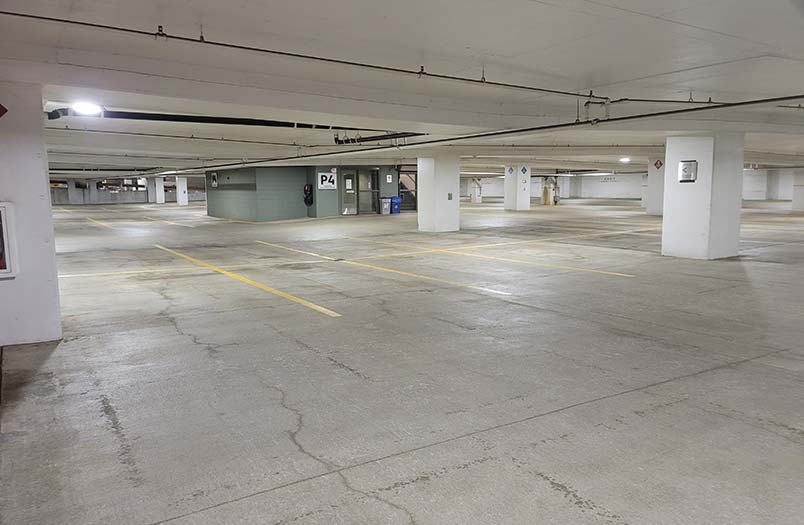
Parking structure restoration encompasses a range of specialized repair techniques. Understanding these categories helps property owners and facility managers communicate effectively with restoration professionals and make informed decisions about their structures.
Restoring load-carrying capacity and structural integrity to deteriorated concrete elements including beams, columns, slabs, and walls.
Preventing moisture infiltration that causes corrosion, freeze-thaw damage, and accelerated deterioration throughout parking structures.
Extending structural service life through corrosion mitigation, surface protection, and preventive maintenance systems.
The most effective approach to parking structure preservation is preventing deterioration before it starts. Protective systems—including traffic-bearing membranes, deck coatings, and waterproofing applications—form the first line of defense against the moisture and chloride infiltration that drives corrosion.
“If water doesn’t get into the concrete, it doesn’t cause that corrosion path to occur. We spend so much time and money repairing damage that could have been prevented with proper waterproofing. It’s like your roof at home—you’d rather pay for good roofing than deal with water damage throughout the house.”— Mike Hintsala, RSI Expert
Traffic coatings protect parking deck surfaces while withstanding vehicle traffic, tire wear, and the constant abrasion of daily use. Modern coating systems provide waterproofing, chemical resistance, and improved traction while remaining flexible enough to bridge small cracks in the concrete substrate.
Key considerations for traffic coating selection include:
For occupied space below parking levels or in areas requiring maximum protection, waterproofing membranes provide a continuous barrier against moisture infiltration. These systems are particularly critical for parking structures built over retail space, mechanical areas, or other occupied areas where leakage creates significant problems beyond structural deterioration.
RSI evaluates existing conditions, traffic patterns, and service life expectations to recommend protective systems that provide optimal performance for each specific application. Our recommendations balance initial cost with long-term value.
For structures with significant chloride contamination or ongoing corrosion concerns, cathodic protection provides an electrochemical approach to stopping corrosion at the reinforcing steel level. These systems work by making the reinforcing steel the cathode in an electrochemical cell, effectively stopping the corrosion reaction.
“Think of cathodic protection like little hockey pucks embedded in the concrete. They provide the electrical current that keeps the steel from corroding. It’s not removing the chlorides—they’re still there—but it’s stopping the reaction that causes the rust and the damage.”— Mike Hintsala, RSI Expert
Cathodic protection is typically considered when chloride levels are high enough that removal would require removing most of the concrete, or when ongoing salt exposure means new chlorides will continue to enter the structure. The technology requires proper design and monitoring but provides long-term corrosion control when appropriately applied.
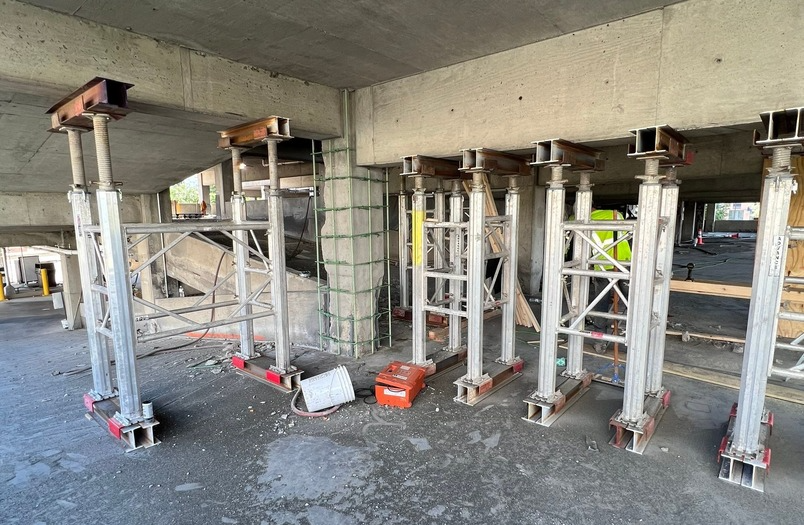
Post-tensioned parking structures present unique challenges that require specialized knowledge. Our technical guide to post-tension cable repair covers these considerations in depth and careful repair approaches. These structures rely on high-strength steel cables (tendons) that are tensioned after the concrete is placed to compress the concrete and improve its load-carrying capacity.
“Think of it like squeezing 10 books together tightly—the books in the center don’t fall out because of that compression force. Post-tensioning does the same thing for concrete. Those cables are under tremendous tension, and they’re what holds the whole structure together.”— Mike Hintsala, RSI Expert
The compressed state of post-tensioned concrete means that any work near the cables must be carefully planned. Cutting into PT cables during repair work can have serious structural consequences—the sudden release of tension can damage surrounding concrete and potentially compromise the entire structural bay.
RSI’s approach to post-tensioned structure work includes:
One of the most significant decisions parking structure owners face is determining whether to continue investing in repairs or plan for replacement. Our repair vs. replace ROI analysis explores this decision framework in detail. This decision involves complex tradeoffs between immediate costs, long-term expenses, operational disruption, and facility requirements.
“When your car needs serious work, it can take a while to find a shop you trust. The reason I trust my mechanic is because they tell me when something doesn’t need to be fixed yet—when we can wait and monitor it. That’s what good advice looks like. We’re the same way with parking structures. If repair makes sense, we’ll tell you. If you’re better off replacing, we’ll tell you that too.”— Mike Hintsala, RSI Expert
There’s no universal threshold that determines when a structure should be replaced rather than repaired. The decision depends on factors specific to each situation, including current condition, anticipated future deterioration, budget constraints, and operational requirements.
Use this framework to guide discussions with your restoration contractor about the best approach for your specific situation.
| Factor | Favors Repair | Favors Replacement |
|---|---|---|
| Deterioration Extent | Less than 15-20% of structure affected; localized damage areas | More than 40-50% of structure affected; widespread deterioration throughout |
| Structural System | Sound primary structure; damage primarily in secondary elements | Primary structural elements (beams, columns) significantly compromised |
| Repair History | First major repair cycle; good response to previous maintenance | Multiple repair cycles; recurring failures in previously repaired areas |
| Remaining Service Life | 20+ years of useful life achievable with repairs | Less than 10-15 years of useful life even after repairs |
| Chloride Contamination | Localized chloride penetration; treatable with repairs and protection | Widespread chloride contamination throughout the structure |
| Code Compliance | Structure meets current requirements; no significant upgrades needed | Major upgrades required for accessibility, fire safety, or structural code |
| Operational Needs | Current capacity and configuration meet long-term requirements | Capacity expansion or reconfiguration needed for future use |
| Budget Horizon | Can phase repairs over multiple budget cycles | Capital budget available for major investment |
These are general guidelines—each structure requires individual assessment. RSI provides detailed condition reports and lifecycle cost analyses to support informed decision-making.
When you’re investing in parking structure restoration, you need a contractor who understands both the technical requirements and the practical realities of keeping your facility operational. RSI brings nearly three decades of specialized experience to every project, backed by industry credentials that few competitors can match.
Our team helped develop the industry-standard Concrete Surface Profile guidelines used throughout North America.
Extensive experience across Minnesota, Wisconsin, and the Upper Midwest with structures of all sizes and configurations.
EMR consistently below national average; repeat LECET MN & ND Award of Excellence recipient.
Founded in 1997 with principals averaging more than 25 years experience each in concrete restoration.
RSI approaches every parking structure project with the same commitment to quality, safety, and client service—regardless of project size. We provide comprehensive assessments, detailed repair recommendations, transparent pricing, and craftsmanship that protects your investment for years to come. Our goal is building long-term relationships based on trust and proven performance, not just completing transactions.
From initial assessment through project completion, you’ll work with experienced professionals who understand both the technical requirements and the practical challenges of parking structure restoration. We communicate clearly, deliver on schedule, and stand behind our work.
RSI has completed parking deck restoration projects throughout Minnesota, Wisconsin, and the Upper Midwest. Each project demonstrates our commitment to quality craftsmanship and lasting results.
Comprehensive concrete and structural repair
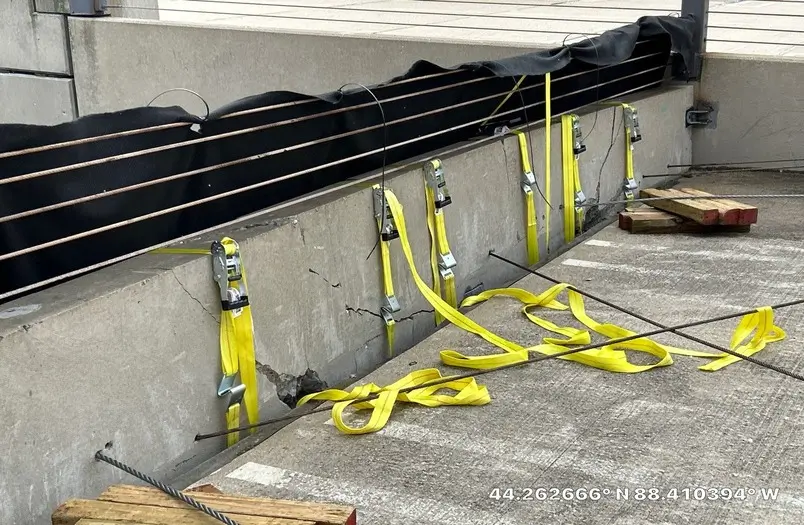
Traffic-bearing membrane installation and joint replacement
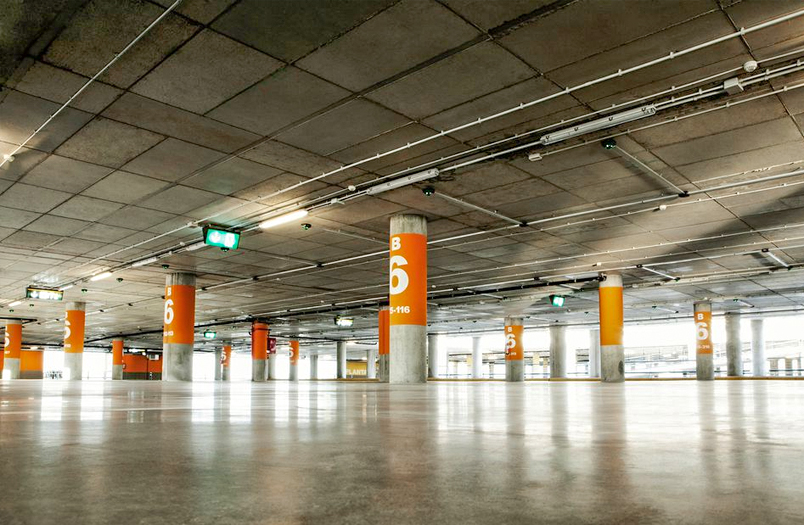
Parking ramp restoration including concrete repairs, expansion joint replacement, and post-tensioned haunch installation — completed ahead of schedule and under budget
“RSI’s approach to our parking structure project went beyond just fixing what was visible. They identified root causes we hadn’t even considered and developed a repair strategy that addressed both immediate needs and long-term protection. The difference in their expertise was evident from the first assessment.”— Property Manager, Minneapolis Commercial Development
RSI provides parking deck restoration services throughout Minnesota, Wisconsin, and surrounding states. Our team travels to project sites throughout the region, bringing expert craftsmanship wherever it’s needed.
Our home state and the region where we’ve completed the majority of our 300+ parking structure projects.
Significant project experience throughout Wisconsin, including multi-phase restorations in several major cities.
We also serve parking structure owners in neighboring states throughout the Upper Midwest region.
RSI specializes in a comprehensive range of structural restoration services including concrete repair, masonry restoration, waterproofing, and structural strengthening. We work on commercial, industrial, and institutional buildings.
Our services include crack injection, carbon fiber reinforcement, joint sealant replacement, facade restoration, and preventive maintenance programs tailored to your building’s specific needs.
Every project begins with a thorough on-site assessment. We evaluate the extent of damage, access requirements, materials needed, and project timeline to provide a detailed, transparent estimate.
General pricing ranges for parking deck restoration: Minor repairs $45–$65/SF, Partial Depth $65–$85/SF, and Full Depth $85–$150+/SF.
Our estimates include itemized costs for labor, materials, equipment, and any specialized services required. We believe in no-surprise pricing and will clearly communicate any potential variables before work begins.
Project timelines vary based on scope, complexity, and access conditions. Small to medium repairs typically take 1-4 weeks, while comprehensive facade restorations may span several months.
We provide detailed project schedules at the start of each engagement and maintain open communication about progress. Our team is experienced at minimizing disruption to building operations and occupants.
Yes, RSI is fully licensed and carries comprehensive insurance coverage including general liability, workers’ compensation, and professional liability insurance. We can provide certificates of insurance upon request.
Our team includes certified restoration technicians with specialized training in the latest repair techniques and safety protocols. We partner with licensed professional engineers when projects require engineering expertise.
Absolutely. We stand behind our workmanship with comprehensive warranties. Standard repairs include a 5-year warranty, while structural repairs and waterproofing systems come with extended warranty options of up to 10 years.
Warranty terms are clearly outlined in your contract, and we maintain detailed project documentation to support any future warranty claims.
RSI provides restoration services throughout the Mid-Atlantic region, including major metropolitan areas and surrounding counties. Our headquarters and primary service area covers a 150-mile radius.
For larger projects outside our primary service area, we can often accommodate travel or partner with local contractors while providing project management and quality oversight. Contact us to discuss your specific location.
Contact us today for a free on-site assessment. Our team will evaluate your building’s needs and provide a detailed proposal with no obligation.