Commercial Media Blasting for Building Restoration
Coating removal and surface cleaning matched to the wall, not forced onto it.
A blasting job usually starts with a surface that is already telling the truth: failed coating over brick, graffiti sunk into masonry, corrosion on steel, or decades of buildup hiding joints that need repair. RSI selects the media, pressure, containment, and cleanup plan around one requirement: remove what does not belong “without damaging the underlying substrate.”
Commercial media blasting is controlled surface cleaning and coating removal. The point is not simply to blast harder; it is to remove the unwanted coating, contamination, graffiti, or corrosion while keeping the brick, stone, concrete, or steel underneath intact.
That is why RSI chooses the media and pressure around the building material and the desired outcome. Softer media is used where delicate masonry or historic facade material needs protection. More aggressive media may be appropriate for steel preparation or heavy coating removal, but that same approach can be destructive on older brick or stone.
On Upper Midwest commercial buildings, RSI most often uses media blasting as part of masonry restoration, steel preparation, coating removal, graffiti removal, and historic facade restoration. It is frequently the preparation step that makes the next phase possible: tuckpointing and mortar repair, commercial waterproofing, recoating, or a larger building facade restoration scope.
Failed coatings can be removed so repairs and waterproofing are installed over a sound surface.
Graffiti and surface staining can be addressed without treating historic masonry like structural steel.
Steel and coating-removal work can receive a more aggressive preparation plan when the substrate can tolerate it.
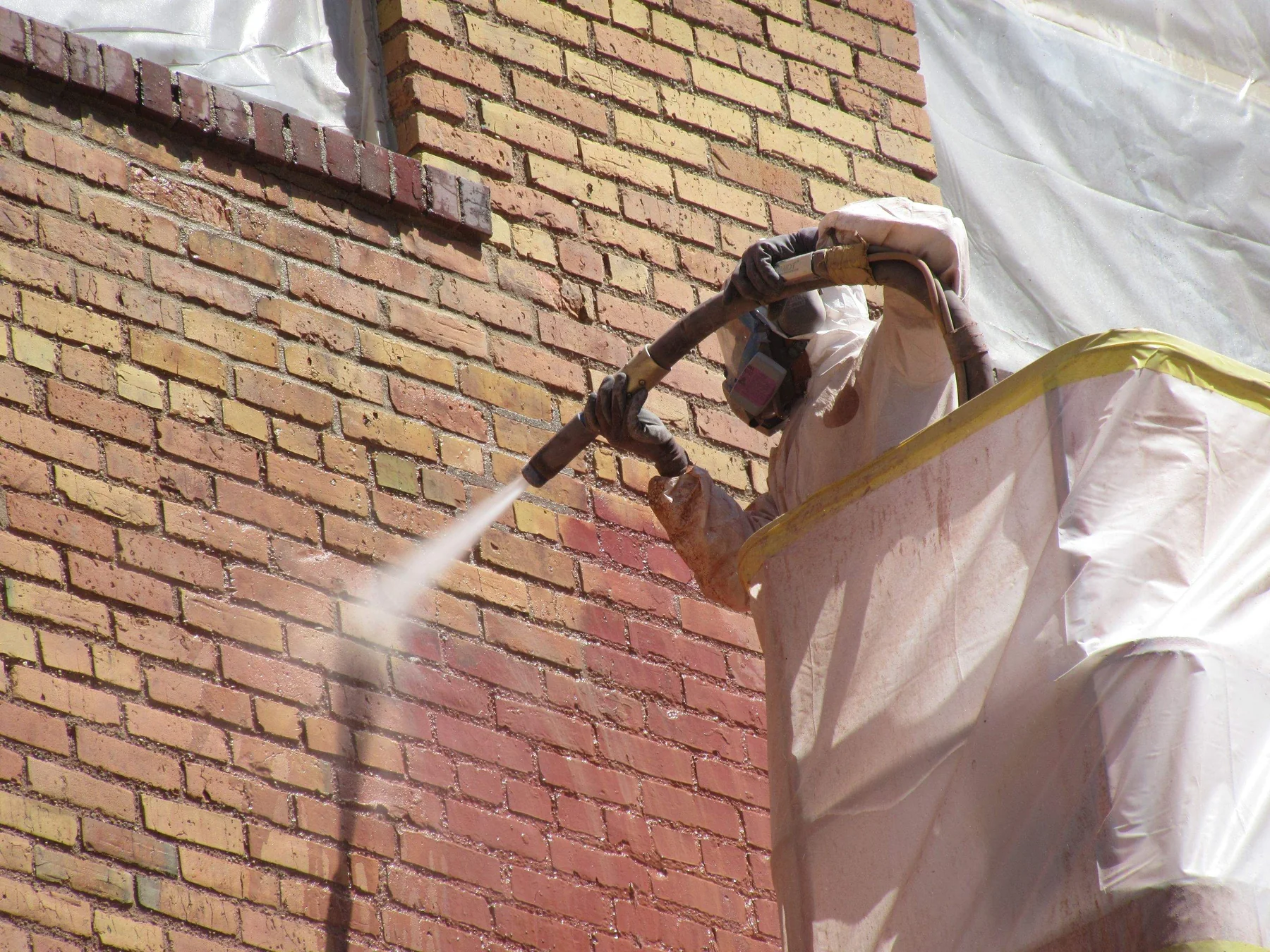
Containment is part of the restoration plan, not an afterthought. Depending on the site and environmental requirements, RSI may use tarping, negative air setups, dust collection systems, and other containment methods to control dust and protect the surrounding building environment.
A few of RSI’s Commercial Media Blasting for Building Restoration projects
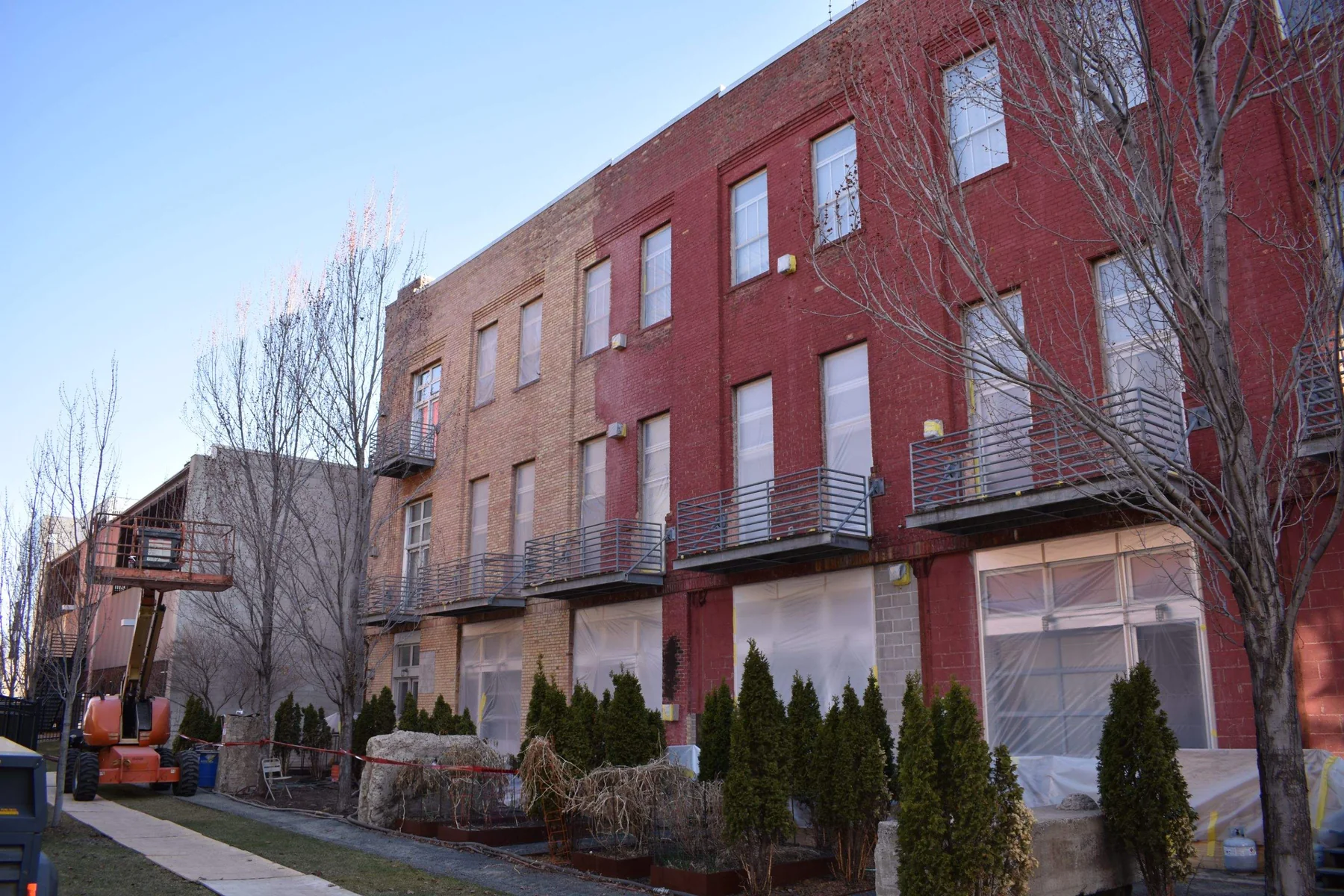
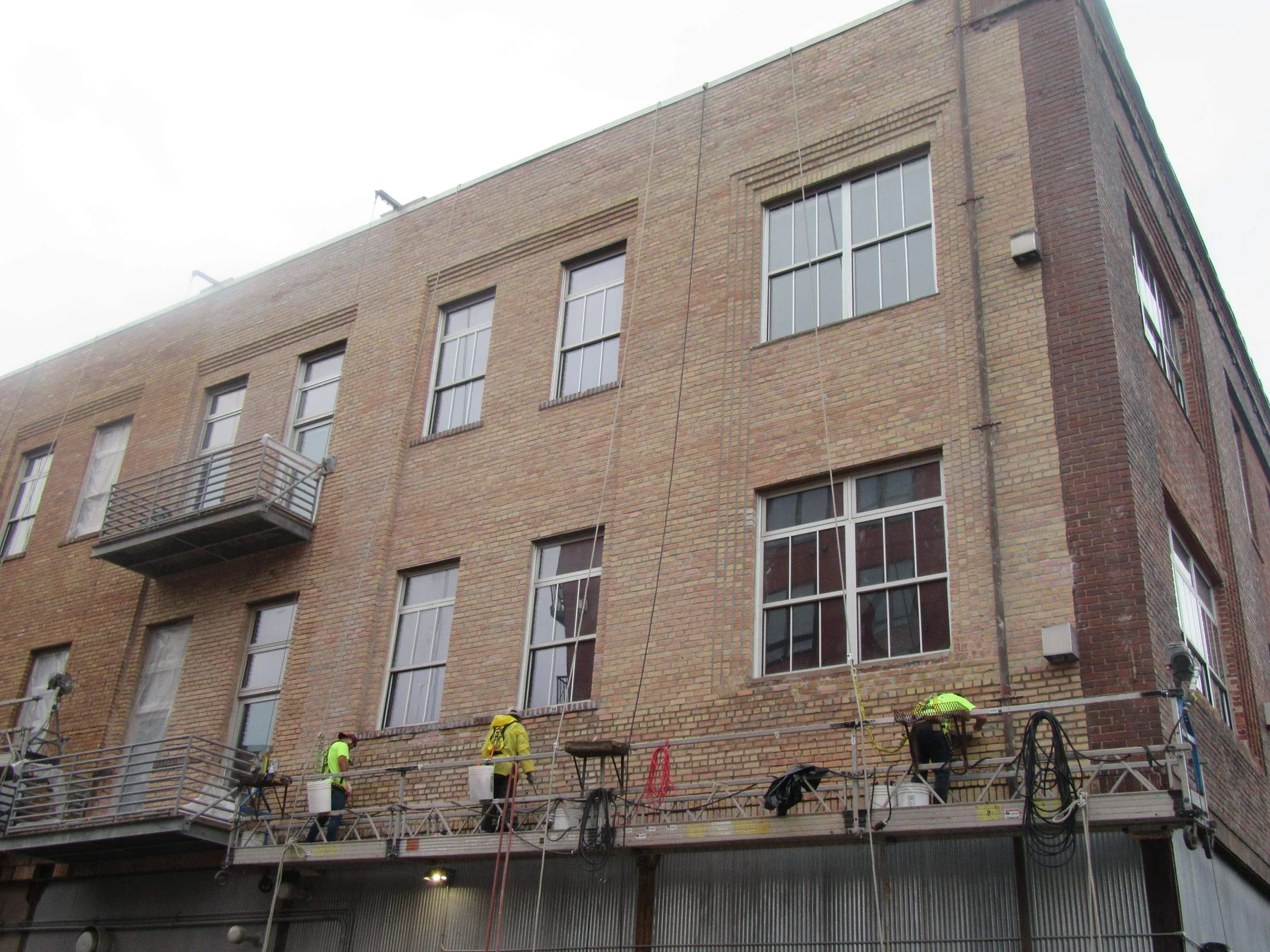
Media blasting on a commercial facade is controlled work: the media, pressure, access, containment, and cleanup plan all have to fit the substrate and the building around it.
Specifications
Media, pressure, containment, and handoff
A good blasting specification is not a media shopping list. It describes the substrate, the material to be removed, the level of cleaning required, the containment expectations, and the surface condition needed by the next repair or coating system.
01
Delicate masonry and historic facades
Historic brick and stone need restraint. RSI starts from the principle that “softer medias are better for delicate masonry or historic restoration,” then controls pressure and dwell time so cleaning does not become erosion. The National Park Service warns that aggressive abrasive cleaning can damage historic masonry faces and mortar joints. [NPS Preservation Brief 6]
02
Steel and coating removal
Steel preparation and heavy coating removal call for a different level of aggression. Where the next coating system specifies a blast-cleaning profile or visual cleanliness level, RSI prepares the surface to that project requirement rather than using a one-media default.
03
Dust and work-zone control
Containment is planned with the building in mind: tarping, negative-air setups, dust collection systems, and project-specific enclosure methods. When work may generate respirable silica, exposure control is governed by OSHA’s construction silica rule. [OSHA 1926.1153]
04
Repair-ready surface
Blasting usually prepares the way for masonry repair, waterproofing, coating, or restoration systems. The finished surface has to be clean enough for the next scope without being overworked for the material underneath.
How RSI chooses the blasting approach
Start with the building materialBrick, stone, concrete, and steel do not respond the same way. Media and pressure are selected after the substrate is identified and the desired outcome is clear.
Match aggression to the taskSurface cleaning, graffiti removal, and historic masonry require a lighter hand. RSI uses more aggressive media where steel preparation or coating removal demands it because “more aggressive medias work better for steel or coating removal.”
Protect the surrounding buildingBlasting dust is part of the scope, not an afterthought. Containment may include tarping, dust collection, and negative-air arrangements depending on the site, occupants, and environmental requirements.
Coordinate the next tradeWhen blasting exposes masonry joints, steel, or bare substrate, the work is sequenced with brick repair, stone repair, waterproofing, or coating crews so the surface does not sit unfinished.
801 Washington as a useful comparison
Exterior restoration work at 801 Washington shows the kind of access, sequencing, and facade coordination that makes blasting planning matter. On occupied commercial exteriors, the wall is only one constraint; the work zone, adjacent uses, and follow-on repair scope shape the plan.
“
Media blasting is a controlled cleaning or coating removal process using different blasting materials to clean surfaces or remove coatings without damaging the underlying substrate. We use different medias depending on the building material and desired outcome – softer medias for delicate masonry, more aggressive medias for steel or coating removal.
Tayton EggenbergerMinnesota Branch Manager, RSI
Regional Reality
Why media-blasting projects fail in the Upper Midwest
Upper Midwest buildings carry hard histories: freeze-thaw movement, deicing salts, older coatings, and facades that have already been repaired more than once. Blasting fails when the contractor reads only the coating and ignores the wall behind it.
Dust control on active sites
Containment is a major part of blasting projects. The plan may include tarping, negative air, dust collection, and site-specific controls before production starts. [OSHA 1926.1153]
01
Wrong media for the substrate
The most expensive mistake is assuming every surface can take the same blast. On sensitive brick or stone, the wrong media and pressure can “permanently damage the surface” before anyone realizes the cleaning line has crossed into removal.
02
Historic masonry treated like steel
RSI has seen damage caused by contractors “treating historic masonry like structural steel.” Steel preparation may need aggressive removal; a historic facade may need the lightest effective method and careful mockup approval before production.
03
Containment added too late
Tarping, dust collection, and negative-air setups cannot be improvised after dust starts moving. On active commercial properties, containment protects tenants, sidewalks, neighboring spaces, and the cleanup budget.
04
No plan for what comes next
Blasting that removes failed coatings but leaves masonry joints exposed is unfinished work. The surface should move into repair, coating, or waterproofing before weather and site conditions undo the preparation.
When blasting prepares an exposed slab, ramp, or walkway, RSI coordinates the surface profile with the requirements of traffic coatings and broader parking deck restoration scopes.
The RSI Approach
How RSI handles media blasting
RSI treats media blasting as a controlled setup, not a commodity cleaning pass. The substrate, coating condition, desired outcome, and containment requirements are settled before the crew commits to the blast pattern.
Read the substrate and coating
Identify whether the work is masonry, stone, concrete, steel, or another surface, then confirm what needs to be removed: coating, graffiti, corrosion, contamination, or surface buildup.
Select media and pressure
Choose a softer approach for delicate masonry and historic restoration, or a more aggressive approach for steel preparation and coating removal. The building material and desired outcome drive the selection.
Build the containment plan
Set tarps, dust collection, negative-air controls, or other containment methods as the location requires. The goal is to keep the work zone controlled while protecting adjacent spaces and environmental requirements.
Blast, inspect, and hand off
Remove the coating or contamination to the agreed condition, inspect the surface for damage or remaining material, and turn it over for repairs, waterproofing, coatings, or restoration systems.
On masonry, the right media and pressure matter because the goal is often to expose the wall for mortar repair or commercial brick repair, not remove the protective face of the wall.
FAQ
Frequently asked questions
Media blasting is a controlled cleaning or coating-removal process. Different blasting materials are used to remove coatings, graffiti, corrosion, or surface contamination while protecting the substrate underneath.
RSI chooses media based on the building material and the desired outcome. Softer media and lower pressure are better for delicate masonry or historic restoration. More aggressive media are used where steel preparation or coating removal requires it.
It can be, but only when the media, pressure, and method are matched to the substrate. Historic brick and stone are especially sensitive; the wrong approach can scar the surface, remove protective faces, and create long-term water infiltration problems. The National Park Service warns against aggressive abrasive cleaning on historic masonry. [NPS Preservation Brief 6]
RSI commonly uses media blasting on masonry restoration projects, steel preparation, coating removal, graffiti removal, and historic facade restoration. It is frequently one step in a larger repair or restoration sequence.
Containment is built into the project plan. RSI may use tarping, negative-air setups, dust collection systems, and other containment methods depending on the project location, occupied conditions, and environmental requirements. Silica exposure controls are governed by OSHA’s construction silica rule when applicable. [OSHA 1926.1153]
Yes. Blasting is often preparation work before repairs, coatings, waterproofing, or restoration systems are installed. A common example is removing decades of failed coating before tuckpointing and waterproofing can begin.
Often, yes. The feasibility depends on the substrate, access, containment, dust-control requirements, and building operations. RSI plans blasting around the work zone and the surrounding property so cleaning does not become a tenant, sidewalk, or adjacent-space problem.
Sources & Field Inputs
Sources used for this page
RSI field input: Tayton Eggenberger, RSI Minnesota Branch Manager, provided service-source guidance on media selection, substrate sensitivity, containment, dust control, failed-coating removal, and the role of blasting before repairs, coatings, waterproofing, and restoration systems.
RSI handles commercial media blasting across the Upper Midwest for masonry restoration, steel preparation, coating removal, graffiti removal, and historic facade work. We match the media, pressure, containment, and cleanup plan to the material and restoration goal.