A six-month historic masonry restoration in the heart of Minneapolis. Using wet media blasting (vapor blasting), RSI carefully removed decades-old paint that was trapping moisture in the brick and mortar, restoring the building’s original character without damaging the underlying historic masonry.
A historic Minneapolis landmark, stripped of moisture-trapping paint and returned to its original brick. Specialized wet media blasting equipment was selected specifically to lift the coating without damaging the underlying historic masonry.
801 Washington is a historic Minneapolis property whose masonry façade had been coated in red paint. While the paint may have once been a cosmetic choice, it had become an active threat to the building. Painted masonry traps moisture against the brick and mortar, and on a historic building the cumulative damage from decades of trapped moisture can be severe: bond failure between brick and mortar, spalled brick faces, and accelerated freeze-thaw damage all become harder to reverse the longer the coating stays in place.
The objective was straightforward but demanding. Remove the paint completely, expose the original brick, and do it without inflicting the very damage the coating had been causing. Aggressive dry sandblasting, the default approach on less sensitive substrates, was off the table from the start. Historic brick simply cannot tolerate that level of abrasive energy.
RSI specified wet media blasting, also called vapor blasting, for exactly this reason. By introducing water into the abrasive stream, the energy delivered to the substrate is dramatically reduced compared to dry sandblasting, a critical distinction when the substrate is irreplaceable historic masonry. The six-month project began in April 2017 and was executed under historic preservation–compliant practices throughout.
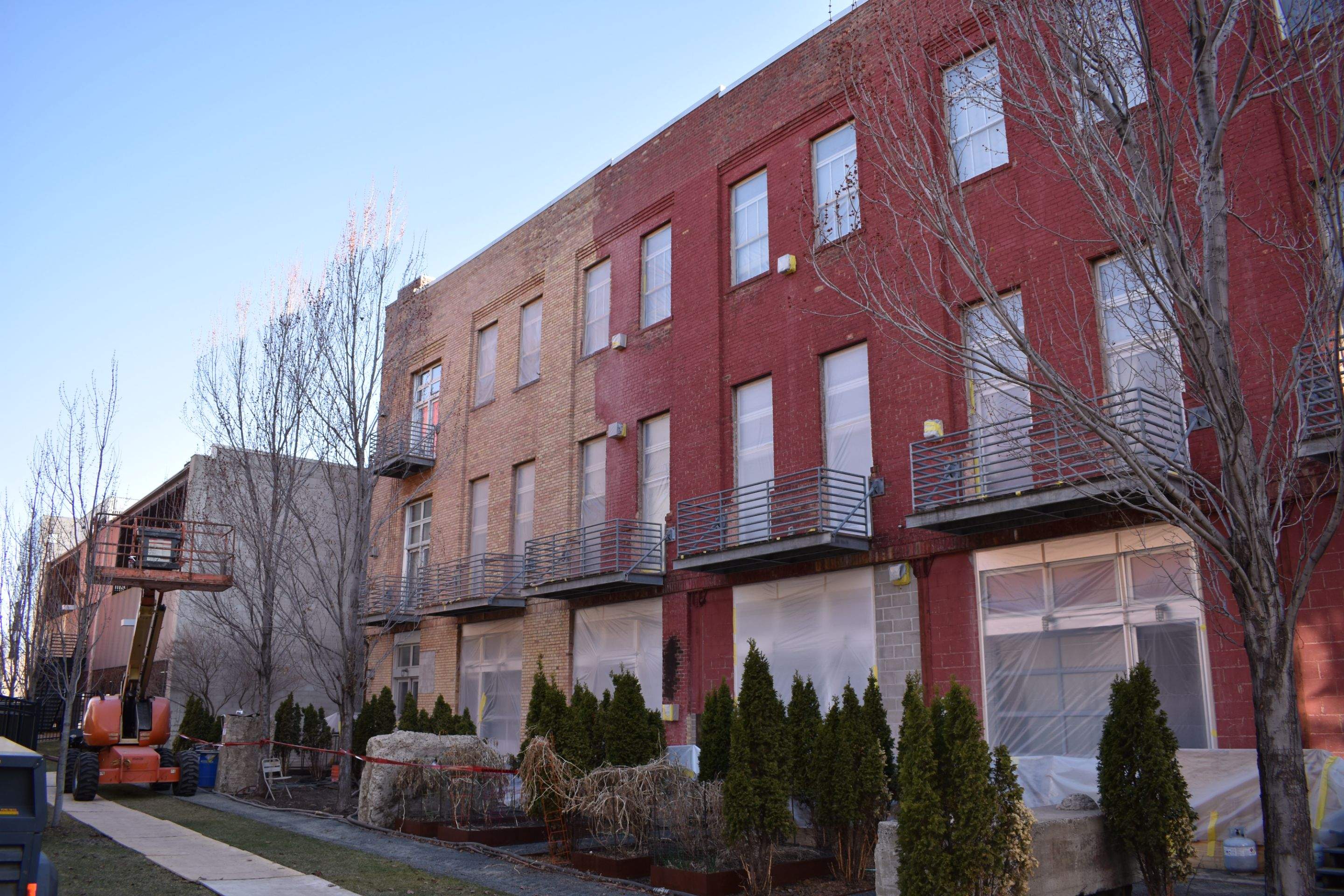
The story in a single frame: original brick revealed on the left, the previous red coating still in place on the right, with ground-floor openings sealed in containment plastic during active wet media blasting.
Our Approach
The Right Method for Historic Brick
Removing paint from a historic façade is not the same job as removing paint from a modern wall. Every step at 801 Washington was selected to lift the coating cleanly while leaving the original brick intact.
Assessment & Method Selection
The façade was evaluated to confirm that the existing red paint was driving moisture-related deterioration of the brick and mortar. Dry sandblasting was ruled out as too aggressive for historic masonry; wet media blasting was specified as the appropriate method.
Containment & Access
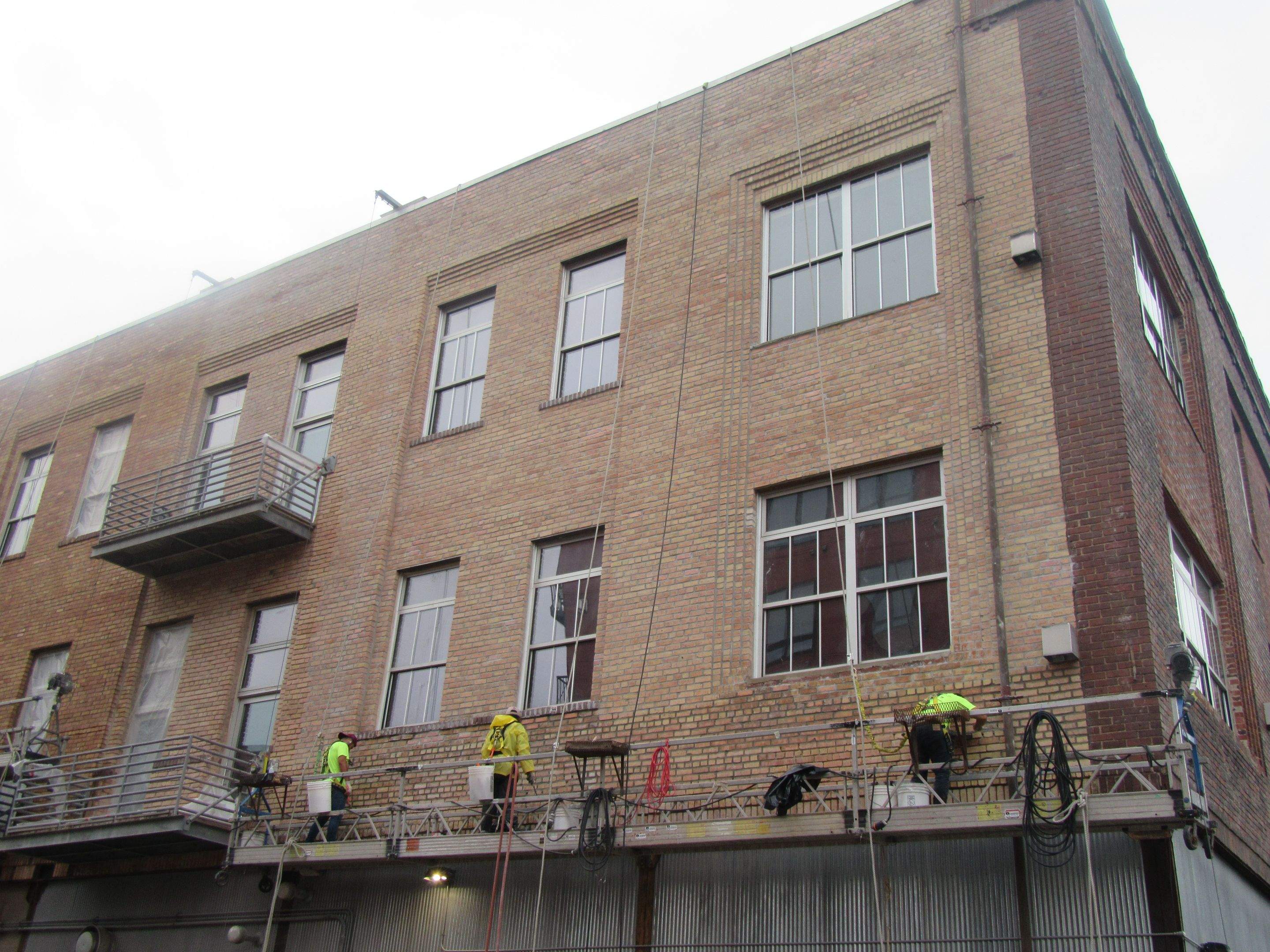
Swing-stage rigging and full containment were set up around the active work zones. Ground-floor openings were sealed in plastic to protect the interior, the public, and adjacent surfaces from paint debris and blast media throughout the six-month project.
Wet Media Blasting
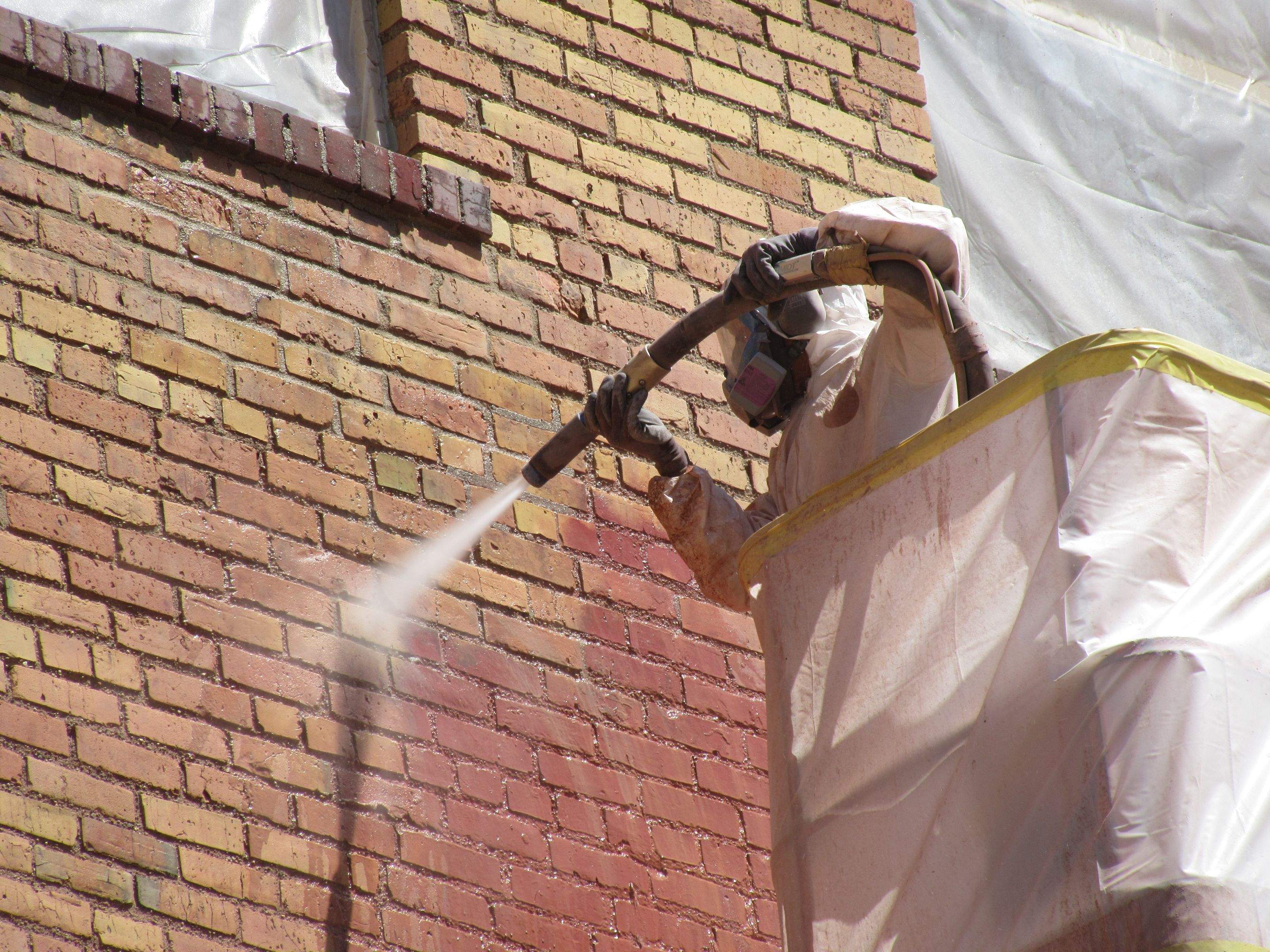
Water introduced into the abrasive stream dramatically reduced the energy delivered to the brick compared to dry methods. Crews worked the façade in controlled sections, lifting the red coating and revealing the original masonry beneath without scarring the brick faces.
RSI crew working from a suspended swing stage on the 801 Washington façade: rigged, contained, and accessed safely for historic masonry paint removal.
On Site
Craftsmanship That Lasts
Wet media blasting in active use: full PPE, contained workspace, and the brick’s original color emerging beneath decades of paint.
The result shows in the brick itself. Decades of moisture-trapping paint are gone, the original masonry is exposed and breathing again, and the brick faces and mortar profiles are intact. By matching the method to the substrate, RSI removed a problematic coating from a Minneapolis historic landmark without sacrificing the underlying material, restoring both the appearance and the long-term durability of the façade.
Have a Building That Needs Restoring?
If your historic property is hidden under a coat of paint that’s damaging the masonry beneath, RSI can help. We specialize in wet media blasting and historical restoration that protects the original substrate.