01
Substrate Protection
Masonry, historic brick, stone, concrete, and steel do not tolerate the same removal force. Damaging the substrate can turn a coating job into a repair job before the surface is ready.

When the old coating is peeling, holding water, or keeping the next system from bonding, the project starts by getting back to the real substrate.
RSI removes failed paint and coatings from commercial masonry, concrete, steel, and facade assemblies across the Upper Midwest. The goal is not to expose a clean-looking wall for its own sake. It is to find out whether the coating is “failing, trapping moisture, or preventing proper adhesion,” protect crews and occupants during removal, repair what the coating has been hiding, and leave the surface ready for the waterproofing, sealant, masonry, or coating system that follows.

Commercial paint removal is not just a way to make a wall look new again. RSI typically recommends stripping when the existing coating is failing, trapping moisture, or blocking the bond of the next repair or coating system. On older brick, block, stone, and concrete facades across the Upper Midwest, that often means working through more than one generation of paint before the actual substrate condition can be trusted.
The removal method depends on the wall, the coating, and the risk around the work area. RSI may use media blasting, chemical stripping, grinding, or other mechanical methods, but the goal is the same: remove the failed or incompatible coating without damaging the substrate that has to carry the next system.
That restoration-first mindset is where this scope differs from a standard repaint. After removal, RSI inspects the exposed surface, repairs deterioration when needed, and verifies that the substrate is clean and properly profiled before installing brick repair and replacement, tuckpointing and mortar repair, sealant replacement, waterproofing, or a new coating system.
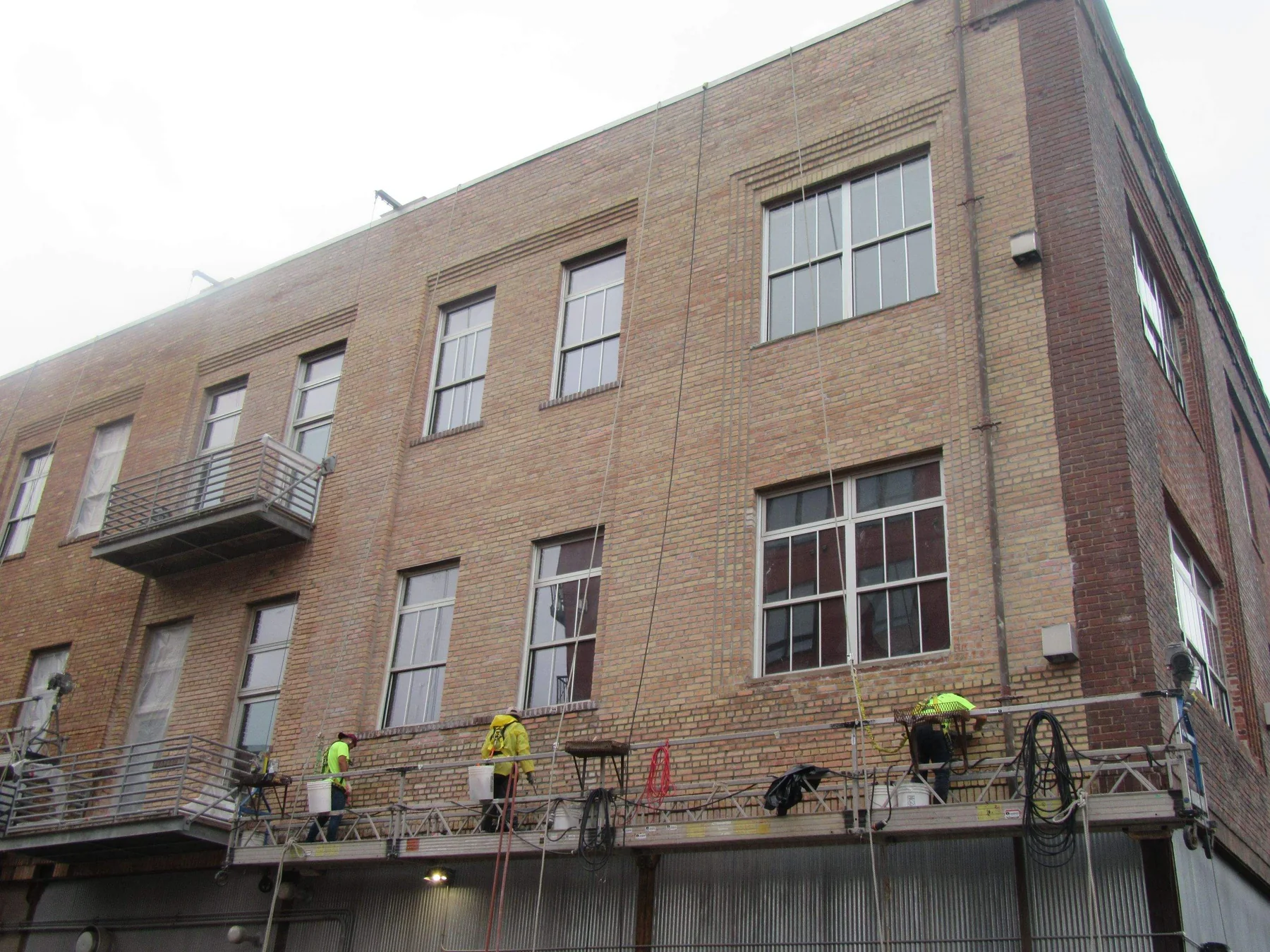
On one commercial masonry building, multiple coating layers had held moisture inside the wall system. Once stripping began, the team found more masonry deterioration than expected. The failed paint was the visible symptom; the restoration plan had to address the wall conditions underneath it.
A few of RSI’s Commercial Paint Removal & Coating Stripping projects
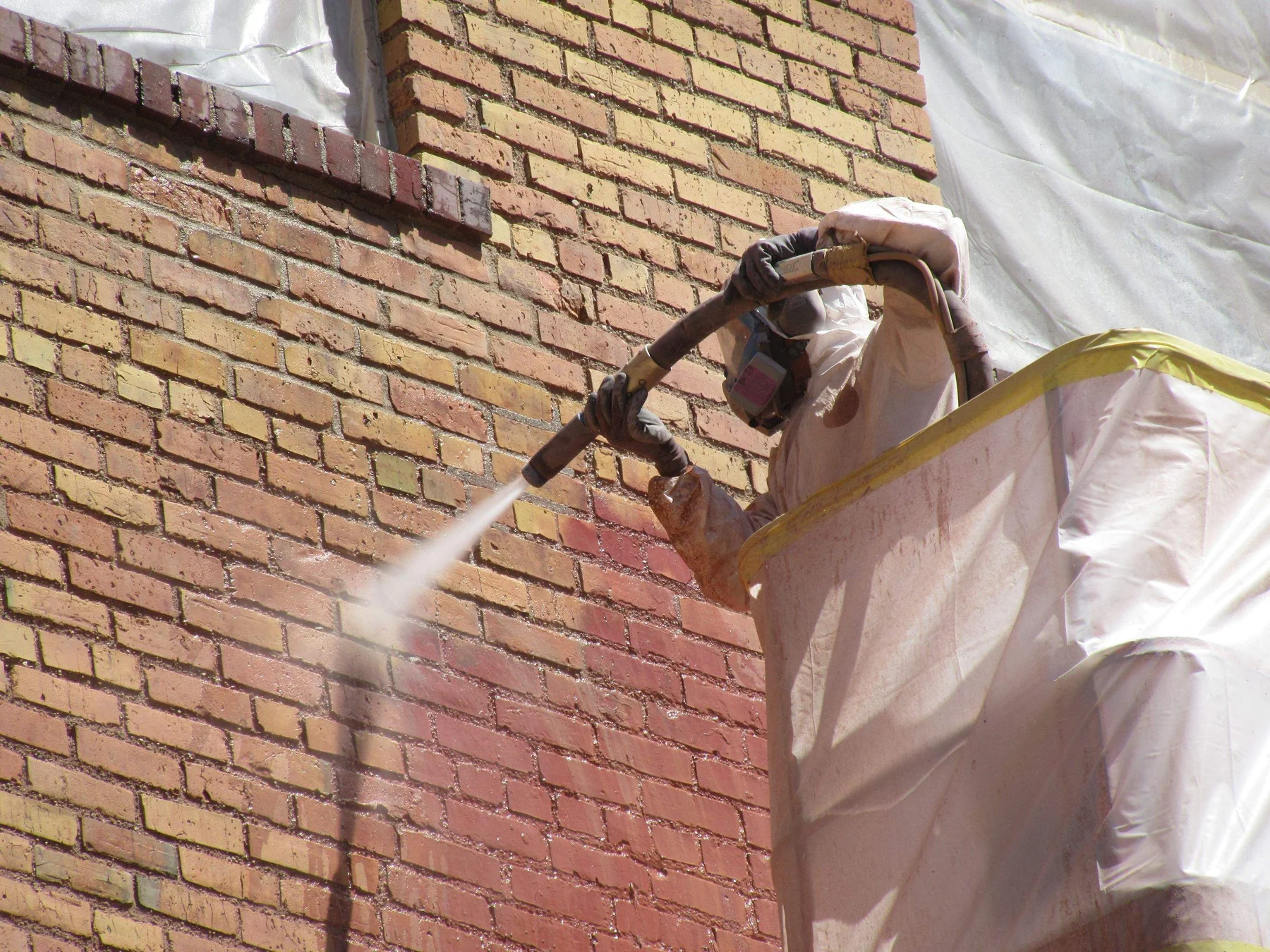
The right removal plan depends on the existing coating, the wall or deck beneath it, the next system being installed, and whether hazardous materials are present. When a coating manufacturer or project specification calls for a defined level of surface preparation, RSI works to that requirement instead of substituting a faster shortcut.
Masonry, historic brick, stone, concrete, and steel do not tolerate the same removal force. Damaging the substrate can turn a coating job into a repair job before the surface is ready.
New coating systems need the surface clean and profiled so they can bond. Industrial coating specs may reference SSPC/NACE surface-preparation levels such as commercial or near-white blast cleaning. [SSPC-SP6] [SSPC-SP10]
When lead-bearing coatings are possible, containment, worker protection, exposure controls, and disposal procedures become part of the work plan before removal starts. [OSHA 1926.62]
After removal, RSI inspects the exposed surface, addresses deterioration where needed, and verifies that the substrate is ready for repair materials, waterproofing, sealants, or coatings.
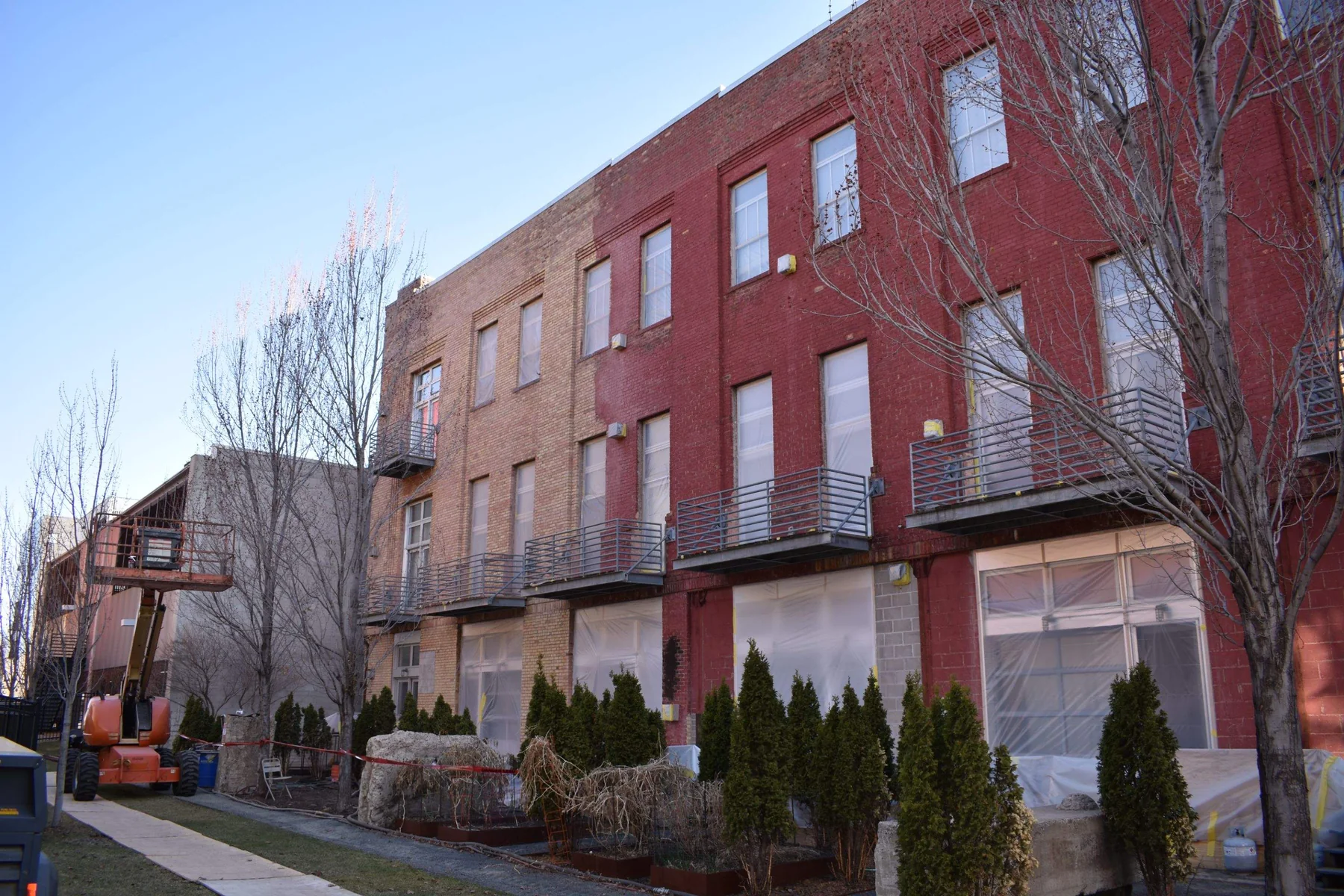
Paint removal on an occupied commercial building is planned around access, debris, dust, runoff, adjacent property, and disposal. When hazardous coatings are involved, the job becomes more controlled and regulated; as Tayton puts it, “Lead changes everything.”
We approach it from a restoration standpoint, not just repainting. We’re evaluating the building envelope and long-term performance, not simply appearance. Once coatings are removed, there’s often significantly more masonry deterioration underneath than originally anticipated.
Tayton EggenbergerMinnesota Branch Manager, RSI
A coating that merely looks aged in a mild climate can become destructive in an Upper Midwest freeze-thaw cycle. Moisture gets behind the film, salts and weather attack the substrate, and stacked coating layers make it harder to see what is happening until removal begins.
Older buildings can include lead-bearing coatings. When those coatings are disturbed, worker protection, containment, exposure controls, and waste handling are governed by OSHA lead-in-construction requirements. [OSHA 1926.62]
Paint that stops a wall from drying can hold moisture in brick, block, or stone. When that moisture freezes, the masonry face can spall behind a coating that still looks mostly intact.
RSI often cannot confirm the real repair quantity until the coating comes off. Failed mortar, soft brick, prior patches, and cracked units may be masked by layers of paint.
Lead or other hazardous coatings change containment, crew protection, and disposal requirements. Removal is no longer a simple production decision once exposure risk is present.
A new coating cannot make up for a dirty, glossy, damp, or weak substrate. The surface has to be clean, sound, and properly profiled before the next system is installed.
On facades, ramps, plazas, and exposed concrete, paint and coating removal often determines whether the follow-on work performs. That may include commercial waterproofing, traffic coatings, concrete repair, or masonry restoration after the wall is opened up.
RSI starts by reading the building. The crew needs to know what coating is present, what substrate is underneath, what hazards may be disturbed, and what system is coming next. The sequence is built to protect the substrate as much as to remove the coating.
Identify the coating layers, adhesion, moisture concerns, and substrate condition. On masonry, RSI looks for deteriorated mortar, soft units, spalled faces, and old repairs that may change the removal method.
Before removal starts, RSI plans containment, access, worker safety, and waste handling. Lead or hazardous coatings make the work more controlled, and the plan has to reflect that before tools touch the wall.
Media blasting, chemical stripping, grinding, and other mechanical methods are selected by condition. The biggest technical risk is “damaging the substrate,” especially on masonry and historic structures.
After removal, RSI inspects what is exposed, repairs deterioration where needed, and verifies the substrate is “clean and properly profiled” before coatings or restoration materials are installed.
Paint removal is often the first step before facade restoration, waterproofing, sealants, or coating systems can be installed properly.
Stripping is usually needed when the existing coating is failing, trapping moisture, or preventing proper adhesion of the next system. If the old paint is loose, vapor-tight, contaminated, or covering deteriorated masonry or concrete, another coat can hide the problem while making future repairs harder.
RSI may use media blasting, chemical stripping, grinding, or other mechanical removal depending on the substrate and coating type. The method is selected after the team evaluates the wall, deck, or steel surface, because the wrong method can damage the substrate that the project is supposed to restore.
Lead changes containment, worker safety, exposure controls, and disposal requirements. Once lead-bearing coatings are part of the scope, the project becomes more controlled and regulated under OSHA lead-in-construction requirements. [OSHA 1926.62]
If the existing coating has lost adhesion or keeps the wall from drying, painting over it can trap moisture inside the masonry. In an Upper Midwest freeze-thaw climate, that trapped moisture can contribute to spalling, mortar deterioration, and early failure of the new coating.
RSI inspects the exposed substrate, repairs deterioration where needed, and verifies that the surface is clean and properly profiled before new coatings or restoration materials are installed. On masonry walls, that may mean coordinating tuckpointing, brick replacement, stone repair, sealants, or waterproofing before the final finish.
Often, yes, if the access, containment, work hours, and method are planned around the building’s use. Occupied commercial properties require tighter control of dust, debris, noise, odors, pedestrian protection, and waste handling. Hazardous coatings add another layer of planning.
The terms often overlap. Paint removal usually refers to architectural coatings on masonry, concrete, metal trim, or facade elements. Coating stripping may refer to heavier elastomeric, industrial, epoxy, urethane, or traffic-coating systems. In both cases, RSI is focused on safe removal, substrate protection, and readiness for the next repair or coating system.
Schedule depends on square footage, access, coating type, containment requirements, hazardous-material controls, weather, and the repairs discovered after removal. A small localized removal can be short; a full facade or deck restoration may take much longer because stripping is only the first step in the restoration sequence.
RSI performs commercial paint removal and coating stripping across the Upper Midwest with the restoration work in mind: protect the substrate, control the work zone, reveal the actual condition, and prepare the surface for repair or recoating.