01
Flow Path
Water should move to the drain without long-term ponding. If settlement or concrete deterioration has changed the deck pitch, cleaning the drain will not restore drainage.

Drain replacement, bowl repair, waterproofing tie-ins, concrete repair, slope correction, and clogged-drain response for Upper Midwest parking structures.
The call usually starts with standing water, a drain that keeps backing up, or leakage into the level below. On a parking deck, that symptom cannot be separated from the slab, coating, membrane, drain bowl, and slope around it. RSI evaluates the full assembly because deck drains are “part of the overall waterproofing and structural system” and a clean pipe does not help if water is bypassing the inlet, saturating the patch, or traveling beneath the coating.

When a parking deck drain backs up, the pipe may not be the only problem. In a garage or ramp, the drain is tied into the concrete, waterproofing membrane, traffic coating, slope, and structural deck. RSI is typically called when cleaning alone does not stop ponding water, leakage below, or deterioration around the drain assembly.
RSI evaluates how the drain is performing within the structure: drainage patterns, active water intrusion, surrounding concrete deterioration, waterproofing tie-ins, drain assembly condition, and localized slope. Depending on what the investigation shows, the repair may include drain replacement, drain bowl repair, concrete removal and replacement, waterproofing restoration, slope correction, trench drain repair, traffic-coating repair, or localized structural repair.
That distinction is especially important across the Upper Midwest. Standing water increases chloride exposure, drives moisture into cracks and failed transitions, and accelerates coating failure, concrete cracking, spalling, reinforcing steel corrosion, and waterproofing breakdown. A drain issue that starts as a maintenance complaint can become a much larger restoration problem when water continues to sit on the deck or migrate beneath the surface.
For owners planning broader garage work, RSI coordinates drain repairs with parking deck restoration, commercial waterproofing, concrete repair, and traffic coatings so the drain, slab, membrane, and wearing surface are repaired as one connected system.
A few of RSI’s Commercial Parking Deck Drain Repair & Clogged Drain Services projects
Drain repair scope should be built from field conditions, not assumptions. RSI looks for the cause of the ponding or leakage first, then selects the least disruptive repair that will still protect the structure.
Water should move to the drain without long-term ponding. If settlement or concrete deterioration has changed the deck pitch, cleaning the drain will not restore drainage.
The bowl, grate seat, outlet connection, trench drain components, and piping interface are reviewed for corrosion, broken connections, and aging parts that can keep the problem returning.
The membrane or coating termination at the drain is critical. Failed transitions let water bypass the inlet and enter the deck system even when surface water appears to be flowing.
Sand, leaves, trash, sediment, and deicing materials load parking deck drains heavily. Spring and fall cleaning, with winter monitoring, helps keep standing water from becoming a repair project.
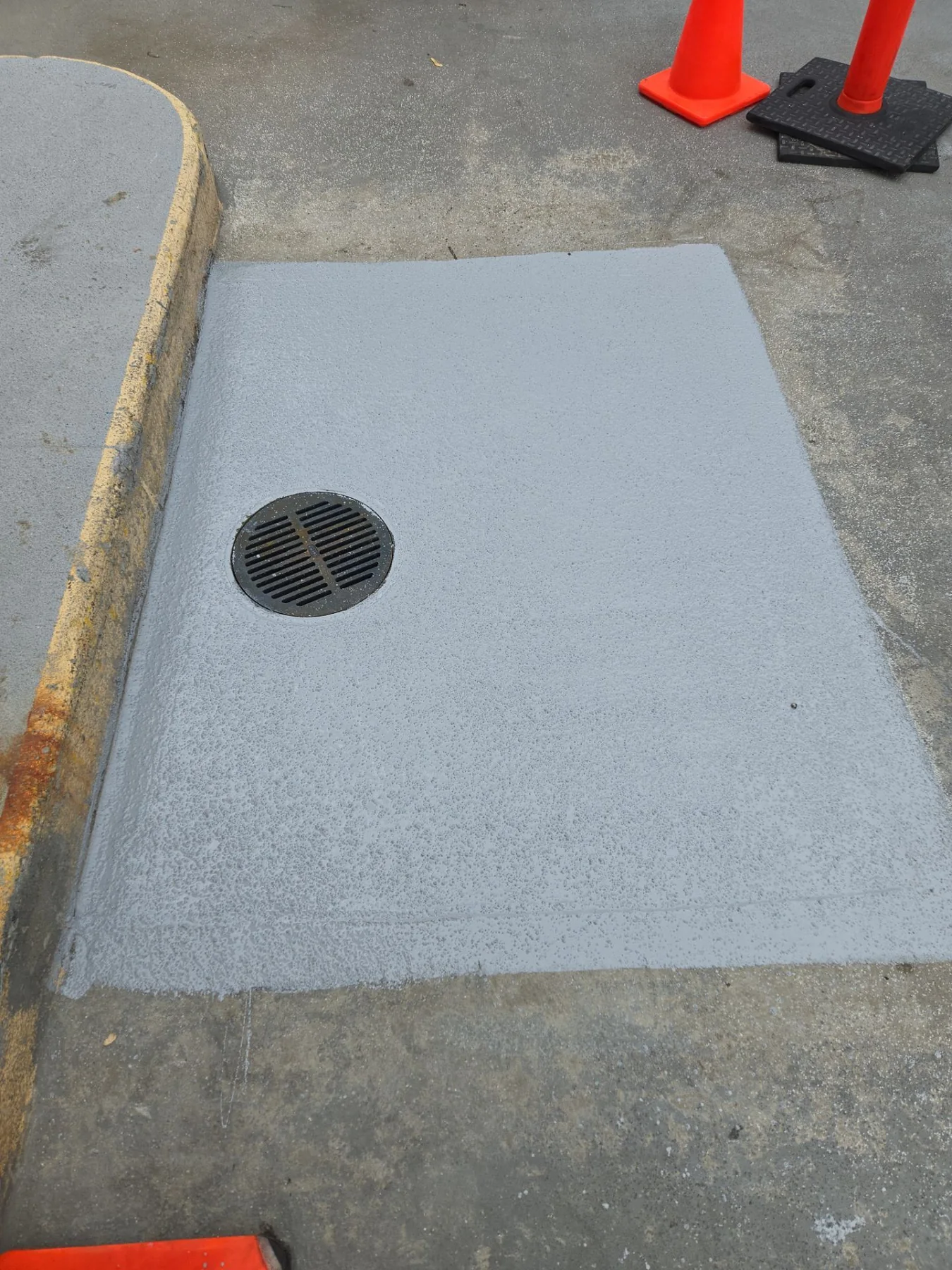
A new drain set in a fresh patch only succeeds if the surrounding concrete, waterproofing transition, coating edge, and traffic staging are handled together. On active decks, RSI plans repairs so runoff is redirected, users are protected, and the completed inlet is tied back into the deck system before traffic returns.
The biggest misconception is that drain issues are minor maintenance items that only require occasional cleaning. In reality, drainage problems are often early warning signs of larger waterproofing or structural issues developing within the parking structure.
Dan LephardtRSI Wisconsin Branch Manager
Water, snow, chlorides, and deicing salts concentrate at drain locations. Add freeze-thaw cycling and aging assemblies, and the inlet becomes one of the first places a parking structure shows whether its waterproofing and concrete are still performing.
RSI generally recommends inspecting and cleaning parking structure drains in spring and fall, with added monitoring during winter when snow, ice, and deicing salts are most active.
Repeat clogs can come from ordinary debris, but they can also point to a corroded drain body, failed connection, settled deck, missing basket, or damaged waterproofing transition. The first question is whether the clog is the cause or the symptom.
Salt-laden water and winter moisture attack metal drain components and the surrounding concrete. Once the assembly deteriorates, water can leak at the connection or enter the slab around the drain instead of leaving the deck.
RSI often finds drains blamed for ponding when the deck no longer slopes properly toward them. Settlement and concrete deterioration can move the low point away from the inlet and hold water where the deck is least prepared for it.
A drain may still pass water while the membrane tie-in fails beside it. When that happens, moisture gets into the deck assembly, accelerates coating breakdown, and can show up as “active water intrusion” in occupied areas below.
When ponding, leakage, or coating failure suggests a broader envelope problem, drain repair should be coordinated with commercial waterproofing and traffic coating work. RSI performs this work across the Upper Midwest, including parking structures in markets such as Milwaukee, Madison, Minneapolis, Chicago, and surrounding regional cities.
RSI starts by reading the deck: where water is standing, where it is leaking below, what the drain assembly looks like, and whether the surrounding concrete and waterproofing can still support a durable repair.
Evaluate ponding patterns, drain conditions, surrounding concrete deterioration, waterproofing tie-ins, coating condition, and signs of water intrusion below the deck.
Identify whether the issue is debris, sand, leaves, sediment, deicing material, corrosion, failed connections, improper slope, structural deterioration, or a combination of conditions.
Complete the selected scope: concrete removal, drain bowl repair, drain replacement, trench drain repair, localized structural repair, slope correction, or piping interface work where conditions require it.
Rebuild the waterproofing tie-in, restore adjacent coatings or sealants, and confirm the repaired area drains correctly before the work zone is returned to service.
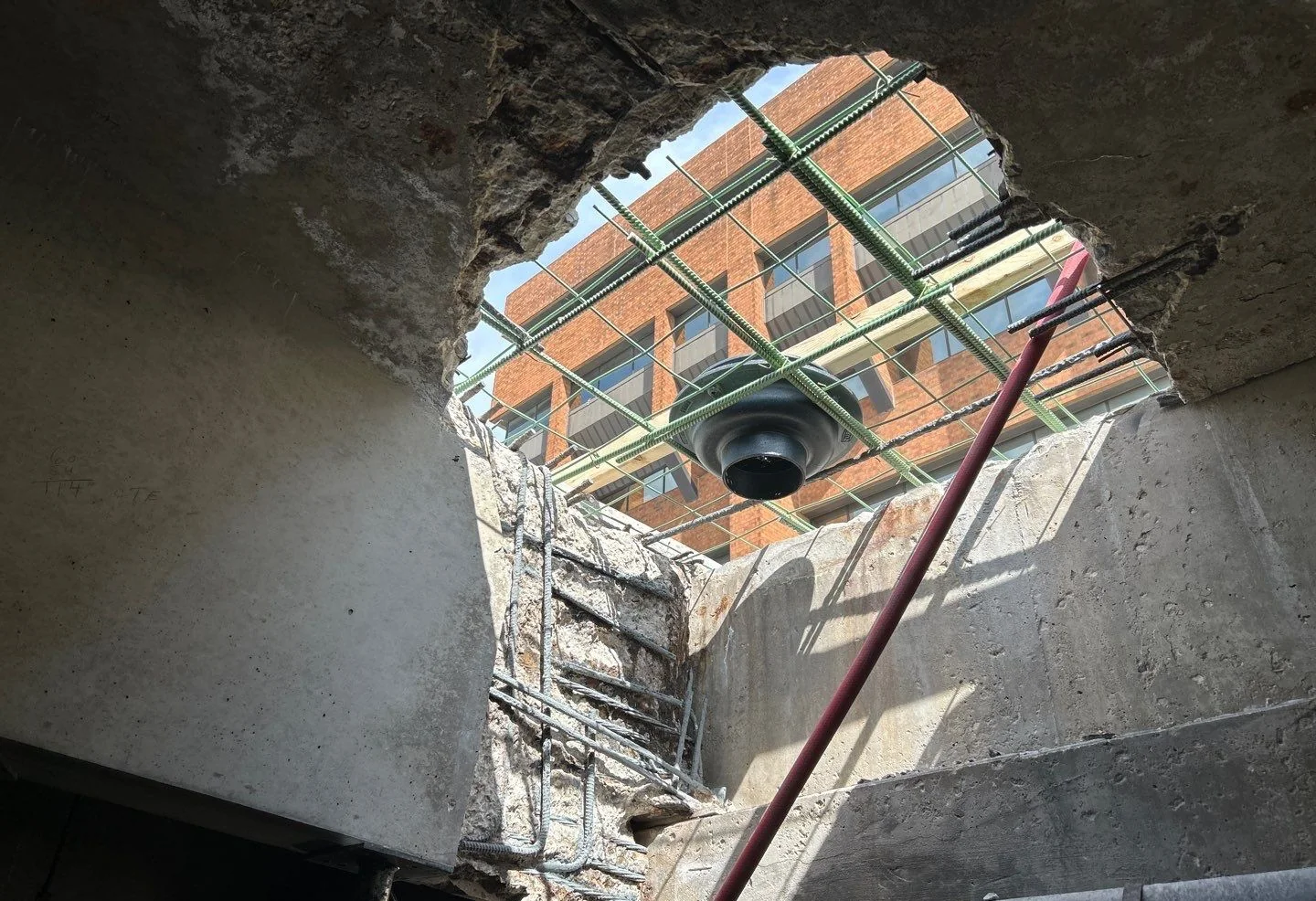
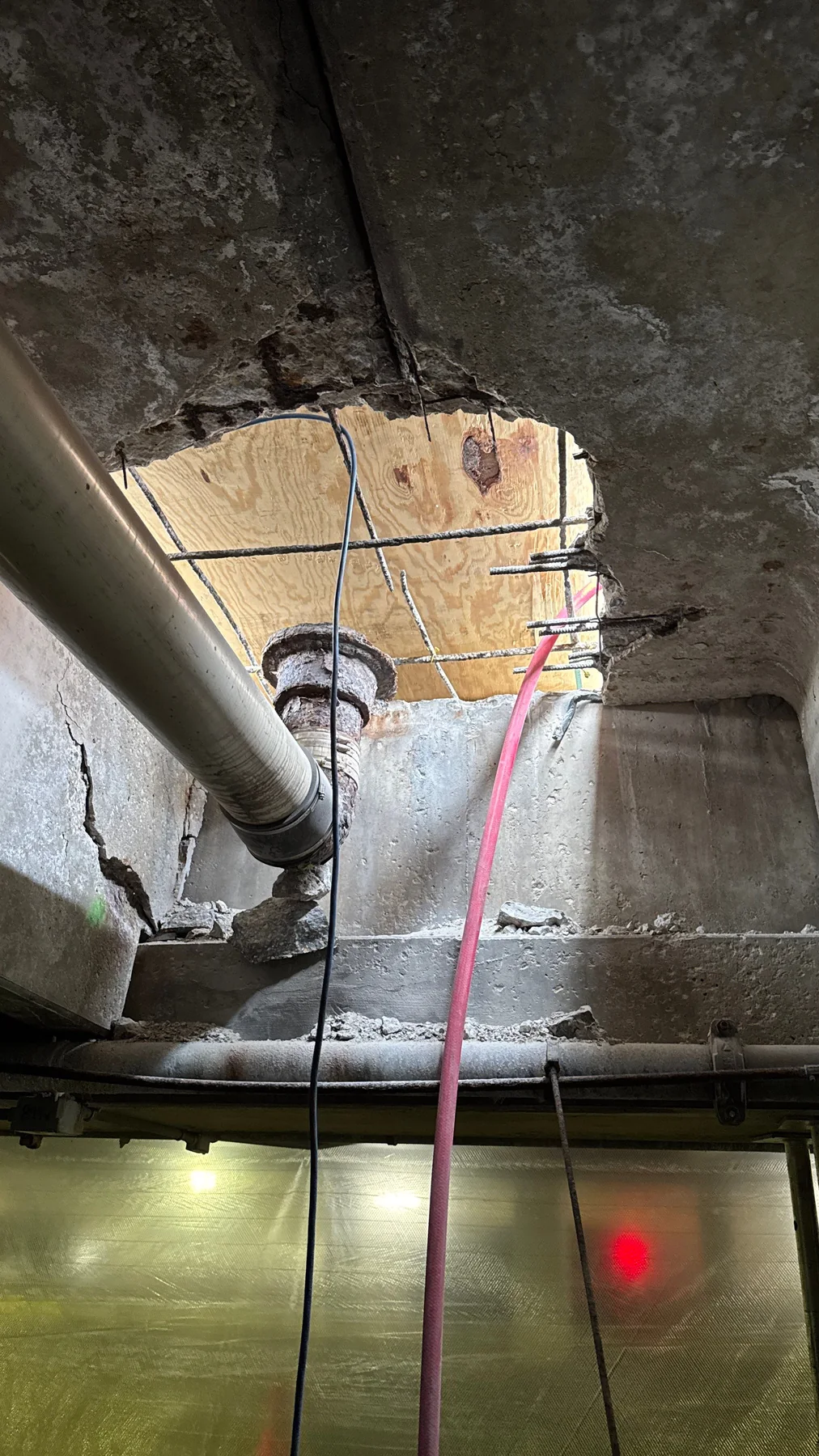
On one RSI parking structure repair, repeated ponding and leakage below were traced to deteriorated drain assemblies and lost local slope, not simply clogged drains. RSI removed deteriorated concrete, installed new drain assemblies, restored waterproofing tie-ins, corrected slope conditions, and repaired adjacent concrete so water returned to the drains instead of the structure. For similar ramp-restoration context, see RSI’s commercial underground ramp and Riverwest parking garage restoration projects.
A plumber typically focuses on the piping and restoring flow. RSI focuses on how the drain interacts with the parking structure: the surrounding concrete, waterproofing membrane, coatings, slope, drain bowl, and drainage design. If the pipe is plugged, it may need cleaning. If the assembly is corroded, the deck has settled, or the waterproofing transition has failed, it needs restoration work.
In Upper Midwest climates, RSI generally recommends inspection and cleaning at least twice per year, typically spring and fall, with additional monitoring during winter when snow, ice, and deicing salts are active. High-traffic structures, tree-covered decks, and known ponding areas may need more frequent cleaning.
Yes. Standing water keeps moisture and chlorides against the concrete, speeds freeze-thaw deterioration, breaks down traffic coatings and waterproofing, and contributes to reinforcing steel corrosion. A small drain issue can become a much larger concrete and waterproofing repair if water is allowed to stay in the deck system.
Depending on the cause, the work may include routine drain cleaning, jetting or flushing drain lines, drain bowl repair, full drain replacement, trench drain repair, concrete removal and replacement around the drain, waterproofing restoration, localized slope correction, traffic-coating repair, and verification that water drains properly after repair.
Parking structures in this region are exposed to water, snow, chlorides, deicing salts, and repeated freeze-thaw cycles. Those conditions corrode metal drain components, damage surrounding concrete, weaken waterproofing connections, and carry heavy debris into the drainage system.
Not always. If the surrounding deck is sound, RSI may be able to restore the waterproofing tie-in locally at the drain. If water has migrated beneath coatings or the membrane is failing in a larger area, drain repair should be scoped with broader waterproofing or traffic-coating restoration.
Repeated ponding, active leakage below the deck, rust staining, spalled concrete around the drain, loose grates, failed coating at the inlet, and recurring clogs after cleaning are all signs that the problem may involve the structure or waterproofing system, not only debris in the pipe.
RSI evaluates parking deck drain problems across the Upper Midwest by looking at the drain assembly, surrounding concrete, slope, coating, waterproofing tie-in, and signs of leakage below. We help owners separate a clog from a larger drainage or deck-protection issue.