01
Accessible Route
Abrupt elevation changes at entrances, ramps, sidewalks, and primary paths can create accessibility concerns. The practical goal is a smooth, predictable transition where pedestrians expect one. [ADA 2010 Standards]

The lip at the entrance, the broken stair nosing, the paver that moved after winter — small walking-surface defects become real exposure once people have to cross them every day.
RSI repairs uneven sidewalks, deteriorated stairs and landings, raised expansion joints, settled pavers, spalled concrete, curb transitions, and damaged parking deck walking surfaces across the Upper Midwest. We separate “making the area safe today” from “solving the problem long term” so owners understand when grinding or patching is enough — and when water, settlement, failed joints, or reinforcing steel corrosion need to be addressed first.

On a commercial property, a trip hazard rarely stays isolated for long. An uneven sidewalk panel, a deteriorated stair edge, a raised expansion joint, a shifted paver field, or a spalled parking deck surface can quickly become a safety concern for tenants, employees, customers, and the public. Once the condition is visible, the owner also has to show that the hazard is being actively managed.
In parking ramps and elevated concrete structures, the surface defect is often a symptom of a deeper system problem. Water intrusion, deicing salts, reinforcing steel corrosion, freeze-thaw exposure, failed waterproofing, and poor drainage can all create the internal pressure and movement that turns a small defect into an uneven walking surface.
RSI scopes trip hazard repair around both the immediate risk and the cause behind it. A minor elevation change may be corrected with grinding or leveling if the concrete is otherwise sound. A deteriorated surface may require patching, resurfacing, partial replacement, joint and sealant repair, waterproofing improvements, drainage correction, or structural concrete repair when the problem is tied to the slab or parking deck system.
That distinction matters for compliance and risk management. Accessible pedestrian routes and entry transitions can create concerns under the [ADA 2010 Standards], and unsafe walking-working surfaces can create exposure for employers and facility operators under [OSHA 29 CFR 1910]. RSI treats the repair as part safety correction, part liability reduction, and part asset preservation.
A few of RSI’s Commercial Trip Hazard Repair projects
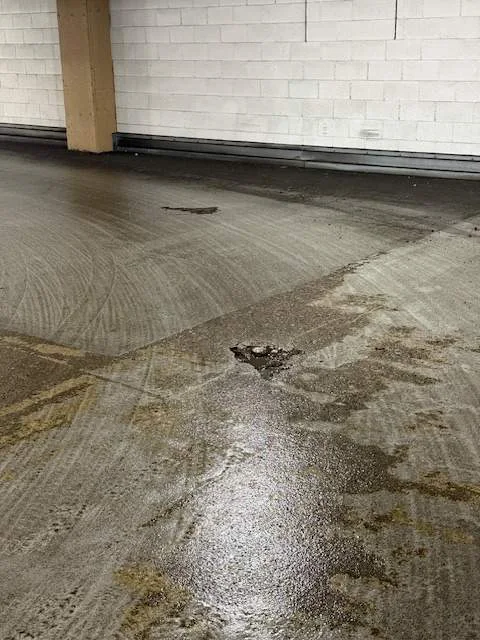
Trip hazard repair starts with the walking route, but the repair belongs to the material below it. ADA and OSHA expectations matter when an unsafe surface is known, but the field decision is usually more practical: is the surface high, hollow, spalled, settled, moving, or wet? The answer determines whether RSI grinds, patches, replaces, stabilizes, reseals, or protects the area. [ADA 2010 Standards] [OSHA 29 CFR 1910.22]
Abrupt elevation changes at entrances, ramps, sidewalks, and primary paths can create accessibility concerns. The practical goal is a smooth, predictable transition where pedestrians expect one. [ADA 2010 Standards]
Known unsafe walking-working surfaces should be addressed through repair, temporary protection, restricted access, or scheduling corrective work. Documentation matters once the condition is identified. [OSHA 29 CFR 1910.22]
Spalled, cracked, delaminated, or chloride-damaged concrete needs a concrete repair approach, not a cosmetic skim. The surrounding slab has to be sound enough to hold the repair.
Standing water, failed joints, and worn waterproofing accelerate freeze-thaw damage. Long-term repairs often depend on drainage, sealants, or coatings as much as the patch material.
Grinding is appropriate when the slab is sound and the defect is a minor high spot. Patching is appropriate when deteriorated concrete has been removed and the surrounding material can hold the repair. Stabilization is appropriate when settlement or voids are driving movement. Choosing the wrong method is how a repair becomes a short-term cover instead of a durable correction.
Many property managers think the issue is ‘minor’ simply because the defect itself appears small. In reality, many slip, trip, and fall claims come from relatively small elevation changes, cracked surfaces, or isolated deteriorated areas. Once a hazardous condition becomes known, there is an expectation that the owner takes reasonable action.
Blake DronenRSI President
Freeze-thaw cycles, deicing salts, snow removal equipment, delivery traffic, and deferred maintenance all work on the same weak points: joints, stair edges, curb transitions, drainage low spots, and patched concrete that never addressed the cause. In this region, a small defect before winter can be a larger walking-surface hazard after spring thaw.
A surface correction can reduce immediate risk, but if water intrusion, settlement, or reinforcing steel corrosion continues, the hazard usually returns — sometimes worse than before.
Cold-weather patching or a quick grind can be the right “immediate risk mitigation” step. It becomes a problem when everyone forgets that the underlying movement, moisture, or deterioration still has to be corrected.
Moisture and deicing salts penetrate failed joints and worn surfaces, corrode reinforcing steel, and create pressure that cracks, delaminates, and spalls the concrete where pedestrians walk.
A slab or paver field that has moved because the base settled will not stay corrected by surface patching alone. The elevation has to be re-established and the base or support condition addressed.
Areas that pond water repeatedly deteriorate faster. Freeze-thaw exposure keeps cycling moisture through cracks, patches, joints, and transitions until the walking surface breaks down again.
Where corrected walking surfaces remain exposed to tires, salts, or standing water, RSI may pair the repair with traffic coatings, commercial waterproofing, or joint and sealant replacement to reduce recurring deterioration.
RSI looks at trip hazards in two phases: make the route safe enough to manage the immediate exposure, then correct the condition that caused the defect. That distinction keeps owners from confusing a temporary safety measure with a permanent repair.
Walk the route, photograph and map the hazards, identify pedestrian flow, and note whether the condition is at an entrance, stair, joint, curb, plaza, loading area, or ramp surface.
Look for settlement, heave, spalling, delamination, failed expansion joints, base movement, water intrusion, reinforcing steel corrosion, and drainage patterns that explain why the hazard formed.
If the area needs to stay open, RSI may use temporary patching, grinding, signage, barriers, or access control. The permanent scope may include replacement, resurfacing, joint repair, waterproofing, drainage improvement, or structural concrete repair.
On occupied properties, RSI phases the work zone to maintain safe access where possible. The finished repair is detailed for the exposure it will see: foot traffic, snow removal, deicing salts, drainage, movement, and winter cycling.
If grinding exposes fractured or delaminated concrete, the work belongs in concrete repair services rather than a surface-only trip hazard fix.
RSI repairs uneven or heaved sidewalks, deteriorated stair edges and landings, cracked or spalled concrete, settled pavement and plaza areas, raised expansion joints, loose pavers and stone, failing curb transitions, damaged parking deck surfaces, and unsafe walking surfaces around building entrances, loading areas, and parking structures.
It depends on the cause. Grinding works for minor elevation differences where the concrete is otherwise sound. If the surface is spalled, cracked, delaminated, settled, or moving because of water intrusion or voids below the slab, grinding may only create a temporary improvement. Replacement, patching, resurfacing, joint repair, or slab stabilization may be the better answer.
As quickly as reasonably possible, especially in high-traffic areas, public access routes, schools, healthcare facilities, parking structures, and building entrances. A full permanent repair may not always be immediate, but the condition should be actively managed through patching, grinding, barriers, signage, restricted access, or prompt scheduling.
Both can matter depending on the property and route. Commercial properties are expected to maintain accessible and reasonably safe walking surfaces, and OSHA requires walking-working surfaces used by employees to be kept in safe condition. RSI does not treat these as abstract code issues; once a hazard is known, owners need a practical mitigation or repair plan. [ADA 2010 Standards] [OSHA 29 CFR 1910.22]
They usually come back when the repair addressed the symptom instead of the cause. A patch placed over ongoing movement, a ground edge over a settling slab, or a surface repair beside a failed joint can all break down again. In the Upper Midwest, moisture, freeze-thaw cycling, and deicing salts make that failure cycle faster.
A temporary fix reduces the immediate safety or operational problem — for example, patching, grinding, temporary ramps or plates, warning signage, barriers, or restricted access. A permanent fix corrects the root cause, which may require removing deteriorated material, repairing reinforcing steel corrosion, replacing failed joints, stabilizing slabs, improving drainage, or reconstructing the damaged section.
Yes, when site conditions allow. RSI phases work zones, maintains safe pedestrian access where possible, and coordinates closures or reroutes with the owner. That phasing was critical on a downtown Minneapolis paver remediation where the building entrance and walkways stayed in use while affected pavers were removed, base materials were reworked, and the walking surface was re-leveled.
Cost depends on the cause, repair method, access, phasing, and whether the work is surface-level or tied to deeper concrete deterioration, settlement, joint failure, waterproofing, or drainage. Localized grinding or patching is usually less involved than full replacement, structural concrete repair, or drainage correction. RSI prices this work from the site condition, not from a generic square-foot number.
RSI repairs commercial trip hazards across the Upper Midwest and helps owners distinguish short-term mitigation from durable corrective work. If the surface moved, cracked, spalled, settled, or started holding water, we look for the cause before choosing the repair.