01
Slope & low points
RSI checks whether deck slope, settlement, prior repairs, or transitions have created low areas where water remains after storms or snow melt. The most important question is simple: does each low point have a working way out?

When the same bay stays wet, the same ceiling leaks, or the same patch fails again, the drain is usually only one part of the problem.
RSI drainage diagnostics starts with the real condition on the deck: where water ponds, where it should have gone, how long it sits, and what it touches on the way out. We evaluate “how water moves through and off” the parking structure so owners can separate a simple clogged drain from a larger slope, waterproofing, expansion-joint, or concrete deterioration issue.

Drainage diagnostics for a commercial parking structure is not just a response to a plugged inlet. It is a proactive review of how water moves across the deck, reaches the drains, interacts with waterproofing details, and leaves the structure. RSI looks at deck slope, drain placement, ponding areas, drain assemblies, expansion joints, waterproofing transitions, leakage, saturation, and concrete deterioration so the owner can see whether the visible problem is isolated or part of a larger performance issue.
If one drain is blocked with debris, cleaning may be the right fix. RSI recommends a broader assessment when symptoms keep coming back or show up across the structure: repeated ponding, leaks below the deck, coating failures, concrete spalls near drain bowls, recurring repairs in the same area, or deterioration that suggests water is staying in the system longer than intended.
The value is in finding the root cause before owners pay for the same repair twice. A diagnostic-first approach helps prioritize drain corrections, waterproofing repairs, coating work, and concrete restoration in the right sequence, reducing the chance that uncontrolled water exposure keeps driving deterioration after the repair is complete.
RSI performs drainage diagnostics across the Upper Midwest, including commercial ramps and parking structures in dense downtown districts, mixed-use properties, healthcare campuses, industrial sites, municipal facilities, and corporate assets from Milwaukee and Madison to Minneapolis and beyond.
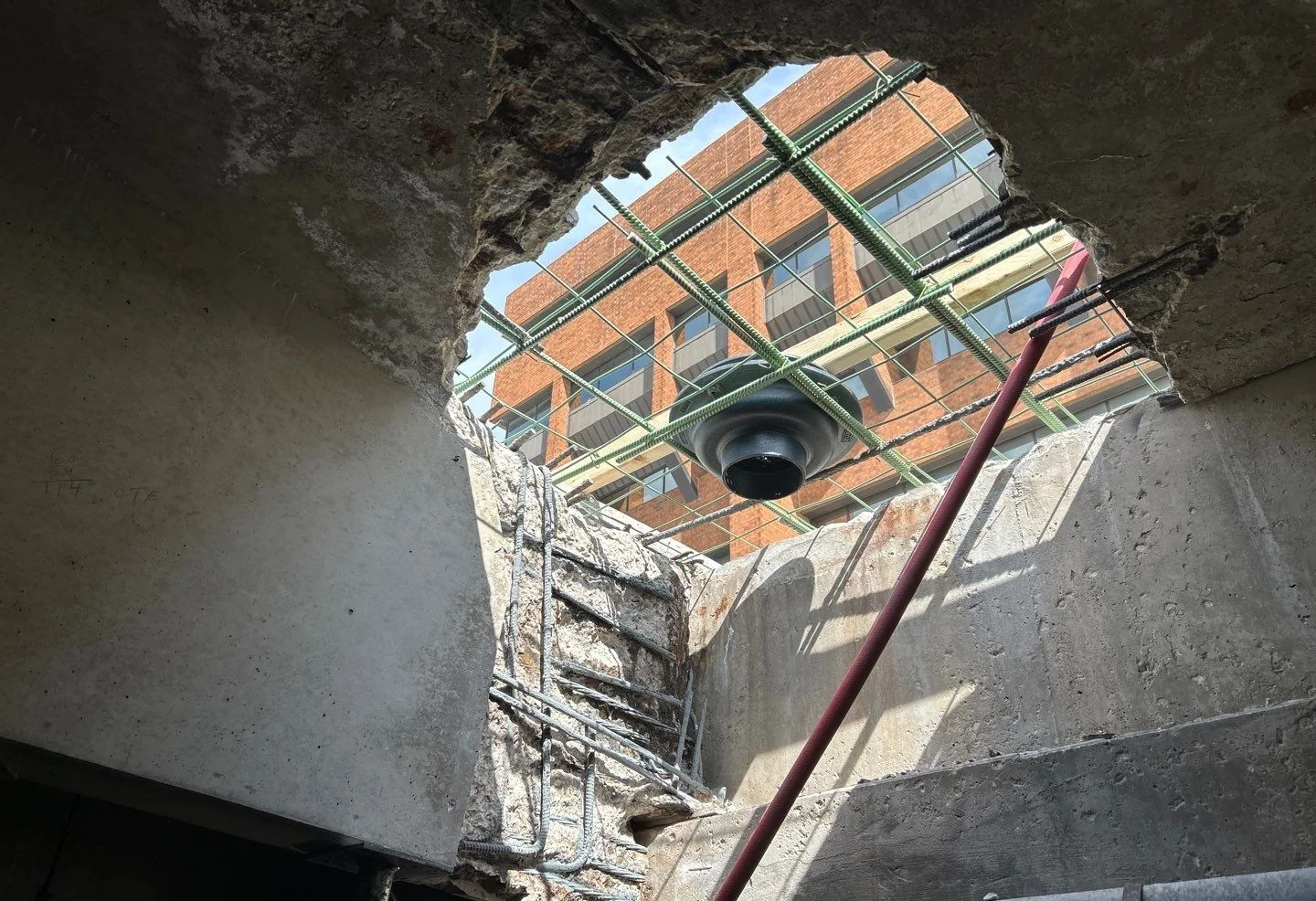
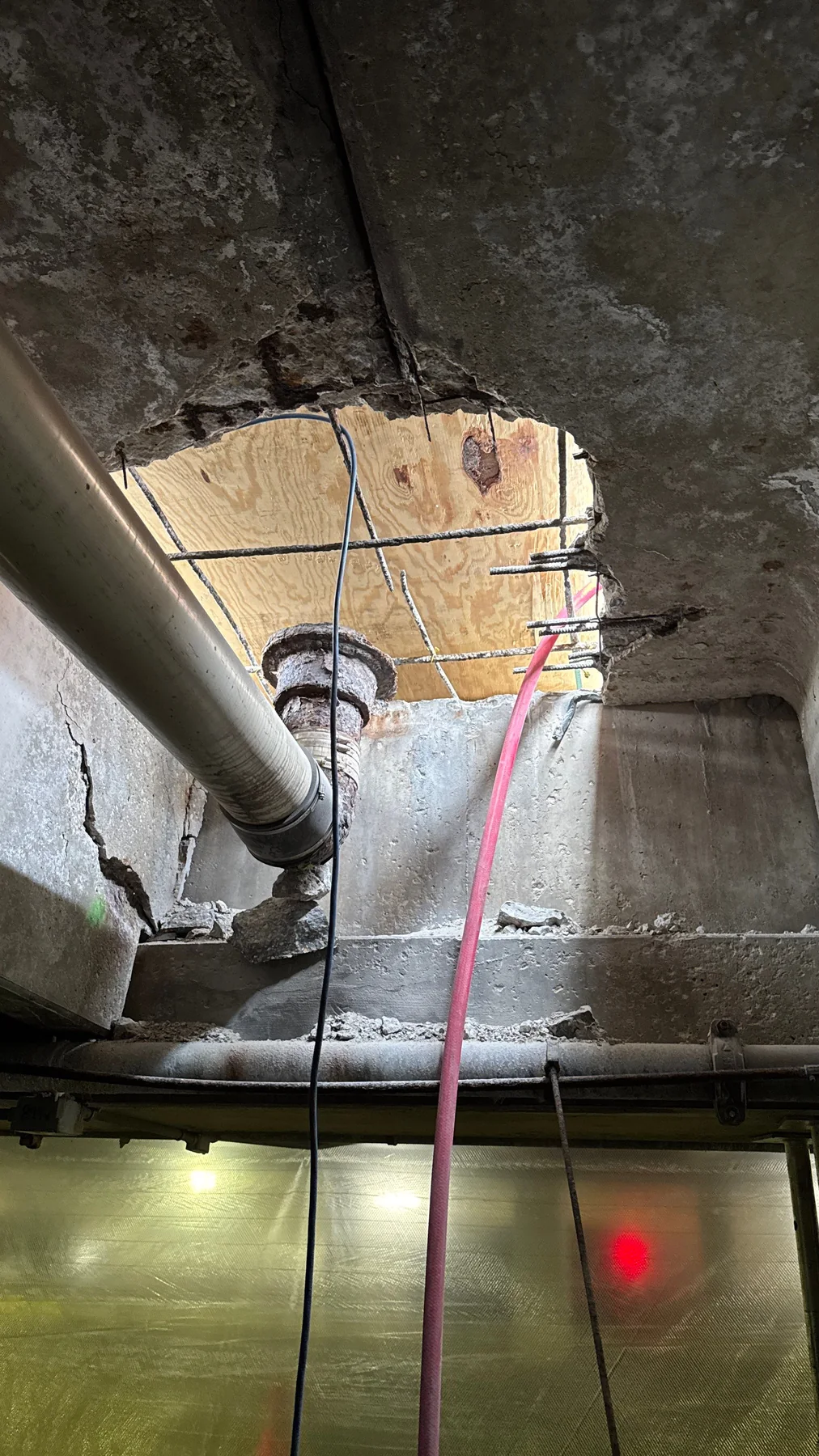
A few of RSI’s Drainage Diagnostics for Commercial Parking Structures projects
A drainage diagnostic is not a code certification or a design stamp. It is a field-grounded evaluation of the places where water is supposed to leave the structure and the places where it is actually staying long enough to damage coatings, concrete, steel, and joints.
RSI checks whether deck slope, settlement, prior repairs, or transitions have created low areas where water remains after storms or snow melt. The most important question is simple: does each low point have a working way out?
Deck drains, trench drains, scuppers, and inter-level piping are reviewed for placement, spacing, blockage, damage, and whether they still match the way water moves on the existing deck.
Many leaks start where coatings, membranes, drain bodies, expansion joints, or repair patches meet. RSI looks closely at these terminations because a good coating field can still fail at a bad drain detail.
Ponding water can expose the same area to moisture, chlorides, and freeze-thaw cycling again and again. RSI maps spalls, saturation, cracking, and deterioration around drains before recommending repair sequence.
The graphic is the deck in miniature: water needs slope, an open inlet, and a waterproof transition at the drain. If one of those pieces is missing, water stays on the surface, finds joints and cracks, or concentrates chlorides directly over vulnerable concrete and reinforcing steel.
Without proper investigation, owners often end up repairing the same areas multiple times because the underlying drainage issue was never corrected. Many parking-structure restoration projects ultimately trace back to long-term drainage deficiencies.
Dan LephardtRSI Wisconsin Branch Manager
Midwest parking decks are asked to handle snow storage, meltwater, deicing salts, and freeze-thaw movement. Poor drainage “dramatically accelerates deterioration” because water does not just sit on the surface; it feeds coating breakdown, membrane failure, reinforcing steel corrosion, concrete spalling, and leaks below the deck.
Before pricing another patch, RSI looks for the root drainage condition: clogged or undersized drains, improper slope, failed waterproofing transitions, blocked trench drains, deteriorated assemblies, coating failures, or ice buildup caused by the way water moves.
Standing water keeps moisture and deicing salt in contact with the same slab area. That is where coatings soften, concrete absorbs more water, and freeze-thaw damage begins to compound.
A drain at the low point receives the heaviest water and chloride load. If the waterproofing transition fails at the bowl or flange, leakage below the deck can appear long before the owner sees the full surface problem.
Older structures may no longer drain the way the drawings intended. Settlement, prior overlays, or patching can create new low points that trap water between drains.
If a spall is patched but the water path remains unchanged, the same area can fail again. RSI’s diagnostic-first approach is meant to identify “root causes” before restoration money is committed.
When drainage is driving coating failure, the diagnostic findings should inform traffic coating selection, hot-applied waterproofing needs, and the order of concrete repair.
RSI evaluates the deck as a connected system before recommending repair. The goal is to determine whether the condition is isolated, or whether recurring leakage, ponding, coating failure, or concrete distress is part of a larger drainage performance problem.
Walk the structure level by level and document drain condition, visible ponding, coating distress, expansion joints, spalls, cracks, active leakage, saturation, and prior repairs.
Trace where water actually travels across the deck, through drains, along joints, and around waterproofing transitions. Ponding locations are mapped against the intended drainage layout.
Check drain assemblies for obstruction, deterioration, and function. Review expansion-joint performance and the condition of coatings or waterproofing where they terminate at penetrations.
Provide photo-backed findings and a prioritized scope so drainage corrections, localized waterproofing repairs, concrete restoration, and coatings are phased in the order that protects the structure.
On one multi-level parking structure, isolated ceiling leaks led to a broader drainage assessment. RSI found widespread upper-level ponding caused by settlement, slope transitions, and partially obstructed drainage systems, allowing the owner to address drainage corrections and preventative restoration before damage spread.
It is a proactive evaluation of how water moves across, through, and off a parking structure. RSI reviews drain condition, ponding locations, deck slope, water-flow patterns, waterproofing and coating condition, expansion-joint performance, evidence of intrusion, concrete deterioration, drain spacing, obstructions, and active leakage or saturation.
If one drain is simply clogged with debris, localized cleaning may solve it. RSI recommends a full assessment when problems repeat or connect to larger deterioration: repeated ponding, leaks below the deck, coating failures, spalls, saturation, or repairs that keep failing in the same area.
Common findings include clogged or undersized drains, improper deck slope, ponding water, failed waterproofing transitions at drains, settlement-related drainage changes, deteriorated drain assemblies, blocked trench drains, coating failures that allow water intrusion, and ice buildup caused by improper drainage flow.
Standing water increases moisture exposure at the deck surface. Over time, that can lead to coating breakdown, membrane failure, freeze-thaw damage, reinforcing steel corrosion, concrete spalling, and leaks below the structure. Deicing salts make the problem more aggressive in Upper Midwest climates.
RSI generally recommends a formal drainage assessment “every few years” for aging parking structures, with routine visual inspections annually or alongside regular structural evaluations. Ramps with recurring leaks, ponding, coating failures, or accelerated deterioration may need more frequent review.
The diagnostic phase is typically visual and can often be performed level by level around normal operations. If repairs are recommended afterward, access, sequencing, tenant circulation, and shutdown needs are planned based on the specific structure and scope.
Yes. Pricing coatings or concrete repair before the drainage picture is understood can leave the owner paying for symptom-based work. Drainage diagnostics helps prioritize the cause first, then the repair system: drainage corrections, concrete restoration, waterproofing transitions, expansion joints, and coatings.
RSI performs drainage diagnostics for commercial parking structures across the Upper Midwest. We identify how water is interacting with the deck, where it is being trapped, and which repairs should happen first so coatings, concrete, joints, and drains are not treated as separate problems.