
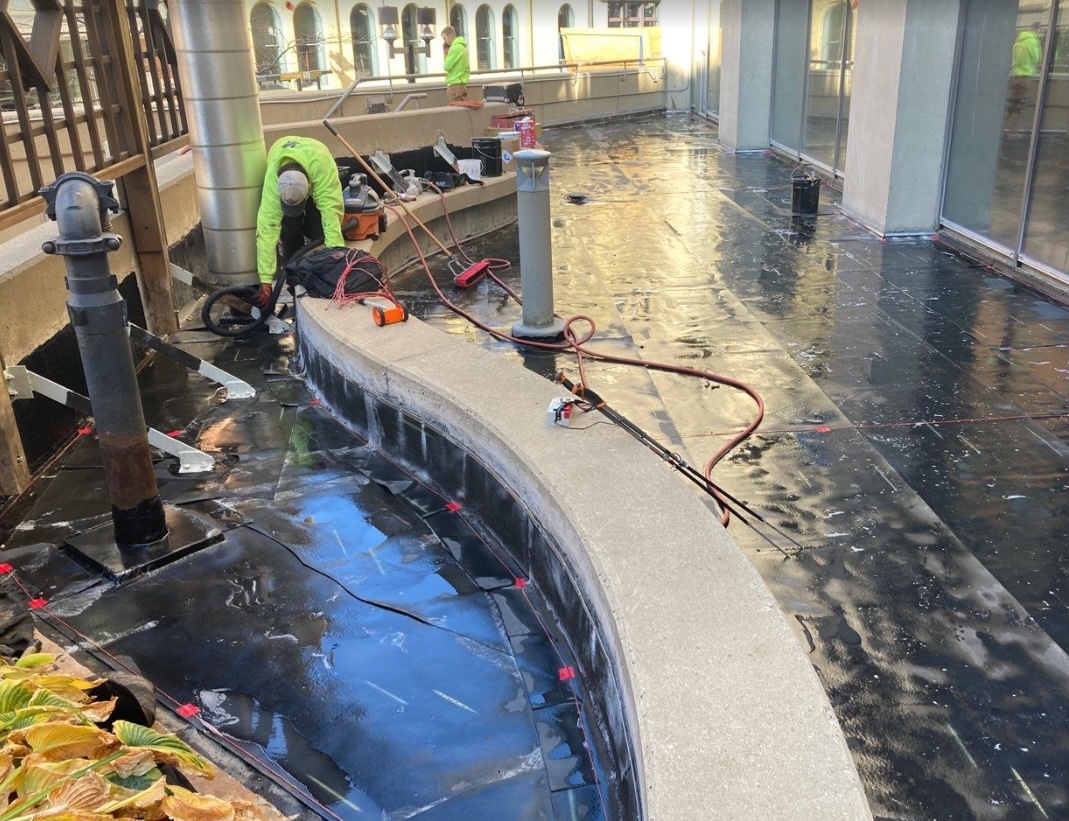
Stop Fighting Water. Start Managing It.
Hot applied waterproofing systems for plaza decks, parking structures & below-grade applications across the Midwest.
At Restoration Systems, we approach waterproofing as a system—not just a product application. Our dedicated crews bring decades of experience to every project, delivering solutions that protect your structures for 25-40+ years.
Request AssessmentThe RSI Difference
Systems thinking, not product-only approach—we address drainage, transitions, and terminations as a complete assembly
Trained, dedicated waterproofing crews (not rotating labor)—consistency and expertise on every project
25-40+ year service life when properly installed—outlasting sheet membrane alternatives
Third-party EVFM testing for critical applications—verified leak-free before burial
Midwest freeze-thaw specialists (50–100+ cycles/year)—systems designed for our climate
Root-cause diagnosis before repair recommendations—solving problems, not just symptoms
Why “Premium Products” Still Fail
Water infiltration remains the leading cause of property loss in commercial structures. Yet building owners continue to be surprised when their “premium” waterproofing system fails within years of installation.
The hard truth? Approximately 90% of waterproofing failures are installation-related, not material failures. The product sitting on your roof or plaza deck isn’t the problem—it’s everything that happened before and during installation.
“You can install the best membrane made, but if the termination isn’t sealed, a joint moves beyond capacity, drainage is missing or clogged, flashing is discontinuous, or penetrations aren’t detailed… you still leak.”
This is why RSI approaches every waterproofing project as a complete system—not just a membrane application. We address the substrate, the transitions, the terminations, the drainage, and the protection. Because waterproofing that works is waterproofing that’s installed as a system.
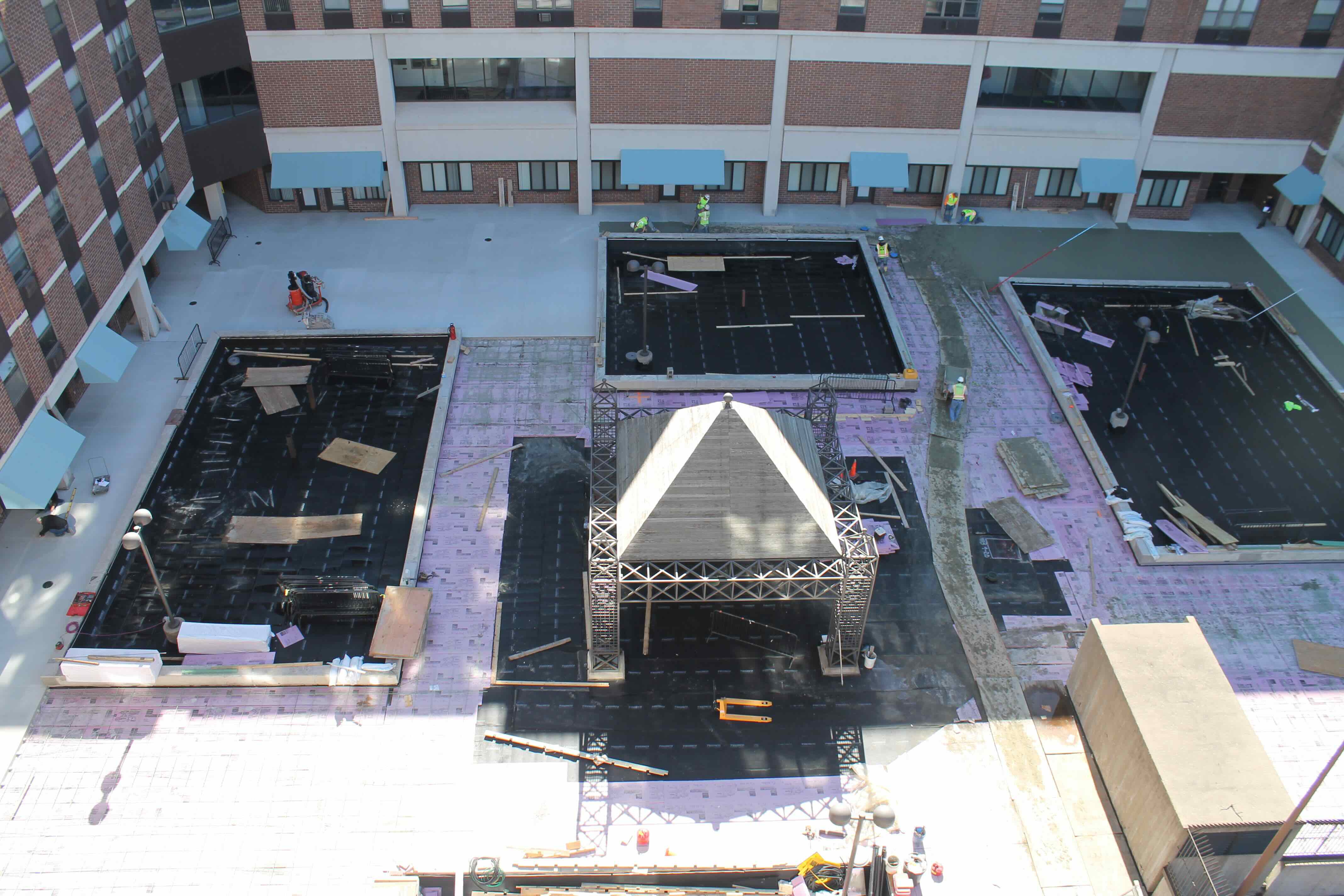
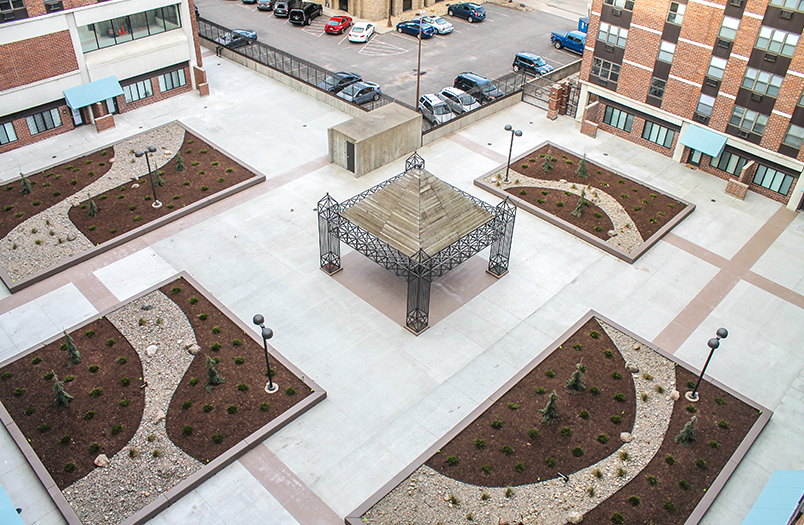
Mears Park Place, St. Paul, MN — 56,000 SF plaza deck waterproofing project
Project Scope
- 56,000 SF Tremproof 6100 hot liquid applied waterproofing system
- 56,000 SF concrete overlay removal and replacement
- Complete drain and pipe replacement throughout plaza deck
- Planter improvements and waterproofing integration
- Full sealant replacement at all transitions
The Result
This multi-year contract represented the largest documented hot liquid applied waterproofing scope in RSI’s portfolio. Through careful phasing and coordination with building occupants, the project was completed on schedule and under budget—delivering decades of protection for the occupied spaces below.
What Is Hot Applied Waterproofing?
Hot applied waterproofing—also known as rubberized asphalt waterproofing or fluid applied waterproofing—is a proven technology that has protected commercial structures for decades. Understanding how it works helps you make informed decisions about protecting your building.
“Hot-applied waterproofing is a liquid rubberized asphalt that’s heated in a kettle and mopped or squeegeed onto the substrate. Once it cools, it becomes a fully adhered, seamless, flexible waterproof membrane.”
The Complete System Assembly
A properly installed hot applied waterproofing system is much more than just the membrane itself. It’s a coordinated assembly of components working together:
- 1 Primer Application: Ensures proper adhesion between the substrate and membrane, creating a continuous bond.
- 2 Hot Rubberized Asphalt: Applied at controlled temperatures (typically 400-425°F) to achieve proper flow and thickness.
- 3 Reinforcing Fabric: Embedded into the hot asphalt at transitions, penetrations, and high-stress areas for added tensile strength.
- 4 Protection Course: Shields the membrane from damage during backfill or overburden installation.
- 5 Drainage & Overburden: Completes the system with proper water management and the final wearing surface.
Key Performance Benefits
Hot applied systems offer distinct advantages that make them ideal for demanding commercial applications:
Seamless coverage eliminates the joints and laps that are common failure points in sheet membrane systems. Full adhesion to the substrate means water can’t travel laterally if a breach occurs—any leak is localized and easier to find. High elongation (typically 1,800%+) allows the membrane to accommodate structural movement and thermal cycling without cracking. And the self-sealing properties of rubberized asphalt mean minor punctures often heal themselves.
Industry Standards: RSI’s hot applied waterproofing installations conform to ASTM D6152 (Standard Practice for Installing Hot-Applied Rubberized Asphalt Waterproofing) and ASTM D6153 (Standard Specification for Materials for Hot-Applied Rubberized Asphalt). These standards govern material properties, application temperatures, and thickness requirements.
RSI installs both hot applied and cold applied waterproofing systems. The right choice depends on your specific application—substrate conditions, access constraints, temperature limitations, and budget. Our assessment process matches the optimal system to your project requirements.
Downtown Milwaukee Plaza Deck
Milwaukee, Wisconsin
This downtown Milwaukee plaza deck project showcased RSI’s ability to execute complex waterproofing repairs under demanding urban constraints. Located adjacent to the city’s light rail line, the project required meticulous coordination with the City of Milwaukee for street closures and precise scheduling.
Key Differentiator
Third-party EVFM (Electronic Vector Field Mapping) testing verified the membrane was 100% leak-free before burial under the concrete wearing slab. This testing provides documented assurance that owners don’t get with visual inspection alone.
The project scope included hot applied waterproofing repair, comprehensive substrate preparation with documented QA, membrane thickness documentation, termination detailing, and a concrete wearing slab re-pour—all executed within a strict 6-hour timeframe to minimize disruption.
Project Capabilities Demonstrated:
- Hot Applied Repair
- EVFM Flood Testing
- Urban Logistics
- Street Closure Coordination
- 6-Hour Concrete Pour
- QA Documentation
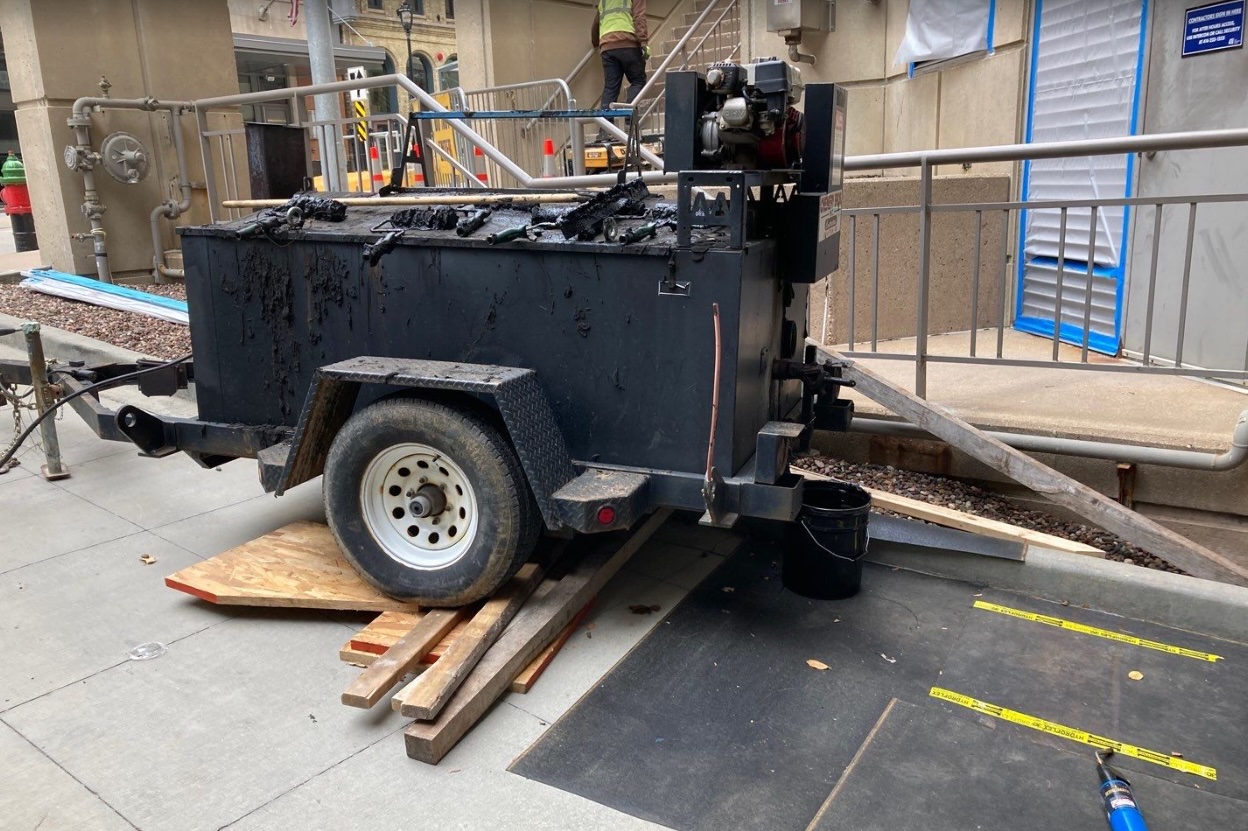
Where Hot Applied Waterproofing Excels
The right waterproofing system depends on your application. Hot applied systems are particularly suited for these demanding commercial environments.
Plaza Decks & Podiums
Plaza decks represent some of the most challenging waterproofing applications—combining pedestrian traffic, thermal movement, complex drainage requirements, and occupied space below. Hot applied systems excel here because they’re fully adhered, seamless, and accommodate movement.
- Structural movement accommodation
- Pedestrian and vehicle traffic loads
- Complex transition detailing
- Integrated drainage systems
Parking Structures
Hot applied waterproofing has decades of proven performance in parking structures throughout the Midwest. These systems handle vehicle traffic, de-icing salt exposure, and the constant thermal cycling that breaks down lesser systems.
- Traffic bearing membrane systems
- Salt and chemical resistance
- Thermal cycling durability
- Expansion joint integration
Below-Grade Foundations
Below-grade applications demand waterproofing that performs under constant hydrostatic pressure. Foundation walls, elevator pits, tunnels, and blind-side applications all benefit from the monolithic, fully-adhered protection that hot applied systems provide.
- Foundation wall protection
- Elevator pit waterproofing
- Tunnel applications
- Blind-side pre-applied systems
Planters & Landscaped Decks
Landscaped decks add soil, roots, irrigation, and drainage to an already complex waterproofing challenge. The fully adhered nature of hot applied membranes prevents root penetration and lateral water migration that damages occupied spaces below.
- Root barrier integration
- Irrigation system coordination
- Soil and planting load management
- Protection of occupied space below
Wondering if hot applied is right for your project?
RSI installs both hot and cold applied waterproofing systems. Our assessment matches the optimal system to your specific application.
Why Freeze-Thaw Changes Everything
Waterproofing in Milwaukee and Minneapolis isn’t like waterproofing in Atlanta or Phoenix. Our climate creates unique stresses that demand specialized approaches.
Annually in Milwaukee and Minneapolis—each cycle stressing your waterproofing system
When water freezes, it expands 9%—forcing cracks wider with every cycle
When properly installed, hot applied systems outlast the Midwest climate

University campus waterproofing project along Lake Michigan — harsh Midwest exposure conditions
The Cumulative Damage Effect
Midwest winters don’t just get cold—they cycle above and below freezing repeatedly throughout the season. Each freeze-thaw cycle drives water into microcracks, expands when frozen, and leaves the crack slightly wider when it thaws. Over 50–100+ cycles per year, this progression causes microcracking, scaling, and spalling that accelerates each season.
This is why waterproofing strategies that work in other regions often fail here. A system that lasts 30 years in a temperate climate might fail in 10 years under Midwest conditions without proper design.
“Midwest winters cycle above and below freezing far more often than most regions. This makes our waterproofing strategy fundamentally different—we design systems that tolerate movement, incorporate redundant drainage, and protect every termination detail.” — RSI Project Approach
RiverWest Building Restoration
Minneapolis, Minnesota
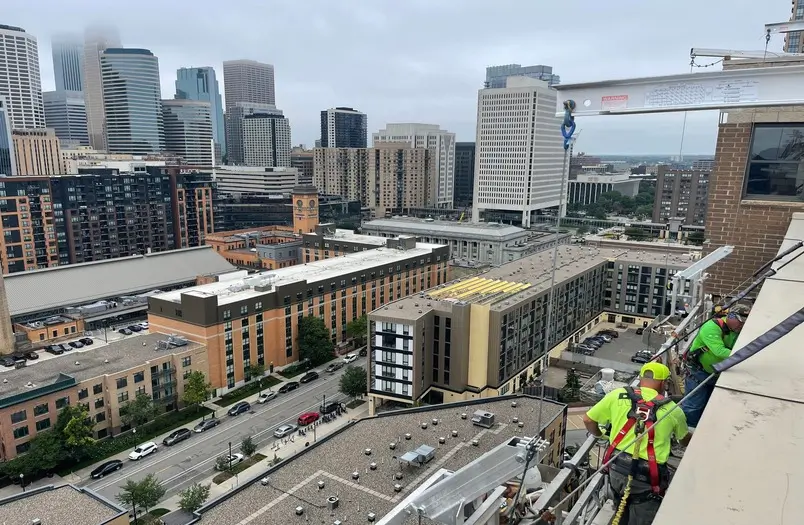
The RiverWest building restoration showcased RSI’s capability to execute large-scale polyurethane waterproofing while navigating complex regulatory requirements. This Minneapolis landmark required comprehensive balcony waterproofing combined with envelope sealant replacement—all while maintaining the building’s historic character.
The scope included traffic-bearing polyurethane waterproofing membrane application at all balcony locations, comprehensive sealant replacement throughout the building envelope, and installation of new thru-wall flashing to complete the weather barrier system.
The Challenge: Historic Preservation Coordination
RSI worked closely with the Historic Preservation Commission to ensure all restoration work maintained the building’s architectural integrity. Material selections, application methods, and finished appearances were coordinated and approved before work began—demonstrating our experience navigating complex stakeholder requirements while delivering technically excellent results.
The RSI 6-Step Installation Process
Every hot applied waterproofing project follows a disciplined process that addresses the details where waterproofing succeeds or fails.
Pre-Installation Assessment
Before any work begins, we diagnose the root cause, not just the symptoms. We evaluate substrate conditions, identify the true sources of water infiltration, and assess the complete assembly including drainage, transitions, and terminations. This prevents repeating past failures.
Substrate Preparation
Proper substrate preparation is verified and documented—never assumed. We repair cracks, remove contaminants, establish proper drainage slopes, and ensure the surface meets manufacturer requirements for moisture content and profile. Documentation protects both you and us.
Membrane Application
Kettle temperatures are monitored to maintain the precise application window. Membrane thickness is documented across the surface—not just spot-checked. Our crews understand that consistent application determines long-term performance.
Transition Reinforcement
Every penetration, every corner, every termination receives appropriate reinforcement and detail work. This is where most waterproofing failures originate, and it’s where RSI’s experience is most visible. We detail everything—not just the visible transitions.
Protection Course Installation
Protection board is installed immediately after membrane application—not left exposed. This shields the membrane from UV, construction traffic, and backfill damage during the remainder of construction. Timing matters.
QA & Testing
For critical applications, RSI offers third-party EVFM (Electronic Vector Field Mapping) testing to verify the membrane is leak-free before burial. This provides documented assurance that visual inspection alone cannot deliver.
“Experience shows up in consistency, detail work, and problem-solving—not just speed. The crews that do this work every day understand how small decisions compound over the life of the system.”
Understanding Waterproofing Lifecycle & Performance
Service Life: The Numbers
When properly installed, hot applied waterproofing systems deliver 25-40+ years of service life—significantly outperforming the 15-25 year typical lifespan of sheet membrane alternatives. This extended service life fundamentally changes the lifecycle cost calculation for building owners.
The key phrase is “properly installed.” The material itself is durable, but performance depends entirely on the quality of the complete assembly—substrate preparation, application consistency, transition detailing, and protection.
- 25-40+ year service life with proper installation
- Minimal maintenance requirements after installation
- Most service issues stem from damage above the membrane, not membrane failure
- Fully adhered systems allow localized repairs when needed
- No lap failures—the most common failure mode for sheet systems
The Overlooked Factors
Experienced waterproofing professionals know that some of the most critical factors in long-term performance are invisible in the finished project. These are the details that separate a 15-year system from a 40-year system.
Drainage is part of waterproofing. A membrane that sheds water but has nowhere for that water to go isn’t a complete solution. RSI evaluates and addresses drainage as part of every waterproofing project—because a clogged drain can undermine even the best membrane.
The best waterproofing is invisible. By the time you see water infiltration, the damage has often been progressing for years. The planning, substrate preparation, and sequencing that happen before membrane installation determine whether you’ll see that damage or not.
The decisions made during assessment and preparation—long before any membrane is applied—are often what determine whether a waterproofing system lasts 15 years or 40 years. This is why RSI’s systems approach starts with understanding the complete picture, not just applying a product.
More Waterproofing Projects Across the Midwest
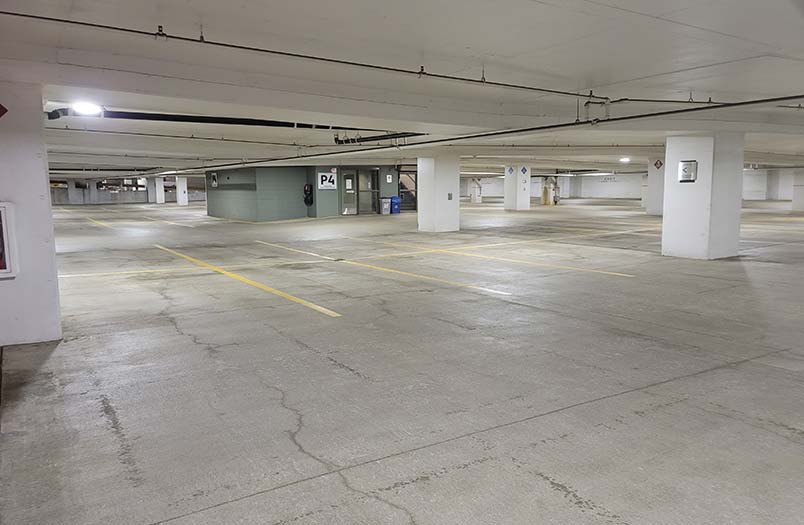
St. Paul Parking Structure
St. Paul, Minnesota
425,000+ SF high-solids polyurethane waterproofing traffic bearing membrane system. One of RSI’s largest parking structure rehabilitation projects, demonstrating capability for major commercial waterproofing scopes.
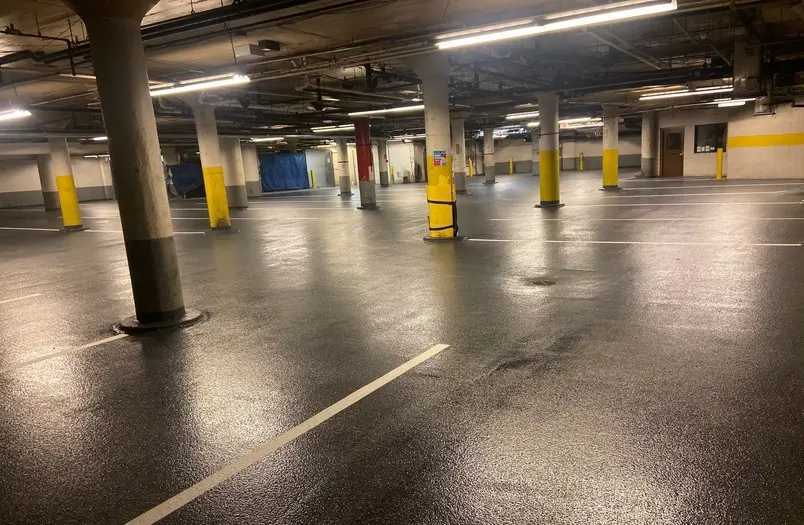
W Hotel at Foshay Tower
Minneapolis, Minnesota
Waterproof traffic coating application following concrete repairs, with careful coordination around active hotel and restaurant operations. Demonstrates RSI’s ability to execute in occupied commercial environments.
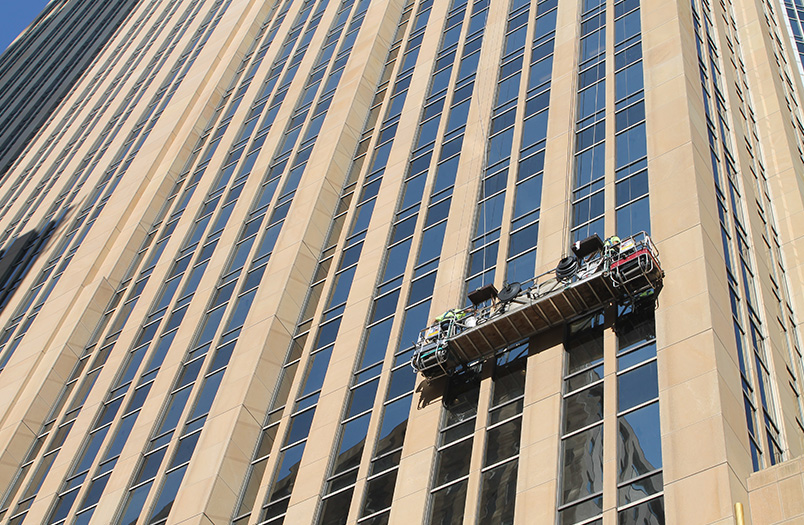
Wells Fargo Center
Minneapolis, Minnesota
Custom window gasket installation and comprehensive sealant installation for envelope waterproofing. High-rise facade work requiring precise coordination and specialized access equipment.
Frequently Asked Questions
What types of restoration services do you offer?
+RSI specializes in a comprehensive range of structural restoration services including concrete repair, masonry restoration, waterproofing, and structural strengthening. We work on commercial, industrial, and institutional buildings.
Our services include crack injection, carbon fiber reinforcement, joint sealant replacement, facade restoration, and preventive maintenance programs tailored to your building’s specific needs.
How do you determine project costs?
+Every project begins with a thorough on-site assessment conducted by our project team. We evaluate the extent of damage, access requirements, materials needed, and project timeline to provide a detailed, transparent estimate.
Our estimates include itemized costs for labor, materials, equipment, and any specialized services required. We believe in no-surprise pricing and will clearly communicate any potential variables before work begins.
What is your typical project timeline?
+Project timelines vary based on scope, complexity, and access conditions. Small to medium repairs typically take 1-4 weeks, while comprehensive facade restorations may span several months.
We provide detailed project schedules at the start of each engagement and maintain open communication about progress. Our team is experienced at minimizing disruption to building operations and occupants.
Are you licensed and insured?
+Yes, RSI is fully licensed and carries comprehensive insurance coverage including general liability, workers’ compensation, and professional liability insurance. We can provide certificates of insurance upon request.
Our team includes certified restoration technicians with specialized training in the latest repair techniques and safety protocols. We partner with licensed professional engineers when projects require engineering expertise.
Do you offer warranties on your work?
+Absolutely. We stand behind our workmanship with comprehensive warranties. Standard repairs include a 5-year warranty, while structural repairs and waterproofing systems come with extended warranty options of up to 10 years.
Warranty terms are clearly outlined in your contract, and we maintain detailed project documentation to support any future warranty claims.
What areas do you serve?
+RSI provides restoration services throughout the Mid-Atlantic region, including major metropolitan areas and surrounding counties. Our headquarters and primary service area covers a 150-mile radius.
For larger projects outside our primary service area, we can often accommodate travel or partner with local contractors while providing project management and quality oversight. Contact us to discuss your specific location.
Ready to Start Your Restoration Project?
Contact us today for a free on-site assessment. Our team will evaluate your building’s needs and provide a detailed proposal with no obligation.