
Commercial Stone Repair and Replacement
Improper stone repair causes more damage than the original problem. When general contractors treat stone like brick, building owners pay the price—in crumbling facades, failed repairs, and costly do-overs. RSI’s material-specific approach protects your investment.

Key Takeaways
- Stone is not brick—using the wrong mortar type or repair method can cause irreversible damage to limestone, granite, and terra cotta.
- Material-specific expertise matters: each stone type requires distinct techniques, from Type O mortar for limestone to Dutchman repairs for granite.
- The hidden cost of improper repairs cascades—one failed repair leads to accelerated deterioration, water infiltration, and structural damage.
- RSI has completed 20+ historic preservation projects with Minneapolis Heritage Preservation Commission approval.
- Assessment, material matching, precision repair, and ongoing protection form our proven four-step approach to commercial stone restoration.
The Hidden Cost of Improper Stone Repair
Every year, building owners spend thousands fixing repairs that were done incorrectly the first time. The problem isn’t always visible at first—mortar that appears sound may be actively destroying the stone around it. By the time the damage becomes apparent, replacement is often the only option.
The most common mistake we see? Contractors treating stone like brick. They use the same mortar, the same techniques, the same approach for both materials. But stone and brick have fundamentally different properties, and what works for one can devastate the other.
When high-strength mortar designed for brick is used on softer limestone, the stone itself becomes the weak point. Freeze-thaw cycles create pressure that the mortar won’t absorb—so the stone fractures instead. What started as a simple repointing job becomes a full facade replacement.
Cascading Damage Alert
One improper repair leads to accelerated deterioration of surrounding stonework. Water infiltrates compromised joints, freeze-thaw cycles expand cracks, and structural integrity weakens. The cost of correction compounds with each passing season.
“I’ve seen too many buildings where contractors used Type S or Type M mortar on limestone—mortars with compressive strengths of 1,800 to 2,500 psi. The limestone itself is often softer than the mortar holding it. When something has to give, it’s the stone that fails.”
First National Bank stone restoration, St. Paul — demonstrating material-appropriate repair methods
Stone vs. Brick: Why the Approach Matters
Natural Stone
-
Material Hardness
Limestone typically softer than high-strength mortar; mortar must be weaker than the stone to prevent damage
-
Mortar Type
Requires Type O mortar (~350 psi) for limestone; mortar should be the “sacrificial” element in freeze-thaw cycles
-
Repair Approach
Material-specific techniques including Dutchman repairs, color-matched patching, and stone replacement from matching quarries
-
Moisture Behavior
Natural stone “breathes” differently; improper sealing can trap moisture and accelerate deterioration
-
Preservation Requirements
Historic stone often requires Heritage Preservation Commission approval for repairs; documentation and material matching essential
Standard Brick
-
Material Hardness
Fired brick is typically harder and more uniform; can handle stronger mortars without damage
-
Mortar Type
Type S (1,800 psi) or Type M (2,500 psi) commonly used for structural brick applications
-
Repair Approach
Standard repointing and replacement methods; more standardized techniques across projects
-
Moisture Behavior
Lower porosity in modern brick; more forgiving with waterproofing treatments
-
Preservation Requirements
Fewer regulatory constraints for standard brick; replacement bricks more readily available
Wisconsin Tower Case Study
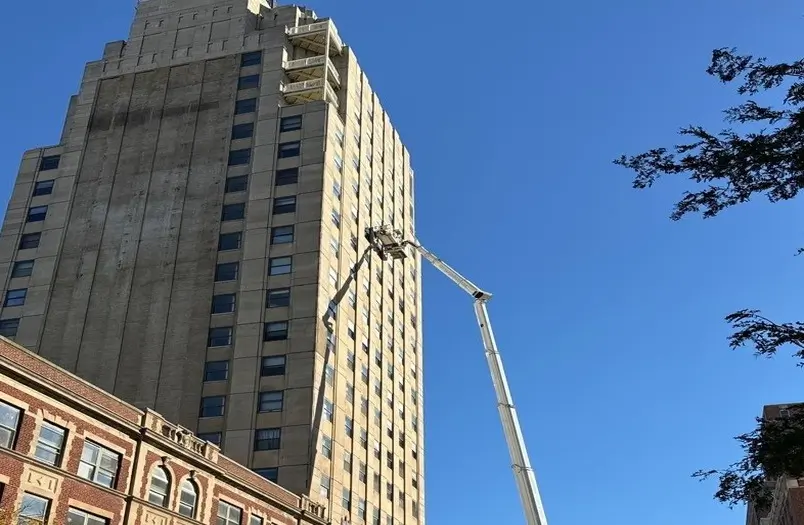
Wisconsin Tower Condominium
Milwaukee, Wisconsin
When Wisconsin Tower’s property management discovered deteriorating stone elements on their historic high-rise, they faced a familiar challenge: previous repair attempts had used inappropriate materials that accelerated rather than solved the problem. RSI’s assessment revealed mortar joints repointed with high-strength mortar that was actively damaging the softer limestone surround. Our team developed a phased restoration plan that removed the damaging mortar, replaced critically deteriorated stone elements with material from a matching quarry source, and repointed all joints with properly formulated Type O mortar. The result: a facade that will last decades, not years.
Three Stone Types, Three Approaches
Each type of stone requires specialized knowledge, techniques, and materials. Our commercial stone restoration craftsmen are trained in the unique demands of each.
Limestone
The most common historic building stone in the Midwest. Requires Type O mortar and careful attention to color matching. Softer composition makes it especially vulnerable to improper repair.
Type O Mortar RequiredGranite
Extremely durable but challenging to repair when damaged. Dutchman repair technique preserves original appearance while replacing only compromised sections. Requires precision cutting and installation.
Dutchman Repair SpecialistsTerra Cotta
Ornamental architectural clay requiring artisan-level restoration skills. Custom molds, glaze matching, and structural steel support are often needed. Our team has restored intricate decorative elements including gargoyles.
Custom Artisan Restoration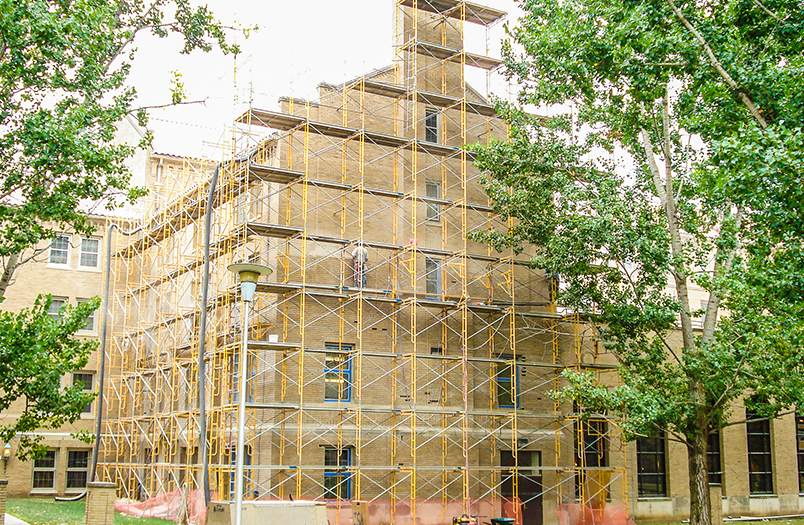
Lourdes Hall limestone restoration, Winona — precision color matching on century-old stone
The Midwest’s Most Common—and Most Misunderstood—Building Stone
Limestone defines the Midwest’s architectural heritage. From university halls to historic downtown facades, this sedimentary stone has shaped our region’s built environment for over 150 years. But its prevalence often leads to a dangerous assumption: that it can be treated like any other masonry.
The reality is that limestone restoration requires specialized knowledge that most general contractors don’t possess. Working with limestone repair specialists ensures proper techniques are used. The stone’s porosity, hardness, and composition vary significantly between quarries—and even within the same quarry. What works for one building’s limestone may cause failure on another.
At Lourdes Hall in Winona, our team faced a common challenge: matching replacement stone to the existing century-old facade. The original quarry had closed decades ago. Through careful analysis and testing, we identified a contemporary source with matching mineral composition, porosity, and weathering characteristics.
The Color Matching Challenge
New limestone rarely matches weathered stone immediately. RSI’s approach accounts for how replacement stone will age over time, selecting material that will converge with existing stone’s appearance within 2-3 years rather than matching at installation (which would result in visible differences for decades).
When the Hardest Stone Needs the Most Precise Touch
Granite’s reputation for durability is well-deserved—it resists weathering, handles freeze-thaw cycles better than most stones, and maintains its appearance for centuries. But when granite does sustain damage, the repair requires a level of precision that challenges even experienced masons.
The difficulty lies in granite’s very hardness. Unlike limestone, which can be worked with traditional hand tools, granite demands diamond-tipped equipment and specialized cutting techniques. Patching compounds that work well on softer stones look obviously wrong on granite. And because granite is often used in high-visibility applications—building entrances, monumental structures, ornamental details—any repair must be virtually invisible.
The Dutchman Repair Technique
When granite elements sustain localized damage—chips, cracks, or spalling—wholesale replacement often isn’t necessary or desirable. The Dutchman repair technique allows our craftsmen to replace only the damaged section while preserving the surrounding original stone.
What is a Dutchman Repair?
A Dutchman repair involves cutting out the damaged section of stone in a precise geometric shape, then fabricating a matching replacement piece that fits exactly into the void. When executed properly, the repair is virtually undetectable. The technique preserves the maximum amount of original material while addressing specific damage—an important consideration for historic buildings where original fabric matters.
The process begins with careful analysis of the damage extent. Our team determines the minimum area that must be removed to create a sound substrate for the repair. We then cut the void with clean, perpendicular edges—typically in a rectangular or trapezoidal shape that follows the stone’s natural grain pattern.
The replacement piece is fabricated from matching granite, cut to precise tolerances, and set with color-matched epoxy. Surface finishing recreates the original texture, whether honed, polished, or thermal-finished.
- Damage assessment determines minimum intervention area
- Precision cutting creates clean geometric void
- Replacement granite matched for color, grain, and finish
- Installation with architectural-grade epoxy
- Surface finishing to match surrounding original stone
Restoring the Art in Architecture
Terra cotta restoration isn’t just about building material—it’s about architectural sculpture. The ornamental clay elements that grace historic buildings throughout the Midwest represent a craft tradition that reached its peak in the early 20th century. When these elements deteriorate, restoration demands artisan-level skills that few contractors possess.
Terra cotta restoration involves challenges unlike any other stone work. The material is hollow, often supported by internal steel that corrodes and expands over time. Glazes must be matched precisely—not just in color, but in reflectivity and texture. And because terra cotta was often used for highly detailed decorative elements, restoration frequently requires custom mold-making and hand-finishing.
Our team approaches each terra cotta project as a blend of structural assessment and fine art. We address the steel framework, recreate complex geometries, and match period glazes.
The Gargoyle Story
One of our most memorable terra cotta projects involved restoring a set of deteriorated gargoyles on a century-old downtown Minneapolis building. The original pieces had cracked and spalled beyond repair. Our craftsmen created silicone molds from surviving sections, rebuilt the internal armature, and hand-sculpted the missing details using period photographs as reference. The replacement gargoyles were then glazed to match the weathered patina of adjacent original terra cotta—a process that required multiple test firings to achieve the precise color and surface texture.
The building owner initially considered removing the gargoyles entirely. Today, visitors can’t tell which are original and which were restored. That’s the standard we hold ourselves to on every terra cotta project.
“Terra cotta restoration is where craftsmanship becomes art. Every piece tells a story about the original artisans who created it. Our job is to continue that story, not end it.”
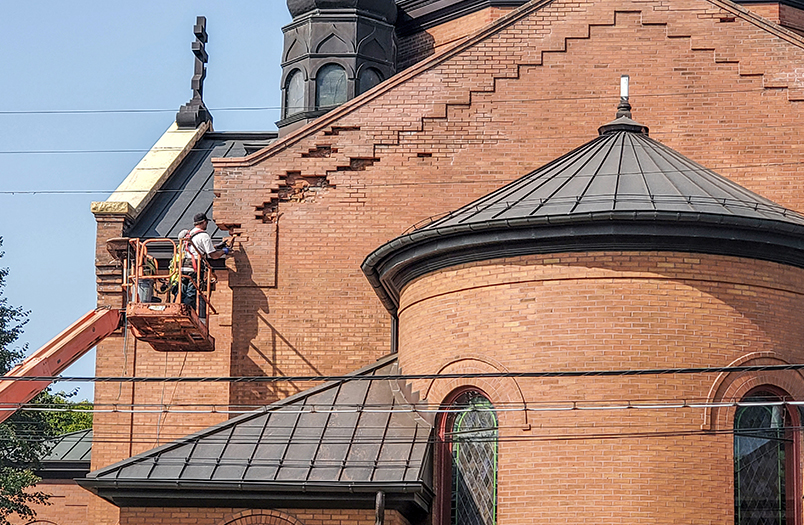
St. Mary’s Church restoration, Minneapolis — intricate ornamental stone and terra cotta detailing
Not Sure What Your Building Needs?
Our assessment team will identify the stone type, evaluate current condition, and recommend the right approach—before any work begins.
Stone Repair vs. Replacement: When to Choose Each
Understanding when to repair versus when to replace can save significant cost and preserve more original material.
| Criteria | Repair Recommended | Replacement Recommended |
|---|---|---|
| Damage Extent | Surface spalling, minor cracks, localized deterioration affecting less than 30% of the unit | Structural cracking, deep spalling, deterioration affecting more than 50% of the unit |
| Structural Integrity | Stone remains sound behind surface damage; original anchoring system intact | Compromised structural capacity; failed anchoring; risk of separation from substrate |
| Historic Significance | Original fabric can be preserved; repair maintains building’s historic character | Stone deteriorated beyond recognition; original character already lost |
| Matching Material Available | Patch compounds can achieve acceptable color match; small repair area | Matching stone available from original or compatible quarry source |
| Cost Consideration | Repair cost less than 60% of replacement; damage is isolated | Multiple units need attention; replacement offers better long-term value |
| Future Deterioration Risk | Underlying cause addressed; repaired stone will perform long-term | Stone type prone to ongoing issues; replacement with more durable material appropriate |
Working with Minneapolis Heritage Preservation
When your building falls under historic preservation guidelines, stone repair becomes more than a construction project—it requires documentation, approval processes, and strict adherence to standards that protect architectural heritage. RSI has built trusted relationships with preservation authorities throughout the Midwest over nearly three decades, providing expert stone restoration services that meet rigorous standards.
We understand what the Minneapolis Heritage Preservation Commission looks for in restoration proposals. Our submissions include detailed material specifications, historical research on original construction methods, and documentation of comparable successful projects. This experience translates to faster approvals and fewer revisions—saving time and cost for building owners navigating the preservation process.
The preservation approach isn’t just about regulatory compliance. It reflects our belief that these buildings matter. They connect communities to their history. Restoring them properly preserves that connection for future generations. Learn more about navigating historic requirements in our guide to the historic restoration approval process.
2023 Color Matching Success: 425 Washington
The 425 Washington project presented a complex color-matching challenge. Original stone from the 1920s had weathered to a distinctive patina that couldn’t be replicated with new material. Working closely with the Heritage Preservation Commission, RSI developed an accelerated weathering protocol and custom mortar pigmentation that achieved approval on first submission—avoiding the typical multiple-revision cycle that can delay projects by months.
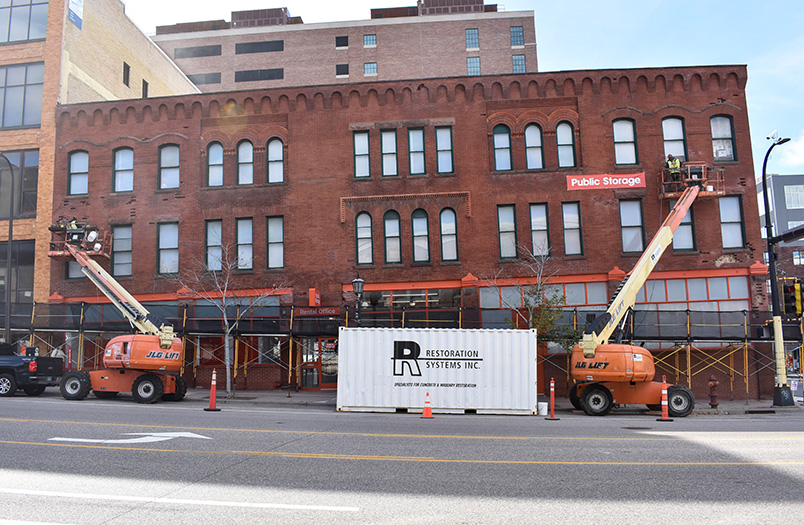
425 Washington, Minneapolis — Heritage Preservation Commission approved restoration
The RSI Four-Step Process
Every stone restoration project follows our proven methodology—from initial assessment through long-term protection.
Assessment
Comprehensive evaluation identifies stone type, current condition, deterioration causes, and previous repair history. We document everything and provide clear repair-versus-replacement recommendations with cost implications for each approach.
Material Matching
For repairs requiring new stone, we source material from the original quarry when possible or identify compatible alternatives. Mortar formulations are specified for compatibility. Color matching accounts for how materials will age over time.
Precision Repair
Our craftsmen execute repairs using techniques appropriate to each stone type. From Dutchman repairs on granite to Type O repointing on limestone, every method is selected for the specific material and conditions.
Ongoing Protection
Restoration doesn’t end at completion. We apply appropriate protective treatments, establish maintenance schedules, and offer partnership programs for buildings requiring ongoing care. Our goal is decades of performance.
“We think about the full lifecycle of the building, not just this repair. The work we do today should last 50 years or more. That requires getting every decision right—from mortar type to finish texture to protective treatment.”
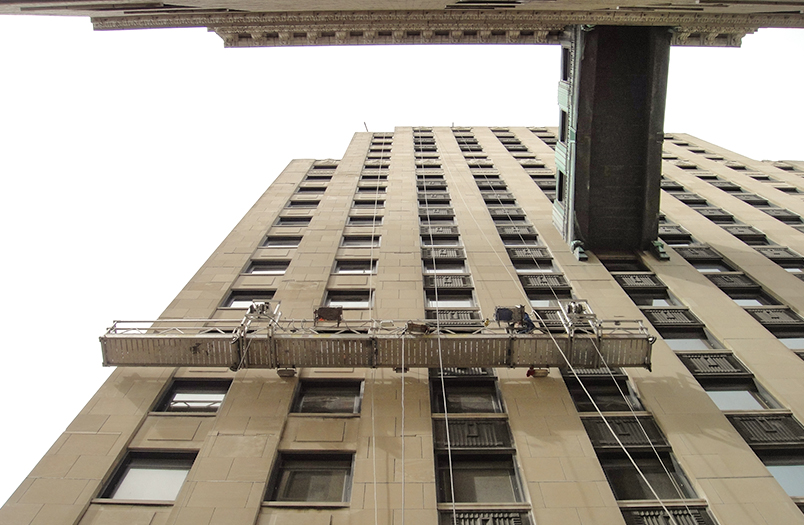
U.S. Bank Plaza: A Five-Year Partnership
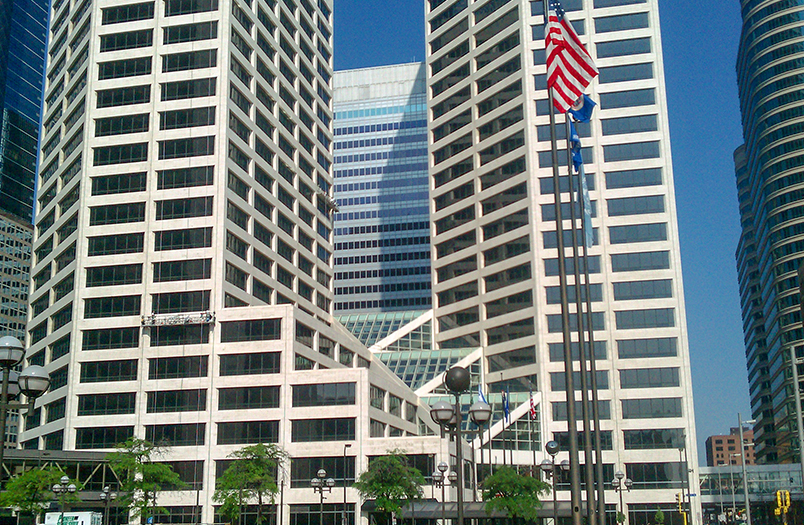
U.S. Bank Plaza
Minneapolis, Minnesota
The U.S. Bank Plaza represents RSI’s approach to large-scale commercial stone restoration at its most comprehensive. This 60-story Minneapolis landmark required a methodical, multi-year restoration program that addressed decades of weathering while keeping the building fully operational throughout the process. Our team developed phased work plans coordinated with building operations, implemented swing-stage access for precision facade work, and established material sourcing relationships that ensured consistency across years of restoration. The result: a restored iconic facade that will serve Minneapolis for generations—and a partnership relationship that continues today.
Five Reasons Building Owners Choose RSI for Stone Restoration
Material-Specific Expertise
We don’t treat all stone the same. Our craftsmen understand the distinct requirements of limestone, granite, and terra cotta—from mortar selection to repair techniques to protective treatments. This specialized knowledge prevents the costly mistakes that occur when general masonry approaches are applied to natural stone.
Historic Preservation Track Record
With 20+ historic preservation projects completed and a 100% approval rate with the Minneapolis Heritage Preservation Commission, RSI brings proven experience navigating complex regulatory requirements. We understand what preservation authorities require and deliver submissions that gain approval efficiently.
Partnership Approach to Large Projects
Major restoration projects aren’t completed in a season. RSI develops multi-year plans that address building needs systematically while coordinating with operations to minimize disruption. Our 5-year partnership with U.S. Bank Plaza demonstrates this long-term commitment in action.
Safety-First Culture
Stone restoration often involves work at height, confined spaces, and complex rigging. RSI maintains an Experience Modification Rate (EMR) well below the national average and has received multiple LECET MN & ND Awards of Excellence. Our comprehensive safety programs protect our teams and your property.
28 Years of Midwest Experience
Founded in 1997 and operated by principals averaging 25+ years experience each, RSI understands Midwest building conditions—the freeze-thaw cycles, the limestone heritage, the regional quarry sources. This local expertise translates to better material matching and longer-lasting repairs.
Frequently Asked Questions
What types of restoration services do you offer?
+RSI specializes in a comprehensive range of structural restoration services including concrete repair, masonry restoration, waterproofing, and structural strengthening. We work on commercial, industrial, and institutional buildings.
Our services include crack injection, carbon fiber reinforcement, joint sealant replacement, facade restoration, and preventive maintenance programs tailored to your building’s specific needs.
How do you determine project costs?
+Every project begins with a thorough on-site assessment conducted by our project team. We evaluate the extent of damage, access requirements, materials needed, and project timeline to provide a detailed, transparent estimate.
Our estimates include itemized costs for labor, materials, equipment, and any specialized services required. We believe in no-surprise pricing and will clearly communicate any potential variables before work begins.
What is your typical project timeline?
+Project timelines vary based on scope, complexity, and access conditions. Small to medium repairs typically take 1-4 weeks, while comprehensive facade restorations may span several months.
We provide detailed project schedules at the start of each engagement and maintain open communication about progress. Our team is experienced at minimizing disruption to building operations and occupants.
Are you licensed and insured?
+Yes, RSI is fully licensed and carries comprehensive insurance coverage including general liability, workers’ compensation, and professional liability insurance. We can provide certificates of insurance upon request.
Our team includes certified restoration technicians with specialized training in the latest repair techniques and safety protocols. We partner with licensed professional engineers when projects require engineering expertise.
Do you offer warranties on your work?
+Absolutely. We stand behind our workmanship with comprehensive warranties. Standard repairs include a 5-year warranty, while structural repairs and waterproofing systems come with extended warranty options of up to 10 years.
Warranty terms are clearly outlined in your contract, and we maintain detailed project documentation to support any future warranty claims.
What areas do you serve?
+RSI provides restoration services throughout the Mid-Atlantic region, including major metropolitan areas and surrounding counties. Our headquarters and primary service area covers a 150-mile radius.
For larger projects outside our primary service area, we can often accommodate travel or partner with local contractors while providing project management and quality oversight. Contact us to discuss your specific location.
Ready to Start Your Restoration Project?
Contact us today for a free on-site assessment. Our team will evaluate your building’s needs and provide a detailed proposal with no obligation.