
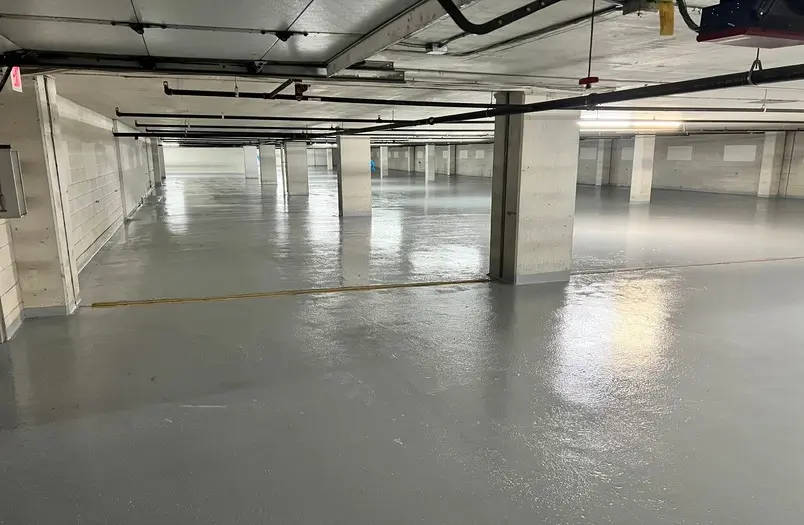
Coating Removal Services
Over 70% of coating failures trace back to improper surface preparation. Don’t let poor removal compromise your investment.
When traffic coatings fail prematurely, the culprit is rarely the coating itself—it’s what happened before application. RSI’s coating removal services establish the foundation for systems that perform for decades, not just years.
Schedule a Coating Assessment
Key Takeaways
- 70%+ of coating failures are attributed to improper surface preparation—making removal the most critical step in any recoating project
- Three primary methods: hydrodemolition (high-pressure water), scarification (mechanical grinding), and chemical stripping for specialized applications
- ICRI CSP 3-5 surface profiles are required for proper traffic coating adhesion—industry standards that RSI consistently meets or exceeds
- RSI’s track record: Zero warranty issues and zero coating failures due to our manufacturer-specified preparation processes
- Midwest expertise matters: Our region experiences 50-100+ freeze-thaw cycles annually, demanding coating systems installed on properly prepared substrates
Why Coating Removal Matters
Skip the removal step—or do it poorly—and you’re setting your parking structure up for premature failure. When new coatings are applied over contaminated, deteriorated, or improperly profiled surfaces, the consequences are predictable: peeling within months, moisture infiltration, and accelerated concrete deterioration that costs far more to fix than doing the job right the first time.
The statistics are stark. Industry data consistently shows that over 70% of traffic coating failures can be traced back to surface preparation issues. This isn’t a minor detail—it’s the foundation that determines whether your investment lasts 5 years or 20 years.
Bond failure is the primary mechanism. Traffic coatings rely on mechanical and chemical adhesion to the concrete substrate. When existing coating residue, contaminants, or an improper surface profile prevent that bond from forming correctly, delamination is inevitable. Worse, most manufacturer warranties specifically require proper surface preparation—skip this step, and you may void your warranty entirely.
“We’ve consistently seen that improper preparation and improper removals lead to a shortened lifespan. Every coating manufacturer will tell you that proper coating removal and surface preparation is the single most important factor in getting the longest lifespan out of your traffic coating system.”— Tayton Eggenberger, Branch Manager, Minnesota, RSI
Industry data shows most coating failures trace back to improper surface preparation—not the coating itself
Annual cycles in the Midwest that stress coating systems and demand proper substrate preparation
ICRI Concrete Surface Profile standard for traffic coating adhesion—the texture coatings need to grip
Demonstrated scale on major Midwest restoration projects including multi-year contracts
What is Coating Removal?
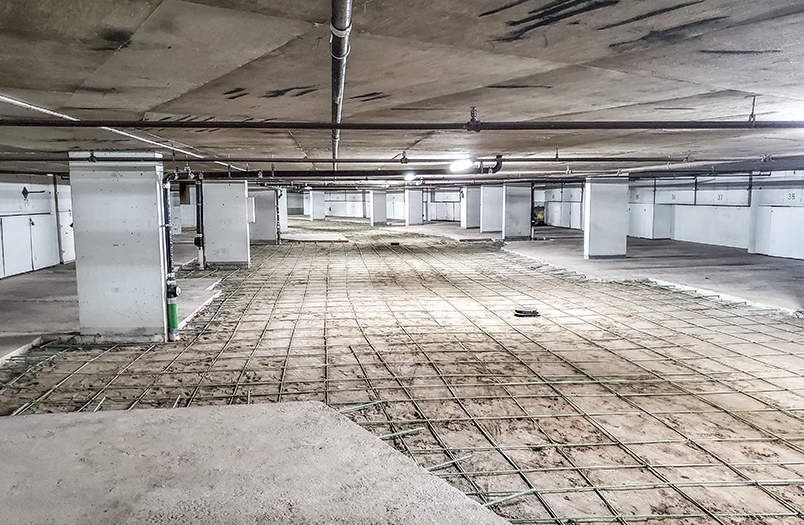
Coating removal is the process of stripping existing protective membranes, traffic coatings, and waterproofing systems from concrete substrates before new systems can be installed. For parking structures, this typically means removing polyurethane, epoxy, or acrylic-based traffic coatings that have reached the end of their service life or failed prematurely.
Think of it like roofing. As Tayton Eggenberger, Branch Manager, Minnesota, RSI, explains: “You’re not going to have us come out and rip your roof off and then not put a new roof on.” Coating removal is inherently tied to recoating—it’s the essential preparation that enables the next system to perform as designed.
The goal isn’t just to remove material. It’s to expose sound concrete, eliminate contaminants, and create a surface profile that allows the new coating to mechanically bond to the substrate. Without this foundation, even the highest-quality coatings will fail.
A Critical Step Before Recoating
Every coating manufacturer specifies surface preparation requirements in their technical data sheets. These aren’t suggestions—they’re the conditions under which the manufacturer will stand behind their product. Proper coating removal achieves the required ICRI Concrete Surface Profile (CSP), typically CSP 3-5 for traffic coating applications, while exposing any underlying concrete deterioration that needs repair before recoating.
When Coating Removal is Necessary
Several conditions trigger the need for coating removal rather than overlay or repair:
- Delamination or peeling of existing coating from the substrate
- Widespread cracking that has compromised the membrane integrity
- Moisture infiltration causing efflorescence or concrete deterioration beneath the coating
- End of service life—most traffic coatings last 15-20 years with proper maintenance
- Incompatible coating systems—when the new coating cannot bond to the existing material
- Concrete repair requirements—deteriorated concrete must be exposed and repaired before recoating
The decision to remove versus overlay should always involve a thorough assessment of the existing coating condition, substrate integrity, and the new system requirements. RSI provides comprehensive evaluations to determine the most effective approach for each project.
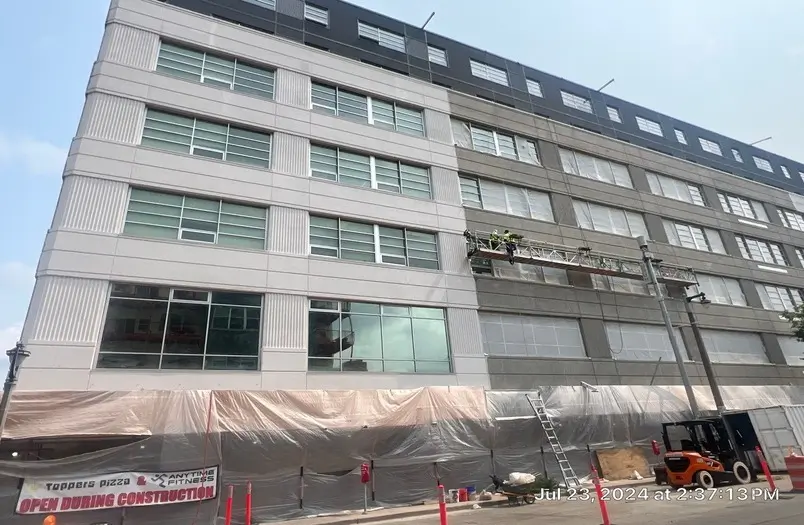
Coating Removal Methods
Different coating types, substrate conditions, and project requirements demand different removal approaches. RSI employs three primary methods, selecting the optimal technique—or combination of techniques—for each project.
Hydrodemolition
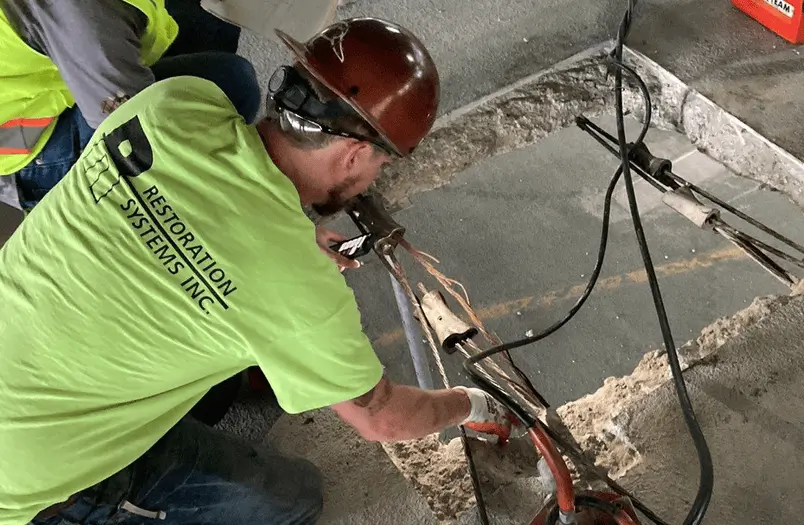
Hydrodemolition uses ultra-high-pressure water—typically 10,000 to 40,000 PSI—to remove coatings and deteriorated concrete while leaving sound material intact. This method excels at selective removal, stripping failed coatings without damaging the underlying substrate or embedded reinforcement.
The water pressure is powerful enough to remove the coating and weak concrete, yet precise enough to stop at sound material. This selectivity makes hydrodemolition ideal for projects combining coating removal with concrete repair, as it simultaneously exposes areas needing attention.
Scarification
Scarification is a mechanical removal method using rotating drums or cutting wheels that physically grind the coating from the concrete surface. RSI utilizes robotic grinders and drum scarifiers that deliver consistent depth control and uniform surface profiles across large areas.
This method produces highly consistent ICRI CSP profiles, making it ideal for large deck areas where uniform coating adhesion is critical. Modern scarifiers include dust collection systems to manage debris and maintain air quality during operations.
Chemical Stripping
Chemical stripping uses specialized solvents and stripping compounds to soften and dissolve coating materials for removal. This is the least common method RSI employs, reserved for situations where mechanical or water-based methods aren’t suitable.
Applications include sensitive substrates that can’t withstand aggressive mechanical action, confined spaces with ventilation limitations, or specialty coatings that resist mechanical removal. Chemical methods require careful attention to dwell times and VOC regulations.
“Hydro demolition utilizes high pressure water to remove either the traffic coating or the concrete. Scarification is essentially a mechanical method using robotic grinders and drum scarifiers. Chemical stripping is the least common—we typically use hydro or mechanical methods for most parking structure applications.”— Tayton Eggenberger, Branch Manager, Minnesota, RSI
Methods Comparison
Quick reference for selecting the appropriate coating removal method based on project conditions and requirements.
| Method | Best Applications | Surface Profile | Key Considerations |
|---|---|---|---|
| Hydrodemolition | Heavy coating buildup, combined coating removal and concrete repair, projects requiring selective removal | Variable—depends on pressure and substrate condition | Water containment and removal systems required; preserves rebar without damage |
| Scarification | Large deck areas, consistent depth removal, projects requiring uniform surface profiles | CSP 3-7 depending on equipment configuration | Dust control systems essential; noise considerations for occupied buildings |
| Chemical Stripping | Sensitive substrates, confined spaces, specialty coatings resistant to mechanical removal | Minimal change to existing profile | VOC regulations apply; dwell time requirements; proper ventilation needed |
Choosing the Right Method
Method selection is rarely straightforward. The optimal approach depends on multiple factors that must be evaluated for each specific project—and sometimes the answer is a combination of methods applied to different areas of the same structure.
RSI’s assessment process considers:
- Project specifications—what the engineer or manufacturer requires
- Existing coating type and thickness—some materials resist certain methods
- Substrate condition—deteriorated concrete may require different treatment
- Project location—occupied buildings have different constraints than vacant structures
- Schedule requirements—methods vary in production rates and mobilization needs
- Client preferences and budget considerations
“Each project is different. We evaluate the existing conditions, review the specifications, and recommend the method—or combination of methods—that will achieve the required surface profile while working within the project’s constraints. Sometimes that’s hydro, sometimes it’s scarification, sometimes we use both on different areas of the same deck.”— Tayton Eggenberger, Branch Manager, Minnesota, RSI
RSI’s Approach to Coating Removal
Our coating removal services are built on decades of Midwest experience, manufacturer relationships, and a commitment to doing the job right—every time. Here’s what sets RSI apart.
Advanced Equipment
RSI invests in the latest removal technology, including robotic grinders for consistent scarification, high-pressure hydrodemolition systems, and shop blasters for component preparation. Our equipment capabilities allow us to match the right tool to each application, achieving optimal results efficiently.
ICRI-Compliant Profiles
We don’t guess at surface preparation—we measure. RSI consistently achieves ICRI Concrete Surface Profile (CSP) 3-5 for traffic coating applications, verified through profile testing. This standardized approach ensures the mechanical bond that coatings need to perform.
Manufacturer Coordination
Before coating installation, RSI brings manufacturer representatives to the site. We work with Sika, Tremco, BASF, and other major suppliers to verify surface preparation meets their specific requirements. This coordination protects your warranty and confirms system compatibility.
Zero Warranty Issues
Our track record speaks for itself. RSI maintains zero warranty issues and zero coating failures attributable to surface preparation. When we prepare a substrate, you can trust that the new coating system will perform as designed for its full intended service life.
“We don’t have warranty issues. We don’t have failure issues because we’re doing the proper preparation per manufacturers specifications. We will have the manufacturers representative out on site just to verify that everything is correct before we start applying the coating system.”
— Tayton Eggenberger, Branch Manager, Minnesota, RSI
“We have some individuals that have been in the industry for 30 and 40 years, and they are going back to some original projects that were installed by them, and we are actually removing what they install. It’s a full circle moment—proof that when coatings are installed properly on properly prepared surfaces, they last their full service life.”
— Tayton Eggenberger, Branch Manager, Minnesota, RSI
What Happens When Coating Removal is Done Wrong
Cutting corners on coating removal doesn’t save money—it guarantees premature failure and costly repairs. Understanding the risks helps you recognize why proper preparation is non-negotiable.
Surface Damage Risks
Using the wrong removal method—or using the right method incorrectly—can damage the concrete substrate itself. Overly aggressive scarification can fracture the concrete surface. Improper hydrodemolition pressure can erode sound material. Chemical strippers left too long can etch the concrete beyond acceptable profiles. Each of these scenarios creates a compromised substrate that no coating can properly bond to.
Adhesion Failures
The most common failure mode is adhesion failure—the new coating simply releases from the substrate. This happens when residual coating material, contaminants, or an improper surface profile prevents the mechanical bond from forming correctly. You’ll see delamination, peeling, and bubbling within months of installation. The coating may look fine initially, then fail rapidly once exposed to traffic and weather.
Shortened System Life
Even when immediate failure doesn’t occur, improper preparation dramatically shortens system life. A traffic coating system designed to last 15-20 years may fail in 5-7 years—or less—when installed on an improperly prepared surface. This isn’t a minor reduction; it’s tripling your lifecycle cost while subjecting your structure to years of inadequate protection.
Critical: Most coating manufacturer warranties specifically exclude failures caused by improper surface preparation. If your contractor cuts corners on removal, you may have no recourse when the system fails prematurely.
“The biggest risks are surface damage, adhesion failures, and a shortened system life. We’ve seen coating systems that should last 15-20 years fail in under 5 because the removal wasn’t done properly. That’s not a coating failure—that’s a preparation failure.”— Tayton Eggenberger, Branch Manager, Minnesota, RSI
Don’t Let Poor Preparation Compromise Your Investment
Your parking structure represents a significant investment. RSI’s comprehensive coating assessments identify exactly what your project needs—the right removal method, proper surface preparation, and a coating system matched to your conditions and budget.
Schedule a Coating AssessmentMidwest Coating Considerations
Parking structures in Minneapolis, throughout Minnesota, and across Wisconsin face environmental challenges that most of the country doesn’t experience. These regional factors directly impact coating removal decisions and new system selection.
Freeze-Thaw Impact
The Midwest experiences 50 to 100+ freeze-thaw cycles annually—far more than coastal or southern regions. Each cycle stresses coating systems as water infiltrates, freezes, expands, and thaws. When coating removal exposes underlying damage from years of freeze-thaw cycling, that damage must be repaired before recoating. Proper removal reveals the true condition of your concrete, allowing targeted repairs that extend structural life.
Traffic and De-Icing Chemical Exposure
Midwest parking structures endure a double assault: heavy vehicle traffic and aggressive de-icing chemicals. Salt, sand, and chemical de-icers are tracked in daily during winter months, attacking both the coating surface and any weak points in the membrane. These contaminants must be completely removed during coating removal to prevent adhesion issues with the new system.
“The sand and salt degradation we see in the Midwest is significant. You’re not just removing a coating—you’re removing years of contamination that’s worked into the surface. If that material isn’t fully removed, the new coating won’t bond properly no matter how good the product is.”— Tayton Eggenberger, Branch Manager, Minnesota, RSI
Heavy-Duty System Selection
Given Midwest conditions, RSI recommends coating systems rated for the actual demands of each structure. Traffic coating systems range from light-duty (pedestrian traffic only) through medium, heavy, and extra-heavy-duty ratings. Most Midwest parking structures require heavy or extra-heavy-duty systems to handle the combination of vehicle traffic, temperature extremes, and chemical exposure. Proper coating removal creates the substrate conditions these systems need to perform.
RSI’s regional experience—serving Minneapolis, St. Paul, Milwaukee, Green Bay, and communities throughout Minnesota and Wisconsin—means we understand local conditions and can recommend systems proven to perform in this climate.
Featured Coating Removal Projects
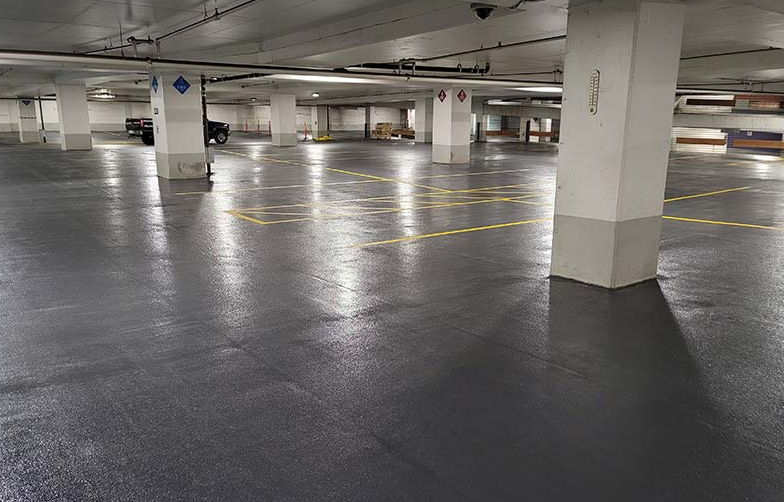
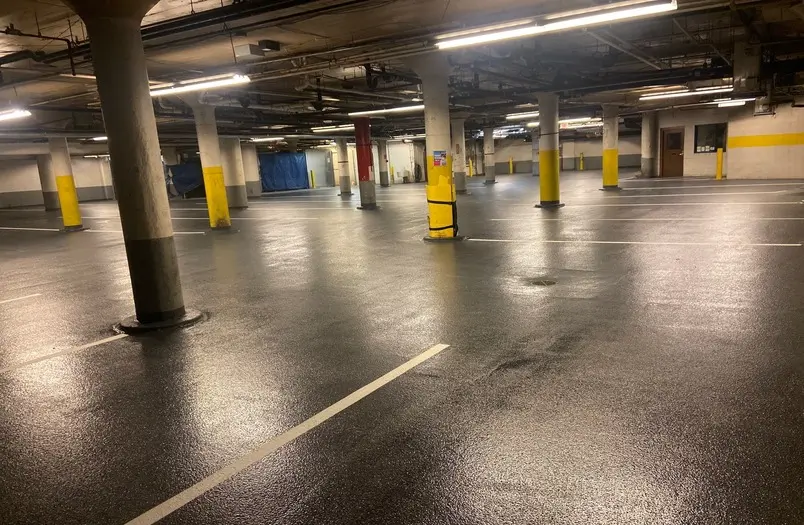
RSI has completed coating removal and recoating projects across the Midwest, from 30,000 SF single-structure jobs to 1 million+ SF annually. These projects demonstrate our capability and commitment to quality.
St. Paul Parking Structure
Multi-year comprehensive restoration including full traffic coating system removal and new installation across multiple parking levels.
1 Million+ SF Annually
RiverWest Parking Garage
Complete traffic coating removal and new system installation on this large urban parking structure serving mixed-use development.
156,000 SF
Kenilworth Square Apartments
Failed coating system removal using recycled crushed glass aggregate media blasting, demonstrating our versatile removal capabilities.
30,000 SFW Hotel at Foshay Tower
Historic landmark requiring careful waterproofing system removal to identify concrete distress, followed by new waterproof traffic coating.
2-Month DurationFrequently Asked Questions
Coating removal from concrete uses one of three primary methods: hydrodemolition (high-pressure water at 10,000-40,000 PSI), mechanical scarification (rotating drums or grinding wheels), or chemical stripping (solvents that dissolve the coating). The method selected depends on the coating type, substrate condition, project specifications, and site constraints. Most parking structure projects use hydrodemolition or scarification, with chemical methods reserved for specialty applications.
Hydrodemolition is a removal technique using ultra-high-pressure water to strip coatings and deteriorated concrete. Water pressure ranges from 10,000 to 40,000 PSI depending on the application. The method is highly selective—it removes failed material while leaving sound concrete intact, and it won’t damage embedded reinforcement. Hydrodemolition is ideal when combining coating removal with concrete repair, as it exposes deterioration that needs attention.
Timeline varies significantly based on square footage, method used, and project complexity. A 30,000 SF parking deck might require 2-3 weeks for removal, while a 400,000+ SF multi-level structure could span several months as part of a phased restoration. RSI provides detailed schedules during the assessment phase, accounting for method production rates, weather constraints, and any operational requirements for the facility.
Over 70% of traffic coating failures trace back to improper surface preparation—not the coating product itself. Other failure causes include using a coating system not rated for the actual traffic conditions, inadequate concrete repairs before coating, moisture infiltration from below the slab, and reaching the end of the coating’s designed service life (typically 15-20 years). Proper removal and surface preparation eliminate the most common failure mode.
In some cases, yes—but only when the existing coating is fully adhered, in good condition, and compatible with the new system. This requires thorough testing and manufacturer approval. More often, removal is necessary because the existing coating has delaminated, is incompatible with the specified new system, or conceals concrete damage requiring repair. RSI evaluates each project individually to determine whether overlay or removal is the appropriate approach.
Traffic coatings typically require ICRI Concrete Surface Profile (CSP) 3-5. The ICRI scale runs from CSP 1 (nearly flat) to CSP 10 (very rough). CSP 3-5 provides enough texture for mechanical bond without excessive roughness that wastes coating material. Specific requirements vary by manufacturer and product—RSI verifies the exact CSP requirement for each coating system and validates achieved profiles through testing.
Cost varies based on square footage, removal method required, existing coating type and thickness, accessibility, and project location. Coating removal is typically priced as part of a comprehensive recoating project that includes surface preparation, concrete repair, and new coating installation. RSI provides detailed proposals after on-site assessment, with transparent pricing for each project phase. Contact us for a no-obligation evaluation and estimate.
Yes. RSI provides complete coating removal and installation services—we don’t remove coatings without installing new systems, and we don’t install coatings on surfaces prepared by others. This single-source accountability ensures the entire process meets quality standards and manufacturer requirements. As our team explains it: “You’re not going to have us come out and rip your roof off and then not put a new roof on.” The same principle applies to traffic coatings.
Related Services
Coating removal is one component of RSI’s comprehensive parking structure restoration services. Explore our related capabilities to understand how we deliver complete solutions.
Traffic Coatings
High-performance polyurethane and epoxy traffic coating systems designed for Midwest conditions. Light-duty through extra-heavy-duty ratings available.
Learn More >Surface Preparation
ICRI-compliant surface profiling for coating adhesion. Shot blasting, scarification, and specialty preparation techniques for all substrate types.
Learn More >Parking Deck Restoration
Complete parking structure rehabilitation including structural assessment, concrete repair, waterproofing, and traffic coating installation.
Learn More >Parking Structure Rehabilitation
Comprehensive rehabilitation services for aging parking structures, addressing structural deficiencies, drainage issues, and protective coating systems.
Learn More >Concrete Repair
Spall repair, crack injection, partial-depth and full-depth repairs to restore structural integrity before coating installation.
Learn More >Ready to Start Your Coating Removal Project?
RSI brings over 30 years of Midwest experience to every coating removal and restoration project. Our team understands the unique challenges of Minnesota and Wisconsin conditions—and delivers results that last.
Request a Free Assessment