
What Is Hot Applied Waterproofing?
Hot applied waterproofing—also known as rubberized asphalt waterproofing or fluid applied waterproofing—is a proven technology that has protected commercial structures for decades. Understanding how it works helps you make informed decisions about protecting your building.
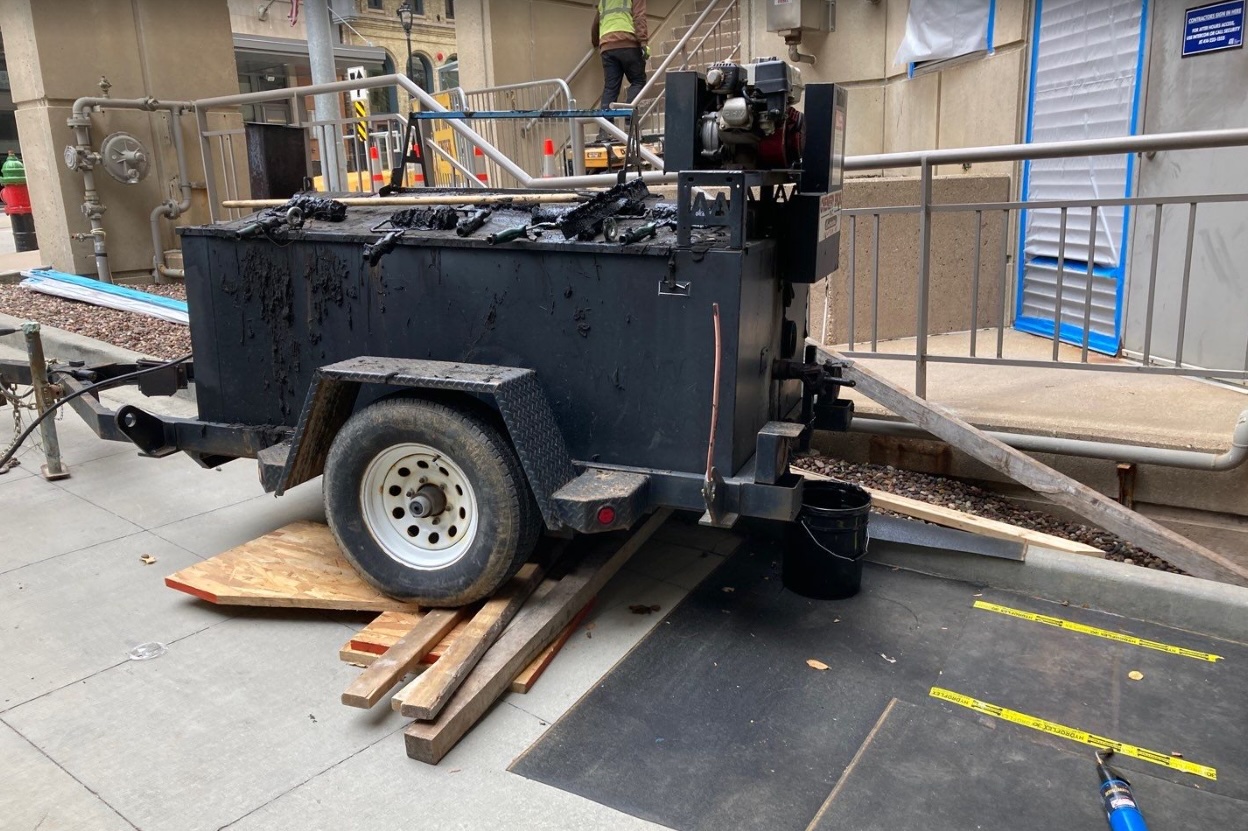
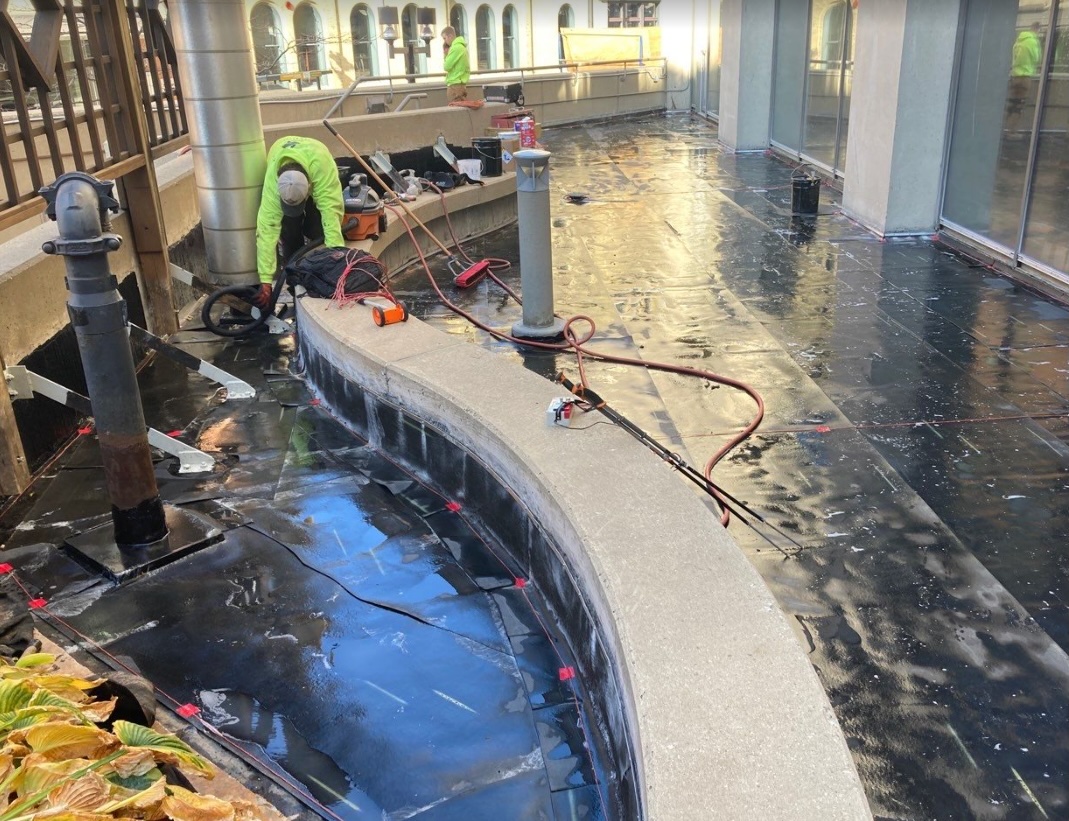
“Hot-applied waterproofing is a liquid rubberized asphalt that’s heated in a kettle and mopped or squeegeed onto the substrate. Once it cools, it becomes a fully adhered, seamless, flexible waterproof membrane.”
The Complete System Assembly
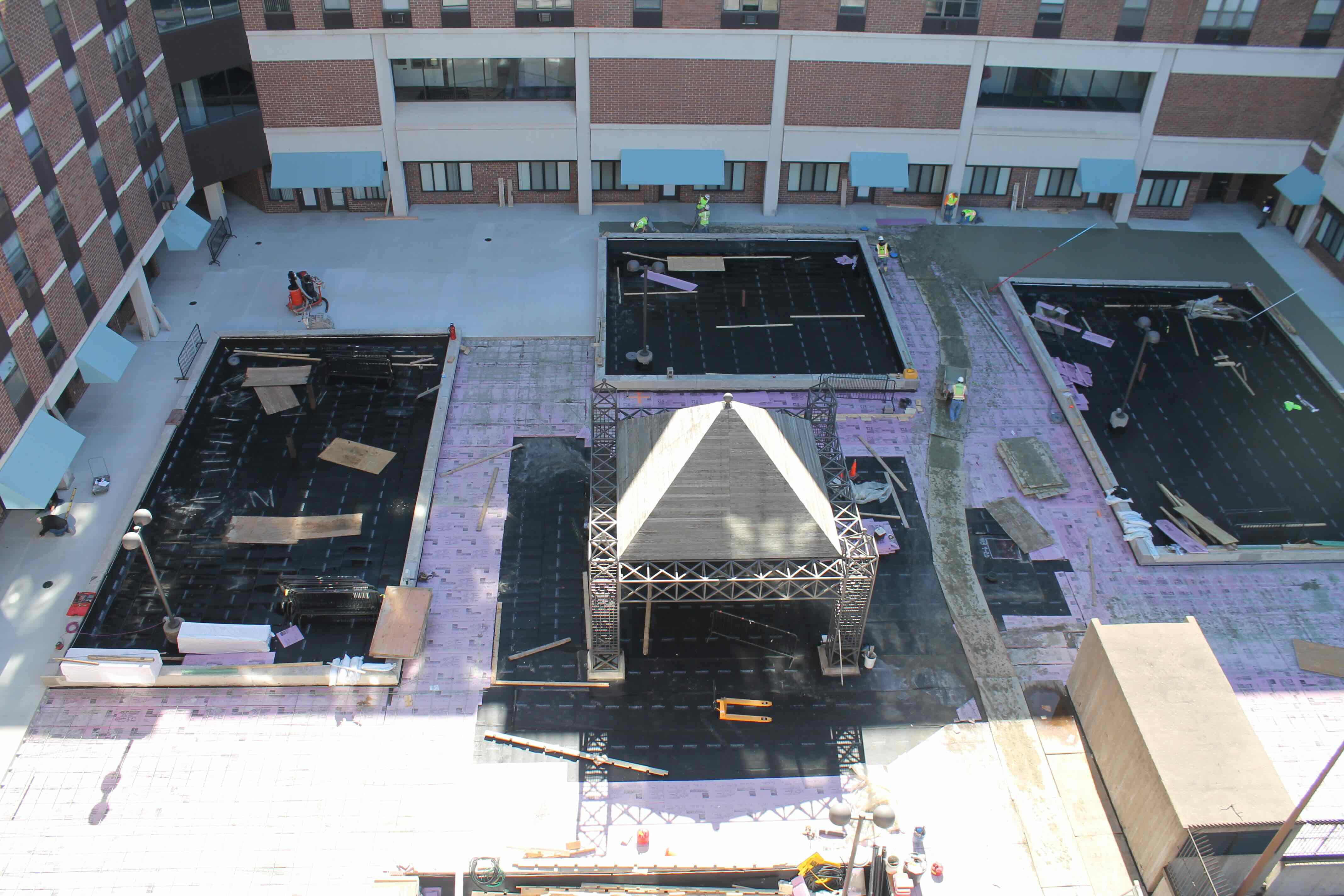
A properly installed hot applied waterproofing system is much more than just the membrane itself. It’s a coordinated assembly of components working together:
- 1 Primer Application: Ensures proper adhesion between the substrate and membrane, creating a continuous bond.
- 2 Hot Rubberized Asphalt: Applied at controlled temperatures (typically 400-425°F) to achieve proper flow and thickness.
- 3 Reinforcing Fabric: Embedded into the hot asphalt at transitions, penetrations, and high-stress areas for added tensile strength.
- 4 Protection Course: Shields the membrane from damage during backfill or overburden installation.
- 5 Drainage & Overburden: Completes the system with proper water management and the final wearing surface.
Key Performance Benefits
Hot applied systems offer distinct advantages that make them ideal for demanding commercial applications:
Seamless coverage eliminates the joints and laps that are common failure points in sheet membrane systems. Full adhesion to the substrate means water can’t travel laterally if a breach occurs—any leak is localized and easier to find. High elongation (typically 1,800%+) allows the membrane to accommodate structural movement and thermal cycling without cracking. And the self-sealing properties of rubberized asphalt mean minor punctures often heal themselves.
Industry Standards: RSI’s hot applied waterproofing installations conform to ASTM D6152 (Standard Practice for Installing Hot-Applied Rubberized Asphalt Waterproofing) and ASTM D6153 (Standard Specification for Materials for Hot-Applied Rubberized Asphalt). These standards govern material properties, application temperatures, and thickness requirements.
RSI installs both hot applied and cold applied waterproofing systems. The right choice depends on your specific application—substrate conditions, access constraints, temperature limitations, and budget. Our assessment process matches the optimal system to your project requirements.