
Commercial Brick Mortar Repair: Matching Historic and Modern Masonry
Mortar is designed to be a sacrificial material. It should fail before the brick or stone it protects. Whether your commercial building needs tuckpointing or repointing, matching the right mortar to your masonry is what separates lasting preservation from accelerated destruction.

Key Takeaways
- Mortar is a sacrificial material, engineered to deteriorate before the brick or stone it protects.
- Using the wrong mortar type causes cascading damage to adjacent masonry units, not just the repair area.
- Historic buildings require specific mortar types (Type O at 350 psi) matched through lab analysis — standard mortar can destroy century-old masonry.
- Midwest freeze-thaw cycles expand trapped water by 9%, compounding mortar failure every winter season.
- Visual signs like efflorescence, cracking, and joint separation signal mortar failure before it becomes catastrophic.
Why Mortar Matching Matters More Than You Think
A contractor patches a small spall in a limestone facade with high-strength concrete. The repair holds — for a while. Then the surrounding stone begins to crack, delaminate, and pull away from the building. What started as a minor fix becomes widespread facade failure. RSI Project Manager Dylan Reynolds has seen this exact scenario unfold: “We have seen other contractors previously utilize a high-strength concrete patching material to repair small spalls in limestone pieces. That does lead to not only the need for further repair at that individual piece, but all of the surrounding and adjacent pieces delaminating, cracking, spalling and displacing from the facade.”
This cascading damage isn’t random. It’s the predictable result of ignoring a fundamental principle of commercial brick mortar repair: mortar is designed to be the weakest link in your wall system, on purpose.
“The mortar really essentially acts as both the bonding agent as well as a sacrificial material, so it holds the masonry units together while allowing the minor movement and moisture, and ideally the mortar should deteriorate before the brick or stone does, protecting the more permanent materials, brick and stone.”
— Tayton Eggenberger, Branch Manager, RSI MinneapolisWhen mortar is softer than the surrounding masonry, it absorbs stress from building movement, moisture cycling, and thermal expansion. It takes the hit so the brick and stone don’t have to. But when a contractor uses mortar that’s too hard — or worse, a rigid concrete patching compound — that hierarchy inverts. The mortar forces stress directly onto the masonry units, causing the very damage it was supposed to prevent. Whether the work is called tuckpointing or repointing, getting the mortar match right is the single most important decision in any commercial brick mortar repair project.
For a deeper look at how mortar joints function and fail, see our guide to mortar joint function and failure.

Historic vs. Modern Masonry: What Changes the Approach
Historic buildings weren’t just built in a different era. They were built with fundamentally different materials and engineering assumptions. Masonry from the 1800s and early 1900s is typically softer, more porous, and far more sensitive to incompatible repairs than modern construction. A repair approach that works on a 10-year-old commercial building can destroy a 120-year-old one.
Three factors change the approach for historic masonry restoration. First, material composition: historic brick and stone are softer and require mortar that matches their compressive strength and permeability. Second, preservation requirements: buildings within the Minneapolis Historic District or listed on the National Register require petrographic analysis — a lab-level examination of the original mortar’s composition — before any repair work begins. Some historic registries even mandate hand-chiseling for mortar removal rather than mechanical methods. Third, irreplaceable components: ornamental elements, stained glass windows, and decorative stonework that are over 100 years old simply cannot be replaced if damaged during restoration.
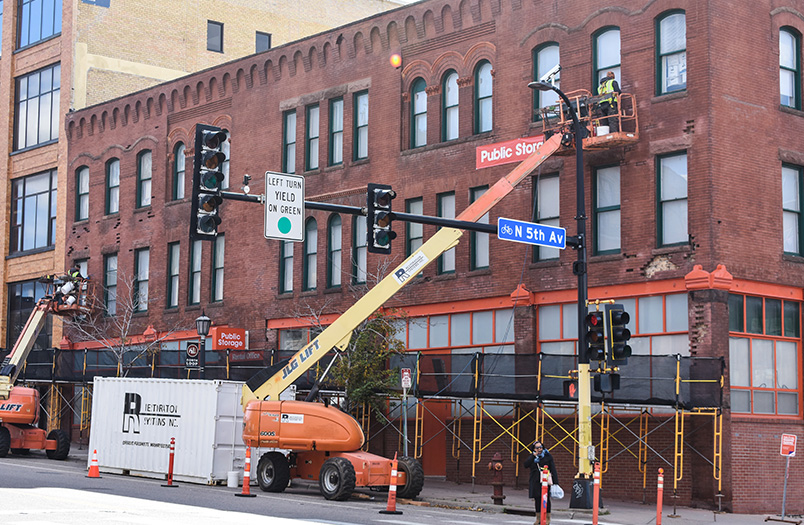
As Tayton Eggenberger explains, “Depending on where the building is located, there are historic requirements that need to take place depending on the district. One of the things that we’re required to do is a petrographic analysis to ensure that the mortar we are putting back in the building and the brick we are putting back in the building does meet those historical standards.” That analysis doesn’t just confirm structural compatibility — it verifies color, aggregate composition, and binder chemistry against the original materials.
The Chaska Brick Challenge
Many of downtown Minneapolis’s oldest buildings were constructed with Chaska brick — a distinctive locally manufactured brick produced in Chaska, Minnesota, during the 1850s and 1860s. That brick is no longer manufactured. Repairing these buildings requires specialty sourcing knowledge, low compressive strength mortar, and an understanding of material compatibility that generic tuckpointing contractors simply don’t have. As Dylan Reynolds notes, Chaska brick “requires a low compressive strength mortar and repair procedures” — standard Type N or Type S mortar would actively damage the historic masonry it’s supposed to protect.
“We’re trying to match quality, but then also match color. Sometimes we’re digging through different suppliers to find the right brick match, to find the right mortar match. That’s one of the things we really excel at — you can’t tell that we worked on that building. That’s our goal.”
— Tayton Eggenberger, Branch Manager, RSI MinneapolisRSI’s invisible repair standard, where completed work is indistinguishable from the original construction, is the benchmark for every historic mortar matching project. It’s a standard that requires both deep material knowledge and the craftsman skill to execute it at scale.
Mortar Type Selection: A Practical Guide to Type O, N, and S
Mortar type selection isn’t guesswork. It’s a decision that must be matched to the existing masonry’s compressive strength and permeability. As Dylan Reynolds explains, “RSI matches compressive strength and permeability to the existing masonry. Historic buildings often require lime-based mortars, such as Type O for their softer compressive strength.” The table below breaks down the three most common mortar types per ASTM C270 standards and when each is appropriate.
| Mortar Type | Compressive Strength (ASTM C270) | Best For | Risk if Misused |
|---|---|---|---|
| Type O | 350 psi | Historic and soft masonry — limestone facades, Chaska brick, and pre-1920s construction. Lime-based composition allows movement without stressing fragile units. | Too soft for structural or below-grade applications. Not suitable for load-bearing walls in newer construction. |
| Type N | 750 psi | General above-grade exterior walls and non-historic tuckpointing. The most versatile medium-strength option for modern commercial buildings. | May be too rigid for soft historic masonry. Can cause cracking in older, more porous brick if used as a substitute for Type O. |
| Type S | 1,800 psi | Structural applications and below-grade masonry. High compressive strength for load-bearing walls and foundations. | Can cause displacement and spalling on soft stone and historic brick. The mortar becomes harder than the masonry it surrounds. |
“If a harder material is used like a Type S mortar, that can lead to displacement of the facade materials, because the mortar that’s utilized is actually harder and more rigid than the stone itself.”
— Dylan Reynolds, Project Manager, RSI MinneapolisHow Midwest Freeze-Thaw Cycles Accelerate Mortar Failure
Water trapped in masonry pores expands by approximately 9% when it freezes, exerting immense pressure that cracks and weakens brick, stone, and mortar from within.
Minneapolis averages over 60 freeze-thaw cycles per winter, each one compounding the damage from the last in an accelerating pattern of mortar deterioration.
RSI has partnered with the Minneapolis Historic Preservation Committee on 20+ projects, coordinating mortar matching that withstands Midwest winters.
This damage is progressive and seasonal. As Dylan Reynolds explains, “Everything’s freezing in wintertime, and then when it thaws in the summertime, you start seeing a lot of those issues come out.” For Midwest building owners, that means mortar selection is a balancing act: softer historic mortars are more vulnerable to freeze-thaw but still necessary for material compatibility. That tension is exactly why expert matching matters — it requires specialist knowledge to balance durability with preservation.
RSI Brick Mortar Repair in Action
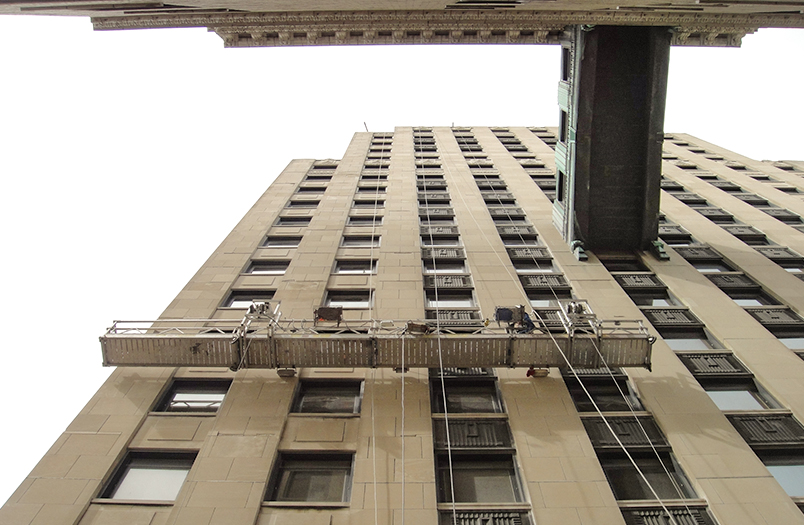
St. Paul, Minnesota
First National Bank Building
At 108,000 square feet of exterior mortar removal and replacement, this is the kind of scope where even minor inconsistency in mortar color or composition would be immediately visible across the facade. RSI evaluated and matched mortar across the entire building envelope — delivering the invisible repair standard that defines our tuckpointing work.
Minneapolis, Minnesota
425 Washington Avenue
This Minneapolis landmark required the full historic preservation workflow: petrographic analysis, lab composition reports, three potential color matches developed and presented to the client, and full coordination with the Historic Preservation Society. RSI walked the client through the public committee hearing at no additional charge, a level of care that sets our masonry restoration approach apart.
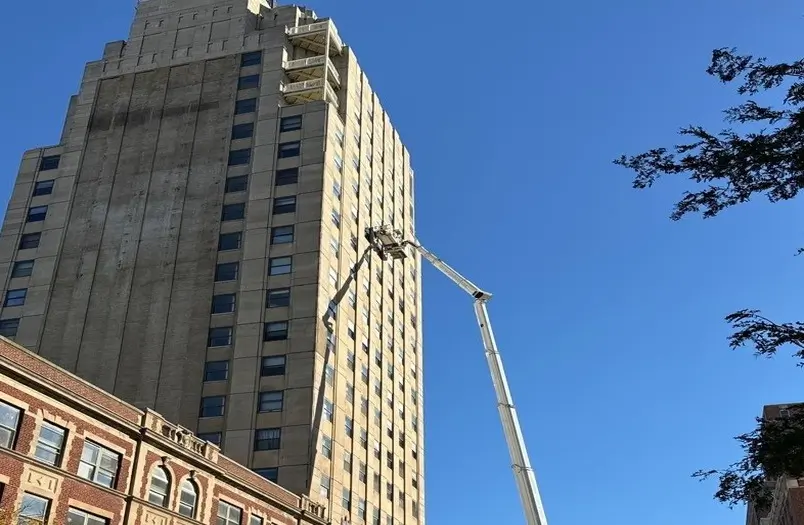
Milwaukee, Wisconsin
Wisconsin Tower Condominiums
1930s Art Deco landmark with 35,000 SF of stone patching, tuckpointing, and anchoring using a specialty 250-foot aerial platform. Matching challenges extended beyond brick to distinctive stone facades.
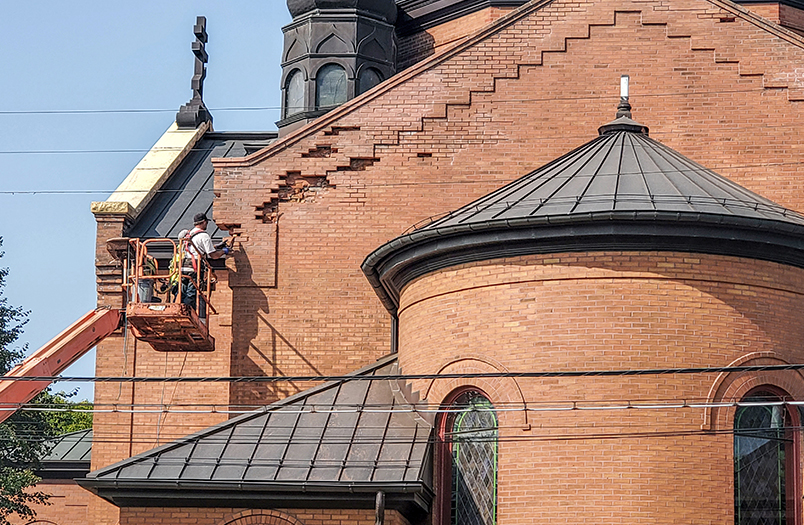
Minneapolis, Minnesota
St. Mary’s Orthodox Cathedral
Multi-year contract encompassing tuckpointing, brick replacement, custom copper flashing, and exterior stone repairs, demonstrating the long-term partnership approach RSI takes on complex historic masonry buildings.
Signs Your Building Needs Mortar Repair
Your building’s facade communicates its condition if you know what to look for. As Tayton Eggenberger advises, “The biggest thing we encourage people is to look at their facade. There’s a lot of visual cues that your building is trying to tell you that you have some issues that need to be corrected.”
Visible from the Sidewalk
-
Mortar Cracking and Erosion
Visible cracks running through mortar joints or joints that have eroded and recessed below the brick face. These failures commonly appear first at parapets, ledges, and areas with repeated moisture exposure.
-
Mortar Separation from Masonry Units
Gaps between the mortar and brick or stone where the bond has failed. This separation creates direct pathways for water to enter the wall system and accelerate deterioration from within.
-
Brick or Stone Cracking
Cracks in the masonry units themselves, not just the mortar joints, often indicate that previous repairs used mortar that was too hard, forcing stress onto the brick or stone instead of absorbing it.
-
Failed Sealant Joints
Sealant that appears hardened, cracked, or pulled away from surfaces. Sealant adhesion and cohesion failures allow water penetration at some of the most vulnerable points on your building’s exterior.
Hidden Damage Requiring Inspection
-
Efflorescence (White Powdery Residue)
White salt deposits on the face of masonry indicate moisture is migrating through the wall and evaporating outward. As Dylan Reynolds explains, efflorescence is “a very big indicator that there’s a water or moisture infiltration issue on the exterior of a building.”
-
Hidden Corrosion, Wall Movement, and Failing Flashings
Corrosion within the facade system, subtle wall movement, and deteriorated flashings aren’t visible from the sidewalk but drive long-term masonry failure. These chronic moisture sources require hands-on inspection to identify.
When to call a specialist: If you see multiple indicators above — or if your building is in a historic district — professional assessment is essential. RSI accesses exteriors via swing stage or scaffold for hands-on investigation, documents distress patterns with photos and detailed observations, and provides a comprehensive repair plan with cost estimates. Request a facade assessment to get started.
Frequently Asked Questions About Brick Mortar Repair
What is the difference between tuckpointing and repointing?
+Both terms refer to the process of removing deteriorated mortar from masonry joints and replacing it with new mortar. Technically, “tuckpointing” involves a specific decorative technique using two contrasting mortar colors to create the appearance of fine joints, while “repointing” is the broader term for any mortar joint replacement. In commercial contexts across the Midwest, these terms are frequently used interchangeably. Regardless of terminology, the critical factor is selecting the correct mortar type matched to your existing masonry.
What type of mortar should I use for historic brick?
+Historic and soft masonry typically requires Type O mortar — a lime-based mix with a compressive strength of 350 psi per ASTM C270 standards. A petrographic analysis of the original mortar determines the exact composition needed to ensure compatibility. Never use Type S or high-strength concrete patching material on historic masonry — the higher compressive strength can cause the surrounding brick or stone to crack, spall, and delaminate.
How do I know if my building needs mortar repair?
+Look for visible cracking in mortar joints, separation between mortar and brick, efflorescence (white powdery residue on masonry surfaces), and sealant that appears hardened or pulled away from the building. Mortar damage often becomes most visible in spring and summer after winter freeze-thaw cycles have compounded the deterioration. If you notice multiple signs, a professional hands-on assessment is recommended.
Why is wrong mortar worse than no repair at all?
+Mortar that is too hard for the surrounding masonry inverts the designed stress hierarchy. Instead of absorbing movement and moisture stress as a sacrificial material, rigid mortar transfers that stress directly to the brick or stone. This causes adjacent masonry units to crack, spall, and delaminate — turning what was a localized mortar repair into widespread facade failure that is significantly more expensive to correct.
Does historic mortar repair require special permits?
+In historic districts, yes. Projects on historically designated buildings may require petrographic analysis of original mortar, committee review by the local historic preservation society, and compliance with the Secretary of the Interior’s Standards for the Treatment of Historic Properties. Some projects require public committee hearings for approval. RSI has coordinated over 20 projects with the Minneapolis Historic Preservation Committee and walks clients through the committee process at no additional charge.
Protect Your Building with Expert Mortar Matching
With 20+ historic preservation projects coordinated alongside the Minneapolis Historic Preservation Committee and union-trained crews across the Midwest, RSI delivers mortar matching for both historic and modern masonry. Whether your building needs targeted tuckpointing or full facade restoration, our team delivers craftsmanship that lasts.