
Positive-Side vs. Negative-Side Waterproofing: When Each Approach Makes Sense
Water is showing up inside your building. Before anyone picks a product, you need to answer a harder question: should you stop the water from outside, or manage it from within? The answer shapes your building’s future. RSI’s Dan Lephardt walks you through the decision.

TL;DR: The Waterproofing Decision Framework
Five things every building owner needs to know before choosing an approach
- If you can access the exterior, positive-side waterproofing is always the best long-term investment — it stops water before it enters the structure, keeping your concrete and steel dry.
- When excavation isn’t feasible (adjacent buildings, deep foundations, occupied facilities), negative-side techniques manage leakage from inside — but the structure stays wet and vulnerable to ongoing deterioration.
- In the Midwest, a wet structure faces 50–100+ freeze-thaw cycles per year — each one widening cracks, accelerating spalling, and driving rebar corrosion deeper into the assembly.
- The right approach depends on access, hydrostatic conditions, and building use — not product brand. It’s a system decision, not a product decision.
- RSI’s diagnostic process determines the recommendation — the investigation comes before the fix, so the solution matches the root cause, not the fastest patch.
Why “We Fixed the Leak” Doesn’t Mean “We Waterproofed the Building”
It’s a scenario most commercial building owners know too well. Water appears on an interior wall or a basement floor. A contractor is called. The crack is patched, a coating is applied, or an injection stops the drip. The visible leak disappears — and everyone assumes the problem is solved.
But as Dan Lephardt, RSI’s Waterproofing and Building Envelope Specialist, warns: stopping a visible leak and actually waterproofing a building are two very different things. Owners routinely conflate the two — and that misunderstanding drives decisions that cost far more in the long run.
“Water only needs one weak link. You can install the best membrane made, but if the termination isn’t sealed, drainage is missing, or penetrations aren’t detailed… you still leak. Systems manage water, movement, and transitions — product-only thinking is why ‘we re-coated it and it still leaks.'”
— Dan Lephardt, Waterproofing / Building Envelope Specialist, RSIThis is the core distinction that drives every waterproofing decision: stopping a leak on the inside (negative-side) is fundamentally different from stopping water at the source (positive-side). The first manages symptoms. The second addresses the system. Understanding the difference between positive-side vs. negative-side waterproofing — and knowing when each approach makes sense — is the first step toward protecting your building’s structural health, not just its interior finishes.
As defined by ASTM D7832, true waterproofing resists both hydrostatic pressure and water vapor transmission — a standard that many interior-only treatments simply can’t meet. This article walks you through the decision framework RSI uses to determine the right approach for every commercial waterproofing project.
Understanding Your Waterproofing Options
Positive-Side Waterproofing
Dan defines it simply: “Stopping water on the outside — the source side — before it enters the structure.” For building owners, this means exterior membranes, flashing, sealants, and drainage working together as a unified system. Your concrete and masonry stay dry, and structural integrity is preserved for decades.
- Intercepts water at the source before it contacts the structural substrate
- Keeps concrete and steel dry — eliminating freeze-thaw and corrosion risk
- Drainage works with the membrane to reduce long-term hydrostatic pressure
- Longest service life and lowest lifecycle cost when access is available
Negative-Side Waterproofing
Dan describes this as “treating the inside — the dry side — after water has already passed through the structure.” For building owners, the reality is this: visible leaks may stop, but the concrete or masonry substrate remains saturated — still vulnerable to corrosion, freeze-thaw, and long-term deterioration.
- Visible leaks may stop, but the structure stays wet — still vulnerable to deterioration
- Ongoing maintenance is likely — not a “set it and forget it” solution
- Exterior drainage issues remain unresolved — the root cause persists
- Durability is lower if hydrostatic pressure continues to stress the assembly
Blind-Side Waterproofing — The Middle Ground
When post-construction exterior access doesn’t exist — such as buildings poured directly against retention walls or adjacent structures — blind-side waterproofing systems are pre-applied membranes installed before the structural pour. They bond to the concrete as it cures, creating a positive-side barrier without needing future excavation. It’s a viable below-grade waterproofing method when full positive-side and negative-side approaches each present challenges.
Dan’s hierarchy: Positive-side (best) → Blind-side → Negative-side (when excavation isn’t feasible)
What Drives the Decision
Access & Excavation Constraints
+The single biggest factor in choosing between positive-side and negative-side waterproofing is access. Can you physically reach the exterior of the structure? If yes, positive-side is almost always the right call. If not, negative-side becomes a pragmatic necessity — not a performance preference.
Dan identifies three common scenarios where excavation isn’t possible:
- Adjacent buildings or property lines: Dense Midwest downtowns like Minneapolis and Milwaukee frequently have zero-lot-line construction where excavation is physically impossible.
- Deep foundations: Below-grade structures extending multiple stories make excavation prohibitively disruptive and costly relative to the repair scope.
- Buried utilities: Major utility corridors running alongside a foundation wall can make excavation a logistical and permitting nightmare.
When you can’t dig, negative-side is the realistic path. The key is understanding what you’re getting — and what you’re not.
Hydrostatic Pressure & Drainage Conditions
+Drainage is the overlooked variable that determines whether either approach succeeds long-term. Water that has nowhere to go creates constant hydrostatic pressure against your foundation — and no coating or membrane can fight that pressure indefinitely.
As Dan puts it: “Without functioning perimeter drainage, you’re asking waterproofing to resist hydrostatic pressure long-term.” Below grade, this means evaluating whether your drain tile, sump systems, and site grading are actually moving water away from the structure — or just letting it pool.
Good practice: design for water to leave, not for coatings to “fight” water forever. Waterproofing should complement drainage, not substitute for it.
Building Operations & Occupancy
+Hospitals, data centers, parking structures in constant use, hotels with active operations — these facilities can’t simply shut down for weeks while exterior waterproofing work is completed. Operational constraints push many owners toward negative-side approaches by default.
But default doesn’t mean inevitable. RSI’s work at the W Hotel at Foshay Tower in Minneapolis demonstrates that positive-side system replacement is achievable even in occupied, high-profile buildings — through careful coordination, phased scheduling, and close communication with building operations. The constraints that feel like dealbreakers often have solutions when the contractor plans for them.
The Honest Trade-Offs of Negative-Side Waterproofing
+When negative-side is the only realistic option, it’s important to understand the trade-offs clearly — not to dismiss the approach, but to set the right expectations.
- Wet structure persists: Interior leakage may slow or stop, but the concrete remains saturated — still vulnerable to corrosion, freeze-thaw damage, and long-term deterioration.
- Lower long-term durability: Persistent hydrostatic pressure on the exterior side continues to stress the treatment, shortening its effective service life.
- Ongoing maintenance required: Unlike a well-installed positive-side system, negative-side repairs often need periodic re-treatment as new leak paths develop.
- Root cause unresolved: Exterior drainage deficiencies, failed flashing, or missing protection courses remain in place.
About curtain grouting: One common negative-side technique involves injecting grout behind a wall to create a water-blocking “curtain.” It’s effective when leak paths are localized and the substrate is injectable — but ineffective when water migration is widespread or the substrate won’t hold a continuous grout curtain. Dan’s evaluation criterion: “Is this a bridge to a bigger fix, or a long-term solution?” The answer determines whether grouting is the right call.
None of this means negative-side is wrong — it means it’s a compromise, and owners should understand exactly what they’re getting before committing budget.
Why Wet Structures Can’t Wait
In the Midwest, the consequences of a saturated structure aren’t theoretical — they’re seasonal, relentless, and cumulative.
Water expands 9% when it freezes inside saturated concrete — causing microcracking, scaling, and spalling that compounds every winter (ACI 201.2R).
Minneapolis and Milwaukee experience 50–100+ freeze-thaw cycles annually — each one widening cracks and accelerating structural decay in wet assemblies.
RSI has navigated Midwest conditions since 1997, with principals averaging 25+ years of hands-on restoration and waterproofing experience.
Dan explains the cascade: “Midwest winters cycle above and below freezing often. When concrete or masonry is saturated, water expands ~9% when freezing — causing damage that accelerates every season.” Beyond freeze-thaw, moisture enables rebar corrosion, alkali-silica reactions, efflorescence, and bond loss in masonry systems.
This climate reality also affects project timing. Cold weather limits installation of primers, coatings, and sealants, making negative-side emergency measures like injection grouting the only winter option — with permanent positive-side repairs scheduled for spring and summer construction windows. In this region, phasing isn’t optional; it’s how experienced commercial waterproofing teams deliver lasting results.
RSI Waterproofing in Action
The choice between positive-side and negative-side waterproofing isn’t abstract — it plays out on real buildings with real constraints. Here’s how RSI has executed positive-side waterproofing systems across the Midwest, even when conditions made shortcuts tempting.
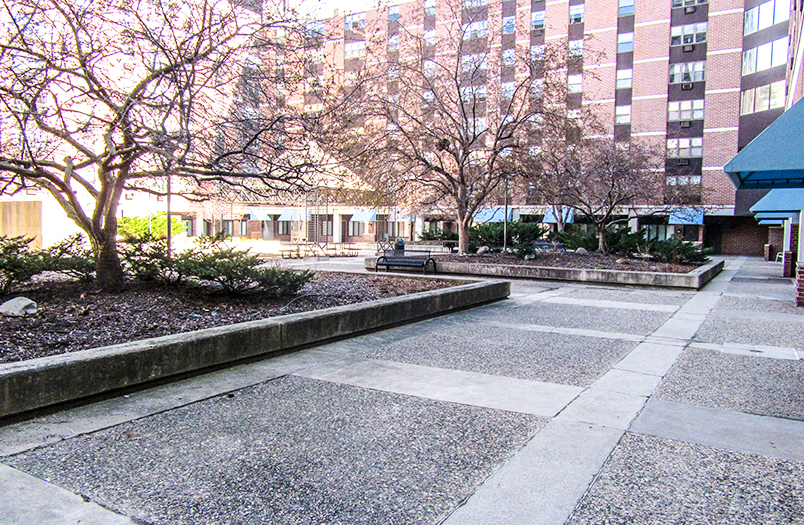
Mears Park Place — 56,000 SF Plaza Waterproofing System Replacement
The existing waterproofing system at this occupied apartment complex had failed after years of weatherization. Rather than apply negative-side patches from below, RSI performed a complete positive-side system replacement: removing 56,000 SF of failed waterproofing and concrete overlay, then installing a new Tremproof 6100 system with improved drainage, planter rehabilitation, and full sealant replacement. When access allows, a complete system approach delivers the best long-term result — and this project proves it.
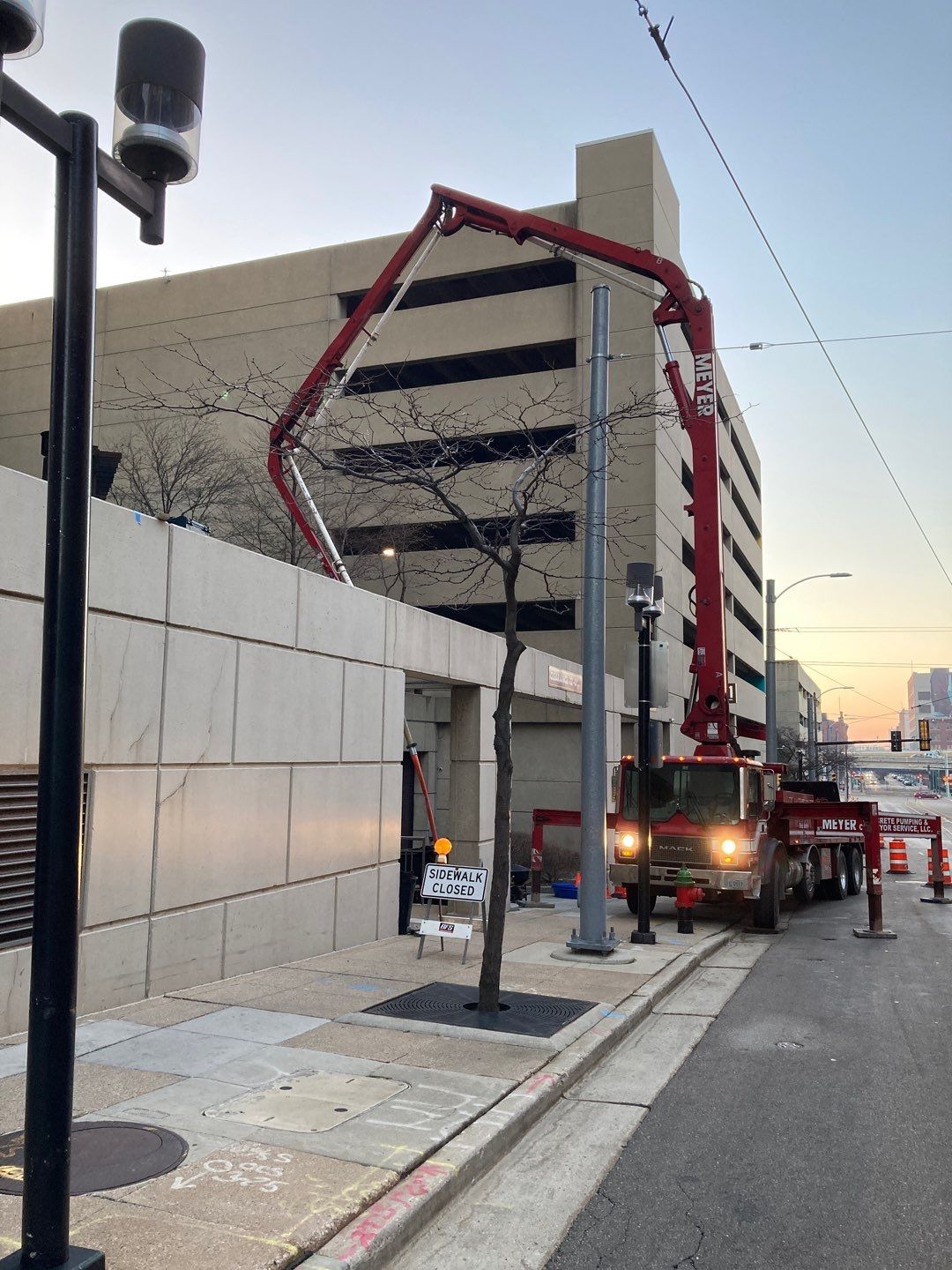
Milwaukee Plaza Deck — Hot-Applied System with EFVM Verification
Tight urban access, an active light rail system, and narrow work windows — conditions that push many contractors toward negative-side shortcuts. RSI executed a full positive-side hot-applied rubberized asphalt system with substrate QA, controlled membrane thickness, reinforced terminations, and third-party EFVM (electric field vector mapping) leak testing before re-pouring the wearing slab. The complexity didn’t change the standard.
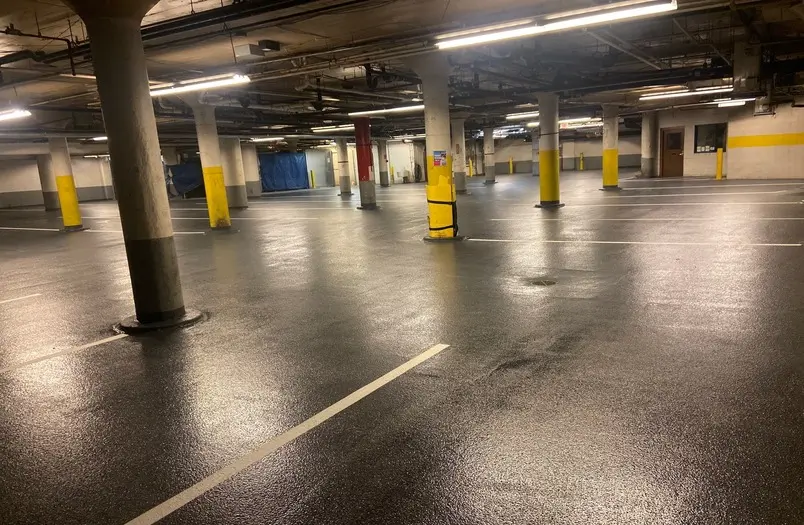
W Hotel at Foshay Tower — Occupied Building, Positive-Side Results
This historic Minneapolis landmark had an active restaurant, hotel operations, and parking facility running throughout the entire project. RSI completed full waterproofing system replacement — including concrete distress repair and new waterproof traffic coating — in two months through careful phasing and coordination. Operational constraints didn’t force a negative-side compromise.
How RSI Determines the Right Approach for Your Building
RSI doesn’t start with a product recommendation — we start with an investigation. Our six-step diagnostic process identifies the root cause so the solution matches the problem, whether that’s positive-side waterproofing, negative-side management, or a phased combination of both.
Interview & History
We document when and where leaks appear, weather correlations, prior repair attempts, and the building’s construction history to establish a baseline understanding.
Visual Survey
Our team maps visible indicators — staining, efflorescence, spalls, sealant condition, and flashing continuity — to identify patterns and suspect areas across the envelope.
Moisture Mapping
Using moisture meters and infrared thermography where appropriate, we correlate readings with specific assemblies to pinpoint problem zones — not just wet spots.
Targeted Testing
Controlled water testing at suspected transitions and interfaces — not “hose everything and see what happens.” Precision testing isolates the actual leak paths.
Open-Ups & Probes
We verify hidden conditions — flashing details, termination integrity, substrate quality — that can’t be assessed from the surface alone. This is where assumptions get confirmed or corrected.
Root-Cause Report
Findings are documented with prioritized repair options based on risk, access constraints, and lifecycle cost — giving you a clear, defensible path forward.
Questions Every Building Owner Should Ask
- What is the root cause of the water intrusion — and how do we know?
- Is this a system repair or a patch? What’s the expected service life?
- How are terminations, transitions, and drainage being addressed?
- What warranty is offered — and what voids it?
- What open-ups or probes are included to verify hidden conditions?
Proactive advice from Dan: Address small leaks early — they’re cheaper to fix than structural damage. Budget for investigations, not just repairs. Ask contractors how water moves through the assembly, not just where it leaks. Think in lifecycle costs, not patch-to-patch spending.
Get a Diagnostic Assessment from RSI
Every waterproofing project starts with understanding how water moves through your building. RSI’s assessment identifies the root cause, evaluates your access and operational constraints, and recommends the right system — not just the easiest product. Let us help you make the right positive-side vs. negative-side waterproofing decision for your building.