
Shelf Angle & Lintel Failure: The Hidden Rust Jacking Threat
Behind every brick facade, hidden steel elements carry the structural load. When they corrode, damage compounds invisibly — until cracking, bulging, and instability force expensive emergency repairs.

Why Shelf Angles and Lintels Matter More Than Most Owners Realize
Every masonry facade has a hidden skeleton — a network of steel shelf angles and lintels embedded within the wall that carry the weight of the brick above. Most property managers never think about these components. They’re invisible under normal conditions, buried inside the wall cavity, silently doing their job. Until they don’t.
Dylan Reynolds, a facade restoration specialist at RSI who has reviewed over 1,000 building facades across the Midwest, encounters the consequences of this oversight regularly. “Some of the things that are often overlooked that we really take an in-depth review to ensure we’re encompassing a repair plan for the long-term health of these properties is hidden corrosion within the facade system, subtle wall movement, failing flashings, and chronic moisture sources that aren’t visible from the sidewalk.”
Rust jacking is the process of steel corrosion expanding beyond the original dimensions of embedded structural elements like shelf angles and lintels. As iron oxide builds up — expanding 6 to 10 times the original steel volume — it exerts up to 4,000 psi of outward pressure on surrounding masonry, far exceeding brick’s 200–500 psi tensile strength. The result is progressive cracking, bulging, and eventual structural instability of the brick facade.
Understanding how rust jacking works — and recognizing its early warning signs — is the first step toward protecting your building before a hidden problem becomes a costly emergency.
What Are Shelf Angles and Lintels?
Shelf Angles Explained
Shelf angles are L-shaped steel elements bolted to the building’s structural frame at floor lines on multi-story buildings. They act as a ledge that supports the weight of the brick veneer above, transferring that masonry load back to the building structure. On a typical commercial building, shelf angles appear at every floor level — each one carrying the accumulated weight of the brickwork between floors.
Lintels Explained
Lintels are steel angles or beams that span across the top of window and door openings, carrying the weight of the brick above those openings. Every window and door in a masonry facade relies on a lintel to bridge the gap and transfer load to the surrounding wall. As Reynolds describes it, these are “hidden steel supports within the facade that carry the masonry load above windows or between floors, transferring the weight back to the structure.”
Why These Components Are Structurally Critical
Both shelf angles and lintels are load-bearing elements — when they corrode and lose structural capacity, everything above them is at risk. Because they’re embedded within the wall cavity, they’re completely hidden from view under normal conditions. That invisibility is precisely what makes shelf angle and lintel failure so dangerous: by the time you see evidence on the surface, the steel behind the brick has already been deteriorating for years.
How Rust Jacking Destroys Brickwork From the Inside Out
The Oxidation Process
When moisture penetrates the wall cavity and reaches unprotected steel, iron reacts with oxygen and water to form iron oxide — rust. The critical fact that makes this so destructive: iron oxide occupies 6 to 10 times the volume of the original steel. As Reynolds explains, “Rust jacking refers to steel corrosion on the lintels or the shelf angles. And when that happens, that oxidation builds up and it expands, building up on the original steel itself, which pushes the brick outward, causing cracking, bulging, and eventual instability.”
How Expanding Steel Damages Surrounding Masonry
The physics are stark. Corroding steel can generate up to 4,000 psi of outward pressure against surrounding masonry. Brick’s tensile strength? Only 200–500 psi. The masonry has no chance. This relentless outward force cracks mortar joints first, then displaces entire brick units, and ultimately compromises the structural integrity of the wall section above the affected steel element.
Why Damage Accelerates Over Time
Rust jacking is a self-reinforcing cycle. Initial corrosion expansion cracks the surrounding mortar and brick, creating new pathways for moisture to reach the steel. More moisture means faster corrosion, which means more expansion, which opens more cracks. Every winter without intervention makes the next repair more extensive and more expensive — a compounding problem that accelerates with each freeze-thaw season.
Warning Signs of Shelf Angle and Lintel Failure
During hands-on facade assessments, RSI’s team looks for these telltale signs of shelf angle and lintel deterioration. If you notice any of these conditions on your building, it’s time for a professional evaluation.
-
Horizontal Cracking and Displacement
Horizontal cracks in mortar joints that align with steel element locations — above windows, at floor lines — are a primary indicator. Look for brick displacement or outward bulging at shelf angle or lintel lines, which signals that expanding steel is actively pushing masonry outward.
-
Rust Staining and Corrosion Evidence
Orange or brown discoloration bleeding through mortar joints or across the brick face is oxidation product migrating to the surface. This staining is visible confirmation that embedded steel is actively corroding behind the facade.
-
Mortar Joint Widening Near Steel Elements
Joints that are opening, widening, or separating specifically at the line where steel is embedded indicate the expansive force of corrosion is overcoming the mortar’s bond. This often precedes more visible brick displacement.
-
Spalled Brick at Openings
Cracked, flaking, or deteriorated brick directly above or below window and door openings where lintels bear load. When brick units in these areas show spalling or fracturing, it often points to the lintel beneath them losing structural integrity.
Why These Issues Go Unnoticed Until They Become Expensive
Shelf angle and lintel corrosion happens in the one place you can’t see — behind the brick facade, inside the wall cavity, where moisture quietly accumulates on steel elements over years and decades. By the time cracking, bulging, or rust staining becomes visible from the exterior, the corrosion is already well advanced.
Waterproofing problems often have a lag because materials can pass initially but fail after UV exposure, movement, and thermal cycling. Early leaks may be hidden behind finishes and insulation until damage builds. Masonry deterioration is progressive — you notice it when spalls, staining, or interior damage finally shows.
— Dan Lephardt, RSI Waterproofing SpecialistGround-level visual inspections simply cannot detect these conditions. Meaningful assessment requires swing stage or aerial lift access to get hands-on with the facade elements. The cost difference between proactive detection and reactive emergency repair is dramatic — on a typical 100,000 SF facade, deferred maintenance can multiply the repair scope and budget several times over. Early detection through professional facade inspections remains the most cost-effective strategy for managing shelf angle and lintel health.
RSI Shelf Angle & Lintel Repair in Action
Rust jacking is rarely an isolated problem. These projects demonstrate how RSI identifies embedded steel corrosion as part of a comprehensive facade assessment — and addresses both the symptom and the underlying moisture pathways that caused it.
2615 Park Avenue Building
Minneapolis, Minnesota
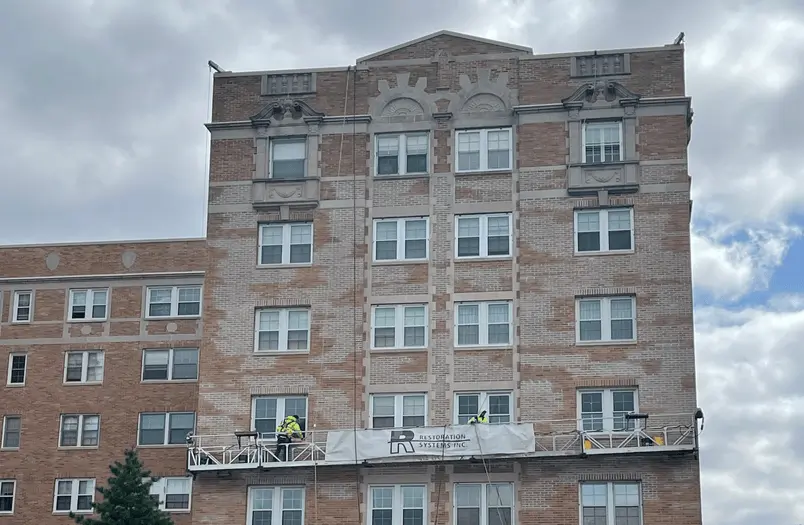
When RSI assessed this multi-story commercial facade, lintel corrosion was one element of a much larger picture. The multi-year restoration contract included lintel refinishing alongside exterior brick replacement, facade tuckpointing, stone patching, sealant replacement, and windowsill repairs. This project demonstrates a core principle: rusting lintels are a symptom of broader moisture infiltration, and effective repair requires addressing the whole system — not just the corroded steel.
Congdon Park Elementary School
Duluth, Minnesota
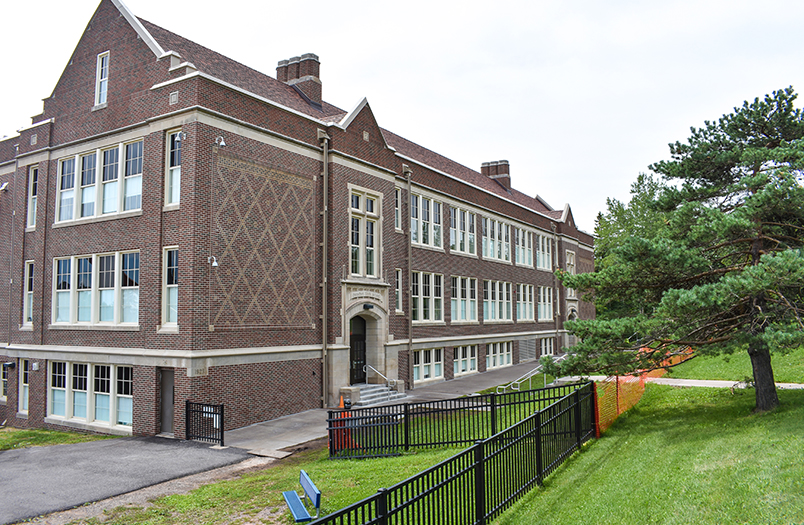
This 3-month project included window lintel flashing repairs — the specific waterproofing detail that, when neglected, allows water to sit on lintels and initiate the rust jacking cycle. RSI addressed both the steel corrosion and the failed flashing that caused it, alongside tuckpointing, brick replacement, stone repairs, and sealant replacement. Proper flashing at lintels is the first line of defense against embedded steel corrosion.
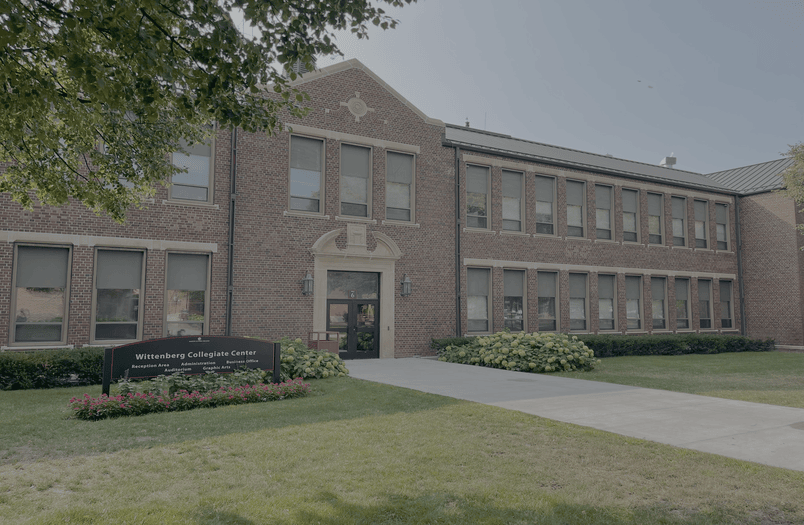
Also of note: At Martin Luther College’s Wittenberg Collegiate Center in New Ulm, Minnesota, RSI performed lintel refinishing combined with a clear penetrating sealer application — a proactive approach that addresses early-stage corrosion while adding a moisture barrier to slow future deterioration. This represents the prevention end of the spectrum: addressing lintels before full failure occurs.
How RSI Addresses Shelf Angle and Lintel Failures
RSI’s approach to shelf angle and lintel repair follows a disciplined process — from hands-on investigation through long-term repair planning. Every step is guided by root-cause diagnostics, not surface-level symptom treatment.
-
1
Access and Assessment
“We’ll access the exterior facade by swing stage or scaffold for a further in-depth, hands-on investigation,” Reynolds explains. Getting up close to the facade is the only way to identify conditions invisible from the ground — including hidden corrosion, subtle wall movement, and failing flashings.
-
2
Documentation and Diagnosis
RSI maps failure patterns around the entire facade. “We provide on-site observations with photos and explanations to ownership groups on what we found, what the cause is, and what the repair procedure will be,” says Reynolds. The goal is root-cause identification — not just cataloging symptoms.
-
3
Repair Planning
“We evaluate the structural stability and material condition. We also evaluate the safety risk and long-term performance. If we feel that a unit can’t reliably carry load or shed water, replacement is usually the right choice.” Each repair plan aligns with long-term maintenance goals — not quick fixes.
-
4
Execution
“A well-run project looks like the job site and the communication is very organized, transparent throughout the life cycle of the project. We’re making safety a priority, and we are minimally disruptive to tenants, and we deliver durable repairs that align with a long-term maintenance plan.”
What sets RSI apart is what we look for beyond the obvious. Less experienced contractors may patch visible cracks and move on. RSI’s team investigates hidden corrosion, subtle wall movement, failing flashings, and chronic moisture sources — the underlying conditions that, if left unaddressed, will cause the same problems to return within a few years.
Midwest Climate Factors That Accelerate Rust Jacking
Water expands by 9% when it freezes, exerting immense pressure that cracks and weakens brick, stone, and mortar from the inside out.
Iron oxide occupies 6 to 10 times the volume of the original steel — turning a thin layer of rust into a force that displaces entire brick sections.
Corroding steel generates up to 4,000 psi of outward force — 8 to 20 times greater than brick’s tensile strength of 200–500 psi.
“It all starts with moisture infiltration,” Reynolds explains. “The freeze-thaw cycle is extremely detrimental to masonry and concrete materials in the Midwest, because we live in such a moisture-filled climate. With that in combination with the freeze-thaw cycle, it allows water and moisture infiltration issues to compound significantly through the winters.”
In the Midwest’s aggressive climate, what might take 30 years to cause failure in a dry region can happen in 15–20 years. Reynolds recommends assessing buildings in winter when damage is most visible, then executing repairs in spring, summer, and fall when temperatures above 40°F overnight support optimal material performance.
Protect Your Building Before Hidden Corrosion Becomes Visible Damage
The most expensive shelf angle and lintel repairs are the ones that were deferred. If your building is 20+ years old and hasn’t had a hands-on facade assessment, hidden corrosion may already be at work behind your brick. RSI’s principals average more than 25 years’ experience, and our team has reviewed over 1,000 facades across the Midwest.