
Commercial Building Sealant Selection: A Decision Framework
Most building envelope leaks start at joints and transitions — not field areas. Here’s how to ensure your sealant scope matches your building’s actual conditions.

Key Takeaways for Property Managers
- No single sealant works everywhere. Different joints on the same building face different stresses — UV exposure, thermal movement, traffic wear, water immersion — and each may require a different chemistry. RSI’s university campus project used both silicone and polyurethane across 30,000 linear feet for exactly this reason.
- Movement capacity is the primary differentiator. Silicone sealants offer ±25–50% movement, polyurethane typically ±12.5–25%, and hybrid systems ±35–50%. Midwest freeze-thaw cycling demands the higher end of these ranges to prevent premature tearing.
- Installation conditions matter as much as chemistry. Cure temperature limits, substrate moisture, and surface prep determine whether even the right chemistry will perform. A premium sealant installed in wrong conditions will still fail.
- Ask why, not what. A competent contractor explains why they selected a specific chemistry for each joint type on your building. One product specified everywhere with no rationale is a red flag.
Why Sealant Joints Are Where Buildings Fail First
When a building envelope fails, the culprit is rarely a broad section of wall or roof membrane. The vast majority of leaks originate at joints and transitions — the perimeters around windows, the gaps between precast panels, the connections where different materials meet. These are the points where your building is most vulnerable, and the sealant at each joint is your critical line of defense.
“Sealants are the flexible connectors at gaps and transitions. Most leaks start at joints/openings, not field areas — so sealants are often the difference between a successful system and a recurring leak.” — Dan Lephardt, Building Envelope Specialist, RSI
When the wrong sealant chemistry is selected — or the right chemistry is installed incorrectly — the consequences cascade quickly. Early adhesion failure (the sealant pulls away from the substrate) or cohesion failure (the sealant body itself tears apart) allows water behind façade elements. That trapped moisture drives staining, efflorescence, interior damage, and accelerated freeze-thaw deterioration that compounds with every season. One of the most common causes of premature failure is three-sided adhesion — joints installed without a proper backer rod — which restricts the sealant’s ability to move and virtually guarantees early tearing regardless of chemistry.
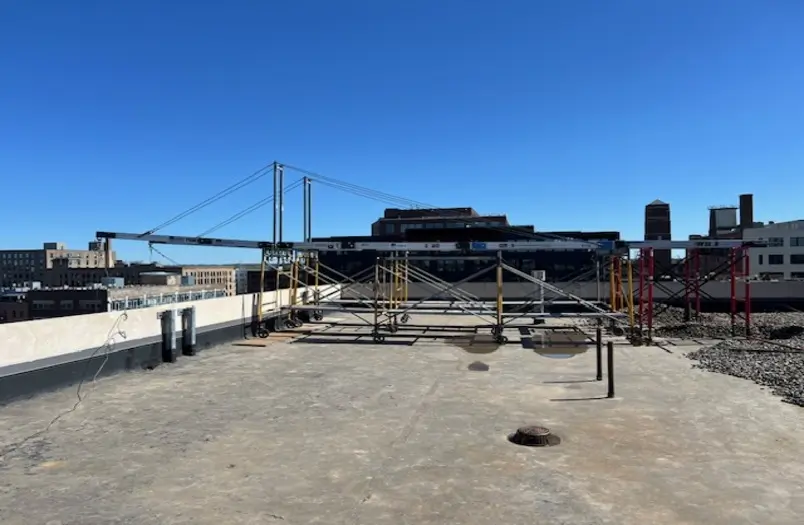
There’s also a critical distinction between consumer-grade “caulk” and commercial-grade sealants rated per ASTM C920 for movement capability, adhesion, and UV resistance. As Dan Lephardt puts it: “The wrong caulk may shrink, crack, or debond quickly in dynamic joints.” The question for commercial building sealant selection isn’t which product is best — it’s which sealant is right for each joint condition on your building. That’s where a systematic sealant selection and replacement approach makes the difference between a lasting repair and a recurring problem.
The Five Factors That Drive Sealant Chemistry Selection
“We match each joint condition with a sealant designed to perform under those exact stresses — rather than relying on a one-size-fits-all product.” — Dan Lephardt, RSI
Movement Capacity
- The primary differentiator between sealant chemistries — joints expand and contract with every temperature shift
- Movement ratings (±25%, ±35%, ±50%) define how much a sealant can stretch before failing
- Midwest buildings with wide thermal swings need the higher end of these ranges to avoid premature tearing
Substrate Compatibility
- Masonry, concrete, metal, and stone each interact differently with sealant chemistries
- Some chemistries require primers for proper adhesion; others bond directly to specific substrates
- The wrong pairing causes adhesion failure regardless of sealant quality or brand reputation
Exposure Conditions
- UV radiation, water immersion, traffic wear, and chemical exposure each demand different sealant properties
- A coping joint faces relentless UV bombardment; a parking deck transition endures tire traffic and de-icing chemicals
- Each location’s unique stress profile determines the appropriate chemistry
Cure Profile & Install Temperature
- Some chemistries won’t cure properly below certain temperatures or in high-moisture conditions
- In the Midwest, this directly limits the installation window — particularly in spring and fall shoulder seasons
- Phased scheduling may be required: stabilize active leaks now, then complete permanent installation in proper conditions
System Compatibility
- Sealants must be chemically compatible with adjacent membranes, coatings, and flashing materials
- Think of the building envelope like a chain — each component must tie into the next with compatible chemistry
- The wrong chemistry at a membrane-to-sealant transition can undermine both systems simultaneously
Silicone vs. Polyurethane vs. Hybrid: Chemistry at a Glance
This comparison covers the three major chemistry families used in commercial sealant applications. Your contractor’s selection should be driven by the joint conditions outlined above — not by brand preference or habit.
| Property | Silicone | Polyurethane | Hybrid (Modified Silicone) |
|---|---|---|---|
| Movement Capacity | ±25–50% (Class 25–50) | ±12.5–25% (typically Class 25) | ±35–50% |
| UV Resistance | Excellent — maintains flexibility and adhesion in direct sun | Poor — degrades and chalks without protective coating | Good to Excellent — strong UV stability without coating |
| Paintability | No — paint will not adhere to cured silicone | Yes — accepts paint readily after curing | Yes — paintable and accepts most topcoats |
| Substrate Adhesion | Requires primer on most substrates for reliable bond | Excellent direct adhesion to masonry and concrete | Good adhesion without primer on most common substrates |
| Service Temp Range | -65°F to +400°F | -40°F to +180°F | -40°F to +300°F |
| Typical Service Life | 20+ years | 10–15 years | 15–20 years |
| Cure Sensitivity | Moisture-cure with broad temperature range | Moisture-sensitive — avoid wet conditions during cure | Low sensitivity — cures reliably in varied conditions |
| Best Applications | Curtainwall, copings, parapets, high-UV exposed joints | Concealed joints, paintable surfaces, traffic-bearing decks | Versatile — exterior joints needing both paintability and flexibility |
All sealants referenced above are governed by ASTM C920, the standard specification for elastomeric joint sealants. Class, Type, Grade, and Use designations within C920 determine a sealant’s tested performance characteristics. These ranges represent general chemistry-family performance — specific products vary by manufacturer and formulation.
How Midwest Conditions Change the Sealant Equation
Greater movement range: Midwest buildings experience wider seasonal temperature swings than temperate climates, meaning joints move more and more often. A joint that could perform reliably with a ±25% product in Atlanta may require a ±35% or ±50% chemistry in Minneapolis or Milwaukee. This pushes commercial building sealant selection toward higher movement-capacity chemistries across the board — and makes the movement capacity row in the table above the single most important data point for Midwest property managers.
Cold-weather stiffening: Polyurethane sealants can stiffen significantly in extreme cold, increasing stress at bond lines during the exact conditions when joints are moving most. Silicone maintains flexibility across a wider temperature range (-65°F to +400°F), which is why it’s often the preferred choice for exposed Midwest joints where UV resistance and extreme flexibility are both required.
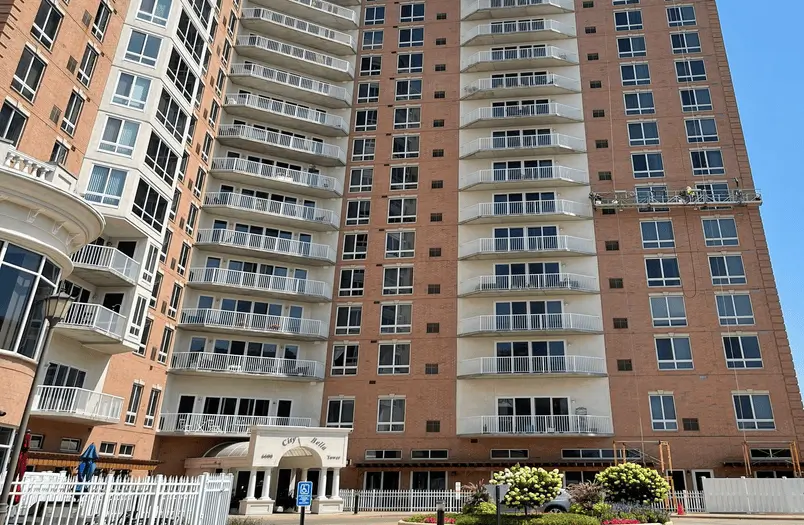
Installation windows: Many sealants have minimum cure temperatures (typically 40–50°F). In the Midwest, this limits the installation season and often requires phased work — temporary stabilization to stop active leaks through winter, then permanent sealant installation when conditions allow proper curing. RSI’s 30,000 LF university campus project along Lake Michigan is a prime example: wind-driven rain, elevated moisture, and aggressive freeze-thaw cycling demanded both careful chemistry selection and strategic scheduling across multiple buildings. Learn more about RSI’s waterproofing approach.
RSI Sealant Selection in Action
Sealant selection decisions compound at scale. Here’s how RSI’s diagnostic approach translates to real building envelope projects across the Midwest.
Minneapolis, MN
RiverWest Building Restoration
60,000 LF
Sealant Replacement
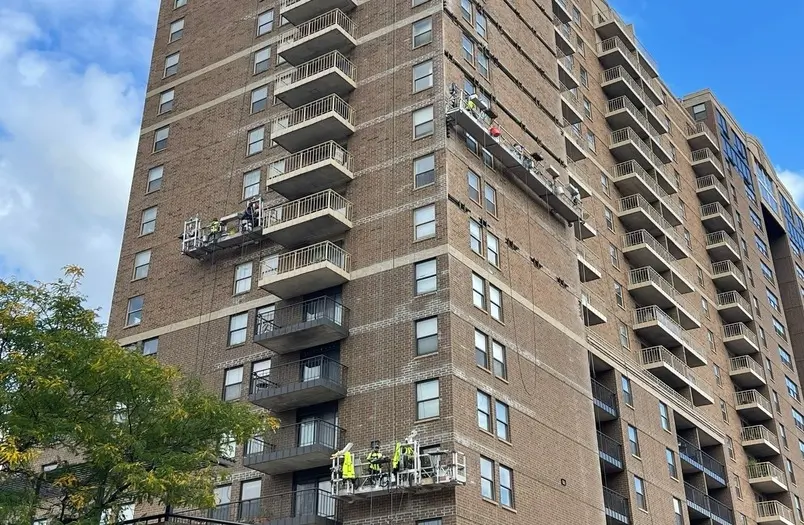
Across 60,000 linear feet of window and door joints on a historic condominium, RSI had to balance substrate compatibility with historic masonry, movement demands at window perimeters, UV exposure, and Heritage Preservation Commission requirements. This multi-year contract proves that sealant selection at scale is a systematic engineering decision — not a product swap. The scope also included 11,650 LF of thru-wall flashing, 2,000 brick replacements, and 30,000 SF of polyurethane waterproofing membrane at balconies.
Minneapolis, MN
720 Lofts Sealant Replacement
3 Joint Types
Different Selection Criteria
Window perimeter sealant, control joint sealant, and sealant between dissimilar materials — three distinct joint types on a single building, each demanding different selection criteria. This project is the article’s central thesis demonstrated in practice: one building, multiple joint conditions, multiple sealant chemistries. Specialty golden gate booms provided access to the building’s full exterior during the five-month project.
Additional Projects
Questions to Ask Before Approving a Sealant Scope
What is the root cause of this failure — and how did you determine it?
+A credible contractor conducts pathway mapping and diagnostic investigation — not just a visual assessment from the ground. They should be able to explain how water is moving through the assembly, not simply where it’s visible. If the answer is “it’s old and needs replacing,” push further. Age alone doesn’t explain why a sealant failed or what will prevent the replacement from failing the same way.
Is this a system repair or a patch?
+Understand whether the proposal addresses the full water management chain — membrane, flashing, sealant, and drainage — or just the visible symptom. A patch may stop today’s leak but leave the underlying water pathway intact. As Dan Lephardt notes: “Water only needs one weak link.” A system repair addresses the chain; a patch addresses the drip.
Why was this specific sealant chemistry selected for each joint type?
+RED FLAG: One product specified everywhere with no rationale. A thorough proposal explains why silicone is specified at the copings, polyurethane at the concealed joints, and hybrid at particular transitions — based on movement demands, substrate type, exposure conditions, and system compatibility at each location. If the proposal reads like a single product purchase order, the selection process was skipped.

How are terminations, transitions, and drainage being addressed?
+The vast majority of envelope failures originate at terminations and transitions — not at field areas. If the proposal doesn’t specifically address termination details, transition sequencing, and drainage pathways, it’s incomplete. These are the details that separate a diagnostic scope from a superficial “re-caulk” bid.
What is the expected service life and maintenance plan?
+Compare lifecycle cost, not just installation cost. A 20-year silicone sealant may cost more upfront but significantly less over time than a 10–15 year polyurethane that requires earlier replacement. Ask for projected maintenance intervals and total cost of ownership across your building’s planning horizon — especially in the Midwest, where freeze-thaw cycling accelerates wear on every chemistry.
What voids the warranty?
+Skipping primers, using incompatible products, or inadequate surface preparation can all void manufacturer warranties — even when the sealant itself is a premium product. Make sure the scope explicitly includes proper prep protocols (surface grinding, cleaning, drying, priming where required), and confirm that the contractor’s installation process aligns with the manufacturer’s warranty requirements. No chemistry overcomes bad prep.
Get a Diagnostic Sealant Assessment from RSI
RSI’s building envelope specialists evaluate each joint condition individually — matching chemistry to movement demands, substrate type, exposure, and system compatibility. Our root-cause diagnostic approach means you get a prioritized scope with the right sealant for every joint, not a one-product-fits-all proposal. With 25+ years of Midwest building envelope experience, we understand how your building performs in the conditions it actually faces.
“We match each joint condition with a sealant designed to perform under those exact stresses.” — Dan Lephardt, Building Envelope Specialist, RSI