
The two-tier parking garage inspection checklist Midwest property managers need
A coating job that is deferred long enough rarely stays a coating job. Once water reaches the steel, what should have been routine surface work becomes a major structural rehabilitation, and the cost climbs with it. The fix is a rhythm you can run yourself: quarterly walkthroughs as an early-warning system, and an annual professional assessment as the diagnostic deep dive. This checklist gives Upper Midwest property managers both tiers, built on 28+ years of trusted restoration work across the region.

Why Midwest parking structures deteriorate faster
Parking structures in Minnesota and Wisconsin face a compounding triple threat:
- 50–100+freeze-thaw cycles per year, each one prying cracks a little wider
- ~9%expansion of trapped water every time it freezes inside a crack
- May–Octreliable repair window — a problem spotted in November can wait months
On top of the freeze-thaw cycling, deicing salt tracked in all winter can push chloride levels several times higher than a coastal structure ever sees, and that chloride is a big part of why structures fail faster here: it drives the corrosion of embedded steel. The narrow repair calendar then compounds everything else. That narrow window is exactly why early detection matters. Catch a condition on a quarterly walkthrough and you can plan the fix for the next open season. Miss it, and you may lose a full year while the deterioration keeps advancing.
The earlier you see it, the cheaper and simpler it stays. The checklist below is built to help you see it.
The quarterly checklist: what to look for every 90 days
This is the part you run yourself. Walk the structure zone by zone every quarter, note and photograph what you see, and keep a running record. It is an early-warning system, not a structural inspection, and it does not produce a pass or fail judgment. Its job is to help you notice change and decide when to escalate. Give drive aisles and entry ramps extra attention, since repeated vehicle loading fatigues those surfaces and accelerates any deterioration already present.
Deck surface: cracks, spalls, and delamination
Scan the driving surface for cracking, and for spalling: saucer-shaped fragments, often one to three inches deep, that break away from the slab. Spalling usually signals that rebar corrosion has already begun expanding beneath the surface. Tap suspect areas with your foot or a hammer; a hollow, drum-like sound points to delamination, where the surface layer has separated from the concrete below.
Expansion joints and sealant integrity
Walk every expansion joint and look at the sealant. Note any sections that are torn, pulled loose, gone hard and brittle, or missing entirely. Open joints are a direct path for chloride-laden water to reach the structure below.
Drainage inlets and ponding evidence
Check that drains are clear and draining. Look for ponding, or for the tide-line stains and debris rings that show where water stood after the deck dried. Low-slope decks let water and dissolved salt sit rather than run off, which lengthens the time chloride is in contact with the concrete.
Stair and elevator core water infiltration
Step into the stair and elevator cores and look for active leaks, efflorescence (the white mineral crust water leaves behind), and rust staining. These enclosed shafts often reveal infiltration before it shows on the open deck.
Ramp transitions
Inspect where ramps meet flat decks. These transitions take concentrated, repeated loading and are common spots for early cracking and surface breakdown.
Post-tension cable end anchors
Where you can see post-tension cable end anchors, note any rust staining, cracking, or spalling around the anchor pockets. You are only recording what is visible here; conditions in this area are a strong reason to bring in a professional, not to investigate further yourself.
Rust staining on soffits and columns
Look up and around. Rust streaks bleeding from a soffit or running down a column are a sign that steel inside the concrete is corroding and expanding. Mark where the staining appears and whether it is spreading between visits.
Barrier panels and cables
Check perimeter barrier panels and any barrier cables for impact damage, cracking, displacement, or corrosion. On the Appleton Parking Ramp in Wisconsin, a vehicle impact required emergency shoring and replacement of a precast barrier panel on an upper level, a reminder that barrier condition belongs on every quarterly walk.
Track your last sealer application
Record the date your penetrating sealer (a silane or siloxane product) was last applied. Applied to sound concrete, these sealers sharply reduce how much chloride soaks in, but they wear and need reapplication on a schedule. If no one can tell you the last date, that is your answer.
One pattern deserves its own note. As one RSI expert puts it: “If you’re repaired in the same area over and over again, something’s wrong.” Recurring spalling or cracking in a spot you have already patched usually means the root cause was never addressed, only the surface. Flag any repeat repair location and treat it as a reason to escalate.
Triggers for a professional assessment
Most of what you log on a quarterly walk you can monitor and document. Some conditions, though, mean it is time to bring in a qualified restoration and engineering team rather than wait for the next visit. If you see any of the following, escalate:
- Exposed or corroded rebar visible through a spall
- Recurring repairs in the same area after previous patching
- Rust or cracking at post-tension anchors, where corrosion is especially serious
- Active water infiltration reaching the levels below
- Standing water that returns across multiple visits in the same location
- Vehicle impact to a column or barrier, which can require immediate attention
Why water is the trigger behind most triggers
“If water doesn’t get into the concrete, it doesn’t cause that corrosion path to occur,” says an RSI expert. “We spend so much time and money repairing damage that could have been prevented with proper waterproofing.” Keep water out and you protect the embedded steel, which is what holds everything together. He compares post-tensioning to squeezing ten books together tightly so the ones in the center don’t fall out: those cables are under tremendous tension, and that compression is what keeps the structure intact. Once corrosion reaches them, the stakes rise quickly.
Timing and the 15-year rule
Book the annual professional assessment for spring, roughly March or April, so any repairs it identifies can be scheduled inside the May-to-October window the same year. And if your structure is 15 or more years old and has never had a professional assessment, start now. The Bloomington Parking Ramp shows how quickly deferred detection drives up parking garage repair costs: that occupied multi-level ramp required structural shoring and repair of broken precast tee stems as part of a 16-month rehabilitation. A professional assessment also gives you the documentation many owners increasingly need to demonstrate due diligence.
What the annual professional assessment adds
A walkthrough tells you what has reached the surface. A professional assessment finds what has not. RSI uses non-destructive testing to see inside the concrete: chain drag and hammer sounding to map delamination by sound, half-cell potential readings to locate active corrosion, chloride core sampling to measure how much salt has penetrated, and ground-penetrating radar to trace post-tension cables. The findings feed a condition assessment report with a prioritized roadmap: immediate life-safety items first, conditions to escalate within the next cycle next, and longer-range work for two-to-five-year capital planning.
“I was part of the people setting standards of acceptability for the ICRI Concrete Surface Profile. When you’ve helped write the standards, you understand not just what to look for, but why it matters.”
— RSI Expert
That authority is literal. This RSI expert physically helped make the molds that define the ICRI Concrete Surface Profile standards used across the industry. When corrosion is already underway, an assessment also weighs protective strategies. He describes cathodic protection as “little hockey pucks embedded in the concrete” that supply a current to keep the steel from corroding. It does not remove the chlorides, he notes; it stops the reaction that turns them into rust and damage.
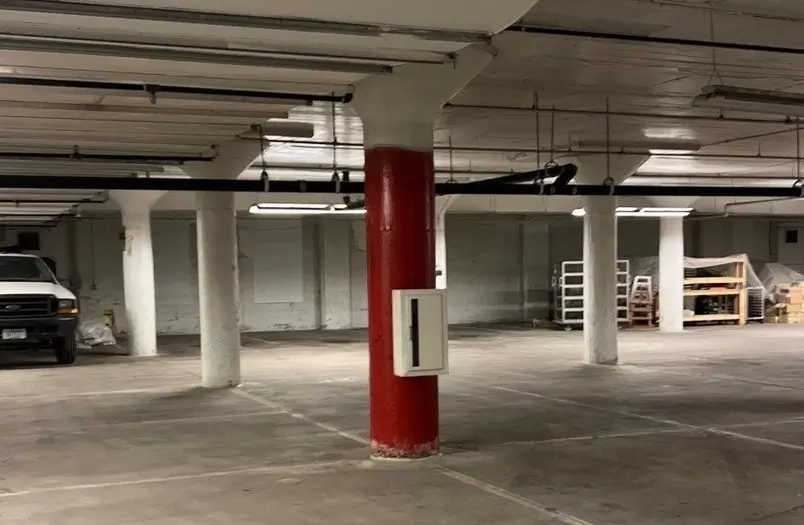
Done early, this work pays off. At the RiverWest Parking Garage in Minneapolis, RSI restored more than 156,000 square feet of traffic-bearing membrane and completed structural concrete repairs and drainage improvements in 30 days, in an occupied condominium structure. That is the proactive outcome the two-tier rhythm is built to produce: a focused, root-cause repair instead of a drawn-out rehabilitation. RSI brings union-trained craftsmen, an approach that addresses root causes rather than symptoms, an EMR well below the national average, the LECET Award of Excellence, and 300+ parking structure projects across the Upper Midwest.
Parking Garage Inspections: Common Questions
Quick answers to the questions Upper Midwest owners and property managers ask most about inspecting parking structures.
How often should a parking garage be inspected?
Run a two-tier rhythm: a quarterly walkthrough every 90 days as an early-warning system, plus an annual professional assessment as the diagnostic deep dive. Book the annual assessment for spring, roughly March or April, so any repairs it identifies can be scheduled inside the May-to-October repair window the same year. If your structure is 15 or more years old and has never had a professional assessment, start now.
Why do Midwest parking structures deteriorate faster than others?
Structures in Minnesota and Wisconsin face a compounding triple threat: 50 to 100 or more freeze-thaw events a year, with trapped water expanding roughly nine percent each time it freezes and prying cracks wider. Deicing salt tracked in all winter can push chloride levels several times higher than a coastal structure ever sees, driving corrosion of the embedded steel. The short May-through-October repair window then means a problem spotted in November often waits months before it can be fixed.
What should I look for on a quarterly parking garage walkthrough?
Scan the deck for cracks, spalls (saucer-shaped fragments often one to three inches deep), and hollow, drum-like sounds that indicate delamination. Check expansion joint sealant, drains and ponding evidence, stair and elevator cores for leaks and efflorescence, ramp transitions, visible post-tension anchor pockets, rust staining on soffits and columns, and barrier panels and cables. Also record the date your penetrating sealer was last applied, and photograph everything so you can track change between visits.
When should I escalate to a professional assessment instead of just monitoring?
Bring in a qualified restoration and engineering team if you see exposed or corroded rebar through a spall, recurring repairs in the same area after previous patching, rust or cracking at post-tension anchors, active water infiltration reaching levels below, standing water that returns across multiple visits, or vehicle impact to a column or barrier. Repeat repairs in one spot usually mean the root cause was never addressed, only the surface.
What testing does an annual professional assessment include?
A professional assessment uses non-destructive testing to see inside the concrete: chain drag and hammer sounding to map delamination by sound, half-cell potential readings to locate active corrosion, chloride core sampling to measure how much salt has penetrated, and ground-penetrating radar to trace post-tension cables. The findings feed a prioritized roadmap: immediate life-safety items first, conditions to escalate within the next cycle next, and longer-range work for two-to-five-year capital planning.
Do penetrating sealers really keep deicing salt out of concrete?
Yes. Applied to sound concrete, penetrating silane or siloxane sealers sharply reduce how much chloride soaks in, and keeping water out protects the embedded steel that holds the structure together. They wear over time, though, and need reapplication on a schedule, so record the date of the last application. If no one can tell you when the sealer was last applied, that is your answer that it is time to act.
Run the checklist. Then let RSI handle the escalation.
When a quarterly walk surfaces an escalation trigger, bring in the team that has completed 300+ parking structure projects across the Upper Midwest. RSI delivers repair, restoration, and preservation that extend service life and ensure safety, backed by 28+ years in the region. Request your complimentary assessment and get ahead of the next repair season.