
Why Shelf Angles and Lintels Matter More Than Most Owners Realize
Every masonry facade has a hidden skeleton — a network of steel shelf angles and lintels embedded within the wall that carry the weight of the brick above. Most property managers never think about these components. They’re invisible under normal conditions, buried inside the wall cavity, silently doing their job. Until they don’t.
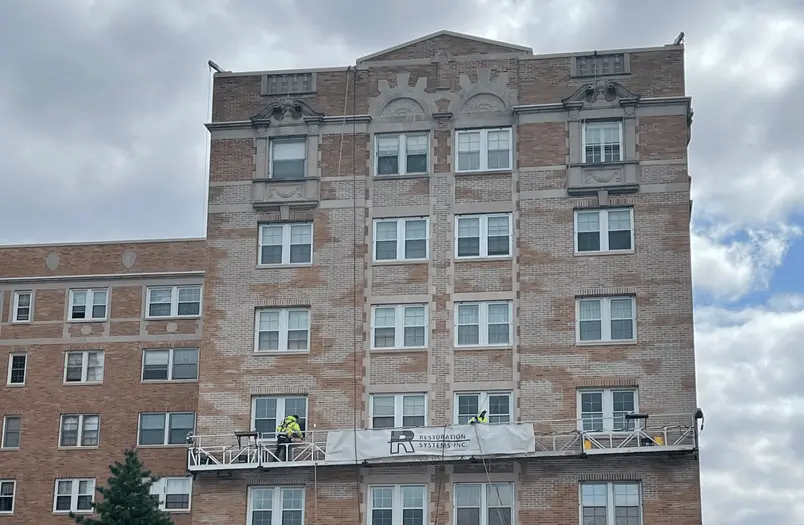
Dylan Reynolds, a facade restoration specialist at RSI who has reviewed over 1,000 building facades across the Midwest, encounters the consequences of this oversight regularly. “Some of the things that are often overlooked that we really take an in-depth review to ensure we’re encompassing a repair plan for the long-term health of these properties is hidden corrosion within the facade system, subtle wall movement, failing flashings, and chronic moisture sources that aren’t visible from the sidewalk.”
Rust jacking is the process of steel corrosion expanding beyond the original dimensions of embedded structural elements like shelf angles and lintels. As iron oxide builds up — expanding 6 to 10 times the original steel volume — it exerts up to 4,000 psi of outward pressure on surrounding masonry, far exceeding brick’s 200–500 psi tensile strength. The result is progressive cracking, bulging, and eventual structural instability of the brick facade.
Understanding how rust jacking works — and recognizing its early warning signs — is the first step toward protecting your building before a hidden problem becomes a costly emergency.