
Why Post-Tension Slabs Deserve Special Attention
When a post-tension cable fails, it doesn’t give a warning. The sudden release of tension — each strand can carry approximately 33,000 lbs of force per ACI 423 guidelines — sends energy violently through the concrete. The slab bulges. Concrete displaces. In some cases, the event is severe enough that police and emergency responders are called to the scene.
For building owners, the real danger isn’t the dramatic failure itself. It’s what you can’t see happening before it occurs. Post-tension cables are embedded inside the slab, making corrosion and deterioration virtually invisible until something breaks. That hidden nature is what makes deferred maintenance on PT structures so costly — and so dangerous.
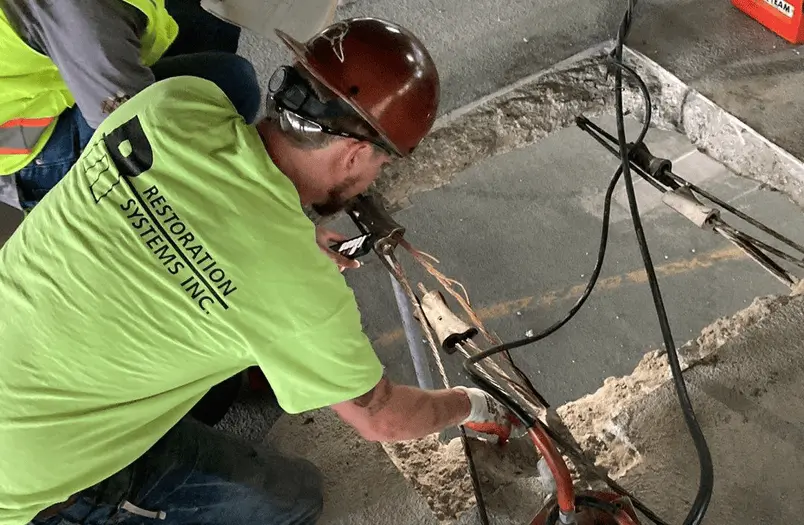
“We went to a parking ramp in Rockford, Illinois, and we’re under contract to do concrete repairs and an estimated four PT cable repairs. By the time we left there, we had done over 1,000.”
— Mike Hintsala, RSI Expert
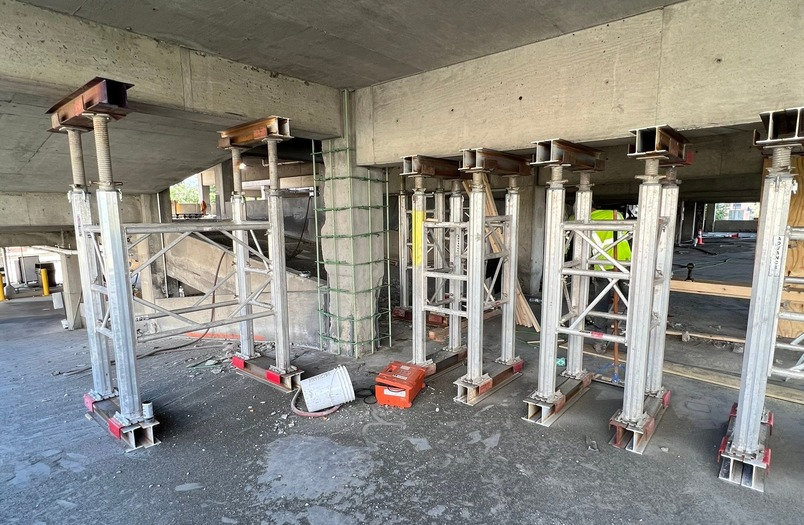
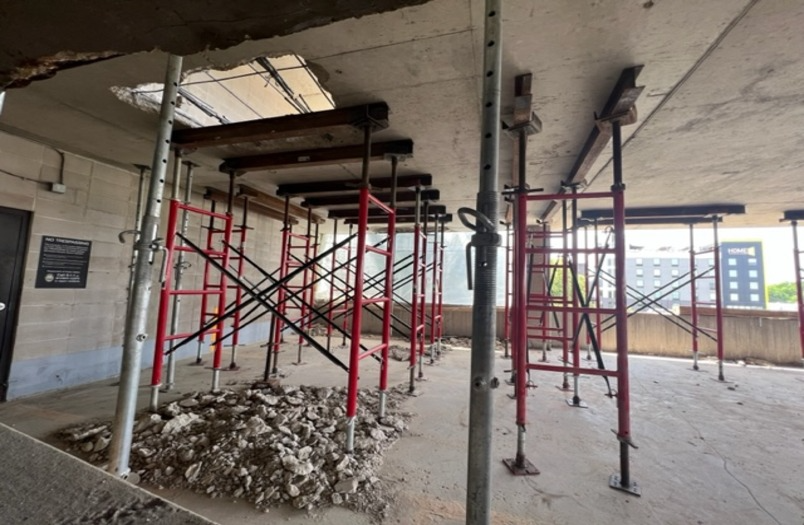
That Rockford project is a cautionary example of what happens when PT slab inspection is deferred. What began as a routine concrete repair contract revealed catastrophic hidden damage — from 4 planned cable repairs to over 1,000 actual repairs. On a similar out-of-state project, the scope exploded from 6 partial cable repairs to full cable replacement on an entire level. The owner ran out of funds and faced potential ramp closure.
“You can’t be mad at the engine if you never change the oil. What do you expect? Do you expect it to last forever?” — Mike Hintsala, RSI Expert, on the consequences of deferred PT maintenance.
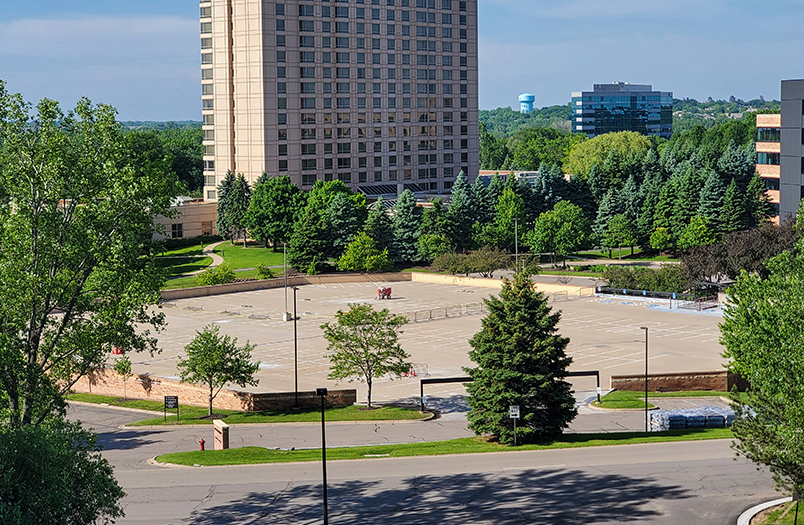
Consider this: if your parking ramp represents a $200 million investment, how often would you review a $200 million financial portfolio? Probably not once every 10 years. Yet many building owners treat their parking structures as afterthoughts — the lowest-priority asset in their portfolio — until a failure forces their hand.
To understand why these failures happen — and why they’re so difficult to catch in time — you need to understand how post-tension systems actually work.