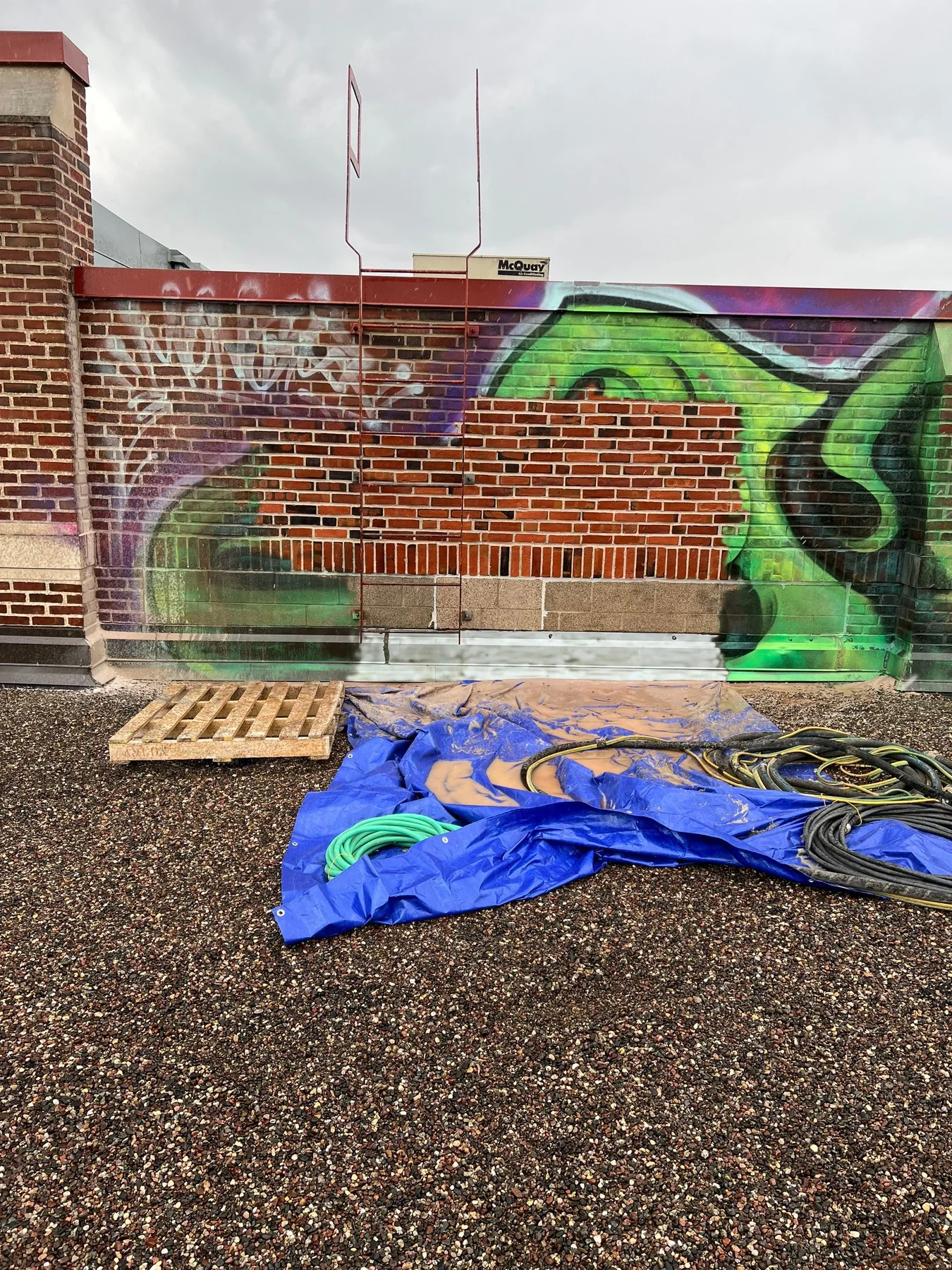
01
Substrate Identification
Brick, concrete, precast, natural stone, metal panels, and coated surfaces do not respond the same way. The wall decides the method.

Graffiti removal that starts with the wall, not the stain.
A tagged brick pier, precast panel, stone entry, or coated storefront needs fast attention, but speed cannot come at the cost of the building face. RSI treats graffiti removal as facade restoration work: identify the substrate, test the response, then remove the paint or marker “without damaging the underlying substrate.” The wrong cleaner, pressure, or dwell time can turn a maintenance call into permanent scarring.

Commercial graffiti removal starts with the surface, not the sprayer. Brick, concrete, precast, natural stone, metal panels, and coated surfaces can all respond differently to the same cleaner, rinse pressure, or dwell time. On one wall, a remover may release paint cleanly; on another, it can discolor stone, soften a coating, or leave masonry permanently roughened.
That is what separates professional facade restoration work from a quick pressure-washing attempt. The goal is not simply to make the paint disappear. The goal is to remove the graffiti without creating a lighter rectangle, a scarred brick face, a dull metal panel, or an uneven patch that becomes more visible than the original vandalism.
RSI treats graffiti removal as part of building facade restoration. Crews test small areas first, use the least aggressive method that will work, and adjust cleaners, pressure, and dwell times to the actual condition of the substrate. That process matters even more on historic brick, soft stone, architectural concrete, or finished metal where aggressive cleaning can permanently change the surface.
For properties in the Upper Midwest that are repeatedly tagged, RSI may also recommend anti-graffiti coatings after removal. Sacrificial coatings can make future cleaning faster and less aggressive, helping reduce long-term maintenance cost while protecting the underlying wall.
A few of RSI’s Commercial Graffiti Removal projects
When graffiti sits over deteriorated masonry, failed coatings, or damaged facade materials, removal may reveal the need for related work such as brick repair and replacement, tuckpointing and mortar repair, stone repair and replacement, coating removals, or surface preparation.
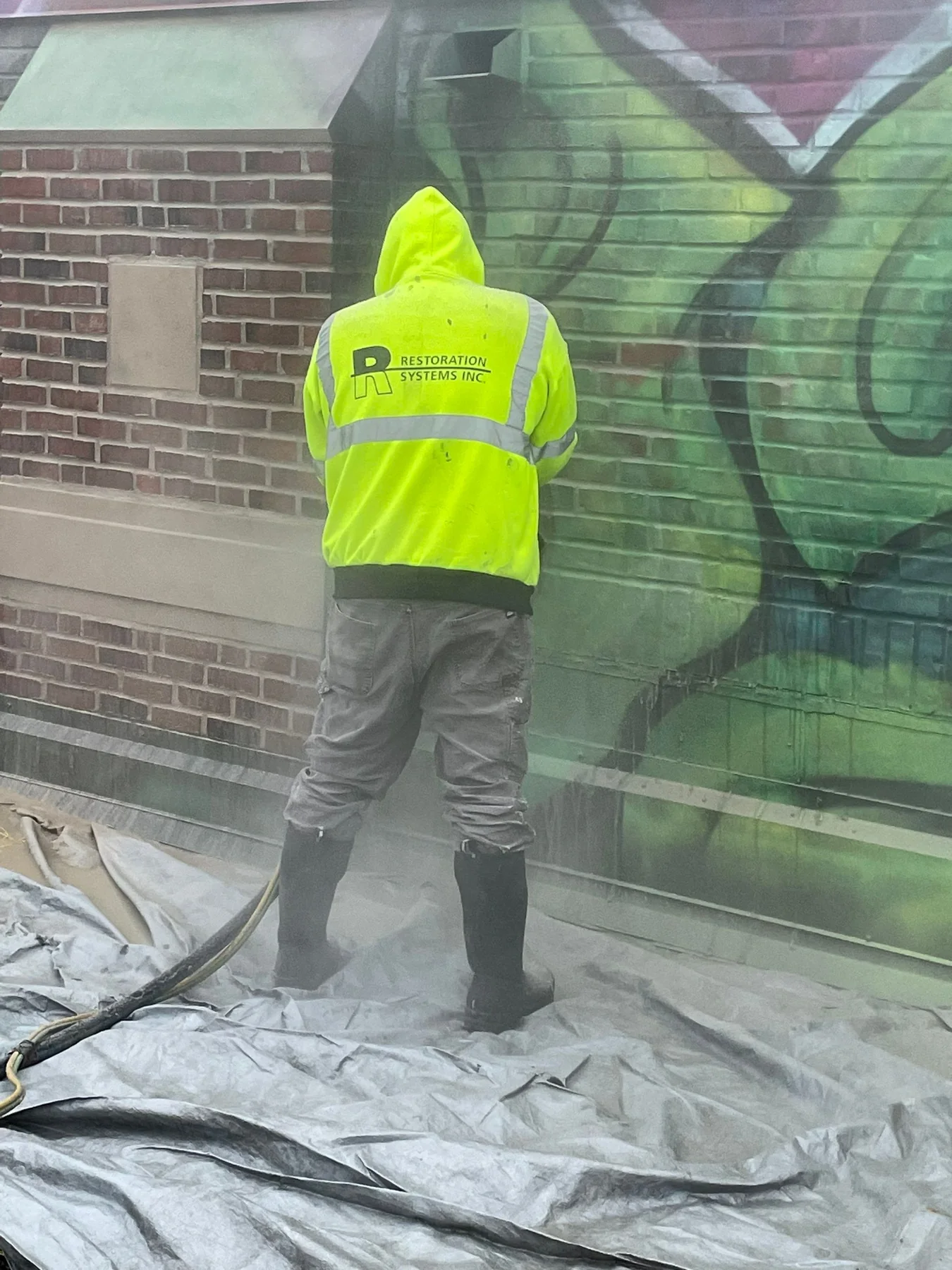
Good graffiti removal is restrained. RSI identifies the surface, tests a small area, and starts with the least aggressive method that can do the work. Historic masonry guidance says the same thing in plain terms: test first, use the gentlest effective method, and avoid turning cleaning into surface loss [NPS Preservation Brief 38].
Brick, concrete, precast, natural stone, metal panels, and coated surfaces do not respond the same way. The wall decides the method.
RSI confirms cleaner, pressure, and dwell time on a limited area before scaling up. This is where halos, discoloration, or coating sensitivity should show up.
The target is the tag, not the face of the building. Specialty cleaners, low-pressure washing, and light media blasting each have a place when the surface can tolerate them.
On repeat-tagged buildings, anti-graffiti coatings can make the next cleaning faster and reduce long-term maintenance cost.
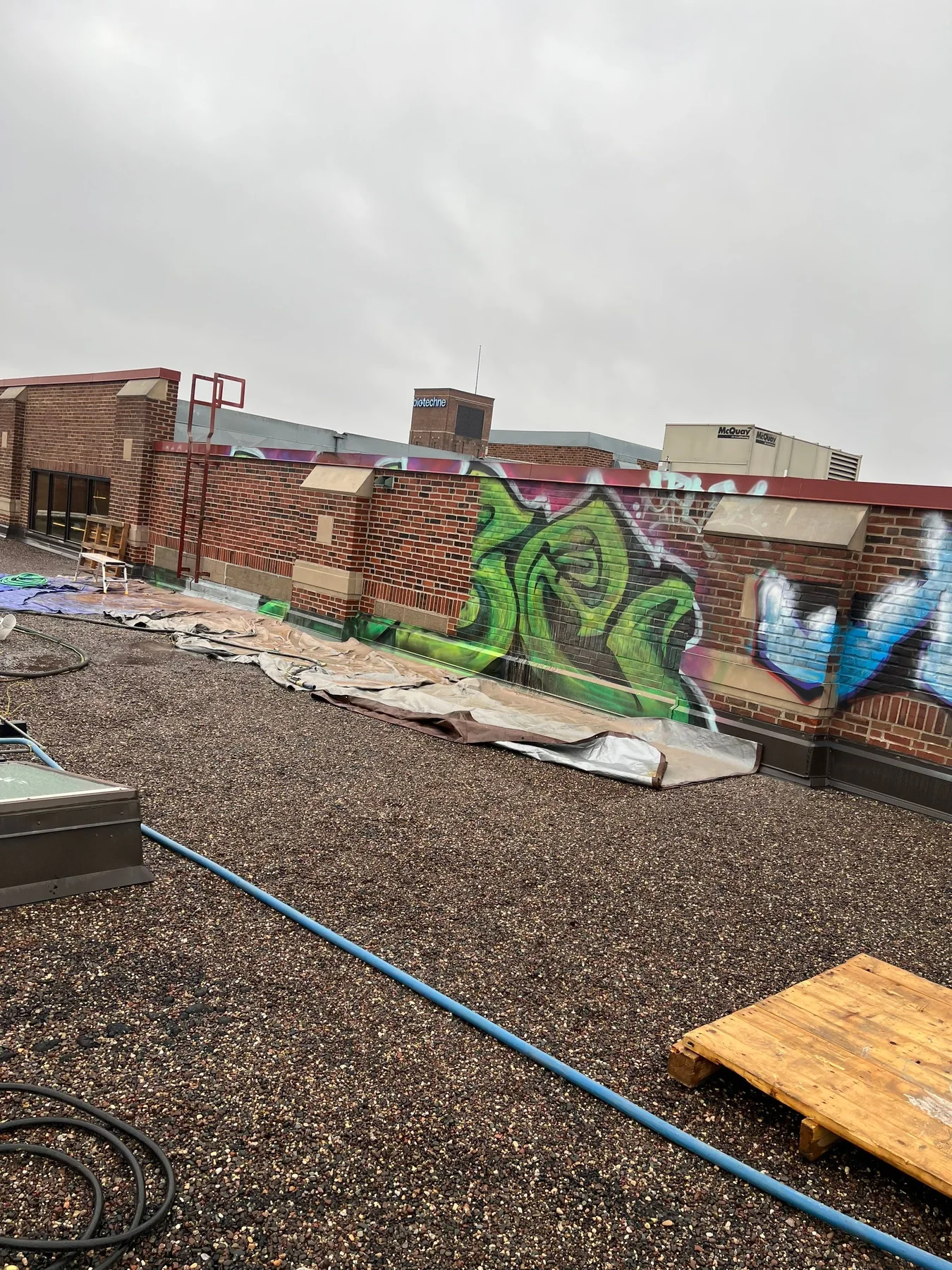
Before the cleaner touches the wall, the crew stages access, protects adjacent surfaces, and verifies how the material is responding. The field rule is simple: “test small areas first,” then adjust pressure, cleaner strength, and dwell time until removal is effective without leaving a brighter scar where the tag used to be.
Commercial graffiti removal is about removing the graffiti without damaging the underlying substrate. Different materials react differently, so the wrong cleaner or pressure can permanently damage masonry, stone, coatings, or architectural finishes. We test small areas first and use the least aggressive method possible.
Tayton EggenbergerRSI Minnesota Branch Manager
Across the Upper Midwest, exterior walls see freeze-thaw movement, deicing salts, older masonry repairs, and repeated wetting. A removal method that looks acceptable in the moment can leave a roughened, opened, or discolored surface that weathers poorly through the next season.
The most common mistake is trying to remove graffiti “too aggressively or too quickly” before the substrate is understood.
Historic brick and soft stone can lose their finished face under aggressive washing. Once the surface is scarred, the repair is no longer graffiti removal; it becomes masonry restoration.
The same remover can behave differently on natural stone, coated concrete, metal panels, or painted masonry. RSI adjusts cleaners and dwell times to the actual surface instead of assuming one product fits every tag.
If the first full-height pass is the test, the crew may not see discoloration or shadowing until the damage has been repeated across the elevation. A small test area protects the larger facade.
Many commercial buildings are tagged more than once. Where vandalism repeats, anti-graffiti coatings can make future removal easier and reduce the number of harsh cleaning cycles the substrate has to survive.
RSI performs this work throughout the Upper Midwest, including dense commercial corridors in Minneapolis, St. Paul, Milwaukee, Madison, Chicago, and surrounding markets. Where graffiti is part of a broader exterior condition, RSI can coordinate related commercial waterproofing, concrete repair, and facade restoration scopes.
Every job follows the same sequence: read the wall, prove the method, remove the tag, and leave the building easier to maintain the next time.
Spray paint on dense precast is a different problem than marker on limestone or paint on a coated metal panel. RSI identifies both the surface and the graffiti before choosing the method.
The test area confirms whether the cleaner releases the tag, whether pressure is safe, and whether dwell time needs adjustment. This is especially important on historic brick, natural stone, and coated surfaces.
Some areas need specialty cleaners. Some need low-pressure washing. Others may require light media blasting. RSI chooses the method that removes the graffiti while protecting masonry, stone, coatings, and architectural finishes.
On repeat-tagged properties, RSI may recommend an anti-graffiti coating so future removal is easier and long-term maintenance costs are lower.
A recent downtown commercial masonry removal followed this sequence: multiple tagged surfaces, historic brick appearance to preserve, low-pressure cleaning, specialty removers, and a sacrificial anti-graffiti coating after removal. For adjacent exterior restoration context, see RSI’s 801 Washington exterior restoration project.
It should not when the method matches the substrate. RSI tests a small area first, then adjusts cleaner, pressure, and dwell time to the wall. The damage cases are usually caused by rushing the work or using the wrong pressure or chemistry, which can “permanently scar or discolor” the building surface.
RSI commonly removes graffiti from brick, concrete, precast, natural stone, metal panels, and coated surfaces. Each surface is evaluated separately because the same tag can require a different removal method from one elevation to the next.
Sometimes, but pressure washing alone is often the shortcut that creates damage. On the wrong surface, aggressive pressure can destroy historic brick faces, roughen soft stone, or leave an uneven appearance. RSI uses low-pressure washing where it is appropriate and combines it with specialty cleaners when the substrate calls for it.
Specialty cleaners work chemically to release paint or marker. Low-pressure washing rinses the released material without overdriving the wall. Light media blasting adds controlled mechanical action when the graffiti cannot be removed by chemistry and rinse alone. RSI chooses among them based on the substrate and the type of graffiti.
Fast response is usually smart, especially on visible commercial facades and repeat-target properties. The caution is that immediate action still has to be controlled. Scrubbing, blasting, or applying a strong cleaner before the substrate is understood can create more permanent damage than the graffiti itself.
Yes. On buildings with repeat vandalism, anti-graffiti coatings can make future removal much easier and help reduce long-term maintenance costs. RSI used this approach on a downtown commercial masonry building after removing repeated tagging from historic brick.
Older brick, soft stone, and porous masonry require slower testing and gentler removal. The work may involve specialty cleaners, controlled dwell time, and low-pressure rinsing instead of a quick blast. That care protects the appearance and surface integrity of the facade.
Yes. RSI performs commercial facade and masonry restoration work across the Upper Midwest. Graffiti removal is available for commercial properties, parking structures, mixed-use buildings, storefronts, and institutional facades throughout that service region.
RSI removes graffiti from commercial brick, concrete, precast, stone, metal panels, and coated surfaces across the Upper Midwest. We start with the surface, test the removal approach, and protect the facade from avoidable abrasion, staining, or coating damage.