01
Sound Concrete Edge
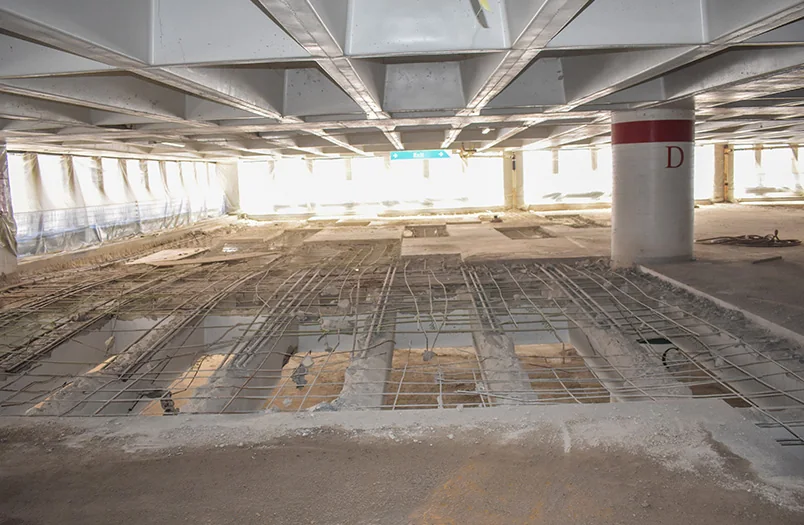
Unsound concrete is removed until the repair can bond to a stable substrate. Concrete repair practices commonly reference ICRI surface-preparation guidance for exposed reinforcement and repair geometry. [ICRI 320.3R]

Concrete pothole repair for parking ramps, elevated decks, loading areas, and commercial drive lanes where the hole may be the last visible sign of a deeper failure.
A ramp pothole is often where water, deicing salt, traffic wear, and failed protection have finally broken through the surface. RSI opens the area far enough to determine “why the failure occurred,” removes unsound concrete, checks reinforcement when exposed, restores the structural section, and ties the repair back into drainage, joints, waterproofing, or traffic coating systems that protect the deck long term.

A commercial pothole repair call often starts with a very visible problem: broken concrete in a drive lane, a tire-catching hole on a ramp, deterioration at a loading dock, or a patch that keeps failing in the same wheel path. On a concrete parking structure or elevated slab, RSI treats that opening as a clue to the condition of the system around it.
RSI’s scope is commercial and structural pothole repair, not asphalt patching. An asphalt contractor is usually focused on restoring drivability across a pavement surface. RSI is looking at whether the damage is tied to concrete deterioration, reinforcing steel corrosion, failed waterproofing, joint failure, drainage problems, freeze-thaw exposure, or traffic coating breakdown.
That distinction matters in the Upper Midwest. Water and deicing salts enter cracks, failed joints, worn coating edges, and low spots. Freeze-thaw cycles expand the damage. If reinforcing steel begins to corrode, the expanding rust can crack and delaminate the surrounding concrete until the surface finally breaks apart.
A proper repair may include removing unsound concrete, evaluating exposed reinforcing steel, addressing corrosion where present, restoring slopes or drainage, repairing cracks or joints, placing structural repair materials, and reinstalling waterproofing or traffic coating systems. In active healthcare, commercial, industrial, and mixed-use properties, RSI also phases repairs so owners can maintain safe access for tenants, customers, deliveries, and emergency vehicles.
For building owners, the decision is not simply whether to fill the hole. The better question is whether the pothole is isolated or part of a broader parking deck restoration or structural concrete repair need.
A few of RSI’s Commercial Pothole Repair projects
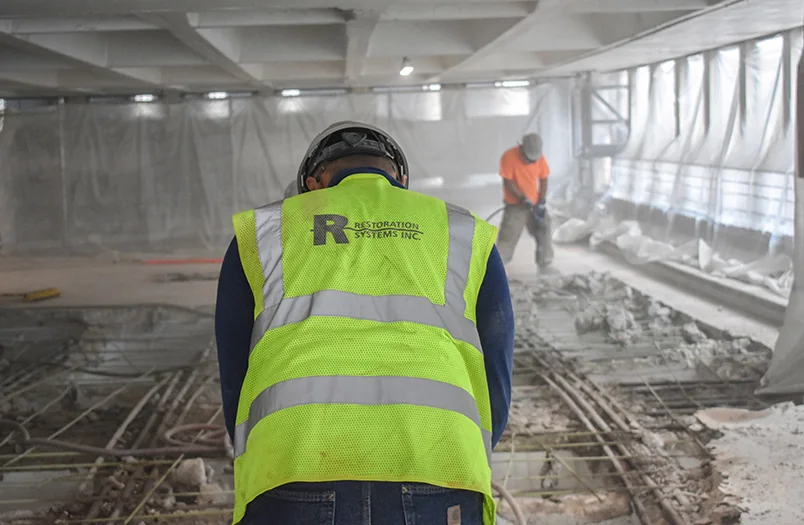
Good pothole repair is decided before the new material is placed. The removal limits, reinforcing steel condition, repair depth, drainage path, and coating tie-in determine whether the work performs through Upper Midwest freeze-thaw cycles and deicing salt exposure.
Unsound concrete is removed until the repair can bond to a stable substrate. Concrete repair practices commonly reference ICRI surface-preparation guidance for exposed reinforcement and repair geometry. [ICRI 320.3R]
When deterioration affects slab capacity, beams, columns, suspended slabs, or post-tension systems, the repair moves beyond a surface patch and is coordinated with appropriate structural direction. [ACI 562]
Exposed steel is cleaned and evaluated. Corroded reinforcing steel, damaged embedment, or compromised post-tension components can change the scope before concrete is replaced.
Traffic coatings, joint repairs, sealants, and waterproofing terminations are part of the repair strategy because water and chlorides restart failure at the repair edge.
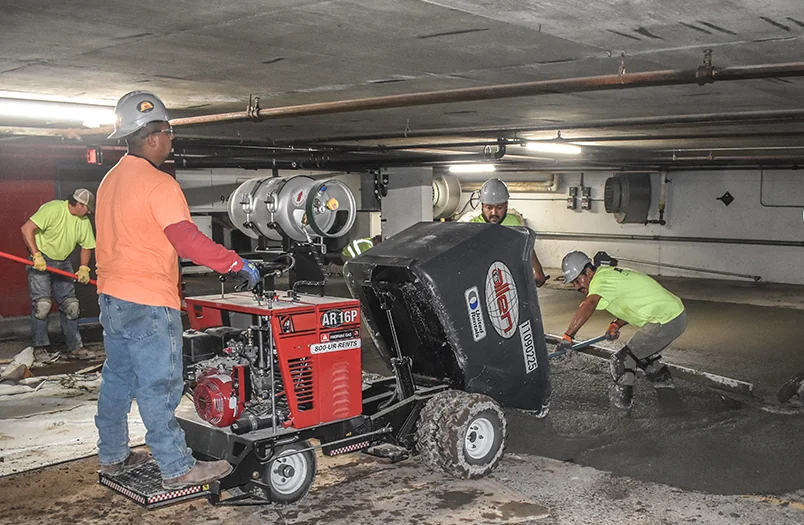
RSI selects repair mortars, concrete restoration materials, corrosion-mitigation products, elastomeric sealants, waterproofing membranes, and traffic coating systems around the structure’s exposure. In the Upper Midwest, that means moisture, salt, thermal movement, traffic load, repair depth, and whether the area must stay in service during phased work all matter.
At Wells Fargo Plaza, what initially looked like a routine pothole in the driving surface turned into a much broader structural issue involving de-tensioned post-tension cables. That is why we do not automatically treat visible surface deterioration in a parking structure as just a pothole.
Blake DronenRSI President
Upper Midwest decks do not fail from one thing. Snowmelt carries chlorides into cracks and joints, freeze-thaw cycles expand trapped moisture, heavy traffic breaks weak edges, and drainage defects keep feeding the same spot. If the repair does not account for those conditions, the new patch can become the next failure plane.
Surface patching, chloride corrosion, poor drainage, and hidden structural deterioration are the patterns RSI looks for before defining the repair limits.
A fast fill may make the drive lane serviceable, and emergency patches have their place. But if the deteriorated concrete is left in place, the repair is bonded to material that is already failing. As Blake puts it, a “patch and a proper repair may look similar on day one” but perform very differently after winter traffic.
Deicing salts and water move through cracks, failed joints, worn coatings, and porous repair edges. Once corrosion starts at the reinforcing steel, expansion pressure cracks and delaminates the concrete from the inside until the surface breaks loose.
A repair at the bottom of a ponding zone sees the same exposure that caused the original failure. If slope, drains, joint sealants, or membrane terminations are not corrected, water keeps arriving at the patch perimeter.
When exposed steel, hollow-sounding concrete, recurring breakouts, active water infiltration, overhead spalls, or damage near beams, columns, suspended slabs, or connections are present, the pothole may indicate a larger structural issue. Post-tensioned decks require especially careful evaluation before cutting or placing repair material.
After the concrete is rebuilt, surrounding drive lanes may need traffic coatings, commercial waterproofing, or sealant replacement so water does not restart the failure at the patch edge. RSI performs this work across the Upper Midwest, including major ramp markets such as Minneapolis, Milwaukee, Madison, and Chicago.
RSI’s repair sequence is built around the condition of the structure, not the diameter of the visible hole. The work area is phased for safe access, the deterioration is opened to sound material, and the rebuilt section is protected against the same water and salt exposure that caused the failure.
RSI reviews the surrounding slab for hollow or loose concrete, recurring damage, exposed reinforcement, active leaks, failed joints, coating breakdown, drainage problems, and traffic patterns that concentrate load at the repair.
The repair perimeter is cut and unsound material is removed. The depth is determined by what is found in the slab: surface deterioration, delamination around reinforcement, full-depth distress, or conditions requiring engineer-coordinated structural evaluation.
Reinforcing steel is cleaned, corrosion is addressed when present, and damaged steel is repaired or replaced as required. If post-tension components are suspected or exposed, RSI coordinates the work with the project engineer and the scope may shift to post-tension cable repair.
Structural repair material is placed for the exposure, finished to shed water, and tied into coatings, sealants, or waterproofing systems. In an active ramp, sequencing also accounts for curing time, tenant access, deliveries, and safe vehicle and pedestrian routing.
For deeper delamination, exposed steel, or recurring repairs, RSI treats potholes as concrete repair services with operational phasing attached. A closely related example is Bloomington Parking Ramp Restoration, where deck restoration planning and phased access are central to the work.
An asphalt patch is usually aimed at restoring surface drivability on a pavement system. RSI’s commercial pothole repair is focused on concrete and structural pavement systems tied to parking ramps, elevated slabs, loading areas, and building infrastructure. That can include removing deteriorated concrete, evaluating reinforcing steel, repairing structural concrete, correcting drainage or waterproofing defects, and reinstalling protective systems.
Recurring potholes usually mean the original cause was never corrected. Common drivers include water intrusion, failed traffic coating or waterproofing, reinforcing steel corrosion, freeze-thaw damage, joint failure, drainage problems, and traffic wear in the same wheel path. If those remain active, the next winter can attack the new patch the same way it attacked the old concrete.
A pothole becomes more concerning when reinforcing steel is exposed or heavily corroded, surrounding concrete sounds hollow, cracking is widespread, water is actively entering the slab, damage returns in the same area, concrete is breaking loose overhead, or deterioration reaches beams, columns, suspended slabs, structural connections, or post-tension systems. In those cases, the “visible hole is just the final stage” of a longer deterioration process.
Often, yes. RSI phases repairs carefully to reduce disruption, maintain safe vehicle and pedestrian routes, and coordinate curing windows with building operations. The plan depends on repair depth, traffic flow, access requirements, material cure time, and whether deliveries, tenants, customers, or emergency vehicles need continuous access.
Material selection depends on the structure and exposure, but RSI commonly uses high-performance structural repair mortars, low-permeability concrete repair materials, corrosion-mitigation products, elastomeric sealants, waterproofing membranes, traffic coating systems, and air-entrained concrete where appropriate. The goal is to resist moisture, temperature swings, chlorides, and repeated traffic loading.
On a deck with an existing traffic coating system, the repaired area usually needs to be tied back into that membrane. Otherwise, the repair edge can become a new water-entry point. Traffic coatings are especially important in parking ramps because they help limit water and salt intrusion into the concrete below.
Partial-depth repair removes deteriorated concrete while the remaining structural section is still sound. Full-depth repair opens and rebuilds the slab through its depth when deterioration extends deeper or reinforcement needs more substantial work. The choice is based on the actual condition of the concrete and steel after the area is opened.
A temporary patch may be the right first move when there is an immediate safety or access problem. But repeated patching can create higher lifecycle cost, recurring disruption, and more risk if deterioration keeps spreading. RSI helps owners balance immediate operations with long-term asset planning so the repair matches the condition and remaining life of the structure.
RSI repairs commercial concrete potholes across the Upper Midwest in parking decks, ramps, loading areas, elevated slabs, and high-traffic access points. We look for moisture, chloride exposure, delamination, and slab deterioration before rebuilding the surface.