
Why Mortar Fails: Understanding the Root Causes
Mortar deterioration is inevitable—it’s designed to happen. But understanding why mortar fails helps property managers make informed decisions about when and how to address it. The primary culprit in the Midwest is our climate: the repeated freeze-thaw cycles that define Minnesota and Wisconsin winters.
When water infiltrates mortar joints and temperatures drop below freezing, that water expands by approximately 9%. This expansion creates tremendous internal pressure that literally pushes mortar apart from within. In a typical Minneapolis winter, this freeze-thaw cycle can occur dozens of times, with each cycle causing incremental damage that compounds over years.
“Water is the enemy of masonry. When it gets into mortar joints and freezes, it expands with enormous force. That expansion doesn’t just crack the mortar—it can push bricks out of alignment and create pathways for even more water infiltration. It becomes a self-accelerating problem if you don’t address the root cause.”
Beyond Freeze-Thaw: Other Failure Mechanisms
While freeze-thaw cycling is the dominant deterioration mechanism in our region, several other factors contribute to mortar failure:
Building Movement: All structures experience movement from thermal expansion, settlement, and wind loading. Mortar joints are designed to accommodate this movement, but over time, repeated stress causes fatigue and cracking. This is particularly evident in tall commercial buildings where wind loads are significant.
Chemical Deterioration: Exposure to airborne pollutants, acid rain, and de-icing salts can chemically attack mortar, breaking down the binding compounds. Buildings near highways or in industrial areas often show accelerated deterioration patterns.
Improper Original Installation: Mortar that wasn’t properly mixed, tooled, or cured during original construction will fail prematurely. We often see this in buildings from certain construction eras where quality control was inconsistent.
Incompatible Repairs: Perhaps the most frustrating cause of premature failure is previous repairs done with the wrong mortar type. Using modern, high-strength mortar on historic buildings with soft brick creates a harder-than-brick mortar that forces stress into the masonry units themselves—causing spalling and cracking of the brick rather than the mortar.
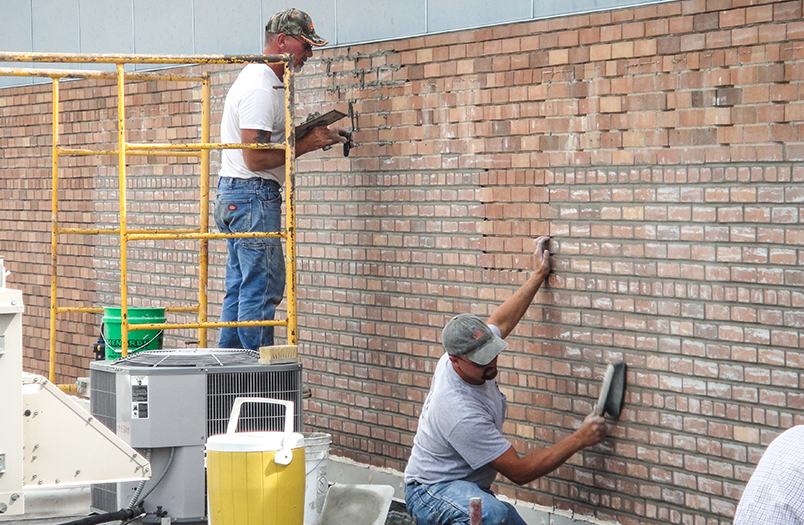
Understanding these failure mechanisms isn’t just academic—it’s essential for developing an effective repair strategy. At RSI, we don’t just fill joints with mortar. We diagnose the underlying causes of deterioration and develop comprehensive repair approaches that address root causes, not just symptoms.