
How to Read a Parking Garage Condition Assessment Report
You opened a thick engineering report on your concrete or precast parking structure and the data feels like another language. This is a plain-English walkthrough of the sections you will see, the severity language that drives priorities, and the questions to ask before any finding becomes a repair scope.
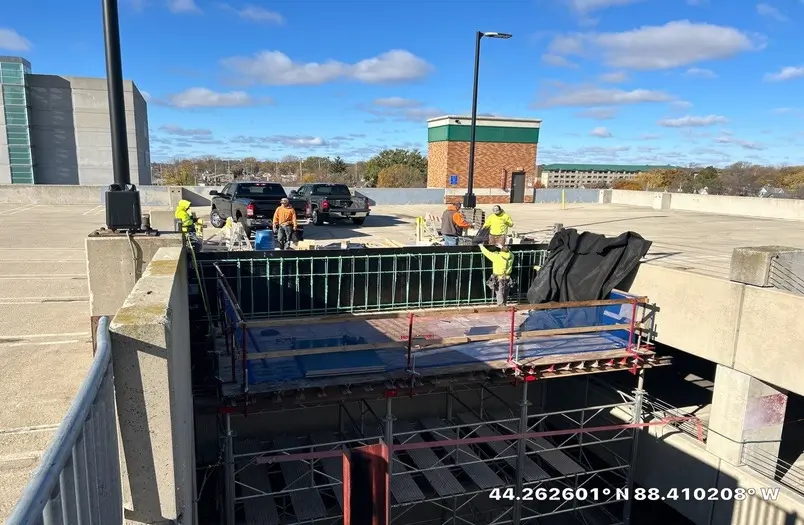

Why That Report Reads Differently in the Upper Midwest
RSI helps owners interpret these reports; we do not write or seal the engineer’s document. The same finding that an engineer might flag as “monitor” in a mild coastal climate often means “budget this cycle” in Minnesota or Wisconsin. The reason is environmental. Midwest parking structures routinely show chloride levels several times higher than coastal environments, because vehicles track concentrated deicing salt onto decks across a long winter season. That salt drives the corrosion clock faster than most reports written for milder regions assume.
Freeze-thaw cycling compounds the problem. Minnesota decks can endure eighty to a hundred or more freeze-thaw cycles a year. Water that infiltrates a failed joint or a cracked slab expands and contracts dozens of times each winter, prying the concrete apart from the inside while chlorides attack the embedded steel. Reading your report through that regional lens matters.
Decoding the Report, Section by Section
Most condition assessment reports follow the same arc. They open with a summary of observed distress, move through field testing results, lay out photographic documentation, and end with a prioritized repair table. Each section builds on the last to tell the deterioration story of your structure. Here is how to read each one without an engineering degree.
The Executive Summary and Observed Distress
This is the engineer’s overview of what they saw on site: cracking, spalling, staining, leaking joints, and any visible damage to slabs, beams, or columns. Read it first, but do not stop here. The summary describes symptoms. The sections that follow tell you what is happening beneath the surface, where the real parking garage repair cost usually lives.
The Chain Drag and Sounding Survey
This is a hollow-sound scan. A technician drags heavy chains across the deck and listens. Sound concrete rings solid. Where there is a void or a delamination beneath the surface, the chains produce a hollow sound. These subsurface separations are usually invisible to the eye, yet they are already compromising the slab. A large flagged area in this section means damage is more advanced than a quick visual walk would suggest.
Chloride Core Testing
Think of this as the corrosion clock. Technicians extract small-diameter cores from the deck, typically three or four inches across, and test them under ASTM C1152 to measure how much chloride has reached the depth of the reinforcing steel. The corrosion threshold for embedded steel generally falls in the range of roughly 1.0 to 1.5 pounds per cubic yard at rebar depth. When the measured number meets or passes that range, the steel has likely started corroding, or soon will. In the Upper Midwest, where deicing salt drives chloride levels well above coastal norms, this section often carries the most urgent news in the entire report.
Photographic Documentation
The photo log ties findings to locations. Use it to connect a flagged finding to a place you can actually walk to. If a photo shows active rust staining or exposed, corroding rebar, that is a visual confirmation of what the chloride and sounding data are telling you in numbers.
The Prioritized Repair Table
This is where findings become a plan. The table groups recommended repairs and ranks them by urgency. One important caution: repair ID numbers in these tables are reference identifiers only. A repair labeled “1” is not automatically more urgent than a repair labeled “12.” The priority tier, not the ID number, tells you what to act on first. Read the tier column, not the row order.
“If you’re repaired in the same area over and over again, something’s wrong. That tells me either the root cause wasn’t addressed, or the repair methods weren’t appropriate for the conditions. A proper assessment finds the real problem, not just what’s visible on the surface.”RSI Expert
That insight is the difference between a report that ends the problem and one that simply documents the next round of it. A good assessment addresses root causes, so you are not patching the same bay every few seasons while the underlying condition keeps spreading.
Understanding Priority Tiers in Your Report
Most reports sort findings into three urgency tiers. This is an interpretation aid for the language you will see, not a substitute for your engineer’s specific findings. Read the tier, decide the timing.
| Priority Tier | What It Signals | Typical Timeframe | How to Treat It |
|---|---|---|---|
| Immediate | A safety threat or active structural concern, such as a failing element, falling-concrete risk, or a condition that could worsen quickly. | Act within days | Address Now |
| Short-Term | Deterioration that is not an emergency today but will progress if left alone, and is cheaper to address before it spreads. | Plan within 1–2 years | Budget Soon |
| Long-Term | Conditions worth watching that have not reached an action threshold yet, and can be folded into a longer planning horizon. | Monitor and schedule within ~5 years | Monitor |
Note: repair ID numbers in your report’s tables are reference labels only. They identify a finding; they do not rank it. The priority tier above is what tells you the order in which to act.
Turning Findings Into a Defensible Capital Plan
A condition assessment is most useful when it becomes a phased, fundable plan — the same discipline that drives structural integrity reserve studies and reserve funding decisions. Start with the priority table. Immediate-tier items are sequenced first because they protect safety. Short-term items get a budget line in the next cycle or two. Long-term items go on the watch list with a re-check date. Lay the chloride profile over that sequence: if the corrosion clock is already running on a deck, the work tied to it tends to move up the schedule, not down.
-
The cost of waiting is real
Deferred maintenance on a parking structure does not hold still. It compounds, and a problem ignored long enough can turn a planned repair into a far larger rehabilitation, with escalating risk of structural failure along the way.
-
Midwest climate accelerates the timeline
With dozens of freeze-thaw cycles a year and chloride loads well above coastal levels, the same deterioration progresses faster here. A finding you might defer in a milder region is often one to fund this cycle.
-
Restoration usually beats replacement
Building a new structure carries a high per-space cost, while comprehensive restoration typically preserves the asset for a meaningful fraction of that. For most owners with a sound structure, repair, restoration, and preservation make the stronger capital case.
-
Keep a steady assessment cadence
Industry guidance under ACI 362.2-21 recommends a structural condition assessment at least every five years for structures more than ten years old, and more often where significant deterioration shows up. This is a planning rhythm, not a legal mandate.
One Tool You May See in the Recommendations: Cathodic Protection
“Think of cathodic protection like little hockey pucks embedded in the concrete. They provide the electrical current that keeps the steel from corroding. It’s not removing the chlorides — they’re still there — but it’s stopping the reaction that causes the rust and the damage.” — RSI Expert
Questions to Ask Before You Turn a Report Into a Repair Scope
A report tells you what was found. These questions help you make sure the scope you build from it solves the actual problem rather than the visible one. Treat each as a consideration to raise with your engineer or restoration partner, along with how the repair design will follow ACI 562, the concrete repair code.
-
Has the root cause been identified, not just the visible symptom?
A spall is a symptom. The question is what caused it: chloride-driven corrosion, a failed joint, water infiltration, or something else. Scoping the symptom alone tends to bring the same finding back.
-
Are repeat repairs in the same zone a signal of an unaddressed problem?
If a bay has been patched more than once, ask why. As one RSI expert notes, repeated repairs in one area usually mean the root cause was never resolved or the method did not suit the conditions, not that the last crew did poor work.
-
What is the recommended sequencing and timeframe for each priority?
Ask the engineer to confirm which items are immediate, which are short-term, and which can be monitored, so the scope reflects the tier logic rather than the order of rows in a table.
-
How do the chloride readings affect the durability of a given repair?
If chloride at rebar depth is already near or past the corrosion threshold, ask whether a surface patch will hold, or whether the repair needs to account for the steel beneath it.
-
What conditions should trigger a re-assessment?
Ask what changes, such as new cracking, fresh staining, or accelerated deterioration, would justify looking again before the next scheduled assessment cycle.
From an Alarming Report to a Restored Asset
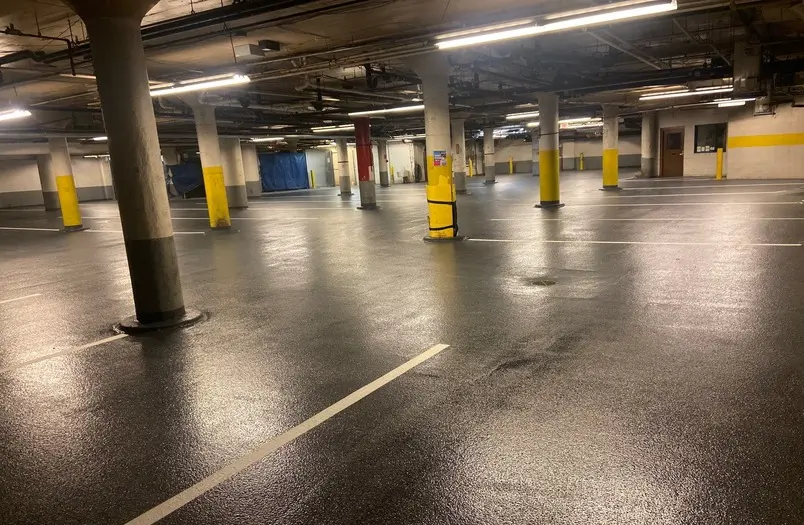
“I’ve had owners call me ready to tear down their parking ramp. After we assess it, we realize we can keep that structure performing for decades. We can keep that old car running forever if you maintain it right.”
RiverWest, Minneapolis
A best-case assessment-to-action outcome: a 156,000-plus square foot restoration completed in just thirty days once a well-scoped plan was drawn from the assessment data.
Bloomington Parking Ramp, MN
Immediate-tier findings, including structural shoring and broken precast tee stems, demanded the fast action a Priority 1 reading should trigger.
A frightening report does not have to mean replacement. Across 28-plus years of trusted restoration work in the Upper Midwest, backed by an EMR well below the national average and a LECET Award of Excellence, RSI’s union-trained craftsmen address root causes through repair, restoration, and preservation that extend service life and ensure safety.
Reading a Condition Assessment Report: Common Questions
Quick answers to the questions owners and property managers ask most when a parking garage condition assessment report lands on their desk.
What does a chain drag or sounding survey tell me about my parking garage?
A chain drag is a hollow-sound scan: a technician drags heavy chains across the deck and listens. Sound concrete rings solid, while a void or delamination beneath the surface produces a hollow sound. These subsurface separations are usually invisible to the eye but are already compromising the slab, so a large flagged area means damage is more advanced than a visual walk would suggest.
What chloride level means corrosion has started in a parking deck?
Chloride core testing under ASTM C1152 measures how much chloride has reached the depth of the reinforcing steel. The corrosion threshold for embedded steel generally falls around 1.0 to 1.5 pounds per cubic yard at rebar depth; when the measured number meets or passes that range, the steel has likely started corroding or soon will. In the Upper Midwest, where deicing salt drives chloride levels well above coastal norms, this section often carries the most urgent news in the report.
Do the repair ID numbers in the report’s tables indicate priority?
No. Repair ID numbers are reference identifiers only — a repair labeled “1” is not automatically more urgent than one labeled “12.” The priority tier, not the ID number or the row order, tells you what to act on first, so always read the tier column when sequencing work.
What do the Immediate, Short-Term, and Long-Term priority tiers mean?
Immediate-tier findings are safety threats or active structural concerns, such as a failing element or falling-concrete risk, and call for action within days. Short-term items are deterioration that will progress if left alone and should be planned within one to two years, while long-term items are conditions to monitor and schedule within roughly five years. Immediate items are sequenced first because they protect safety.
How often should a parking garage get a condition assessment?
Industry guidance under ACI 362.2-21 recommends a structural condition assessment at least every five years for structures more than ten years old, and more often where significant deterioration shows up. This is a planning rhythm, not a legal mandate. It also helps to ask your engineer what changes, such as new cracking or fresh staining, should trigger a re-assessment sooner.
Does a bad condition assessment report mean my parking structure needs replacement?
Usually not. Building a new structure carries a high per-space cost, while comprehensive restoration typically preserves the asset for a meaningful fraction of that. For most owners with a sound structure, repair, restoration, and preservation make the stronger capital case — owners who were ready to tear down a ramp have kept it performing for decades once the root causes were addressed.
Have a Report You’re Not Sure How to Act On?
Request RSI’s complimentary assessment, or bring us the condition assessment report you already have and we will help you interpret it. As the Upper Midwest authority on parking structure repair, restoration, and preservation, we translate findings into a plan that extends service life and ensures safety.