
Structural Reserve Planning: What Aging-Building Owners Should Prepare Now
Whether you are responding to an engineer’s inspection notice, a news cycle about aging buildings, or a board conversation about reserve funding, the practical work is the same. Gather your documentation, understand your building’s real condition, and fund the right repairs before a small problem becomes an emergency. For 28+ years, Restoration Systems has done that work across the Upper Midwest, bringing repair, restoration, and preservation discipline to commercial, condo, and HOA buildings.
Request a complimentary assessment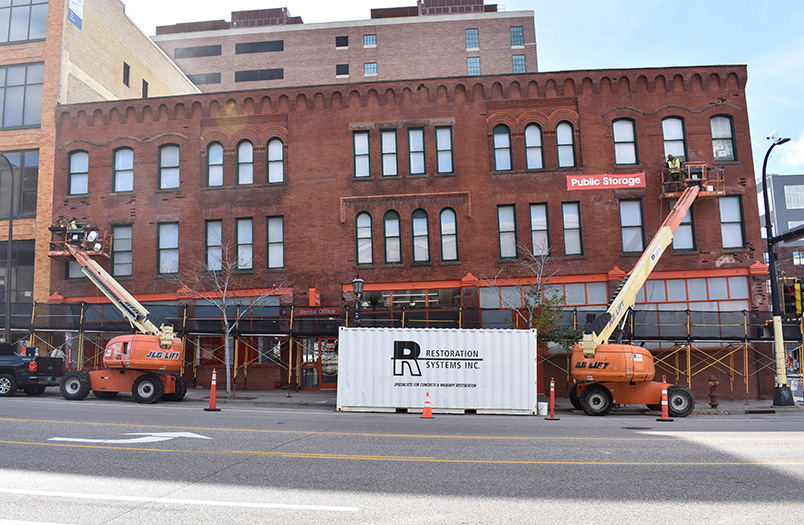

The short version
- The deterioration behind high-profile building failures applies to Midwest buildings too. Water infiltrates, steel corrodes, and the freeze-thaw cycle speeds the whole chain along.
- Requirements vary by state and even by city. Do not assume one universal rule applies. Confirm what governs your association and your jurisdiction.
- The smart move is proactive, phased, funded restoration. A pre-inspection helps you build that plan before an engineer’s mandated report forces reactive spending.
The Same Deterioration Applies to Midwest Buildings
The chain is straightforward, and it does not stop at a state line. Water infiltrates the exterior of a building. Embedded steel corrodes. Small, manageable problems compound into structural failures that demand major reconstruction and create life-safety hazards on the outside of a building. RSI has seen the end of that chain firsthand: large pieces of stone facade and masonry working loose and falling toward pedestrian walkways. That is precisely the outcome proactive restoration exists to prevent.
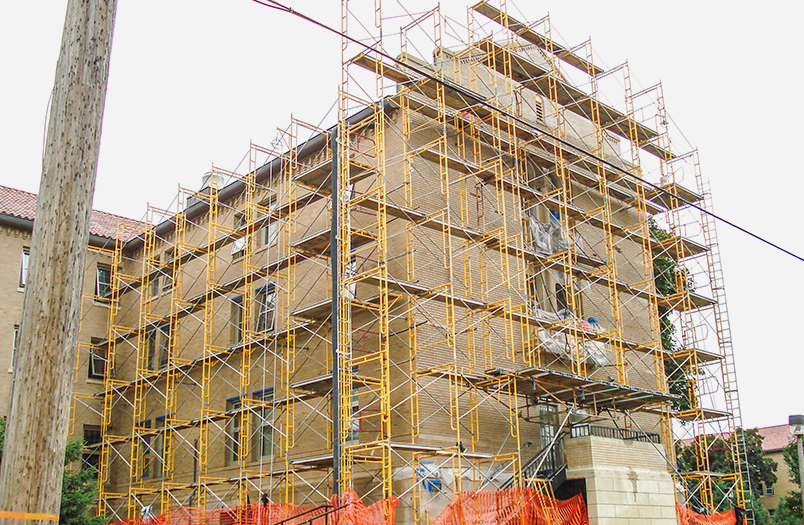
The Midwest does not get a pass on this. Our moisture-rich climate combines with the freeze-thaw cycle to make masonry and concrete especially vulnerable. Water works into the pores of those materials, then expands and contracts as it freezes and thaws through the winter. Each cycle widens cracks and opens new paths for infiltration, accelerating deterioration and compressing the window for cost-effective intervention. The increased scrutiny on aging buildings has put this dynamic in front of more boards than ever, but the underlying physics were always there.
What the Requirements Look Like, and Why They Vary
One clarification before going further. RSI is a restoration and repair specialist, not a law firm or a reserve-study provider. Treat this section as orientation only, and confirm exactly what governs your building with qualified counsel and your engineer.
Where the reserve-study push came from
The structural-integrity reserve study idea that more boards have started hearing about traces back to a high-profile building failure that drew national attention to deferred maintenance and underfunded reserves. In its wake, some states began adopting laws that require certain condominium buildings to study their structural components on a set cycle and to fund the repairs those studies identify. The reach of these laws is still expanding, and industry observers expect the model to influence more states over time. The common thread is simple: put structural condition on a schedule, and fund it deliberately rather than waiving it.
Where Minnesota and Wisconsin stand
The Upper Midwest is a different picture, and the specifics here should be confirmed against current statute before any board acts on them. In broad terms, Minnesota’s common-interest ownership framework expects associations to maintain adequate replacement reserves and to reassess that adequacy on a recurring basis, but it does not impose a single formal structural reserve study by name. Boards that neglect adequate reserves can still face real fiduciary exposure from their own owners, which is its own reason to plan ahead. Because the exact obligations turn on your association’s documents and current law, this is a question to settle with counsel rather than assume.
Wisconsin works differently again. Rather than a single statewide mandate, compliance there is largely city-driven. Engineers perform periodic facade inspections, certify the minimum repairs needed to keep a facade certified for another term, and those terms vary by municipality. RSI’s Milwaukee branch navigates that patchwork directly, which is one reason the firm puts so much weight on understanding the rules that apply to a specific building in a specific city.
The practical takeaway is not “comply with one universal rule.” It is: know exactly which rules apply to your building and your jurisdiction, and gather the condition information you will need either way.
That is where RSI’s role begins well before any statutory deadline. The firm performs detailed condition surveys that document distress on commercial properties and help owners understand what is happening to their building and why. That understanding is the raw material a reserve plan is built on, whatever the governing requirement turns out to be.
What to Gather and Document Before the Engineer’s Report
The owners who handle a structural review well are the ones who walked into it prepared and know how to read a condition assessment report when it arrives. Here is what to have in hand.
Inspection and Leak History
Pull together prior inspections and past leak investigations. RSI places heavy emphasis on this documentation, because leak investigations are often the foundation for future repair planning and budgeting.
A Real Condition Survey
RSI performs detailed condition surveys that document distress and explain what is happening to your building and why. That picture turns a vague worry into a defined, fundable scope of work.
A Phased Repair Plan
Spreading restoration across several years keeps spending predictable. A phased plan lets a board sequence the work, fund it deliberately, and avoid being forced into an emergency response.
A Pre-Inspection
RSI offers pre-inspections to identify risk early and help build a phased plan, so owners are prepared rather than reactive when the engineers’ documentation lands. This keeps repair work focused on root causes.
Why Deferring Costs More: The Compounding Math
RSI Project Manager Dylan Reynolds developed an internal ROI model that boards find clarifying. It maps the cost of proactive repair against the cost of reactive, emergency repair over a multi-year horizon. In the early years the two paths track reasonably close together. After that, they diverge, and the reactive path climbs steeply, because deferred problems do not wait politely. They compound.
You can spend predictably now over whatever term, maybe four, five, six, seven years to restore the exterior of a facade… versus paying exponentially more later when emergencies force you to act. So, like insurance.— Dylan Reynolds, Project Manager, Restoration Systems
There is one budget line that catches property managers off guard more than any other: access. To inspect or repair the exterior of a high-rise, engineers and crews often need swing stages installed, and that access can account for a substantial share of a project, in some cases as much as a fifth of the total. The encouraging part is that access does not have to be spent twice. When inspection and repair are coordinated, the staging that gets an engineer to the facade can be the same staging RSI’s crews use to do the actual work, which is exactly the efficiency a phased plan is built to capture.
That coordination is the practical payoff of planning ahead with a building envelope maintenance calendar. RSI’s approach is to address root causes rather than symptoms, so the work extends service life and ensures safety instead of resetting the same problem a few winters later.
Cosmetic Fixes Are Not Repairs
A pattern RSI sees too often is the cosmetic deferral. A facade begins shedding masonry and creating a genuine life-safety hazard, and rather than correct the underlying cause, someone installs safety netting to catch the falling pieces. The hazard is hidden, not removed. Netting can stop a brick from reaching the sidewalk, but it does nothing for the corroding steel or failing mortar that loosened the brick in the first place. Catching a symptom is not the same as fixing the cause.
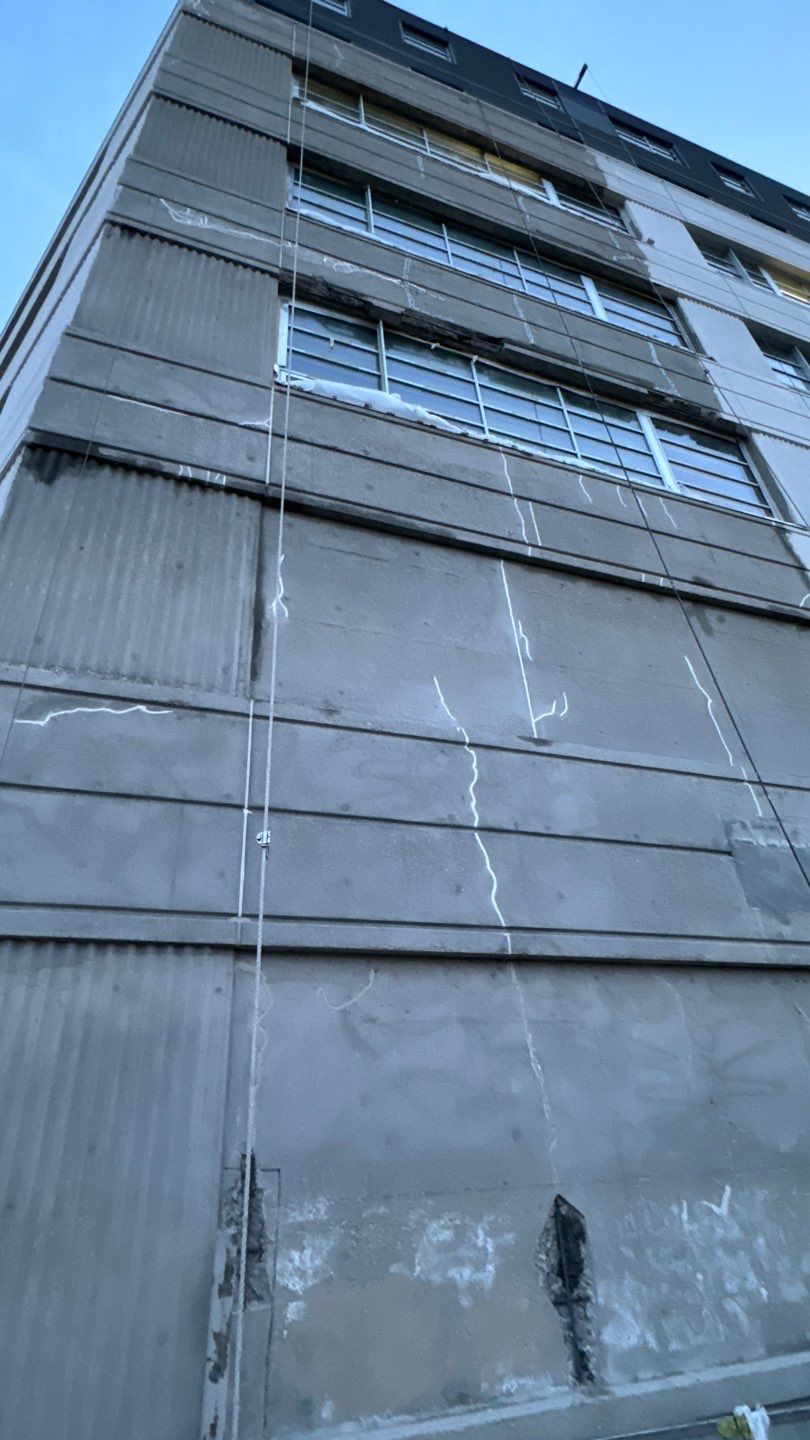
It is hard not to hear the echo of warning signs that preceded the failures now driving reserve-study legislation. The most cited recent example was a building where investigators pointed not to a single defect but to the cumulative effects of long-deferred problems, and where reserve funding had repeatedly been waived. We make no claim that the Midwest faces an identical risk. The lesson that does carry over is simpler and universal: deferred problems do not stay small.
There is also a duty that comes with knowledge. Once a known hazard exists, whether deteriorated concrete, loose masonry, overhead work, or a structural concern, there is a responsibility to properly protect tenants, the public, and everyone working onsite. Netting that catches falling brick does not discharge that responsibility. Restoration that addresses the root cause does.
Reserve-Funded Restoration in Practice
Phased work, not theory
At RiverWest Condominium in Minneapolis, a multi-year contract that began in May 2022 covered a scope that maps cleanly to the structural component categories a reserve study contemplates:
- 11,650 LF thru-wall flashing
- ~2,000 brick replacements
- 60,000 LF sealant replacement
- 30,000 SF balcony traffic membrane
- 385+ balconies refinished
- Companion parking scope
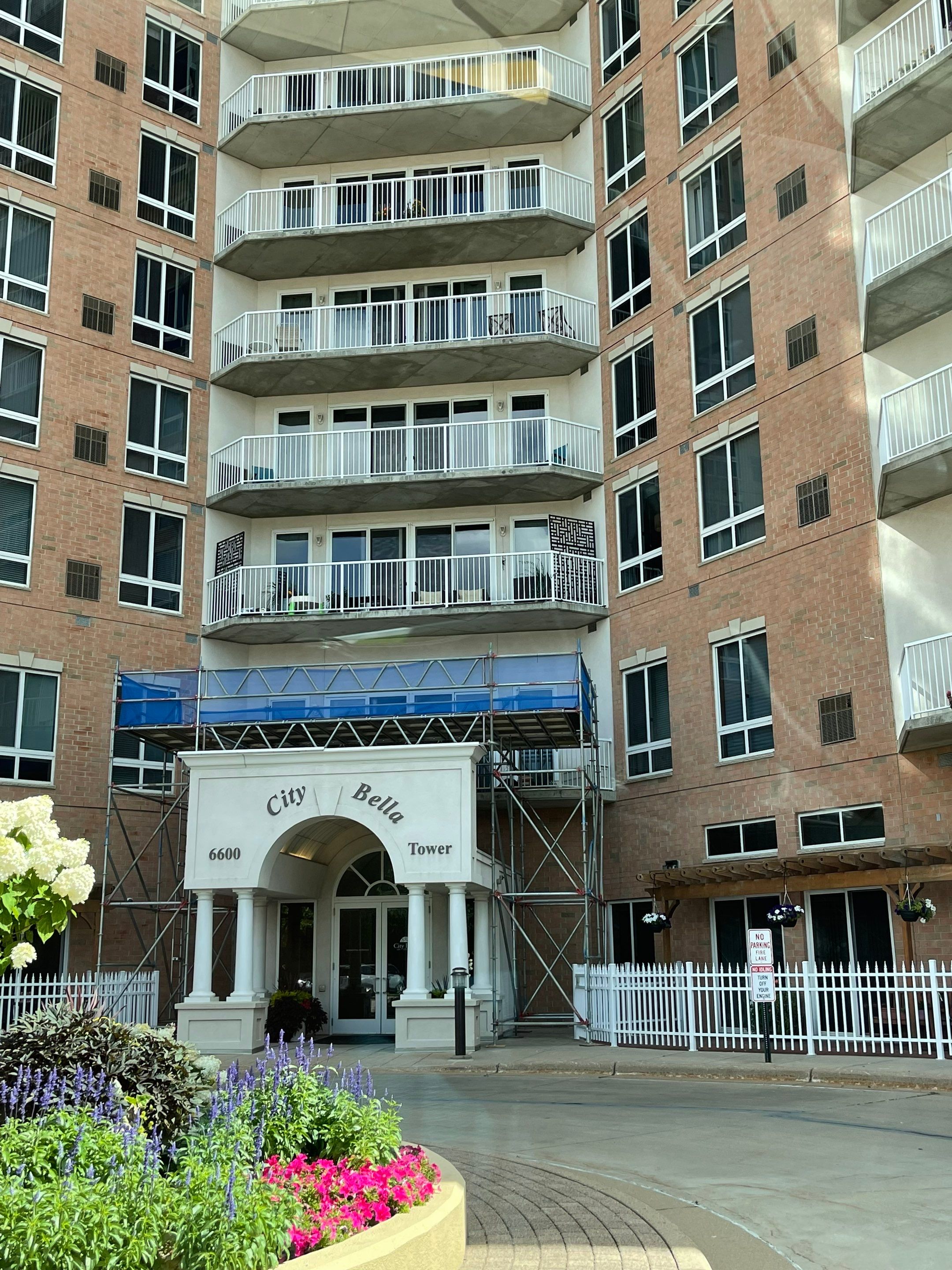
At City Bella Condominium, a contract beginning July 2022 addressed sealant, tuckpointing, brick replacement, waterproofing, structural concrete, balcony and traffic coatings, and parking — again, the kind of components a structural reserve study is meant to track and fund.
The contrast: what reactive work looks like
In Appleton, Wisconsin, RSI’s roughly three-month emergency response in 2024 required a five-story engineered shoring platform to restrain a precast barrier panel weighing somewhere between 15,000 and 27,000 pounds, followed by demolition and a cast-in-place replacement. That is what reactive work looks like — and it is exactly what phased planning is meant to avoid.
Structural Reserve Studies: Common Questions
Quick answers for property managers and condo or HOA boards weighing reserve planning, facade compliance, and structural review in the Upper Midwest.
What is a structural-integrity reserve study and where did the requirement come from?
The structural-integrity reserve study traces back to a high-profile building failure that drew national attention to deferred maintenance and underfunded reserves. In its wake, some states adopted laws requiring certain condominium buildings to study their structural components on a set cycle and fund the repairs those studies identify. The common thread is putting structural condition on a schedule and funding it deliberately rather than waiving it, and industry observers expect the model to influence more states over time.
Are structural reserve studies required in Minnesota and Wisconsin?
In broad terms, Minnesota’s common-interest ownership framework expects associations to maintain adequate replacement reserves and reassess that adequacy on a recurring basis, but it does not impose a single formal structural reserve study by name. Wisconsin compliance is largely city-driven, with engineers performing periodic facade inspections and certification terms that vary by municipality. Because exact obligations turn on your association’s documents and current law, confirm what governs your building with qualified counsel and your engineer.
What should we gather before the engineer’s structural report arrives?
Four things put a board in a prepared position: prior inspections and past leak investigations, a real condition survey that documents distress and explains what is happening to the building and why, a phased repair plan that spreads restoration across several years, and a pre-inspection to identify risk early. Leak investigations are often the foundation for future repair planning and budgeting, and a condition survey turns a vague worry into a defined, fundable scope of work.
How much does access add to the cost of facade inspection and repair?
Access is the budget line that catches property managers off guard most often. Inspecting or repairing a high-rise exterior often requires swing stages, and that access can account for as much as a fifth of a project’s total cost. When inspection and repair are coordinated, the staging that gets an engineer to the facade can be the same staging crews use to do the actual work, so a phased plan keeps access from being paid for twice.
Why does deferring structural repairs cost more in the long run?
An internal ROI model mapping proactive repair against reactive, emergency repair shows the two paths tracking close together in the early years, then diverging sharply as deferred problems compound. The Midwest’s freeze-thaw cycle accelerates the chain: water infiltrates, embedded steel corrodes, and small problems become structural failures. A 2024 emergency response in Appleton, Wisconsin, for example, required a five-story engineered shoring platform to restrain a precast panel weighing 15,000 to 27,000 pounds, followed by demolition and a cast-in-place replacement.
Is safety netting an acceptable fix for a facade shedding masonry?
No. Netting can stop a brick from reaching the sidewalk, but it does nothing for the corroding steel or failing mortar that loosened the brick in the first place, so the hazard is hidden rather than removed. Once a known hazard exists, there is a responsibility to properly protect tenants, the public, and everyone working onsite, and only restoration that addresses the root cause discharges that responsibility.
Plan before the report lands
Get Ahead of the Engineer’s Report
A pre-inspection and a detailed condition survey let you walk into a structural review with a phased, fundable plan already in hand, instead of reacting to a mandated report under pressure. Schedule a complimentary assessment and put 28+ years of Upper Midwest restoration discipline to work on your building.