
Upper Midwest Building Envelope
The Midwest Envelope Calendar: When to Inspect, Repair, and Plan Around the Freeze
Most sealants and waterproofing coatings need application temperatures above 40°F to adhere and cure properly. In Wisconsin and Minnesota, that compresses the usable repair window to roughly May through late October. The practical framework is simple: find and document problems in winter, scope the damage in spring, do the real work in the warm window, and close out before the first freeze.
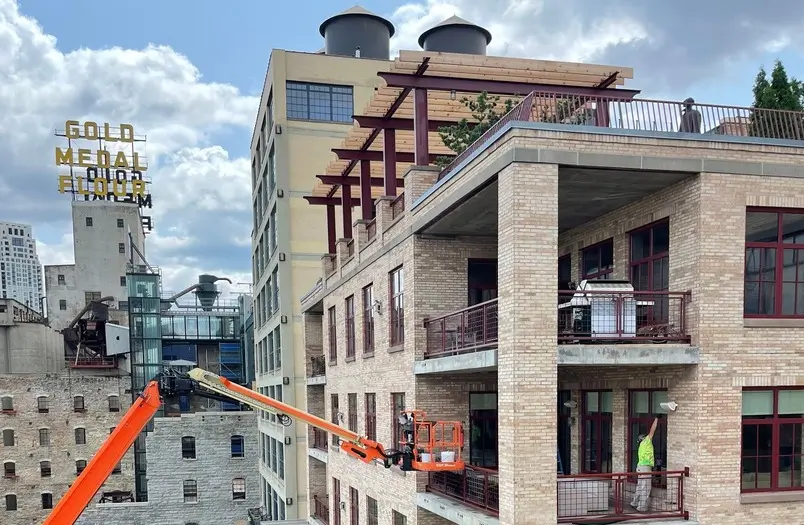

Four Phases That Map to the Midwest Seasons
-
Winter find and document
Active water intrusion and staining are easiest to log while they are happening, even though most repairs cannot be made below 40°F.
-
Spring scope the damage
Sustained thaw in April and May reveals cracks that widened over winter, setting the scope for warm-season work.
-
Summer repair in the warm window
June through August is the time for sealant replacement, membrane installation, and masonry tuckpointing, when temperatures support proper cure.
-
Fall close out before freeze
Finish sealant repairs by late October and clear drainage after leaf fall but before first freeze. Timing here is non-negotiable.
The core reason is simple: the above-40°F application requirement and the Midwest freeze-thaw load make timing a constraint, not a preference. You can request an assessment if you are not sure where your envelope stands this season.
A National Maintenance Calendar Doesn’t Survive a Wisconsin Winter
A maintenance calendar built for a mild climate assumes you can work nearly year-round. Upper Midwest envelopes do not get that luxury. Buildings here face 50 to 100 or more freeze-thaw cycles every year, and the load is relentless rather than occasional. A ten-year Minnesota Department of Transportation dataset put the count at roughly 86 cycles between October and April at just one inch below the surface. That is repeated stress, every winter, not a handful of cold snaps.
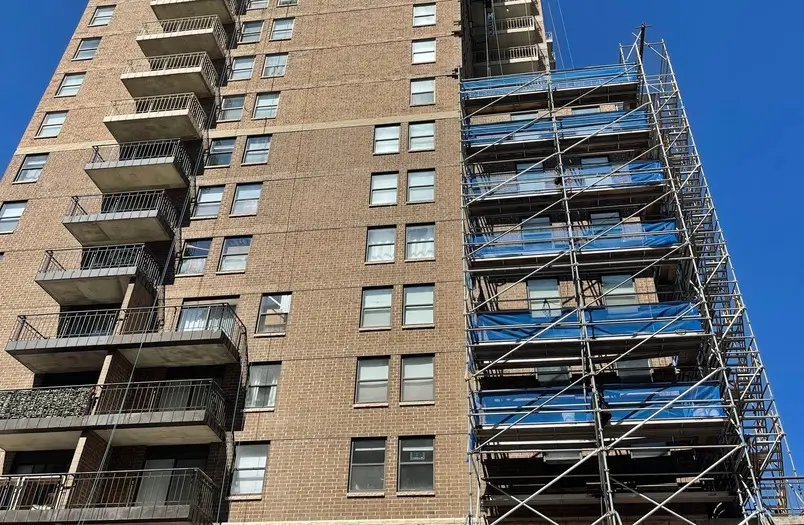
The mechanism is straightforward. Water finds its way into cracks and joints, then freezes and expands as temperatures drop. Each cycle pries the opening a little wider, stresses sealants as they contract and expand, and tests adhesion at every flashing and transition. What was a hairline gap in October can become a real path for water by spring. That is the problem the rest of this calendar is built to stay ahead of.
Winter and Spring: Find, Document, and Scope Before You Can Repair
Winter is the documentation phase. When temperatures sit below 40°F, most sealant and coating repairs are off the table, but the symptoms are at their most visible. Active water intrusion, fresh staining, and interior moisture are easiest to trace while they are happening. Logging where water enters, when, and under what conditions gives you a record you can act on once the weather turns. Treat the cold months as evidence gathering, not as a missed repair season.
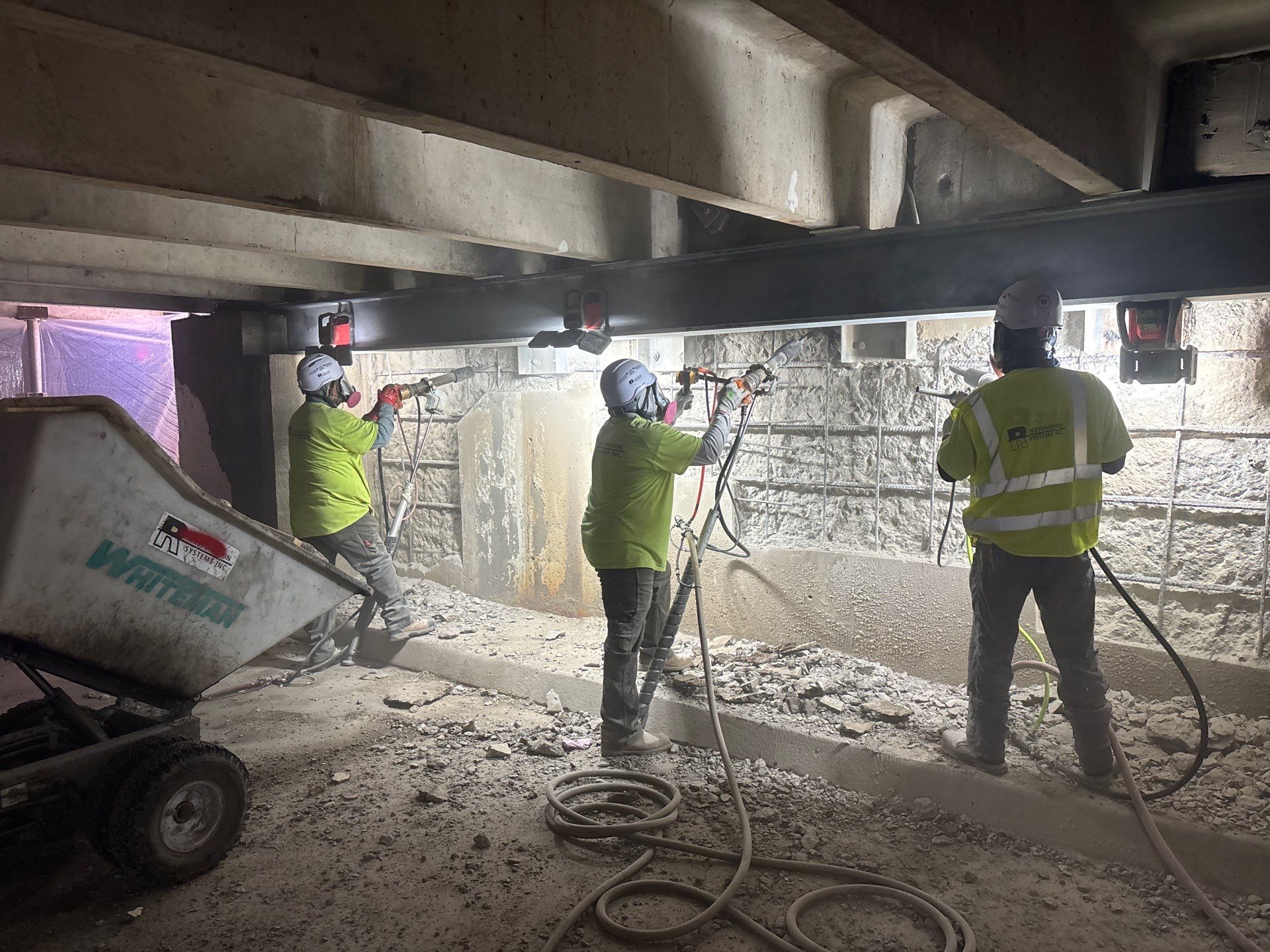
Spring, roughly April through May, is the critical scoping window. Damage that was hidden while frozen becomes fully apparent only after sustained thaw. Cracks that looked like hairlines in October can widen noticeably once repeated freeze-thaw cycles have done their work over the winter. This is when you assess honestly, prioritize what matters, and build the scope for the warm season ahead. Exact timing depends on the year and the building, so treat these months as climate-dependent guidance rather than fixed dates. The point is sequence: you cannot fix well what you have not first found and scoped.
Summer: The Peak Production Window for Real Repairs
June through August is where the bulk of the physical work belongs. Sustained warm temperatures and a lower probability of precipitation give sealants, membranes, and mortar the conditions they need to cure and adhere properly. This is the window for sealant replacement, waterproofing membrane installation, and masonry tuckpointing. Done in summer, this work is planned and sequenced rather than rushed against a closing weather window — and planned mortar work keeps commercial tuckpointing costs far more predictable than emergency repairs do.
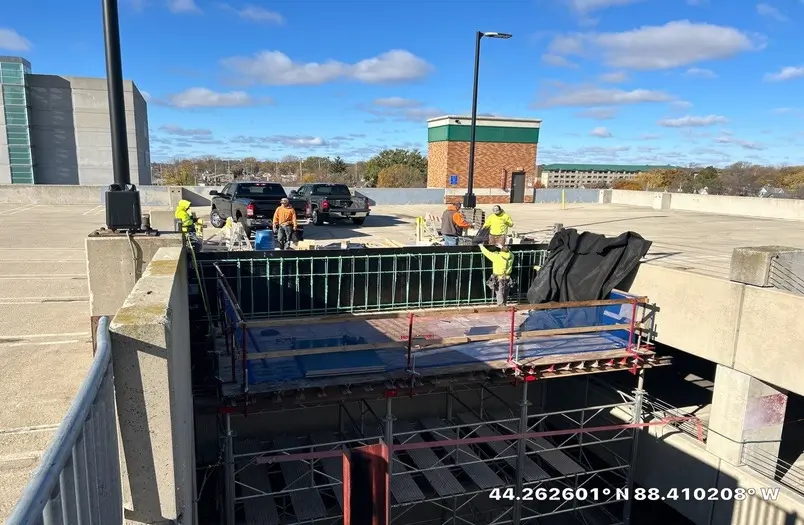
Parking structures deserve particular attention in this window. RSI’s work on a parking structure in St. Paul, Minnesota demonstrates the kind of traffic-bearing waterproofing and deicing-salt protection these decks need before another winter of salt and freeze-thaw. A traffic coating has to stand up to vehicle loads and the chemical exposure that road salt brings, which makes the warm, dry summer months the right time to install or renew it rather than fighting the weather later in the year.
October Is the Hinge of the Whole Calendar
Everything in the warm season points toward one deadline. Most sealants and coatings need application temperatures above 40°F to adhere and cure, and those conditions become unreliable in the Upper Midwest by mid-November. October is where you make sure the building is actually ready for winter, not just hopeful about it.
“Most sealants and waterproofing coatings require application temperatures above 40°F for proper adhesion and cure, conditions that become unreliable by mid-November. Schedule envelope assessments in early October, complete repairs by late October, and address drainage systems after leaf fall but before first freeze.”
The sequence is specific for a reason. Early October is for the assessment that confirms what still needs attention. Late October is the deadline to complete sealant repairs and glazing replacements while temperatures still cooperate. Then drainage comes last, after leaf fall clears the gutters and roof drains of debris but before the first hard freeze, typically early November in the Twin Cities metro. Get those in the wrong order and you either clog fresh repairs with falling leaves or run out of warm days.
Waiting is where the cost climbs. As RSI’s guidance puts it plainly: “If you wait until December, you may be clearing drains that are already partially frozen, dramatically increasing the difficulty and cost of the work.”
Frozen, debris-packed drainage is far harder to clear than a routine fall cleanout, and any sealant gap left open heads into the freeze-thaw season as an open invitation for water. That is why September and October function as a firm deadline rather than a soft target. The work that closes out the envelope has to be finished before the temperature does it for you.
Sealants and Waterproofing: A System, Not a Product
A calendar tells you when to work. What you actually do in that window determines whether the result holds. The most common mistake is treating waterproofing as a product you buy rather than a system you build. Dan Lephardt, RSI’s Wisconsin Branch Manager, frames it directly:
“Waterproofing is a system, not a product. The details — transitions, terminations, drainage, and installation quality — determine whether your investment lasts 5 years or 50.”
— Dan Lephardt, Branch Manager, Wisconsin, RSI
That distinction is not academic. The single weakest point in a system decides its lifespan, which is why RSI addresses every potential failure point before installation begins. As Lephardt puts it: “A waterproofing system is only as strong as its weakest link. You can install the best membrane in the world, but if the termination bar leaks or the joint sealant fails, water finds a way in.”
The data backs the philosophy. The large majority of waterproofing failures are installation-related rather than product defects, which means contractor qualification and quality oversight during the work window matter more than product selection alone. It is also why RSI leans on union-trained craftsmen who address root causes instead of chasing symptoms. The guiding principle is one Lephardt sums up simply:
“Good practice: design for water to leave, not for coatings to fight water forever.”
— Dan Lephardt
Sealants reward this kind of planning. High-quality silicone and polyurethane sealants can provide on the order of 15 to 25 years of service when properly installed. A sensible cadence is a formal inspection roughly every five years, with replacement budgeted around year 12 to 15 and more frequent visual reviews in between. RSI’s University Campus Sealant Replacement on the Lake Michigan waterfront in Wisconsin shows the scale this can reach: more than 30,000 linear feet of sealant replacement across multiple campus buildings, handled in phases and completed before the winter season closed the window.
Build the Program, Don’t Just Maintain It
A structured annual calendar is not only good practice. It is the cheaper path. The cost asymmetry between planned and emergency work is steep, and Midwest freeze-thaw cycles amplify it by turning small sealant gaps into structural problems over a single winter. The argument for building a program, rather than reacting to failures, comes down to a handful of well-documented cost drivers.
- Reactive work costs several times more. BOMA research puts reactive maintenance at roughly four to five times the cost of proactive intervention — a multiplier that widens in climates where freeze-thaw turns minor gaps into failures.
- Planned sealant work is a fraction of the emergency price. Replacing a joint on schedule runs a fraction of what the same joint costs to repair as an emergency after freeze-thaw damage has set in.
- A measured investment prevents multiples in damage. A planned waterproofing investment can prevent several times its cost in downstream structural damage, before counting occupancy disruption or liability exposure.
- The envelope drives heating cost. A significant share of commercial building energy escapes through the envelope, and addressing air infiltration before winter can meaningfully reduce heating costs.
None of this is about selling more work. It is about repair, restoration, and preservation that extend service life and ensure safety, scheduled years ahead in a structural integrity reserve study rather than scrambled together after a leak. That is the program worth building.
Building Envelope Maintenance Calendar: Common Questions
Quick answers on timing inspections, repairs, and fall close-out around the Upper Midwest freeze.
When can building envelope repairs be done in Wisconsin and Minnesota?
Most sealants and waterproofing coatings need application temperatures above 40°F to adhere and cure properly, which compresses the usable repair window in Wisconsin and Minnesota to roughly May through late October. Winter is for finding and documenting problems, spring for scoping, summer for the real work, and fall for closing out before the first freeze. If you are unsure where your building stands, you can request an assessment.
How many freeze-thaw cycles do Upper Midwest buildings face each year?
Buildings in the Upper Midwest face 50 to 100 or more freeze-thaw cycles every year. A ten-year Minnesota Department of Transportation dataset counted roughly 86 cycles between October and April at just one inch below the surface. Each cycle pries cracks a little wider, stresses sealants, and tests adhesion at every flashing and transition.
When should fall envelope work be completed before winter?
Schedule envelope assessments in early October, complete sealant repairs and glazing replacements by late October, and clear drainage systems after leaf fall but before the first hard freeze, typically early November in the Twin Cities metro. Application conditions become unreliable by mid-November, and waiting until December can mean clearing drains that are already partially frozen, which dramatically increases the difficulty and cost of the work.
How long do commercial sealants last, and how often should they be inspected?
High-quality silicone and polyurethane sealants can provide on the order of 15 to 25 years of service when properly installed. A sensible cadence is a formal inspection roughly every five years, with sealant replacement budgeted around year 12 to 15 and more frequent visual reviews in between.
How much more does reactive envelope maintenance cost than planned work?
BOMA research puts reactive maintenance at roughly four to five times the cost of proactive intervention, and the multiplier widens in climates where freeze-thaw turns minor gaps into failures. Replacing a joint on schedule costs a fraction of repairing the same joint as an emergency, and a planned waterproofing investment can prevent several times its cost in downstream structural damage.
Why do most waterproofing systems fail?
The large majority of waterproofing failures are installation-related rather than product defects. Waterproofing is a system, not a product: the details, including transitions, terminations, drainage, and installation quality, determine whether the investment lasts 5 years or 50. That makes contractor qualification and quality oversight during the work window matter more than product selection alone.
Before the window closes
Know Where Your Envelope Stands Before the Window Closes
Backed by 28+ years of trusted restoration work across the Upper Midwest, RSI restores masonry and concrete buildings through repair, restoration, and preservation that extend service life and ensure safety. If you are not sure where your building sits in the calendar, a complimentary assessment will show what should be scheduled before the next freeze — and where it fits across waterproofing, traffic coatings, and sealant work.