
Post-Tension Cable Repair Cost: What Commercial Owners Should Expect
A surface estimate rarely reflects the final cost of a post-tension cable repair, because the real condition of the slab stays hidden until it is exposed. For owners and facility managers, the rational way to budget is lifecycle cost, not the cheapest line item.

Why the Estimate Changes Once the Slab Is Open
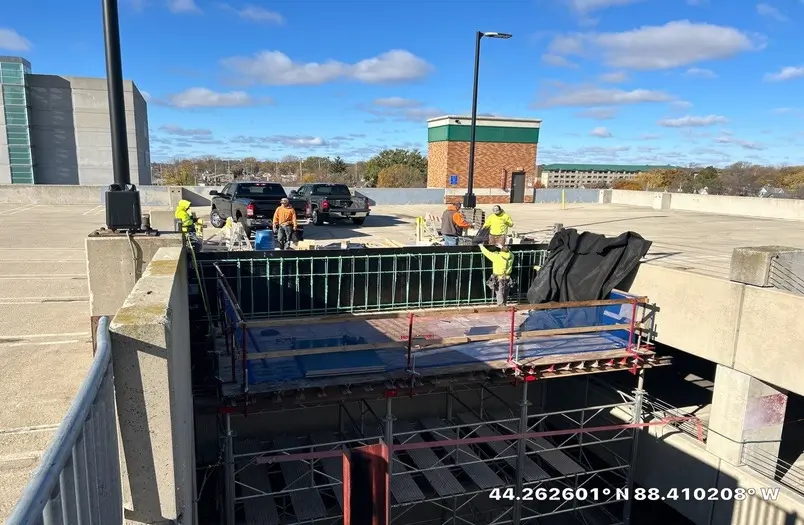
Consider one parking structure project that began as a localized pothole investigation. What looked like a small surface repair expanded into engineer-coordinated structural restoration after de-tensioned post-tension cables were discovered when the slab was exposed.
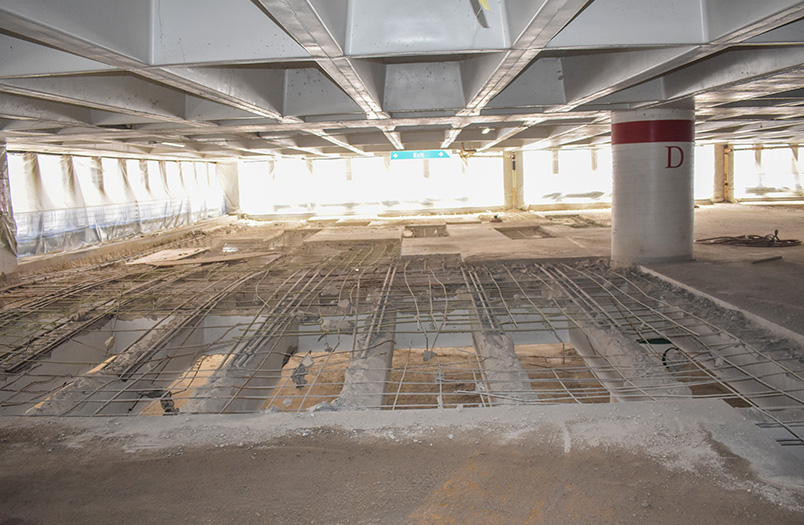
The number on the original estimate could not have reflected that scope, because the condition driving it was not visible from the surface. Post-tension cables and structural steel only reveal their degradation once the traffic coating is removed and the concrete is opened.
By the time concrete breaks loose at the surface, hidden delamination, cracking, and deterioration may already extend well beyond what an inspector can see. That is why a surface estimate is a starting point, not a final cost.
What Drives PT Cable Repair Cost
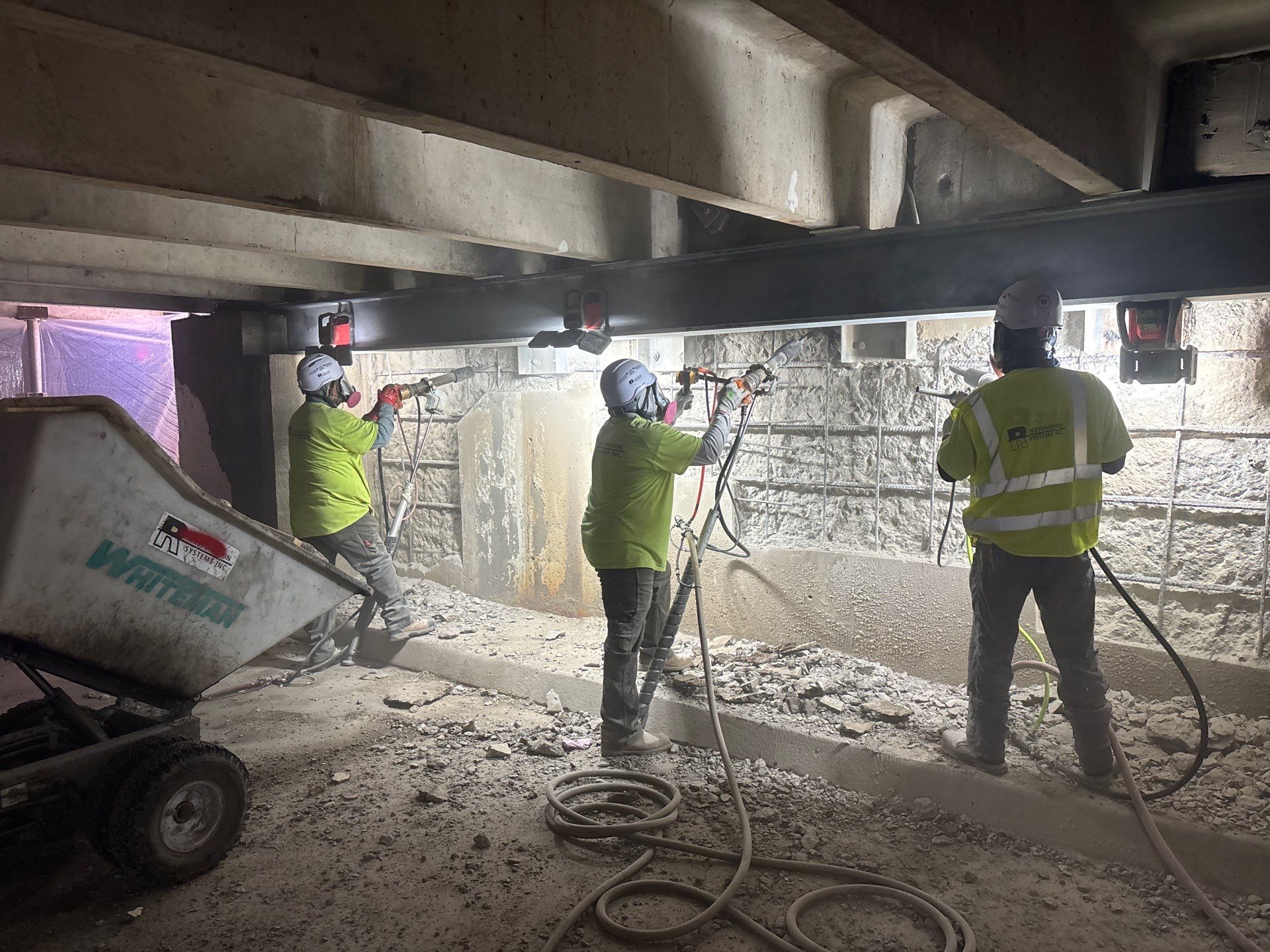
There is no single price for a post-tension cable repair, because the work is investigation-led. What an owner ultimately pays is shaped by a set of drivers that only come into focus as the structure is examined and exposed:
- Investigation and accessReaching the affected area, and confirming how far the damage actually extends.
- Tendon count and corrosion extentHow many cables are involved and how badly they have deteriorated.
- Concrete removal volumeHow much unsound concrete must come out to reach sound material and exposed steel.
- Engineering coordinationThe structural engineer’s evaluation and repair strategy.
- Shoring and traffic controlSupporting the structure safely and managing access while the deck is open.
The reason scope expands is rooted in how these structures fail. Post-tension cables corrode from the inside out, often with no visible warning until structural damage has already progressed well beyond the surface. Reinforcing steel makes it worse: as it corrodes it expands, cracking the surrounding concrete from within and carrying deterioration past the area that first looked damaged.
In a post-tension parking deck, the cables carry loads and hold the slab system together. When they lose tension to corrosion, the structural performance of the deck is directly affected.
Engineer coordination is a standard, anticipated layer of a PT cable repair, not a surprise add-on. Evaluating the deterioration, confirming the repair strategy, and verifying the work all belong in a realistic budget from the start. It is worth setting expectations early: as with any parking garage repair budget, restoring a full structure is a far larger undertaking than a localized repair, and the only honest number for your deck comes from exposing and evaluating that specific structure rather than from a figure quoted in the abstract.
What a Proper PT Repair Actually Includes
A patch fills a hole. A proper post-tension repair restores the system. Here is what an owner should expect a qualified restoration contractor to perform, built around repair, restoration, and preservation that extends service life and ensures safety.
Remove All Unsound Concrete
Take out deteriorated concrete back to sound material, so the repair sits on a solid base rather than over hidden delamination.
Evaluate Reinforcing Steel and the Post-Tension System
Inspect the exposed rebar and cables to confirm the true extent of corrosion and how much of the system has been compromised.
Restore Structural Integrity
Work with the structural engineer’s strategy to bring the slab and its load-carrying system back to sound condition.
Repair Waterproofing and Joint Systems
Reinstate the traffic coatings and joints that keep water and salt out, because they are the first line of defense for a parking deck.
Install Protective Materials for Midwest Durability
Use materials suited to repeated freeze-thaw and chloride exposure, so the repair holds up under Upper Midwest conditions rather than failing early.
Freeze-Thaw and Deicing Salt
In the Upper Midwest, freeze-thaw exposure and deicing salts are among the biggest factors driving parking structure deterioration. Decks here endure repeated freeze-thaw cycling through the winter, and heavy deicing-salt use means a steady supply of chloride-laden moisture working into the slab. Together, that cycling and chloride exposure accelerate corrosion inside the structure.
Ongoing water and chloride intrusion accelerates corrosion inside the slab. As reinforcing steel corrodes it expands, creating internal pressure that cracks the surrounding concrete and, left unaddressed, can affect the load-carrying capacity of the structure. Post-tension strand carries that risk further: under high tensile stress it tends to fail suddenly rather than deteriorating gradually, so there is often no visible warning.
This is why traffic coatings and waterproofing are not an upsell. They are the first line of defense against water and salt, and without them even a quality concrete repair deteriorates prematurely in Midwest conditions. Reinstating that protection is a required part of the repair.
The goal is not only to complete the work, but to address the root causes so the structure can withstand repeated moisture, temperature swings, and chloride exposure, extending its service life and ensuring safety.
Why a Proper Repair Beats Repeated Patching
From an ownership perspective, the cheapest repair upfront is not always the lowest-cost solution over the life of the structure. A patch and a proper repair may look similar on day one, but they are very different in long-term performance, cost, and risk reduction. Repeated patching cycles can create ongoing operational disruption, higher lifecycle costs, and greater liability exposure if deterioration keeps spreading.
If the root causes are not addressed, the deterioration often returns, sometimes larger and more expensive than before.
That is the consideration owners should weigh when a low bid looks attractive. Deferred deterioration has a way of compounding, so work put off today tends to grow into a far larger and more expensive rehabilitation once the damage spreads through the structure. The practical takeaway is that early, properly scoped work is usually the cheaper path over time, even when it costs more on the first invoice.
This is where the restoration mindset matters. Restoration Systems evaluates the issue from a structural restoration and long-term durability perspective, looking at why the failure occurred and how to properly restore and protect the system, not just temporarily fill the hole. The work is performed by union-trained craftsmen who address root causes for repair, restoration, and preservation, so owners are buying durability rather than a repair they will pay for again.
When to Call a Structural Engineer
Visible surface deterioration should never automatically be viewed as “just a pothole.” Because post-tension strand carries very high tension and can fail suddenly rather than gradually, certain signs warrant immediate structural engineer involvement before any work proceeds. The right action is to involve an engineer and a qualified restoration contractor, not to attempt remediation yourself.
Rust Staining at Anchorages
Rust bleeding from the anchorage points can signal corrosion reaching the post-tension system, where the strands hold very high tension.
Visible Tendon Pop-Outs
Any sign of a tendon breaking through the concrete is an urgent indicator that the strand has been compromised and needs engineer evaluation before crews proceed.
Slab Deflection Between Columns
Sagging or deflection across the slab between columns can point to a loss of structural capacity and calls for immediate professional assessment.
Surface Damage That May Hide More
Even an apparent pothole can sit over hidden delamination and corrosion, so treat surface damage as a reason to investigate rather than to patch.
Post-Tension Cable Repair Cost: Common Questions
Answers to the questions owners and facility managers ask most when budgeting post-tension cable repairs.
Why does a post-tension cable repair estimate change once work begins?
Post-tension cables and structural steel only reveal their degradation once the traffic coating is removed and the concrete is opened. By the time concrete breaks loose at the surface, hidden delamination, cracking, and deterioration may already extend well beyond what an inspector can see. That is why a surface estimate is a starting point, not a final cost.
What drives the cost of a post-tension cable repair?
There is no single price for a post-tension cable repair because the work is investigation-led. Cost is shaped by investigation and access, the tendon count and corrosion extent, the volume of unsound concrete that must be removed, engineering coordination, and shoring and traffic control while the deck is open. The only honest number for your deck comes from exposing and evaluating that specific structure.
Is structural engineer involvement an extra charge on a PT repair?
Engineer coordination is a standard, anticipated layer of a PT cable repair, not a surprise add-on. Evaluating the deterioration, confirming the repair strategy, and verifying the work all belong in a realistic budget from the start.
What should a proper post-tension repair include?
A patch fills a hole; a proper post-tension repair restores the system. Expect a qualified restoration contractor to remove all unsound concrete back to sound material, evaluate the reinforcing steel and post-tension system, restore structural integrity per the engineer’s strategy, repair the waterproofing and joint systems, and install protective materials suited to freeze-thaw and chloride exposure.
Why do Midwest parking decks deteriorate faster?
In the Upper Midwest, repeated freeze-thaw cycling and heavy deicing-salt use send a steady supply of chloride-laden moisture into the slab, accelerating corrosion inside the structure. As reinforcing steel corrodes it expands, cracking the surrounding concrete from within, and post-tension strand under high tensile stress tends to fail suddenly rather than gradually. That is why traffic coatings and waterproofing are the first line of defense, not an upsell.
What warning signs mean I should call a structural engineer?
Rust staining at anchorage points, visible tendon pop-outs, and slab deflection or sagging between columns all warrant immediate structural engineer involvement before any work proceeds. Even an apparent pothole can sit over hidden delamination and corrosion, so treat surface damage as a reason to investigate rather than to patch.
Worried About Your Parking Deck?
If your structure is showing surface deterioration, the smartest first step is an honest scope. Restoration Systems brings 28+ years of trusted restoration work across the Upper Midwest and union-trained craftsmen who address root causes, so you budget for the real condition, not just the visible one.