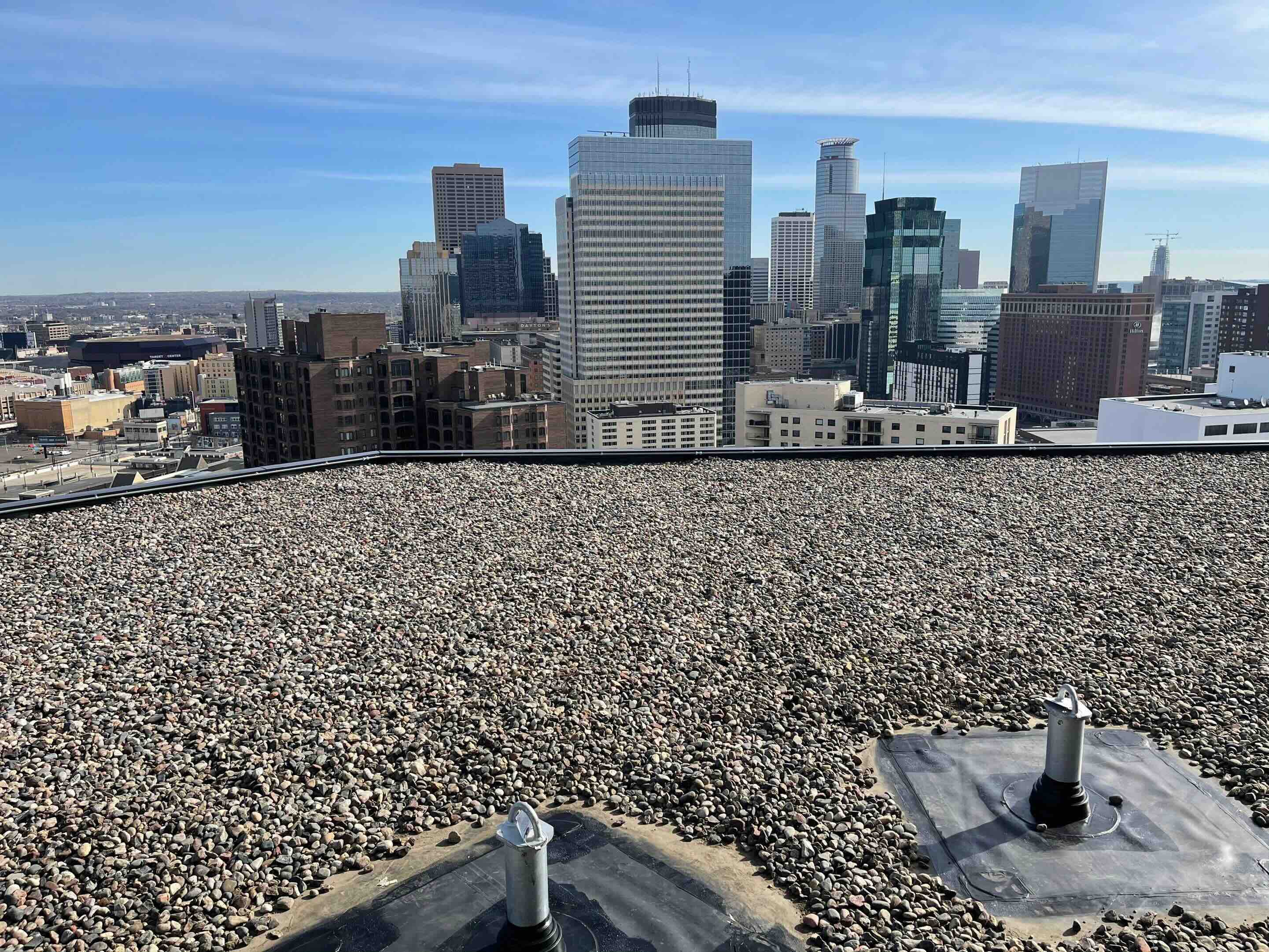
Permanent fall-protection access points coordinated with engineers, roof structure, and the waterproofing detail that keeps the building dry.
A roof anchor install starts before the first penetration is cut. The question is where a worker can safely clip in for facade access, window washing, inspection, or maintenance—and whether the building below the membrane can actually carry that load. RSI installs roof anchors as permanent fall protection attachment points, but treats the roof assembly with the same seriousness as the steel: anchor layout, structural capacity, flashing sequence, and occupied-building access all have to line up.
Roof anchors have to align with the structure, access plan, and roof system
Roof anchors are permanent fall-protection attachment points for facade access, window washing, inspections, and maintenance work. On commercial buildings across Minnesota and the Upper Midwest, they are often installed because compliance, insurance expectations, and restoration access all point to the same need: crews need a safe, engineered way to work at height.
RSI installs permanent anchors, horizontal lifeline systems, davit bases, and related fall-protection components based on the building and the access required. Anchor placement is not just a rooftop layout exercise. Locations have to be coordinated with engineers, existing roof structure conditions, and intended use, then installed without creating a leak path or compromising the building envelope.
Permanent anchors and davit bases for planned facade access and maintenance routes.
Horizontal lifeline systems where the building requires continuous protected movement.
Roof-system tie-ins with proper flashing and waterproofing details so the anchor remains watertight.
Coordination for occupied buildings where tenant activity, roof access, and restoration sequencing all affect the work.
OSHA fall protection standards and ANSI requirements typically govern roof anchor systems and fall-protection equipment [OSHA] [ANSI]. For owners, the practical takeaway is that an anchor is both a life-safety component and a roof penetration. The hardware has to carry the intended load path, and the flashing has to protect the roof assembly long after installation day.
A few of RSI’s Commercial Roof Anchor Installation projects
One common misunderstanding is that anchors are finished forever once they are installed. In reality, these systems still need inspection, maintenance, and periodic recertification depending on the system and use. RSI plans anchor installation around future building facade restoration access, not only the first mobilization. For roof-envelope tie-in context, see RSI’s guide to commercial exterior weatherproofing systems.
Permanent eye-bolt anchor with target patch and counter flashing layered into the membrane – the flashing detail, not the hardware, is where most installs fail downstream.
Specifications
Anchor systems selected for the building and the access plan
Roof anchor work is governed by OSHA fall-protection rules and ANSI requirements, but the field decision is practical: what work will be performed from this point, where does the load transfer into the building, and how will the roof penetration be sealed afterward? RSI installs permanent anchors, horizontal lifeline systems, davit bases, and “other fall protection components” depending on the building and access need.
01
Worker fall protection
Anchorage must be strong enough for the intended fall-protection use and documented for workers who rely on it. OSHA rules frame the minimum safety requirement; the existing building determines how that requirement is met. [OSHA 1910.140]
02
System compatibility
ANSI fall-protection standards help define anchorage equipment, connector use, inspection expectations, and system compatibility. The point is not paperwork for its own sake—it is making sure the installed system matches the way workers will actually access the facade. [ANSI Z359]
03
Engineer coordination
Anchor locations are coordinated with engineers, roof structure conditions, and intended use. As Tayton puts it, “structural capacity underneath the roof system is critical.”
04
Roof envelope tie-in
The base, flashing, target patch, counter flashing, and sealant detail have to work with the existing roofing system. A safe anchor that opens a leak path is still a failed installation.
Roof-anchor systems RSI considers
Permanent single-point anchorsUsed for recurring tie-off needs such as facade inspection, window washing, and maintenance access when a fixed attachment point is appropriate.
Horizontal lifeline systemsUsed where workers need continuous movement along a roof edge, parapet line, equipment zone, or access route without repeatedly disconnecting.
Davit basesUsed when suspended access equipment requires coordinated base locations, clearance, and structural review before facade work can proceed.
Roof system and flashing detailCoordinated before installation so the anchor does not compromise the membrane, insulation, parapet, or building envelope below.
The system follows the access need
A window-washing route, a facade restoration drop, and a roof equipment access path do not need the same layout. RSI starts with intended use, reviews the roof structure, then coordinates the anchor type and membrane detail so the system is safe to use and serviceable later.
“
Anchor locations are coordinated with engineers, roof structure conditions, and intended use. Installation requires coordination with the roofing system to avoid creating leaks or compromising the building envelope. Proper flashing and waterproofing details are extremely important.
Tayton EggenbergerMinnesota Branch Manager, RSI
Regional Reality
Where roof anchor installations go wrong
Across the Upper Midwest, roof anchors are exposed to snow load planning, freeze-thaw movement, roof traffic, and long wet seasons. The failures we watch for are usually not dramatic on day one. They show up as a stain below a penetration, a missing inspection record, a system nobody can safely use, or an anchor placed where the next facade crew cannot reach the work.
Primary field check
The membrane is weather protection, not the load path. Anchor layout has to be coordinated with the engineer, the roof structure, and the work being performed at the facade.
01
Leak at the penetration
The anchor may be structurally sound while the roof detail fails. If the base flashing, target patch, and counter flashing are not sequenced correctly, water finds the opening and the tenant sees the problem first.
02
Anchor in the wrong place
Placement is not a rooftop guessing exercise. Window washing, facade inspection, and restoration access all need different reach, spacing, and tie-off logic, so intended use has to be decided before layout is finalized.
03
Maintenance treated as optional
Owners often assume “once anchors are installed they’re done forever.” They are not. Roof anchor systems still need inspection, maintenance, and periodic recertification depending on the system and governing requirements.
04
Envelope work not coordinated
Roof anchors are frequently installed so other exterior work can proceed safely. When anchors, staging, facade repair, and waterproofing are planned separately, the schedule tightens and the building envelope takes the risk.
RSI reads the building before setting hardware. Anchor locations, roof access, tenant coordination, and the roof membrane detail are mapped together so the system supports the work without creating a new envelope problem. The need is often “usually a combination of all three”: code compliance, insurance expectations, and a restoration or maintenance project that requires safe facade access.
Engineering coordination
Anchor type and placement are coordinated with the project engineer, roof structure conditions, and intended use. This is where permanent anchors, horizontal lifeline systems, davit bases, or other fall-protection components are matched to the building.
Roof system and flashing
Installation is coordinated with the roofing system to “avoid creating leaks or compromising the building envelope.” Flashing, waterproofing, and sealant details are planned before the anchor is set.
Installation and structural tie-in
The installation method is matched to the roof and the structure below it. Crews verify the attachment path, protect the active roof area, and sequence work so occupied buildings can keep functioning.
Closeout and ongoing use
Roof anchors remain part of the owner’s fall-protection program after installation. RSI helps organize the closeout information needed for future inspection, maintenance, and recertification requirements.
RSI installed a roof anchor system on a downtown office building as part of a larger facade restoration project while the building remained occupied—a good example of why tenant coordination and roof access planning matter. For related exterior-envelope work, see 801 Washington Exterior Restoration and City Bella on Lyndale.
FAQ
Frequently asked questions
A permanent roof anchor is a fixed fall-protection attachment point used for facade access, window washing, inspections, and maintenance work. It is installed so qualified workers can connect to an approved system when working at height.
RSI installs permanent anchors, horizontal lifeline systems, davit bases, and related fall-protection components depending on the building and access needs. The right system depends on the roof structure, intended use, and how future crews need to reach the facade or roof edge.
The trigger is often a mix of compliance, insurance requirements, and upcoming exterior work. Some buildings need updated systems for OSHA or ANSI expectations, while others install anchors so facade restoration, inspection, window washing, or maintenance can be completed safely. [OSHA 1910.140] [ANSI Z359]
Anchor locations are coordinated with engineers, the roof structure, and the intended use. The layout has to work for the people using the system, but the load path has to land in structure capable of supporting it.
Yes, when the roof system is part of the plan from the start. Tayton’s warning is direct: “proper flashing and waterproofing details are extremely important.” The anchor penetration, base flashing, counter flashing, target patch, and sealant detail all have to be compatible with the existing roof assembly.
Yes. Roof anchor systems still require inspection, maintenance, and periodic recertification depending on the system and applicable requirements. Owners should not treat installed anchors as a one-time item that can be ignored until the next exterior project.
Yes, with careful coordination. RSI has installed a roof anchor system on a downtown office building as part of a larger facade restoration project while the building remained occupied, which made tenant coordination and controlled roof access a major part of the work plan.
RSI installs roof anchor systems across the Upper Midwest, including major commercial markets such as Minneapolis, St. Paul, Milwaukee, Madison, Chicago, and surrounding regional markets.
Sources & Field Inputs
Sources used for this page
RSI field input: Tayton Eggenberger, RSI Minnesota Branch Manager, provided service-specific input on roof anchor purpose, permanent anchors, horizontal lifeline systems, davit bases, engineer coordination, roof-structure review, flashing and waterproofing coordination, occupied-building access, and ongoing inspection and recertification needs.
Standards referenced: OSHA fall-protection requirements and ANSI fall-protection requirements, including [OSHA 1910.140] and [ANSI Z359].
Project context: RSI downtown office roof-anchor installation completed as part of a larger facade restoration project on an occupied building; related RSI project pages linked where they illustrate comparable exterior-envelope coordination.
Plan the roof anchor around access, structure, and waterproofing
RSI installs commercial roof anchor systems across the Upper Midwest for facade access, window washing, inspections, maintenance, and restoration work. We coordinate layout, structural requirements, roof penetrations, flashing, and future access needs before installation.