
What Drives Tuckpointing Cost on Commercial Masonry
There is no single per-square-foot number for tuckpointing. The price depends on what your building actually demands — and the only honest proposal names those drivers before it names a figure.
“The cost of a tuckpointing project is extremely variable. It’s highly dependent on building height, access methods, extent of deterioration, and any hidden conditions like corroded steel that need to be addressed beyond the mortar repair itself.”

Dylan Reynolds
Project Manager, RSI Minneapolis
Why Mortar Failure Becomes a Budget Problem
Mortar is essentially the glue of the exterior masonry. It holds the units together and keeps water moving across the wall instead of into it. When the mortar fails, water finds the path inside, and the deterioration accelerates from there. This is not cosmetic upkeep. It is water management for the structure.
The warning signs are usually visible before anyone pulls a bid. Property managers can watch for:
- Cracking at the mortar joints
- Crumbling or powdering mortar
- Water stains, inside or out
- Small pieces falling from the facade
Each of those is the wall telling you the joints are no longer doing their job.
The lesson for a budget is simple: timing, not just the bid price, determines what tuckpointing ultimately costs.
Here is why timing drives the number. A joint that needs repointing today is a straightforward repair. Defer it, and minor mortar loss can escalate into structural failure — the kind that requires brick replacement or backup wall repair once water has been working behind the facade for a few seasons. That escalation does not add a little to the cost. It can multiply it several times over. The goal of the sections that follow is to help you understand the real cost drivers, read a proposal with a critical eye, and address the root cause the first time.
Height, Access, Deterioration, and Hidden Conditions
This is the spine of a tuckpointing budget. Four variables do most of the work, and they interact — which is why two buildings of similar square footage can carry very different numbers. It is also why RSI does not quote a blind per-square-foot rate. An honest proposal names which of these drivers apply to your building before it names a figure.
Facade Height
Height sets the tone for everything else, because it dictates how the work is reached.
Access Method
Ground-level work from a lift sits at the low end; swing-stage or specialized platforms sit far higher.
Extent of Deterioration
How much joint actually has to be cut out and repointed, rather than left alone.
Hidden Conditions
The wild card. Corroded steel embedded in joints can surface only once work is underway.
As Dylan Reynolds notes, corroded steel embedded behind or within mortar joints is one of those hidden conditions an exterior investigation cannot always reveal — so it can surface only once the work is underway and expand the scope mid-project.
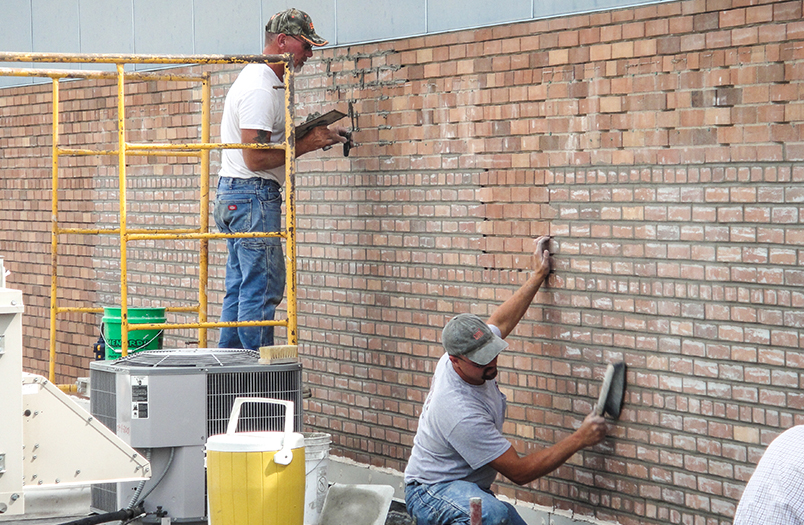
Because these drivers stack, pricing moves across a wide band rather than landing on a single rate. Low-access, ground-level repointing is comparatively inexpensive. Multi-story work on suspended or elevated access costs considerably more. Historic and specialty work, where the mortar must be matched and a preservation board may review the approach, sits at the top of the range. The takeaway is not a number to quote from memory. It is that any honest proposal has to name which of these drivers apply to your building.
Access Is a Line Item, Not a Footnote
The part of a tuckpointing budget that most often surprises facility managers is not the mortar. It is the cost of simply reaching the wall. On a high-rise, you cannot repoint a joint you cannot stand in front of, and getting there safely takes real equipment.
“One of the biggest things that catches property managers off guard is the access requirements. In order for an engineer to access the exterior of these high-rise buildings, they need swing stages installed on the building — a very large portion, sometimes up to 20% of a project’s cost, can be just access.”
Dylan Reynolds, RSI
That share is meaningful enough that access belongs on its own line in any serious proposal. And the rental itself is only the visible piece. Beyond the swing stage or aerial platform, the access line typically carries several add-ons before a single joint is cut:
None of this should read as alarming. It is simply the reality of working at height. The point is to make sure access is scoped, named, and priced on its own — rather than buried inside a single per-square-foot rate that hides how much of your budget is going toward reaching the facade.
The Wisconsin Tower Solution
Building geometry can dictate the access budget as directly as building height. RSI’s work at Wisconsin Tower in Milwaukee is a clear example. The structure is an art deco high-rise with roughly 35,000 square feet of facade, and its shape — not just its height — drove the access plan.
- 35,000
- Sq Ft of Facade
- 250 ft
- Aerial Platform
- 128 ft
- Outreach
On that building, conventional suspended scaffolding was cost-prohibitive because the art deco setback configuration left nowhere practical to rig from above. Rather than force the wrong access method onto the project, RSI deployed a specialty 250-foot aerial platform with 128-foot outreach to reach the facade from the ground up.
That single decision is the access driver made visible. The same square footage on a conventional rectangular tower would have called for a very different, and likely far cheaper, access plan. When you read a bid, the access method is not a detail. It is a direct reflection of what your building’s shape demands.
The Upper Midwest Climate Premium
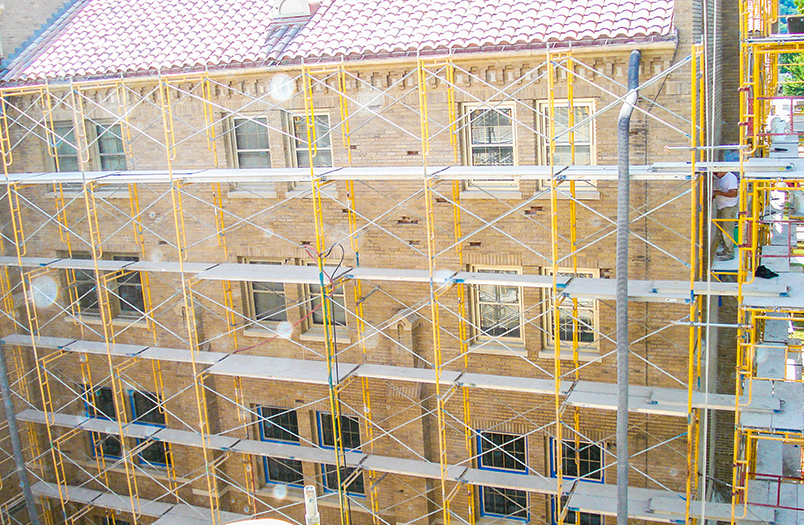
Tuckpointing in Minnesota and Wisconsin is not the same job it is in a milder climate, and the budget reflects that. The Upper Midwest puts masonry through repeated freeze-thaw cycling, and each hard winter compounds the damage the last one started.
That repeated cycling is why a regional facade carries a heavier maintenance burden than one in a temperate climate. The work is harder, the deterioration moves faster, and the seasonal window to do it well is narrower. Treating the deterioration early, while it is still a joint problem rather than a wall problem, is the difference between a routine repointing and a structural repair.
Mortar Matching Is Not Optional Here
Matching mortar to the existing masonry matters as much as the depth of the cut. Older commercial buildings were often built with softer brick that needs a softer, more breathable mortar. Apply a mortar that is harder than the brick around it and the brick face can take the stress instead, leading to spalling that is far more expensive to fix than a repointed joint. The mortar named in a proposal has to be compatible with the masonry it is going into — and on historic facades the approach may also be subject to preservation review.
Scale Is a Driver Too
The size of the facade shapes both the schedule and the budget. RSI’s tuckpointing work on the First National Bank Building in St. Paul covered roughly 108,000 square feet of exterior facade and ran on an eight-month duration. A project at that scale is not simply a small repair multiplied. It carries sustained access, sequencing, and crew commitments across the full work window — which is exactly why honest pricing starts with the drivers rather than a single rate.
In a freeze-thaw climate, work performed without documented temperature controls during cold weather is a quality red flag worth questioning in any bid.
Proper Tuckpointing vs. a Skim Job
The single biggest difference between two bids is usually invisible in the price: how deep the contractor actually cuts. As Dylan Reynolds explains:
“The biggest and most important piece of tuckpointing is ensuring you’re getting the proper depth of repair. Our general rule of thumb is that we always cut and remove the old, deteriorated mortar to a depth of two times the width of the joint.”
The shortcut that undercuts a low bid has a name. “Something we often see that’s improper, from maybe a non-specialized contractor, is called skimming of joints,” Reynolds says, “where they’ll either not remove any mortar from the joints and just skim over it to hide it, or they will cut back a quarter of an inch, maybe one width of the joint. They’re not getting enough repair material in there to be successful.”
Proper Specialty Tuckpointing
- Mortar Removal Depth
- Cut to two times the joint width
- Bonding & Longevity
- Built to last for decades of service
- Mortar Compatibility
- Matched to the existing masonry
Non-Specialized Skim Work
- Mortar Removal Depth
- A quarter inch — or none at all
- Bonding & Longevity
- Can fail within a couple of years
- Mortar Compatibility
- Often ignored, risking spalling
The consequence is a lifespan gap, not a finish-quality gap. A skimmed repair can fail within a couple of years. Work done to RSI’s depth standard, with a compatible mortar — the same discipline that formal repair codes demand of structural work — is built to last for decades. That difference reframes which bid is actually the cheaper one over the life of the wall.
Before You Sign, Confirm the Proposal Specifies
- Mortar removal depth, stated against the joint width
- Mortar type and mix compatibility with the existing masonry
- The access method and how its cost is carried
- How hidden conditions will be scoped and priced if discovered
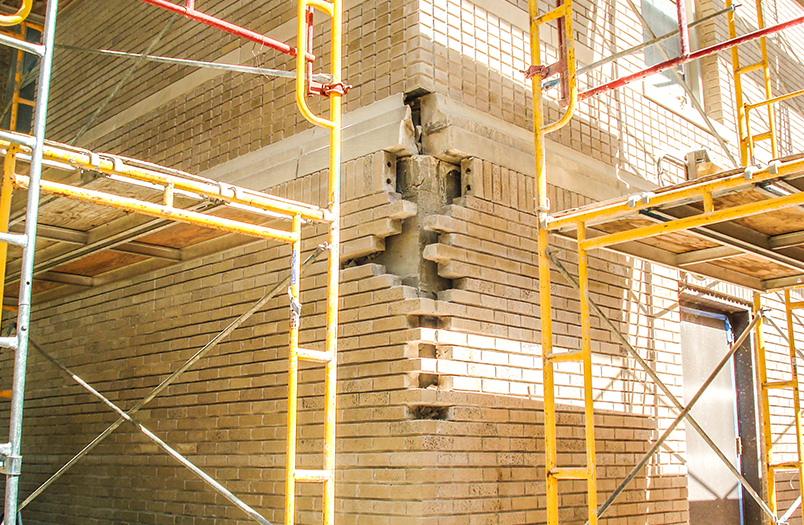
RSI’s union-trained craftsmen work to that standard on every joint — because a repair is only as good as the depth behind it.
The Paid Twice Trap
The lowest bid is often the most expensive outcome. The reason is simple: a cheap repair that never touches the root cause does not last, and the bill comes due again.
“We often see repairs that were done two or three years ago, and we’re being called back to the site to fix them because the root cause was not addressed. We’ve been called out numerous times for projects where we originally submitted a proposal but weren’t the lowest price. In the end, the owner realized they paid someone to do it incorrectly the first time — and then had to pay us to come out and fix it.”
Dylan Reynolds, RSI
The economics get worse the longer the wrong repair sits. Work that is comparatively inexpensive while it is still a mortar problem becomes far more expensive once water has penetrated the wall system and the damage moves into the brick and the backup wall behind it. RSI addresses root causes so a repair holds — extending service life and ensuring safety, rather than buying you a few years before the next call.
Commercial Tuckpointing Cost: Common Questions
Quick answers for owners and property managers weighing tuckpointing proposals.
How much does commercial tuckpointing cost per square foot?
There is no single per-square-foot number for commercial tuckpointing, and a blind per-square-foot rate is a sign of an incomplete proposal. Pricing moves across a wide band: low-access, ground-level repointing is comparatively inexpensive, multi-story work on suspended or elevated access costs considerably more, and historic or specialty work with mortar matching and preservation review sits at the top of the range. An honest proposal names which cost drivers apply to your building before it names a figure.
What factors drive the cost of a commercial tuckpointing project?
Four variables do most of the work: facade height, access method, the extent of deterioration, and hidden conditions such as corroded steel embedded in the joints. These drivers interact, which is why two buildings of similar square footage can carry very different numbers. Hidden conditions are the wild card, since they can surface only once work is underway and expand the scope mid-project.
How much of a tuckpointing budget goes to access equipment?
On high-rise buildings, access alone can run up to 20% of a project’s cost, which is why it belongs on its own line in any serious proposal. The swing stage or aerial platform rental is only the visible piece; the access line also typically carries engineering, installation and rigging, operator labor, and permitting before a single joint is cut. Building shape matters too — at Milwaukee’s Wisconsin Tower, the art deco setbacks made suspended scaffolding cost-prohibitive, so RSI used a 250-foot aerial platform with 128-foot outreach instead.
What’s the difference between proper tuckpointing and a skim job?
Proper tuckpointing cuts out the old, deteriorated mortar to a depth of two times the width of the joint and uses a mortar matched to the existing masonry. Skimming — removing a quarter inch or no mortar at all and coating over the joint — doesn’t get enough repair material in to be successful. The difference is a lifespan gap: a skimmed repair can fail within a couple of years, while work done to the proper depth standard is built to last for decades.
Why does tuckpointing cost more in Minnesota and Wisconsin?
The Upper Midwest puts masonry through repeated freeze-thaw cycling: water seeps into a joint, expands as it freezes, and forces the mortar open from the inside, compounding through each hard winter. That means the deterioration moves faster, the work is harder, and the window to do it well is narrower than in a temperate climate. Mortar matching also matters more here — and cold-weather work without documented temperature controls is a quality red flag worth questioning.
What should a tuckpointing proposal specify before I sign it?
Confirm the proposal states four things: the mortar removal depth against the joint width, the mortar type and its compatibility with the existing masonry, the access method and how its cost is carried, and how hidden conditions will be scoped and priced if discovered. Be wary of the lowest number — a cheap repair that never touches the root cause can fail within two or three years, leaving you paying twice for the same wall.
Get a Complimentary Assessment of Your Facade
Whether you’re weighing competing bids or budgeting for deferred maintenance, RSI will evaluate your masonry and help you understand the cost drivers behind it. With 28+ years of repair, restoration, and preservation work across the Upper Midwest, our union-trained craftsmen address the root cause the first time.
Explore our tuckpointing & mortar repair services or request your assessment below.