
Industries We Serve
Commercial Office Building Restoration Across the Upper Midwest
Office properties across Minnesota, Wisconsin, and Iowa need facade, plaza deck, and attached parking repairs that can run while tenants stay. We diagnose root causes, phase work around your tenants, and protect the appearance your rent roll depends on.
What Fails on Upper Midwest Office Buildings
An office tower is mostly joints: window perimeters, control joints, and panel-to-panel seams. Miles of sealant stand between the weather and your tenants. In the Upper Midwest those joints work harder than anywhere else.
On a sunny January day, a tower’s south elevation swings through an enormous temperature range while the north face stays frozen. Every swing flexes the sealant bridging the panels. Once the sealant tears, water enters the wall on every rain and melt.
Then the freeze does the rest. Water expands roughly 9% when it freezes, prying masonry, stone, and concrete apart from the inside, dozens of cycles a winter. That’s how a failed joint on the 30th floor becomes a stained ceiling tile on the 28th.
Office properties carry two liabilities most building types don’t. Plaza decks sit over occupied lobbies and retail, so a waterproofing failure drips onto rent-paying space. Attached parking structures take road salt that corrodes reinforcing steel inside the slab. Both get more expensive every season they wait.

The Constraints Office Owners Work Under
On an occupied tower, logistics govern the job as much as the repair detail does. Here is what we plan around before the first crew arrives.
Work Around Occupied Suites
Grinding mortar from a swing stage outside a conference room at 10 a.m. costs goodwill you’ll need at renewal. We sequence noisy work by elevation and floor and give property management advance schedules to send tenants.
Facade Condition on Tour Day
Streaked precast, stained stone, and crumbling joints are visible from the parking lot on tour day. Prospects read them as a statement about ownership. Facade condition is part of the pitch.
Phasing Across Budget Years
You budget by fiscal year, while buildings deteriorate on their own schedule. We scope work to phase across budget years. On U.S. Bank Plaza, sealant and stone repairs spanned five construction seasons to fit Hines’ budgets.
Mandated Facade Inspections
Once a mandated inspection report lands, deficiencies stop being optional. Finding and pricing issues first turns a compliance scramble into a planned capital project.
Attached Parking and Road Salt
Your attached ramp is the first and last thing every tenant touches daily. It absorbs road salt all winter. Chloride corrosion doesn’t announce itself until repairs are structural, not surface.
How Restoration Proceeds on Occupied Office Buildings
The building stays open and tenants stay informed while the work gets done. Root-cause diagnosis comes first, then execution planned around your operations.
Assess & Price for Capital Plans
We inspect from grade and from a swing stage, document every deficiency, and diagnose why it’s happening. Findings arrive prioritized and priced for next year’s budget. Here’s how to read a condition assessment report.
Map Daily Work Around Tenants
Each day we map where crews will work so property management can notify tenants of noise and access impacts. On the 15 Building, that daily drop map kept a full masonry rehabilitation on time and on budget.
Our Crews Self-Perform the Work
We self-perform the work: masonry, sealants, concrete, and waterproofing. Sequencing decisions happen on site. Entrances stay protected, sidewalks stay open, and one team answers for the schedule.
Document & Plan Future Phases
Closeout includes documentation and a prioritized roadmap for future phases, so each mobilization builds toward a maintained envelope. A building envelope maintenance calendar keeps the work on schedule.
Get Numbers Before Budget Season
A complimentary assessment gives you documented conditions, repairs prioritized by urgency, and pricing you can carry into your capital plan. You get those numbers before a tenant complaint or an ordinance inspection sets the agenda.
Problems That Show Up on Office Properties
These failures account for most of our office-building work. Every one gets cheaper the earlier it’s caught.
Torn Window & Joint Sealants
Torn or de-bonded sealant at windows and control joints is the most common water entry point on an office tower. Sealant replacement restores that first line of defense. It is the cheapest repair on this list.
Water Stains in Tenant Suites
A stained ceiling tile on the 12th floor is rarely where the water entered. Leak investigation traces water to its entry point so you fix the source once, not the symptom every spring.
Eroded Masonry & Cracked Stone
Eroded mortar, spalled brick, and cracked stone let water deeper in with every storm. Tuckpointing and facade restoration rebuild the weather protection with materials matched to your building.
Spalled Concrete Over Entrances
Spalling concrete with exposed rebar over entrances is a liability, not a maintenance item. Our concrete repair crews perform spall repairs and rebar remediation. That is the life-safety work we executed at the US Bank building.
Failed Plaza Deck Waterproofing
When plaza waterproofing fails, the drip lands in your lobby or in a retail tenant’s ceiling. Commercial waterproofing rebuilt from the substrate up stops the cycle of patch, leak, repeat.
Chloride Damage in Parking Structures
Chlorides carried in on every commute corrode rebar and post-tension cables inside the slab. Parking deck restoration removes the contaminated concrete, repairs the structure, and protects it with a traffic membrane.
Facade Ordinances and What Waiting Costs
Two of the region’s largest office markets mandate periodic facade inspections. Deficiencies will be documented. You can find them first.
Minneapolis Facade Ordinance
Buildings 6+ stories require periodic facade inspections by licensed engineers or architects. Inspections follow a tiered schedule based on building age. Non-compliance can bring fines and mandatory immediate inspections.
Milwaukee Facade Ordinance
Milwaukee requires periodic inspections for buildings over a certain height in the downtown area. Qualified professionals perform them and file detailed reporting on any deficiencies discovered.
How Deferred Facade Repairs Compound
A failed sealant joint is a sealant repair. Left through a few winters, it becomes saturated masonry, then spalled stone, then corroded anchors. Deferred maintenance compounds like unpaid interest, and freeze-thaw physics doesn’t respect hold periods.
Access is the multiplier. Scaffolding, swing stages, and lifts can add 20% or more to any facade project. Finding issues before a mandated inspection lets you bundle repairs into one mobilization: one rigging cost instead of three.
Office Markets We Serve
Office properties in Minneapolis, St. Paul, Rochester, Milwaukee, Madison, Des Moines, and Cedar Rapids get this work from our Minneapolis headquarters and Cedar Rapids office. We also cover Minnesota, Wisconsin, Iowa, Nebraska, the Dakotas, and northern Illinois. Commercial office is one of several industries we serve.
Completed Office Building Projects
Some of the region’s most visible office addresses have gone through this work. At Wells Fargo Center, a multi-year program installed custom silicone window gaskets. At 800 Nicollet Mall, we sealed 163,000 SF of precast panels.
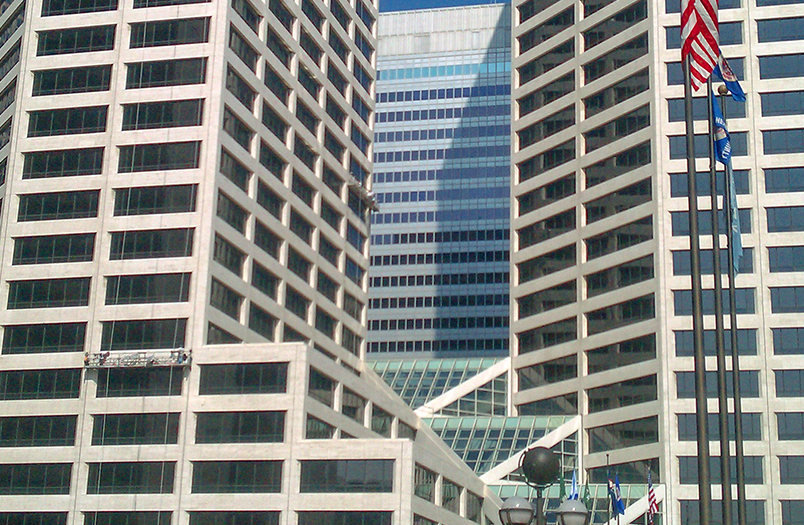
U.S. Bank Plaza
Sealant replacement at window perimeters and stone joints ran across two towers (20 and 40 stories). Cracked stone was repaired or replaced as found. The work spread over five construction seasons with Hines to fit budgets and scheduling.
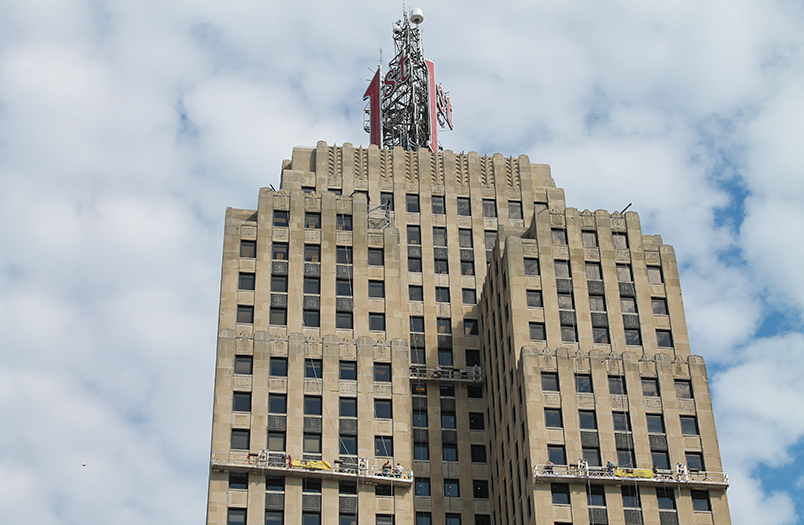
First National Bank Building
Approximately 108,000 SF of exterior tuckpointing, 1,000 SF of stone patching and replacement, spandrel-panel sealant, and a full exterior washing on the St. Paul landmark. The work was completed in eight months.

15 Building
Tuckpointing, brick replacement, stone patching, and full sealant replacement at control joints and window perimeters. A daily drop map kept tenants informed on noise. The two-month project finished on time and on budget.
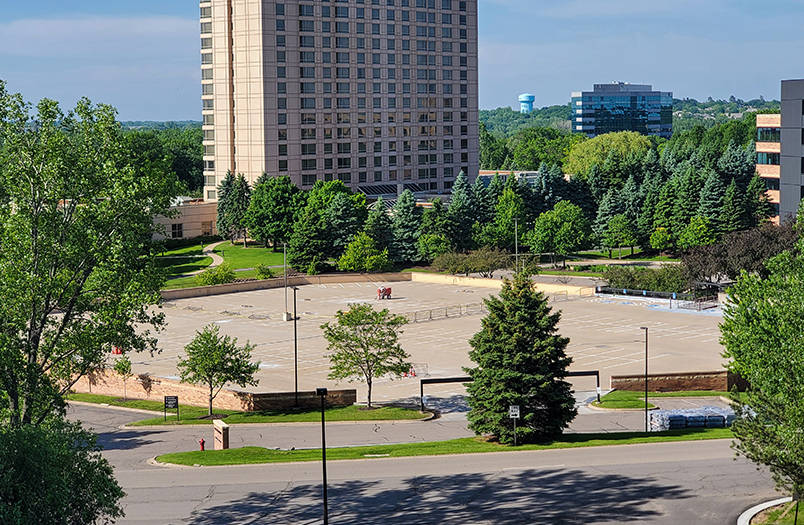
Minneapolis Office Complex
Post-tension cable replacement and repairs, structural concrete replacement, and a traffic-bearing membrane in the parking ramp, plus exterior tuckpointing, brick and stone repairs, and sealant replacement. The work was delivered in four months.
Questions Managers Ask Before Restoration
Questions property and asset managers raise before restoration starts on an occupied office building.
Yes. Occupied buildings are our normal condition. We sequence work by elevation and floor and give property management advance schedules to share. On the 15 Building in Minneapolis, a daily drop map told tenants where crews would be working. The project finished on time and on budget with no delays.
We establish protected pedestrian routes, overhead protection at entrances, and controlled work zones below active drops before mobilizing. Access equipment can represent 20% or more of project cost, so we bundle every repair that can share the same rigging. You pay for the swing stage once, not three times.
Yes. On larger assets it’s often the right answer. At U.S. Bank Plaza, we completed sealant and stone repairs across two towers over five construction seasons, matched to Hines’ budgets and scheduling. Life-safety and active-leak items go first. Cosmetic scope can wait.
Mortar and most sealants need sustained temperatures above roughly 40°F to cure, so exterior work concentrates between April and October. That window fills fast, so assess in fall or winter to bid, budget, and reserve crew time before the season opens. Life-safety repairs are the exception, and we address those immediately.
Request a Complimentary Assessment
Get a complimentary assessment of your facade, plaza deck, or parking structure: documented conditions, repairs prioritized by urgency, and numbers your capital plan can use. Emergencies get answered through our emergency support line, day or night.