
Industries We Serve
Building Restoration for Colleges, Universities & K-12 Schools
Masonry, concrete, and building-envelope restoration for Upper Midwest campuses, scoped while school is in session and executed inside the summer window. Since 1997.
Why Campus Buildings Deteriorate in the Upper Midwest
Most education buildings in Minnesota, Wisconsin, and Iowa are load-bearing brick and limestone from the 1920s, the postwar boom, and the 1960s. They were built to last a century. Their mortar joints were not.
Mortar is a sacrificial material: it is supposed to erode before the brick does. On a classroom wing forty years past its last repointing, that protection is spent. Open joints drink in snowmelt. That trapped water swells about 9% as it turns to ice, and a Midwest winter delivers dozens of freeze-thaw cycles. Those cycles pry brick faces off parapets, crack limestone sills, and rust the steel lintels over every window opening.
School entrances are salted from November to March, because they have to be. That chloride-laden meltwater corrodes the reinforcing steel in steps and walks. The surfaces then spall, which is where parents form their first impression.
Operating budgets go to roofs, boilers, and classrooms, so the walls wait. We catch the walls before waiting gets expensive.
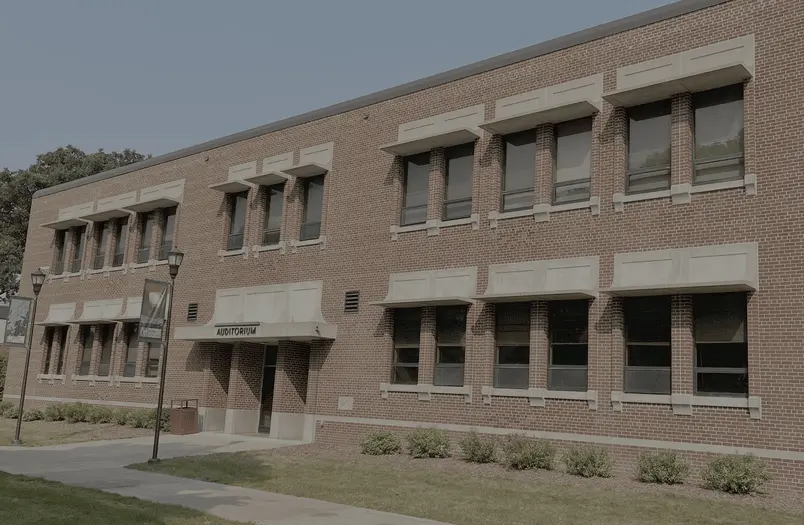
The Constraints Education Projects Work Under
Restoring a school differs from restoring an office tower. The calendar, the funding, and the people below the scaffold are all different. We have to plan for all three.
The Twelve-Week Summer Window
You get roughly twelve weeks between the last bell and the first one. We size crews and sequence scopes to fit that window. Our campus projects have historically mobilized in May and June.
Bond & Referendum Funding Cycles
A scope written this year may not be funded until voters approve it. Our assessments document quantities, priorities, and phasing so they survive a budget cycle and hold up in front of a school board. Here’s how to read a condition assessment report.
Deferred Maintenance Backlogs
Every district carries one. We triage it: safety items, conditions actively worsening, and repairs that can genuinely wait. Because deferred repairs compound, the order matters as much as the funding.
Safety on Occupied Campuses
Summer campuses are never empty: camps, summer sessions, athletics, and childcare. We fence and barricade drop zones, net scaffolding, keep building entrances protected, and coordinate daily with your facilities staff.
Historic Buildings on Campus
The building alumni care about most is usually the oldest one on the quad. We match brick, mortar, and stone to the original. At Winona State’s Lourdes Hall, that meant replacing 150 pieces of original Indiana limestone in kind.
Public Procurement and Bidding
State colleges and public districts buy through formal processes, and public dollars get scrutinized. We bid from defined scopes with unit pricing for brick and joint quantities. Change orders are the exception.
Common Problems on Education Buildings
The same failure patterns show up on campuses across the region. Each has a root cause and a repair that lasts when the cause is addressed.
Eroded Mortar Joints on Classroom Wings
These are mid-century brick wings, decades past their repointing cycle. Tuckpointing with mortar matched to the original restores weather protection without damaging the brick.
Spalled Brick on Parapets and Chimneys
The most exposed masonry fails first. We source matching units and complete brick replacement that blends with the original coursing.
Cracked Limestone Sills and Surrounds
Carved limestone sills and entrance surrounds crack and erode under freeze-thaw. Stone repair and replacement preserves the stone, patched or replaced in kind.
Failed Sealant at Window Walls
Sixties-era classroom blocks are ribbons of glass. Once the sealant fails, every perimeter joint is a water path. Sealant replacement is the cheapest leak prevention a district can buy.
Salt-Damaged Steps, Stoops, and Walks
Chlorides corrode the reinforcing steel inside entrance concrete. Surfaces then spall and edges crumble. Concrete repair restores them and slows the next round of salt attack.
Deteriorating Parking Structures on Campus
Student and staff vehicles carry road salt into ramps all winter. Parking deck restoration (structural concrete, post-tension repairs, traffic-bearing membranes) keeps them safe and open.
How an Education Project Runs
The academic calendar drives the work. Planning happens while school is in session, and the disruptive work lands inside the summer window.
Assess During the School Year
Buildings get walked and documented while they are occupied. Inspections from grade and lift disturb no one. You get photographs, quantities, and conditions ranked by urgency before any budget decision is due.
Scope Work to the Funding
Repairs are mapped to your capital reality: what fits this summer’s budget, what belongs in the bond request, and what phases across successive summers.
Build in the Summer Window
Crews mobilize after the last day of classes. Self-performed work means no subcontractor scheduling risk inside a window with no slack.
Finish Before School Starts
The site is demobilized, cleaned, and documented before staff return. You also get recommendations for the next phase, so next year’s planning starts with real information.
Assess This Year for Next Summer
The campuses that get their masonry fixed next summer are the ones scoping it this school year. Request a complimentary assessment before budget season.
Campus and School Projects
Residence halls, elementary schools, university parking structures: real scopes, real quantities, finished on academic schedules.
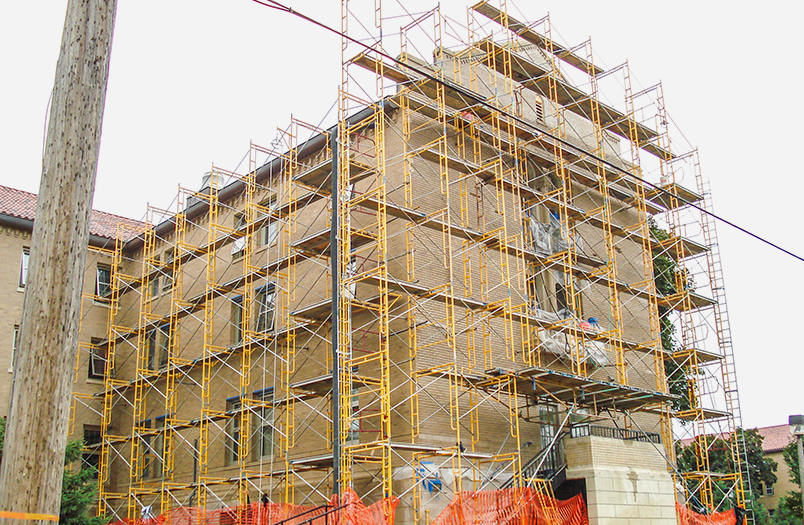
Lourdes Hall, Winona State University
Roughly 56,000 SF of exterior mortar was removed and tucked back, and 580 bricks and 150 pieces of original Indiana limestone were replaced. The six-month restoration started in June 2008.
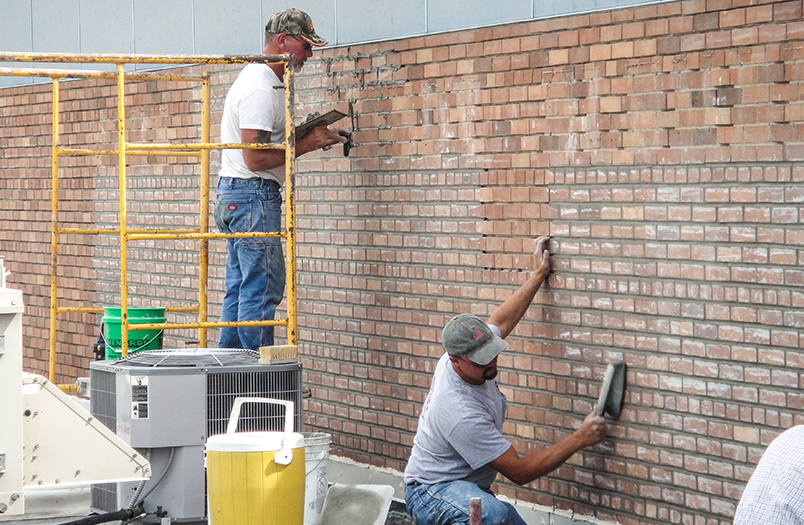
St. Cloud Community & Technical College
Approximately 3,800 SF of mortar was tuckpointed, 1,650 bricks and the facility’s sealant were replaced, and 2,900 structural helical brick ties were installed. The ties re-anchored the veneer, not just repointed it.
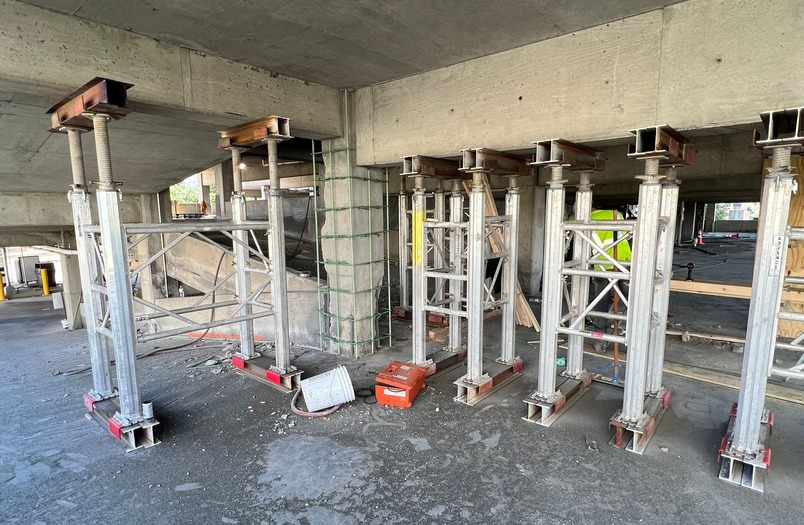
University of Minnesota, Prospect Park Ramp
Structural ramp repairs beginning June 2023 included post-tension system repairs, column and structural concrete repairs, and a new polyurethane traffic-bearing waterproofing membrane.
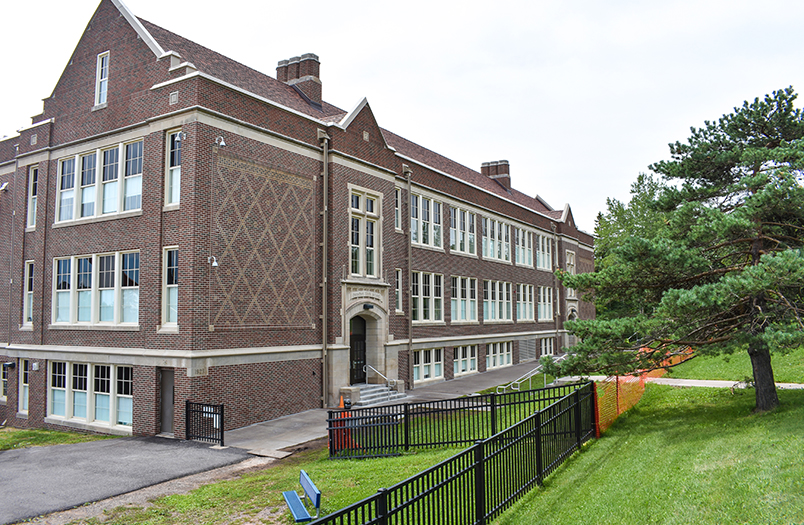
Congdon Park Elementary School
The work included tuckpointing, brick replacement, sealant, window lintel flashing repairs, and stone and concrete repairs. It was a full-envelope K-12 scope completed in three months from a June 2020 start.
Work Timed to the Academic Calendar
Masonry has a season in the Upper Midwest. Mortar needs sustained temperatures above roughly 40°F to cure properly, which makes May through October the productive window. That window and your empty-campus window overlap almost perfectly, and the education projects show it. Congdon Park Elementary started in June and finished in three months. Martin Luther College’s Wittenberg Collegiate Center mobilized in May 2021 and wrapped its tuckpointing, brick replacement, stone patching, lintel refinishing, and windowsill repairs in three months. That overlap is the only reason a full masonry scope fits between the last bell and the first one.
Decisions made in fall and winter determine what gets built next summer. A building envelope maintenance calendar keeps the cycle honest: assess in the school year, fund in the spring, build in the summer, document in the fall.
Where Education Work Happens
Campus and district work runs across Minnesota, Wisconsin, Iowa, and Nebraska, and into the Dakotas and northern Illinois. Self-performed crews are based at the Minneapolis headquarters and the Cedar Rapids office. Those crews have restored campus buildings from Duluth to St. Cloud to Winona. They also serve districts and campuses around Madison, Rochester, and Des Moines. Education is one of several industries we serve across the region.
Questions Campus and District Teams Ask
These are the questions facilities directors, campus planners, and district operations teams actually ask.
For most single-building scopes, yes. Congdon Park Elementary and Martin Luther College were each finished in three months from May and June starts. Contract during the school year so crews mobilize the week classes end, not mid-July. Scopes that genuinely exceed one summer get phased across successive summers by elevation or building. Each fall then opens with finished work.
Some can. Assessments and leak investigations disturb no one, and parking structures or fully fenced areas can often proceed during the academic year. The University of Minnesota ramp project ran nine months through the academic year. Loud, dusty work is different: grinding out mortar joints near occupied classrooms belongs in summer, and we’ll tell you so directly.
Start with a condition assessment that produces quantities, not adjectives: square feet of joints, brick counts, stone pieces. Quantities can be priced, phased, and defended in front of a board or the public. “The building needs tuckpointing” cannot. We rank conditions by urgency and structure scopes so the safety-critical work stands alone if the full package isn’t funded. A partial yes still protects the building.
Yes. Depending on condition, the right answer is patching with color-matched repair mortar or replacement in kind. At Lourdes Hall on the Winona State campus we replaced 150 pieces of original Indiana limestone. Mortar matters just as much. Repointing a 1920s building with hard modern mortar destroys the brick it was meant to protect, so we match softer historic formulations.
Campus ramps deteriorate fast. Vehicles carry road salt onto the decks all winter. Chlorides then attack the reinforcing and post-tension systems inside the concrete. At the University of Minnesota’s Prospect Park ramp we completed post-tension repairs, column and structural concrete repairs, and installed a new traffic-bearing waterproofing membrane to stop chloride intrusion. If your ramp shows spalls, exposed steel, or leaking joints, have it evaluated before winter, not after.
Request a Condition Assessment
Name the buildings that worry you. We’ll assess them while school is in session, hand you priorities you can take to your board, and build the fix inside your summer window.